Choosing the right spark plug isn’t just about price or marketing claims—it’s about matching the electrode material to your engine’s design, ignition system, and maintenance goals. The three main types—copper, platinum, and iridium—each have distinct strengths and weaknesses. This guide cuts through the noise with real-world diagnostics, cost analysis, and expert insights from the repair bay.
Copper Spark Plugs: Performance Now, Maintenance Later
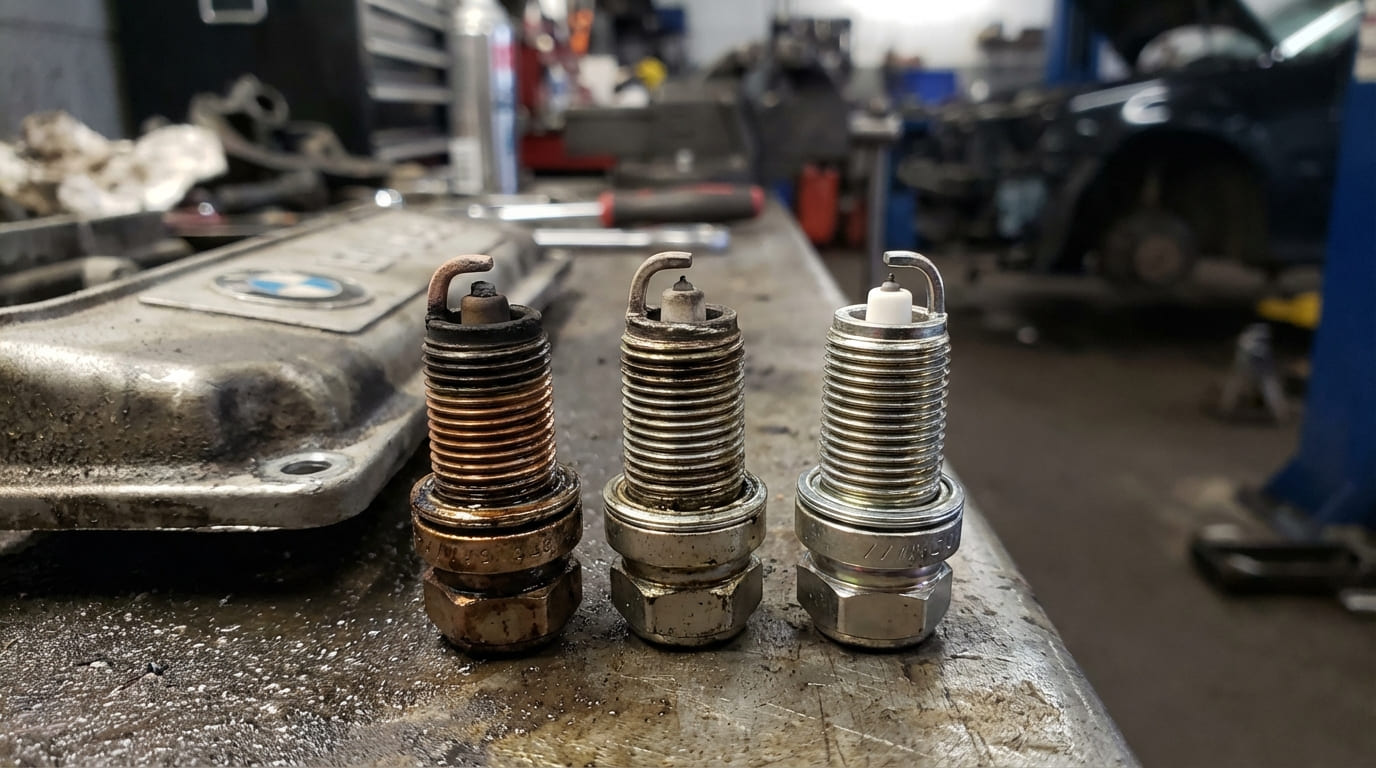
Copper plugs deliver excellent initial spark performance due to high electrical conductivity. They require less voltage to fire, making them a solid choice in older ignition systems with lower-output coils. However, copper’s softness and low melting point mean rapid electrode erosion under modern combustion conditions.
How to Check If Copper Plugs Are Right for Your Engine
Inspect your ignition system type. Copper is acceptable in older distributor-based or high-output performance systems where frequent plug changes are part of the maintenance plan. Avoid in modern coil-on-plug (COP) or direct-injection engines.
Check wear after 30,000 km (18,000 miles). Look for:
- Center electrode rounding or flattening
- Increased gap beyond specification
- Heavy carbon or oil fouling if driving is mostly short trips
In my shop, we see copper plugs fail prematurely on modern engines not because they can’t spark—but because their erosion increases misfire rates as early as 25,000 miles. If you’re chasing a rough idle on a high-mileage engine that was switched to copper, pull a plug and compare electrode wear to factory specs.
Cost and Viability
Copper plugs cost $2–$5 each—cheapest upfront. But consider labor: replacing them every 30,000–50,000 miles means 3–5 changes over the life of one iridium set. On engines with buried spark plugs (e.g., V6s with intake manifolds on top), labor can run $150–$300 per change. The math shifts fast.
| Factor | Copper |
|---|---|
| Upfront Cost per Plug | $2–$5 |
| Service Life | 30,000–50,000 km |
| Labor Frequency | High |
| Best For | Older engines, performance builds with frequent maintenance |
Platinum Spark Plugs: The Balanced Choice
Platinum offers a practical middle ground—better durability than copper, at a lower cost than iridium. It resists erosion well and maintains consistent spark over time, making it ideal for daily drivers with standard maintenance intervals.
Single vs. Double Platinum: Know the Difference
Single platinum has a platinum disc welded to the center electrode. Double platinum adds platinum to the ground electrode, making it essential for waste-spark ignition systems (common in 1990s–2000s GM, Ford, and Chrysler engines). In these systems, the plug fires in both directions, so both electrodes must resist reverse-current wear.
How to Diagnose Platinum Plug Issues
If a misfire appears on a platinum-equipped engine at 70,000+ km, don’t assume the plug is bad. First:
- Verify spark plug gap with a wire gauge—do not use a blade gauge
- Check coil output with a scope; aging coils may struggle with even slight gap increases
- Inspect for carbon tracking in the boot, especially if the plug was hand-tightened or overtorqued
I once diagnosed a persistent P0303 misfire on a 2008 Ford F-150. The owner had installed new double platinum plugs, but the gap was 0.052″ instead of the specified 0.054″. That tiny difference caused inconsistent firing with aging coils. Replacing the plugs with factory-gapped ones fixed it—no coil change needed.
Cost and Viability
Platinum plugs cost $6–$12 each. Service life of 80,000–100,000 km aligns with most factory schedules. For drivers averaging 12,000–15,000 miles per year, that’s a 5–6 year replacement cycle—ideal for predictable maintenance.
| Factor | Platinum |
|---|---|
| Upfront Cost per Plug | $6–$12 |
| Service Life | 80,000–100,000 km |
| Best For | Distributorless ignition systems, waste-spark setups, daily drivers |
Iridium Spark Plugs: Long Life, High Reliability
Iridium is the premium choice for modern engines. With a melting point over 2,400°C and extreme hardness, it withstands high heat and pressure without deforming. The ultra-fine center electrode (0.4–0.6mm) reduces required firing voltage, helping older coils perform better.
How to Use Iridium Plugs Without Damaging Them
Never adjust the gap on iridium plugs unless the manufacturer explicitly allows it. The fine wire is laser-welded, and bending it can break the joint, leading to premature failure. Always verify the gap out of the box with a wire gauge.
Inspect for ceramic cracks during installation. These are often caused by dropping the plug or overtorquing. A cracked insulator can lead to misfires or flashover.
On turbocharged and GDI engines, iridium plugs prevent “phantom misfires” caused by carbon buildup. I’ve pulled 100,000-mile iridium plugs from GDI four-cylinders that looked nearly new—while copper plugs in the same engine were fouled and eroded at 40,000 miles.
Cost and Viability
Iridium plugs cost $10–$18 each—highest upfront. But with service intervals of 100,000–160,000 km, they often save money long-term. On engines where plug access requires intake manifold removal, a single change can cost $500+ in labor. Paying $15 more per plug to avoid a $600 job in 5 years is a smart investment.
| Factor | Iridium |
|---|---|
| Upfront Cost per Plug | $10–$18 |
| Service Life | 100,000–160,000 km |
| Best For | Modern COP systems, turbocharged, GDI, high-compression engines |
How to Choose: Practical Decision Guide
The best plug isn’t always the most expensive—it’s the one that matches your engine and driving habits. Follow these steps:
- Check the OEM specification. If the manual calls for iridium, use iridium. Substitutions can lead to misfires, fouling, or secondary damage.
- Match the ignition system. Waste-spark? Use double platinum. Coil-on-plug? Iridium or single platinum are ideal.
- Consider labor access. If plugs are hard to reach, invest in long-life iridium to minimize future work.
- Respect heat range. A colder plug won’t prevent knock without tuning. A plug too cold will foul; too hot can cause pre-ignition.
A Subaru WRX owner installed colder iridium plugs to “prevent knocking.” By 20,000 miles, the engine idled rough and fouled plugs. The colder tip couldn’t self-clean during city driving. We switched back to OEM heat range—problem solved. Heat range is about thermal management, not performance tuning.
Diagnostic Table: What Plug Condition Tells You
| Observation | Most Likely Cause(s) | Less Common But Possible | Recommended Action |
|---|---|---|---|
| Black, sooty deposits on copper plug | Fuel mixture too rich, weak ignition, frequent short trips | Incorrect heat range (too cold), faulty O2 sensor | Check fuel trims, inspect ignition components, verify plug heat range |
| Worn ground electrode on platinum plug at 60,000 km | Normal wear if near upper limit, possible overtorquing | Coil overvoltage, lean condition increasing spark intensity | Inspect coil output, verify air-fuel ratio, check torque history |
| Cracked ceramic on iridium plug | Thermal shock from cold start under load, physical impact during install | Detonation, incorrect reach allowing piston contact | Inspect for detonation signs, verify correct plug length |
| Glazed insulator on any plug | Repeated rapid acceleration causing hot spots | Too hot heat range, advanced timing, low-octane fuel | Review driving pattern, check timing, verify fuel grade |
Critical Best Practices
- Use a torque wrench. Aluminum cylinder heads are easily damaged. Under-torquing causes poor heat transfer; over-torquing can strip threads.
- Clean plug well threads. Use a thread chaser or compressed air before reinstalling. Debris affects torque and seating.
- Never gap platinum or iridium plugs unless specified. The fine-wire electrode can crack at the weld point.
- Avoid anti-seize on fine-thread plugs unless required. It alters torque values and increases galling risk.
- Replace coil boots if cracked or carbon-tracked. Reusing damaged seals leads to misfires.
The factory service manual is your ultimate authority. Plug material, heat range, gap, and torque are engineered as a system. I’ve seen more misfires from well-intentioned plug swaps than from actual failures. When in doubt, stick with OEM specs—especially on modern engines firing 3,000 times per minute.