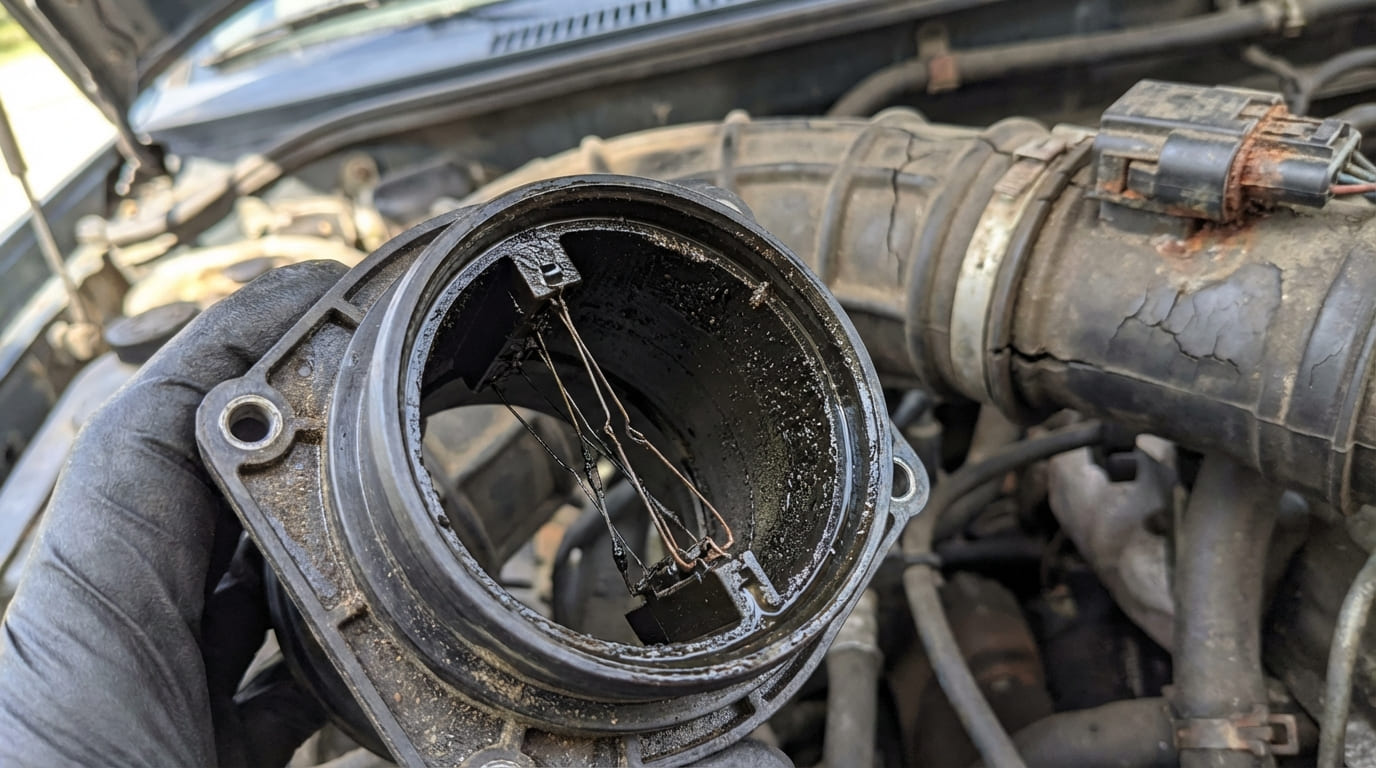
A strong gasoline odor from your engine oil isn’t just unpleasant—it’s a warning sign of fuel dilution. This condition reduces oil viscosity, accelerates engine wear, and can lead to serious damage if ignored. As a master technician, I’ve seen this issue across thousands of vehicles, from daily drivers to high-mileage fleets. The good news: with the right diagnostics, you can pinpoint and fix the cause before major harm occurs. Below is a focused breakdown of causes, how to check them, repair strategies, and real-world insights.
Common Causes of Gasoline in Engine Oil
Fuel ends up in the oil through three main pathways: combustion issues, mechanical leaks, or driving habits. Each has distinct clues and solutions.
1. Incomplete Combustion or Misfires
When the engine misfires—especially during cold starts—unburned fuel washes down cylinder walls and slips past piston rings into the oil. This is common in modern direct-injection engines where carbon buildup restricts airflow, causing lean misfires.
How to Check: Use an OBD2 scanner to review live data. Look for elevated short-term fuel trims (STFT over +15%) and cylinder-specific misfire codes (e.g., P0301). Pull the spark plugs: wet, fuel-soaked electrodes indicate poor combustion.
In my shop, we always inspect for carbon buildup on intake valves in GDI engines before replacing coils or injectors. A $200 walnut blast often fixes what looks like a failed component.
2. Fuel System Leaks
Raw fuel can enter the crankcase without ever burning. The source is often a leaking component in the fuel system.
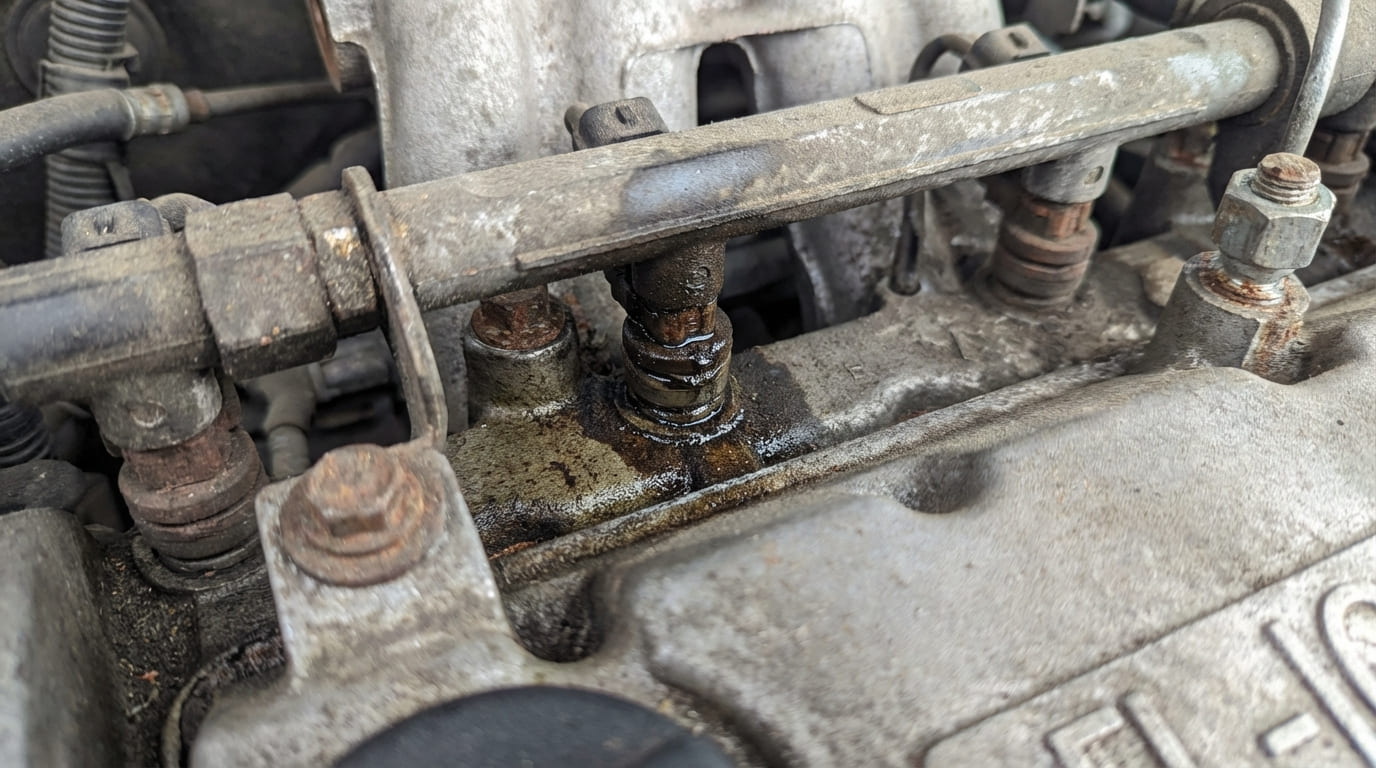
2.1 Leaking Fuel Injectors
Worn seals or clogged nozzles can cause injectors to drip fuel after shutdown. This pooled fuel seeps past piston rings, especially in engines that sit for hours.
How to Check: Perform a fuel pressure leak-down test. Attach a gauge and monitor pressure for 10 minutes after shutdown. A drop exceeding 5–10 psi (vehicle-specific) suggests leaking injectors. Also, inspect spark plugs—fuel residue on a cold engine points to leakage.
Cost & Viability: Injector replacement: $300–$800 (labor-intensive). Consider cleaning first ($100–$150), but only if leak-down is minor and no misfires exist.
2.2 Failed High-Pressure Fuel Pump (HPFP) Seals
In direct-injection engines, the HPFP is mechanically driven and operates under extreme pressure. If internal seals fail, fuel leaks into the cam carrier and drains into the oil sump—a common issue on European and Japanese GDI engines past 80,000 miles.
How to Check: Remove the HPFP cover or inspection plug. Look for a fuel-oil mix at the drive mechanism. An unexplained rise in oil level without coolant contamination is a red flag.
I’ve replaced dozens of injectors only to find the real culprit was the HPFP. Always inspect the pump base before condemning injectors.
Cost & Viability: HPFP replacement: $600–$1,200. Labor is heavy—timing cover often needs removal. Repair vs. replace? Replace. Rebuilding isn’t reliable.
2.3 Ruptured Fuel Pressure Regulator (FPR)
Found on older port-injected engines, a ruptured FPR diaphragm can allow fuel to enter the intake manifold via vacuum line—or even the PCV system—leading to oil contamination.
How to Check: Disconnect the vacuum hose from the FPR. If fuel drips out or the hose smells strongly of gasoline, the diaphragm is ruptured.
Note: Rare on modern returnless systems (post-2010), but still relevant for older vehicles.
3. Short Trips and Prolonged Idling
Engines that never reach full operating temperature (above 180°F) can’t evaporate condensed fuel from the crankcase. Delivery vans, police cars, and short-commute drivers are at high risk.
How to Check: Review driving pattern. If trips are under 10 minutes regularly, dilution is likely operational, not mechanical.
One customer solved chronic dilution by installing a block heater. Cold starts went from 15-second cranking to instant ignition—fuel content dropped 70% in two months.
4. Excessive Engine Cranking
Repeated cranking without ignition sprays fuel into cold cylinders with no combustion. This fuel pools and enters the oil. Common with weak batteries or failing starters.
How to Check: Monitor crank time. If the engine turns over more than 5–7 seconds before starting, especially in cold weather, dilution risk increases.
Solution: Test battery and starter. Replace if voltage drops below 9.6V during cranking.
5. Worn Piston Rings or Cylinder Walls
Blow-by from worn or stuck rings allows combustion gases—and fuel vapor—to enter the crankcase. Common in high-mileage engines or those with poor maintenance.
How to Check: Perform compression and leak-down tests. In a wet compression test, oil temporarily improves readings if rings are worn. With leak-down testing, air escaping through the oil fill cap confirms crankcase leakage.
Acceptable Limits: Leak-down under 10% is typical. Over 15% indicates mechanical wear needing attention.
Diagnostic Decision Table
| Symptom / Observation | Most Likely Causes | Less Common But Possible | Recommended Next Step |
|---|---|---|---|
| Strong fuel smell, oil level high | Leaking injectors, HPFP seal failure | FPR rupture, excessive cranking | Leak-down test, used oil analysis, inspect HPFP base |
| Fuel smell, no oil level change | Short trips, misfires | Minor injector seepage | Check fuel trims, review driving pattern, perform used oil analysis |
| Fuel smell, oil thin, misfire codes | Ignition fault, carbon buildup | Worn rings, poor ring seating | Inspect plugs, clean injectors, check compression |
| Oil level rising, no smell | Coolant ingress | Fuel dilution with masked odor | Used oil analysis with coolant detection, cooling system pressure test |
Diagnostic and Repair Best Practices
- ✅ Perform a used oil analysis (UOA) when fuel dilution is suspected. Labs use gas chromatography to measure fuel content accurately. Threshold: over 2.0% fuel by volume is critical for most engines.
- ✅ Replace all injector O-rings and seals as a set—even if only one injector is changed. Reusing old seals risks leaks.
- ✅ Clean injector bores and fuel rail threads with a thread chaser before reinstallation. Debris prevents proper sealing.
- ⚠️ Avoid assuming injector replacement will fix the problem. Confirm root cause first—HPFP leaks mimic injector issues.
- ⚠️ Avoid running the engine with known dilution beyond 500 miles. Even 3% fuel content cuts oil film strength by half.
- ⚠️ Avoid relying on fuel system cleaners for mechanical leaks. They won’t stop a dripping injector or failed HPFP seal.
Real-World Case Studies
Situation: 2016 FWD sedan with fuel smell and oil level over full. No check engine light.
Diagnosis: Leak-down and plug inspection normal. HPFP cover removed—fuel-oil mix found at drive shaft.
Solution: HPFP seal failure. Pump replaced. Post-repair UOA at 750 miles showed 0.8% fuel—within spec.
Takeaway: Not all fuel dilution comes from combustion. Always inspect mechanical fuel pumps on GDI engines.
Situation: Pickup truck with recurring fuel smell every 3,000 miles. Injectors replaced twice.
Diagnosis: UOA showed 3.5% fuel. No leaks, good compression. Live data showed 12-second cold cranking.
Solution: Battery tested weak. Replaced, and owner installed block heater. Cranking dropped to 2 seconds. Next UOA: 1.1% fuel.
Takeaway: Driving pattern matters. Fix the root cause, not the symptom.
Situation: Turbo hatchback with fuel odor, oil consumption, and cylinder 3 misfire. Coil and plug replaced—misfire returned.
Diagnosis: Leak-down: 18% loss, air heard past rings. Bore scope showed heavy carbon on piston.
Solution: Walnut blast of intake valves and combustion chamber cleaning. Misfire cleared. Follow-up UOA: fuel down from 3.0% to 1.3%.
Takeaway: Carbon buildup can cause misfires and dilution. Clean before replacing parts.
Repair and Verification
Fixing fuel dilution means stopping the source—not just changing oil. After repair, verify success with a used oil analysis between 500 and 1,000 miles. Smell alone is unreliable; oil retains fuel odor even after the issue is resolved.
When replacing injectors or HPFP, use new seals and lubricate O-rings with clean oil. Torque to spec—over-tightening can crack aluminum injector bores.
And remember: frequent oil changes may delay symptoms but won’t stop engine wear. I’ve seen customers change oil every 1,500 miles to “manage” dilution, only to face spun bearings at 90,000 miles. Fix the cause, not the symptom.
Trust the data. Every engine dilutes fuel differently. Consult factory service info—what’s normal on one model is dangerous on another.