Over two decades in the shop, I’ve seen this symptom roll in more times than I can count. The key isn’t jumping to conclusions—it’s methodically ruling things out. When an engine fires on the second try or needs throttle to start, it usually points to an air/fuel mixture issue during cranking. But the root cause? That’s where experience matters. This guide walks you through the real-world diagnostics, tools, and decisions that separate a quick fix from a costly guess.
Start with the Basics: Confirm and Observe
Before grabbing tools, spend 10 minutes observing the vehicle. The pattern of failure is often more revealing than any test.
Check cold vs. warm start behavior and throttle response
If the problem only happens on cold starts, suspect fuel pressure loss, faulty ECT sensor, or carbon buildup. Warm start issues often trace back to leaking injectors or vapor lock. If pressing the throttle helps every time, the engine likely needs more air or fuel during cranking—common with idle air restrictions or lean conditions.
In my shop, we always simulate the customer’s routine. If they say “first start of the day fails,” we let it sit overnight. Too many techs diagnose a warm engine and miss the real issue.
Scan for codes and monitor live data
Use an OBD2 scanner that reads pending and historical codes—not just active ones. Pending fuel trim or misfire codes can reveal early-stage issues.
Even without codes, monitor live data during cranking. Key parameters:
- Engine Coolant Temperature (ECT): Must reflect actual ambient temp. A reading of 180°F in winter means no cold enrichment.
- Intake Air Temperature (IAT): Skewed readings lean out fuel mix.
- MAF or MAP: Low airflow signal = reduced fueling.
- Fuel Trim: High positive STFT after start indicates lean condition from insufficient cranking fuel.
- Cranking RPM: Below 200 RPM reduces fuel pump output and injector effectiveness.
- Battery Voltage: Must stay above 10V. Low voltage starves fuel pump and ECM.
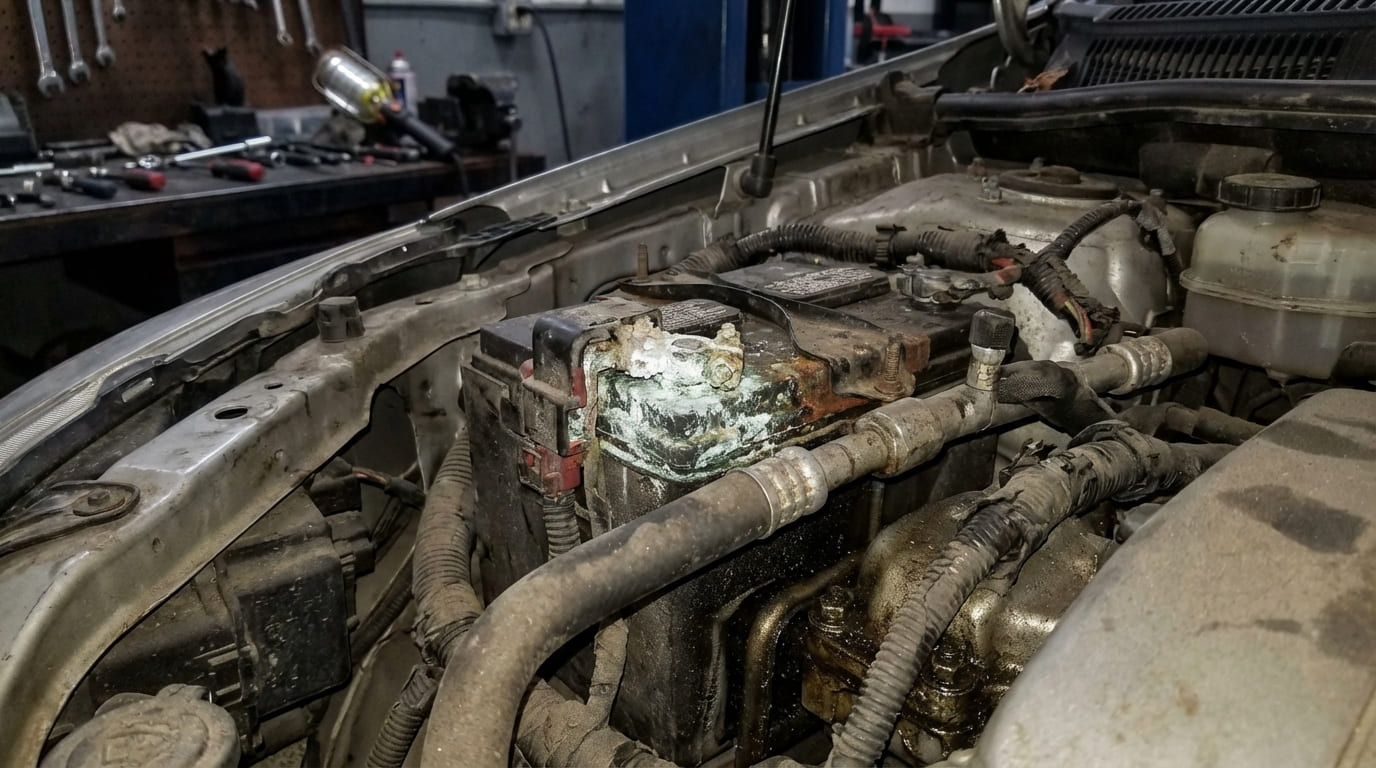
I’ve seen engines start perfectly after a battery boost—no codes, no faults. The culprit? A 3-year-old battery with high internal resistance. Always test under load, not just at rest.
Fuel System: The Most Common Culprit
Most second-crank or throttle-dependent starts stem from inadequate fuel delivery at startup. Diagnose pressure, volume, and retention.
Test fuel pressure and bleed-down
Use a fuel pressure gauge on the rail. Turn the key to ON (do not start) and watch for prime pressure. It should hit spec in 2–3 seconds.
After pump shuts off, pressure must hold for at least 5 minutes. If it drops fast, the system is losing prime—requiring re-pressurization on second crank.
| System Type | Typical Prime Pressure | Hold Time |
|---|---|---|
| Port Fuel Injection | 40–65 PSI | 5+ minutes |
| Direct Injection (GDI) | 500–2200 PSI | 5+ minutes |
Diagnose the cause of pressure loss
If pressure drops, the leak could be in the pump, injectors, or regulator.
- Fuel pump check valve failure: Most common cause. The internal valve keeps fuel in the rail. When it fails, fuel drains back to the tank. Replace the pump module. Cost: $200–$600 (DIY lowers to $100–$300).
- Leaking fuel injector: Drips fuel into the cylinder, washing oil off walls or causing hydro-lock. Perform a leak-down test: pressurize the rail, shut off, and monitor. If pressure drops, crack each injector line to isolate the leaking one. Replacement: $150–$300 per injector (labor-intensive).
- Fuel pressure regulator failure: On older return-style systems, a ruptured diaphragm leaks fuel into the intake. Check for fuel in the vacuum line. Replacement: $50–$150 part, 1–2 hours labor.
Verify fuel volume and pump health
Pressure alone isn’t enough. Test volume: run fuel into a graduated container for 30 seconds. Most systems require at least 1 liter.
Also monitor fuel pump current draw with an ammeter. A healthy pump draws steady current. Spikes or drops indicate worn brushes or commutator.
I’ve saved customers hundreds by testing volume first. One pump showed 62 PSI but delivered only 0.6L in 30 seconds. It ran fine once started—just couldn’t prime.
Inspect fuel quality and contamination
Water in fuel settles overnight and disrupts cold starts. Drain a small sample from the rail or filter. Cloudy or separated fuel means contamination.
Check the fuel cap seal. A compromised cap can let in moisture. Replacement: $15–$40.
Air Induction and Idle Air Control
Too much unmetered air or too little controlled air during cranking can prevent ignition.
Check for vacuum leaks
Unmetered air dilutes the mixture. Throttle input changes airflow dynamics, sometimes stabilizing combustion.
Perform a smoke test on the intake system. Focus on:
- PCV hoses and elbows
- Brake booster line
- Intake manifold gaskets (especially on plastic manifolds)
- Schrader valve on fuel rail (yes, it can leak!)
A 2015 Subaru came in with second-crank cold starts. Pressure held. No codes. Smoke test revealed a hairline crack in the intake manifold. Fixed with epoxy—saved a $400 gasket job.
Inspect MAF and MAP sensors
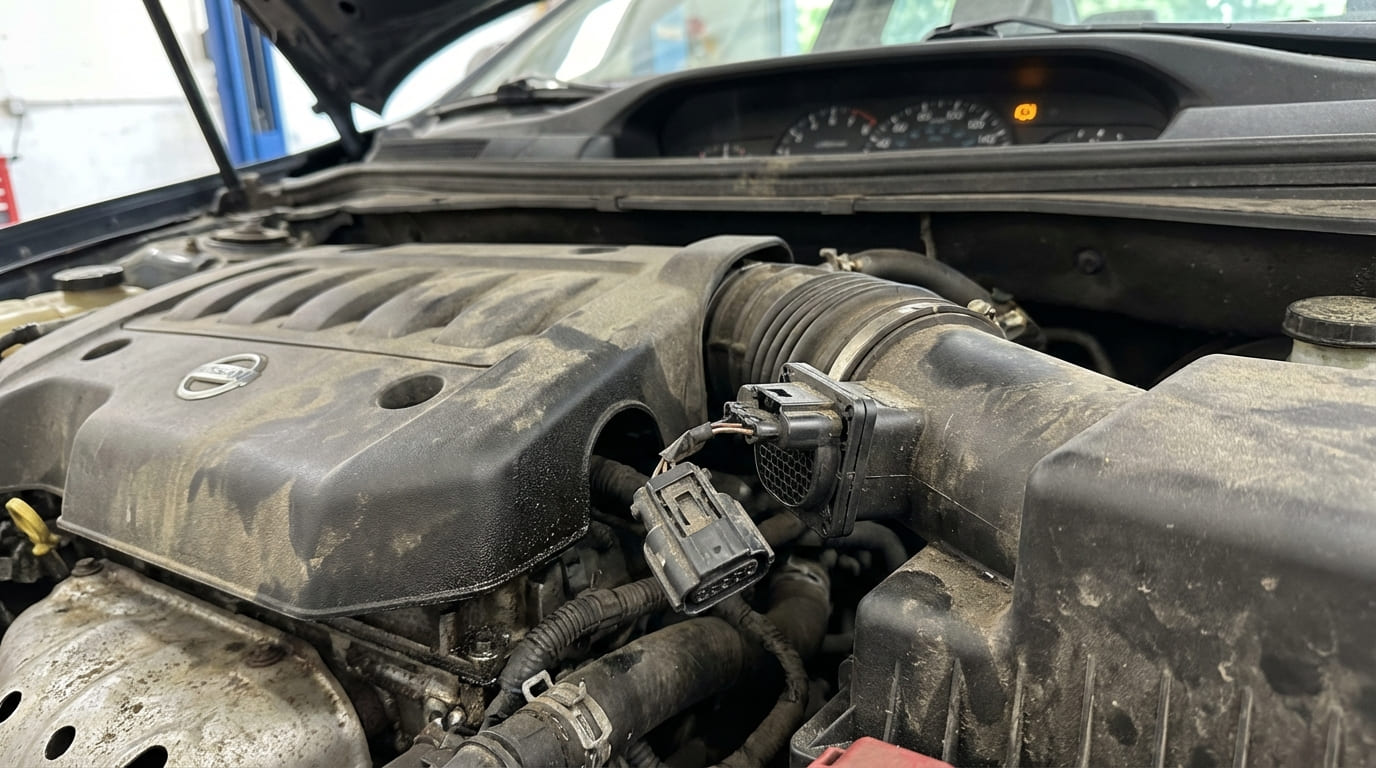
A dirty MAF underreports airflow, causing lean mixtures. Inspect the hot wire. If coated with oil (from oiled air filters) or grime, clean with MAF-specific spray.
On speed-density systems (no MAF), the MAP sensor is critical. A faulty one may read high vacuum at rest, confusing the ECM. Test with live data: should reflect atmospheric pressure when off.
Examine throttle body and idle air control
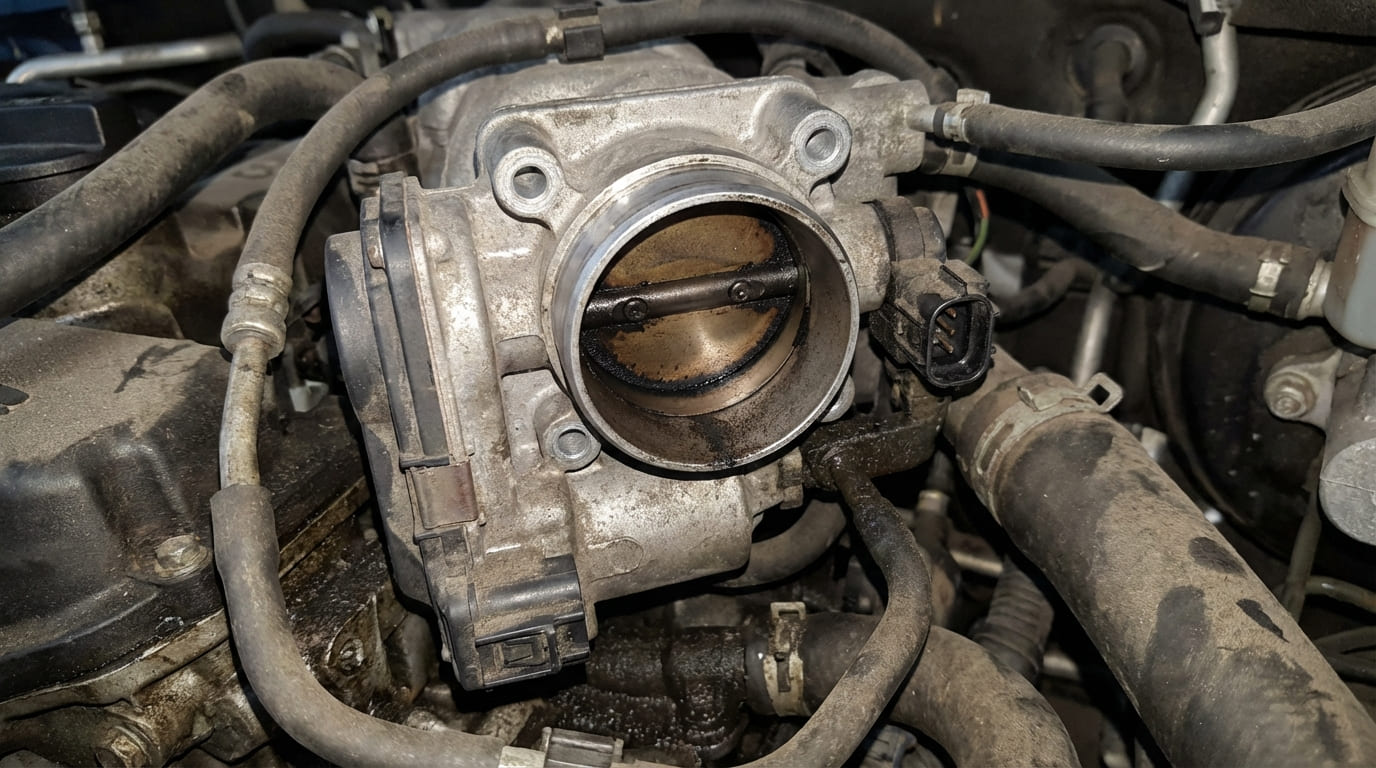
Carbon buildup around the throttle plate blocks idle air passages. On cold start, the IAC or electronic throttle can’t bypass the restriction. Pressing the throttle forces air in.
Remove the intake tube and inspect behind the plate. Heavy carbon? Clean with throttle body cleaner and a soft brush.
For older vehicles with IAC valves, check live data: on key-on, it should step to a preset count (e.g., 25–35). If stuck at zero, clean or replace.
Ignition System: Don’t Overlook Spark
Cold cylinders are harder to ignite. Weak spark can fail the first attempt but work on the second as residual heat helps.
Test spark quality and plug condition
Use an adjustable gap spark tester. Set to 25kV. If the spark can’t jump, ignition components are weak.
Inspect spark plugs: worn electrodes, incorrect gaps, or oil fouling reduce spark energy. Replace if worn. Cost: $10–$20 per plug, $100–$200 labor (varies by engine).
I once fixed a “hard cold start” with a $30 plug change. The old plugs had gaps over 0.100” due to erosion. Fired fine warm—failed cold.
Sensors and ECM: Silent Failures
Many sensors degrade without setting codes. Cross-check live data with physical conditions.
Test the ECT sensor
A faulty ECT that reads “hot” when cold prevents fuel enrichment. Measure resistance with a multimeter and compare to OEM chart.
Example: At 70°F, a typical ECT reads ~2,000 ohms. A reading of 100k ohms tells the ECM the engine is cold-soaked—causing over-fueling. But if it reads 300 ohms (indicating 250°F), the ECM won’t enrich—leading to lean start.
Check crank and cam sensors
Intermittent signal loss during cranking can prevent injector pulse. Some sensors fail when cold, working after a few attempts.
Test with an oscilloscope. A multimeter won’t catch missing teeth or signal dropouts. Look for clean, consistent waveform.
Consider ECM software issues
Rare, but possible. Some vehicles have known PCM flash issues that delay injector pulse on first crank. Check for TSBs. A software update may resolve it—often free at the dealer.
Battery and Starting System
Slow cranking = low fuel pressure and weak spark.
Test battery and connections
Perform a voltage drop test on battery cables. More than 0.2V drop indicates resistance—even if terminals look clean.
Check cranking voltage. Must stay above 10V. Below 9.6V, fuel pump slows and injectors may not open fully.
I’ve seen batteries pass a load test but fail under real cranking load. Surface charge fools the tester. Always test voltage during actual start attempts.
Diagnostic Scenarios and Probable Causes
| Symptom Pattern | Most Likely Causes | Less Common But Possible |
|---|---|---|
| Cold start only, resolves with throttle | Fuel pressure loss, ECT sensor fault, throttle bore carbon | Weak battery, MAF contamination |
| Warm start only, improves on second crank | Leaking injector, fuel check valve failure | Vapor lock, PCM logic delay |
| Intermittent, no pattern | Loose connection, failing fuel pump, vacuum leak | ECM relay, crank sensor thermal failure |
| Consistent second-crank start, no throttle needed | Fuel pump check valve, slow-acting regulator | ECM relearn needed after battery disconnect |
Situation: A 2012 F-150 with 140k miles came in with a cold-start no-crank issue—first attempt failed, second usually worked. No codes.
Initial Assumption: I suspected the fuel pump. Pressure dropped from 60 to 20 PSI in 30 seconds.
Deep Dive/Discovery: Replaced the pump module—problem returned in a week. This time, I checked the fuel rail Schrader valve. It was leaking. A new cap fixed it.
Nuanced Lesson Learned: Don’t assume pressure loss is always in the tank. The Schrader valve is a small part, but it’s part of the sealed system.
Situation: 2008 Camry, hard cold start, throttle helps. Fuel pressure holds. No codes.
Initial Assumption: Thought it was a lazy IAC motor.
Deep Dive/Discovery: Live data showed ECT reading 85°F at 30°F ambient. Replaced the sensor—fixed.
Nuanced Lesson Learned: Even a partially failed ECT can prevent enrichment. Always verify sensor data against physical conditions.
Situation: 2015 Subaru, starts on second try when cold. No codes. Pressure holds.
Initial Assumption: Figured it was carbon on the throttle body—common on direct-injected engines.
Deep Dive/Discovery: Cleaned throttle—no change. Then I noticed STFT went from +18% to +8% after start. Smoke test revealed a tiny crack in the intake manifold.
Nuanced Lesson Learned: Small vacuum leaks can be invisible. Fuel trims during and after cranking are often the first clue.
In my shop, we don’t rush to replace parts. We watch, measure, and compare. The second-crank start isn’t a mystery—it’s a symptom with patterns. But those patterns depend on the engine, the environment, and the driver’s habits. Always consult the specific service data before making a final call.