In my two decades in the shop, I’ve seen more than a few engines come in on a tow truck because someone ignored—or worse, misdiagnosed—an oil pressure warning light. Some folks assume it’s “just a sensor,” while others panic at the first flicker. The truth, as usual, lies somewhere in the middle. This light can signal anything from a simple low oil level to the beginning of the end for an engine. The key is systematic, informed diagnosis—not assumptions.
Primary Causes of Oil Pressure Warning Light
The oil pressure warning light activates when oil pressure drops below a critical threshold—typically 5 to 7 psi, depending on the vehicle. While the cause may seem mysterious, it almost always falls into one of three categories: actual low oil pressure, a faulty sensor, or an electrical fault. Below is a breakdown of each, with diagnostic guidance and real-world context.
Actual Low Oil Pressure
When oil pressure is genuinely low, mechanical issues are at play. These are often progressive and worsen with heat or engine load. Ignoring them risks catastrophic engine failure.
How to Check: Always verify with a mechanical oil pressure gauge before disassembling the engine. Connect it to the oil pressure sensor port after removing the sensor. Run the engine to operating temperature and check readings at idle and 2,000 RPM.
- Low oil level: Due to leaks (e.g., oil pan, valve cover, front seal) or consumption (burning oil). Check dipstick—top off with correct viscosity if low. A quart every 1,000 miles or less is a red flag.
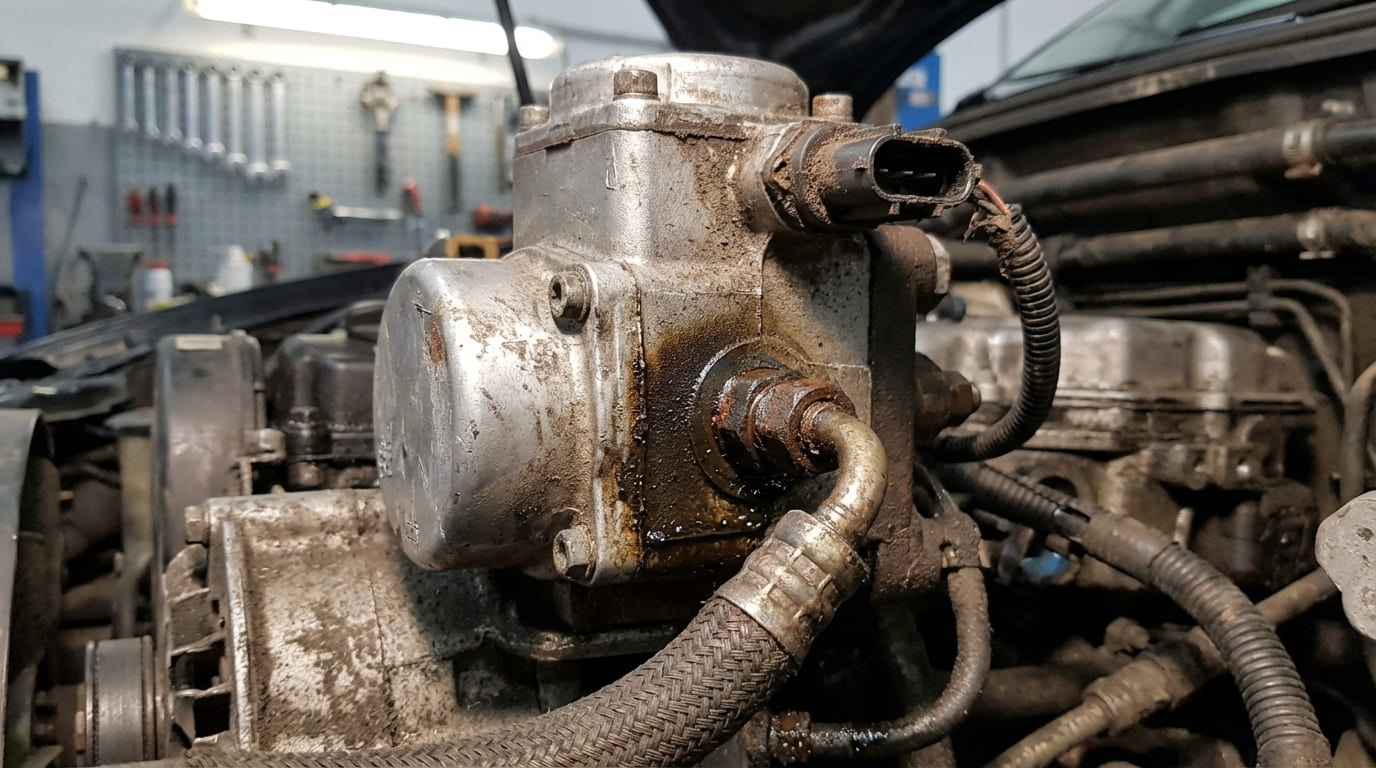
- Oil pump issues: Worn gears, clogged pickup screen, or a failed relief valve. The pickup screen is located inside the oil pan—inspect it if pressure is low. Sludge from poor maintenance is a common culprit.
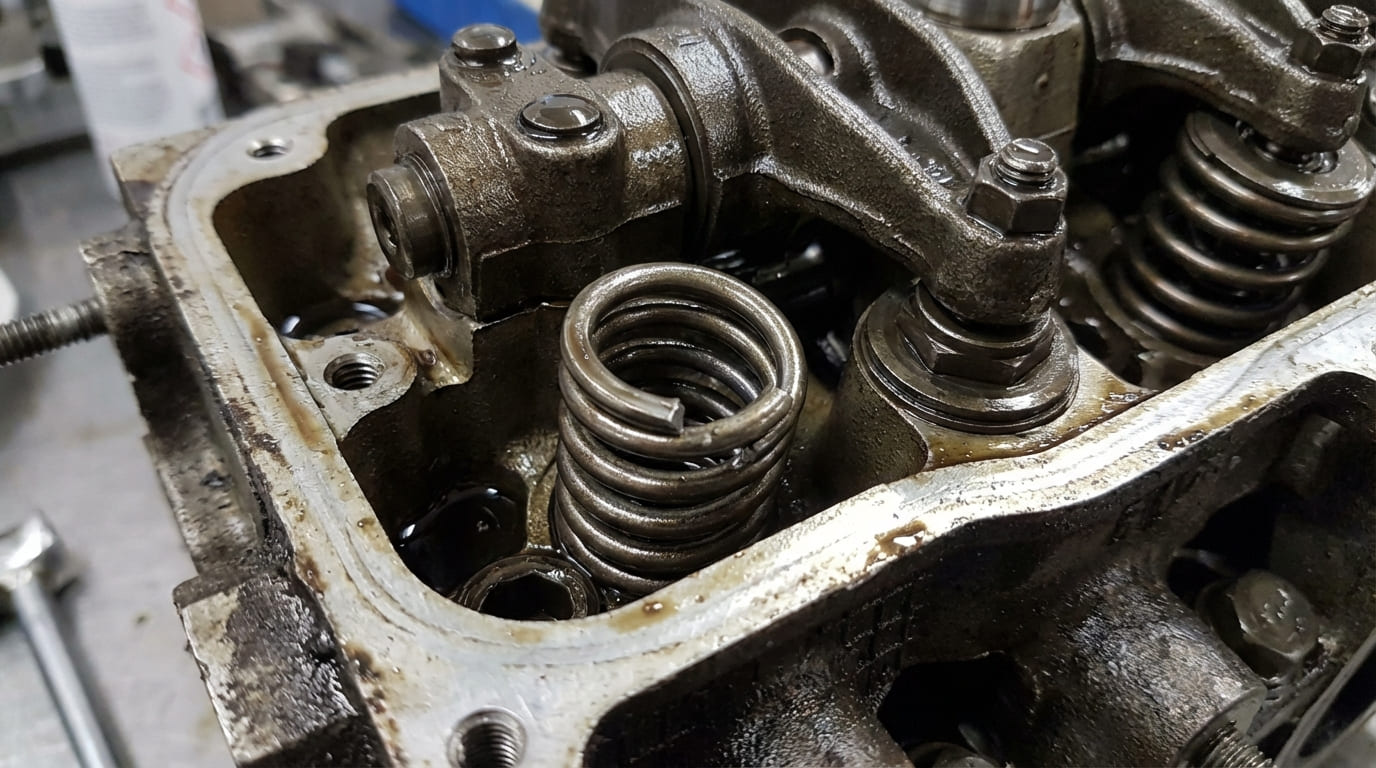
- Excessive bearing clearances: Worn crankshaft main or rod bearings allow oil to escape before building pressure. Use Plastigage to measure clearances during teardown. Clearances over 0.003″ on main bearings typically indicate a need for engine rebuild.
- Internal oil leaks: Failed VVT/VCT actuators, cracked oil galleries, or a damaged oil filter can bleed pressure. On modern engines, a leaking timing actuator can drop system pressure at idle.
- Incorrect oil viscosity: Using oil that’s too thin (e.g., 0W-20 in a 5W-30-recommended engine) reduces pressure, especially when hot. Fuel or coolant contamination also thins oil—check for gasoline smell or milky residue on the dipstick.
In my shop, we always pull the oil pan if pressure is low and no other cause is found. More than once, we’ve found the pickup screen completely blocked with sludge—even on vehicles with “regular” oil changes. The PCV system can push contaminants into the pan if it’s restricted.
Faulty Oil Pressure Sensor or Electrical Fault
If the mechanical gauge shows normal pressure, the problem is likely electrical. This includes the sensor, wiring, or instrument cluster.
How to Check: With the sensor disconnected, use a multimeter to check for reference voltage (typically 5V or 12V, depending on design). Then measure sensor resistance or output voltage while cranking. Compare readings to factory specs.
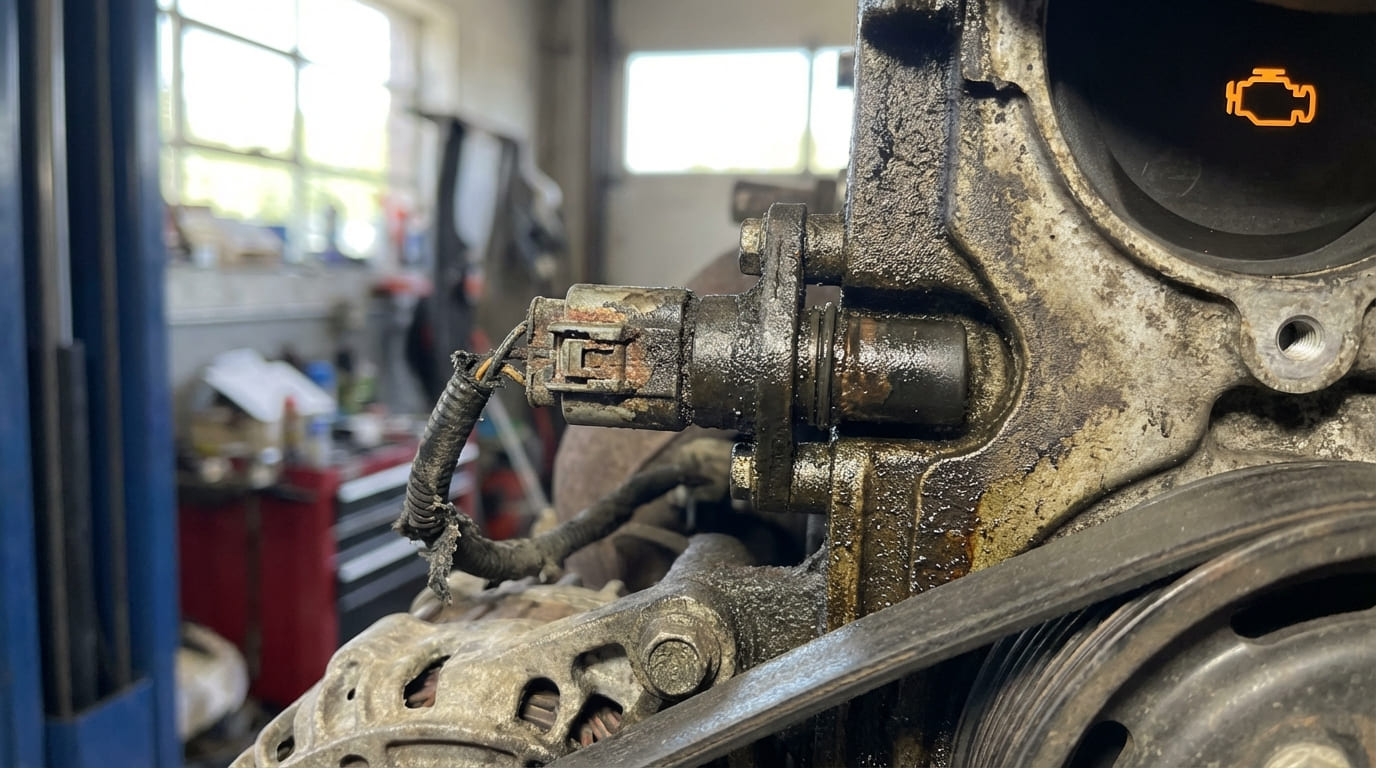
- Failed sensor: The most common electrical cause. Sensors fail due to heat, vibration, or internal corrosion. A failed diaphragm may read zero pressure even when oil pressure is normal.
- Wiring issues: Look for chafed wires near the exhaust manifold or oil filter. A short to ground will make the system think pressure is zero.
- Corroded connector: Clean with electrical contact cleaner and inspect for bent pins. Moisture and road salt accelerate corrosion, especially in northern climates.
- ECM or cluster failure: Rare, but possible. If wiring and sensor test good, suspect the receiving module.
I once replaced a sensor three times before realizing the wiring harness had a pinched wire under the intake manifold. Always test the circuit—not just the sensor.
Diagnostic Procedure
Follow a step-by-step approach to avoid misdiagnosis and wasted parts.
- Shut off the engine immediately if the light is on at idle or flashing under load. Continued operation risks bearing damage.
- Check oil level and condition. Top off if low. Look for fuel smell, milky appearance, or metal particles.
- Install a mechanical oil pressure gauge. This is non-negotiable. It’s the only way to know if pressure is truly low.
- Test pressure at operating temperature. Idle and 2,000 RPM readings matter. Typical specs: 10–15 psi at idle, 30–60 psi at 2,000 RPM. Consult factory service manual for exact values.
Inspect for external leaks. Common areas: oil filter, pan gasket, valve covers, front/rear main seals.
If pressure is normal, the issue is electrical. If pressure is low, proceed to internal inspection.
Cost and Repair Viability
Repair costs vary widely. Here’s a general breakdown:
| Issue | Typical Cost (Parts + Labor) | Repair vs Replace |
|---|---|---|
| Oil leak (gasket/seal) | $150–$400 | Repair—cost-effective |
| Oil pressure sensor | $80–$180 | Repair—simple fix |
| Oil pump replacement | $600–$1,200 | Repair if engine is otherwise healthy |
| Engine rebuild (bearings, crank) | $2,500–$5,000 | Depends on vehicle value—consider replacement engine |
| Short block or long block replacement | $3,000–$7,000 | Compare to vehicle’s market value |
On high-mileage engines with worn bearings, I often recommend a used long block over a full rebuild. It’s faster, more reliable, and often cheaper.
Common Scenarios and Diagnostic Priority
Use this guide to prioritize your diagnosis based on symptoms:
| Symptom | Most Likely Cause | Action |
|---|---|---|
| Light on at idle, off at higher RPM | Worn main bearings, low oil level, thin oil | Verify with mechanical gauge; inspect oil condition and level |
| Light on at startup, clears in seconds | Cold oil, weak pump, low level | Monitor duration—longer than 5 seconds is a concern |
| Light on constantly, oil level OK | Faulty sensor or wiring | Test circuit and install mechanical gauge |
| Flashing under load or acceleration | Cavitation, internal leak (VVT), clogged pickup | High risk—shut down and inspect immediately |
Risks of Ignoring the Light
Driving with low oil pressure—even briefly—can destroy an engine.
- Bearings lose lubrication and overheat, leading to spinning or seizure.
- Camshaft lobes wear rapidly, especially in overhead cam engines.
- Turbochargers fail quickly without oil—replacement costs $1,000+.
- In extreme cases, the engine locks up and cannot be repaired economically.
I’ve seen engines go from “just a warning light” to “no compression” in under 10 minutes of driving. If the light is on, stop. It’s not worth the risk.
Post-Repair Verification
After any repair, confirm the fix with real-world testing.
- Reinstall the mechanical gauge and verify pressure at idle and 2,000 RPM when hot.
- Reinstall the OEM sensor and start the engine—warning light should not illuminate.
- Check oil level and look for leaks.
- Test drive under load and monitor for recurrence.
One final note: always use OEM or high-quality aftermarket parts. I’ve seen cheap oil filters collapse under suction and non-OEM sensors fail within months. Your engine depends on these components—don’t cut corners.