Yes, an engine can run without a functioning MAF sensor — but not well, and not for long without risking damage. In over 20 years of diagnosing drivability issues, I’ve seen more good MAF sensors replaced unnecessarily than any other component in the fuel management system. The Check Engine Light and codes like P0171 or P0100 often point elsewhere. This guide cuts through the noise with actionable diagnostics, real-world symptoms, and proven repair strategies.
How the Engine Runs Without a Working MAF Sensor
When the MAF sensor fails or is disconnected, the ECU doesn’t shut down — it switches to a backup strategy called Speed-Density mode. Using inputs from the MAP sensor, throttle position, RPM, and coolant temperature, the ECU estimates airflow instead of measuring it directly. This keeps the engine running, but fuel control is less precise, leading to drivability issues and potential long-term damage.
In my shop, we always check for vacuum and intake leaks before replacing a MAF sensor. Over 60% of “bad MAF” cases I see are actually unmetered air entering downstream of the sensor.
Symptoms of MAF Sensor Failure
Whether disconnected or faulty, the engine will show clear signs. The severity depends on the failure type and driving conditions.
Common Symptoms (Both Disconnected and Faulty)
- Check Engine Light (MIL) illuminated, often with P0100–P0104 or P0171/P0172
- Rough idle or stalling, especially during warm-up
- Poor acceleration and reduced engine power
- Increased fuel consumption
- Hesitation, surging, or stumbling under light throttle
Disconnected MAF: What to Expect
The engine will usually start and idle, but performance suffers under load. Without real-time airflow data, the ECU struggles to deliver correct fuel during acceleration. Turbocharged engines may handle this slightly better due to MAP-based load calculation, but drivability is still compromised.
Faulty MAF: The Hidden Danger
A contaminated or drifting MAF is worse than a dead one. The ECU trusts bad data, leading to chronic rich or lean conditions. Oil-fouled sensors (common with oiled air filters) under-report airflow, causing over-fueling. A cracked intake boot can let in unmetered air, mimicking a lean signal. Both scenarios stress the catalytic converter and increase wear.
I pulled a set of spark plugs from a car with a contaminated MAF — they were black and sooty from running rich. The customer thought it was a fuel pressure issue. Always check MAF data before diving into the fuel system.
Step-by-Step Diagnostic Procedure
1. Scan Tool Analysis: Start Here
Use an OBD2 scanner to pull codes and view live data. Focus on:
- KOEO (Key On, Engine Off): MAF should read 0.00 g/s. Any reading above 0.1 g/s suggests a short or internal fault.
- Warm Idle: Typical values: 2.5–4.5 g/s for a 2.0L, 7–9 g/s for a 5.3L V8. Refer to factory specs when possible.
- WOT at 4000 RPM: Expect ~0.9–1.1 g/s per liter of engine displacement. A 2.0L should reach ~7–8 g/s at 4000 RPM.
- Fuel Trims: STFT and LTFT beyond ±10% indicate the ECU is struggling. But don’t assume the MAF is at fault — this could be a leak, weak fuel pump, or clogged injector.
2. Visual and Physical Inspection
Before electrical tests, inspect:
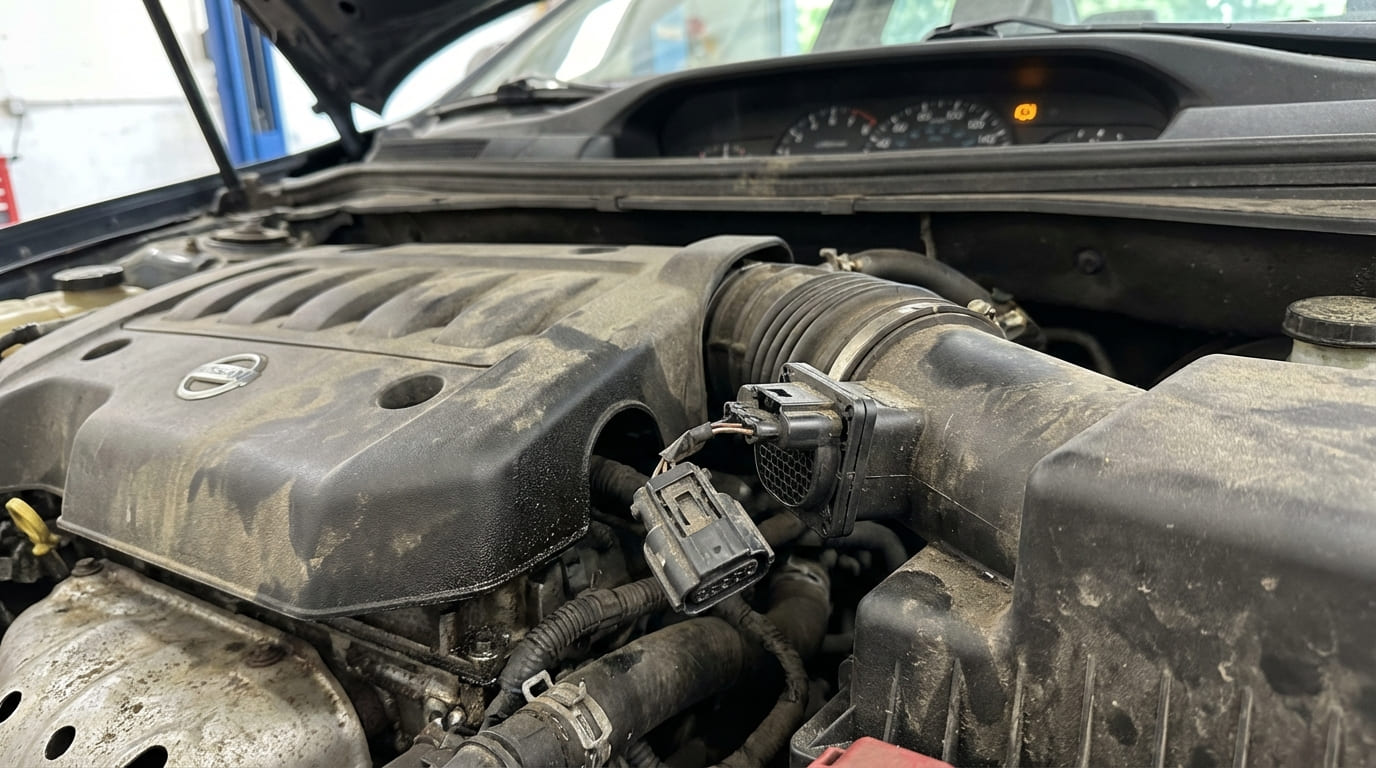
- MAF housing for cracks or debris
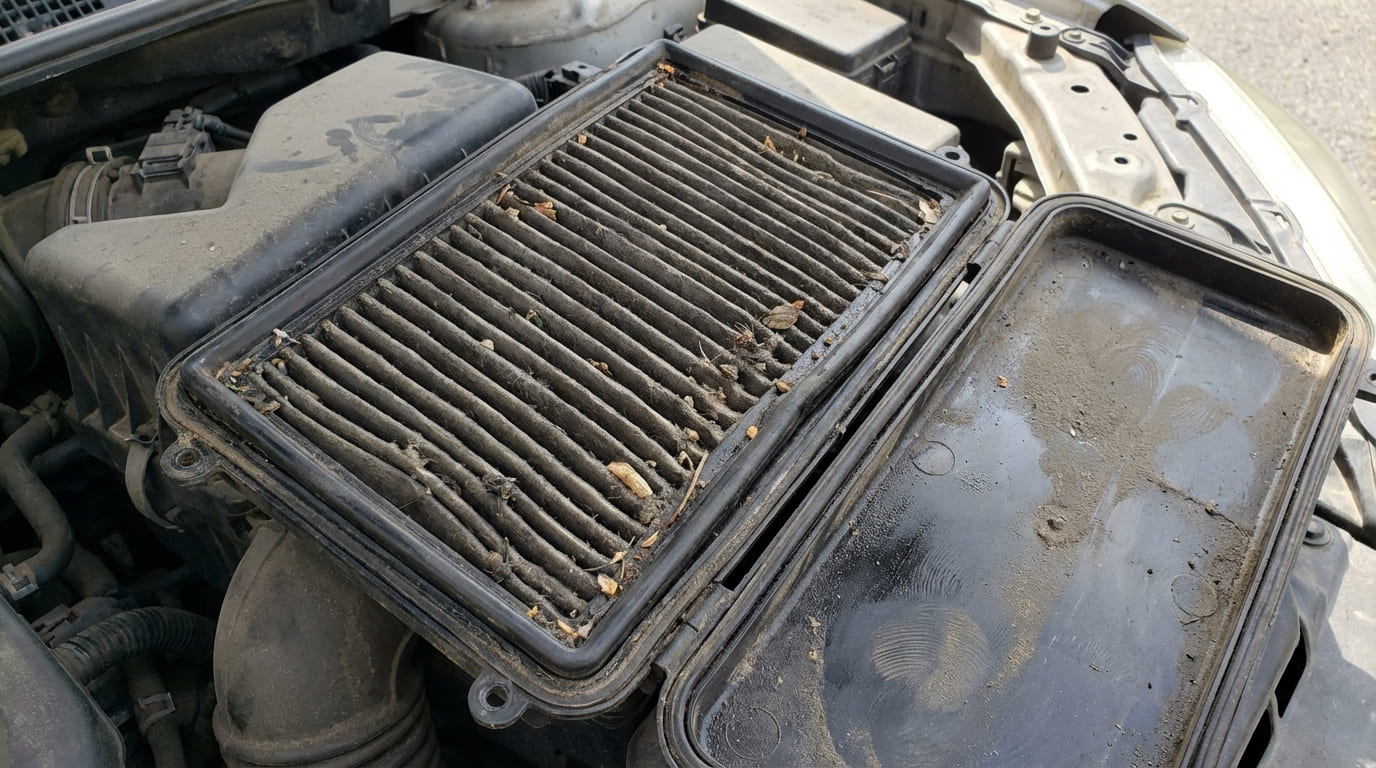
- Air filter condition — dirty or oiled filters contaminate MAFs
- Sensor element — clean and shiny, or coated in grime?
- Intake tract for leaks downstream of the MAF (after the throttle body)
- Connector for corrosion or loose pins
Perform a wiggle test on the wiring while monitoring live data for signal dropouts.
I’ve cleared “MAF fault” codes just by finding a split vacuum hose. A smoke test takes 10 minutes and saves hundreds in unnecessary parts.
3. Electrical Testing (For Technicians)
Use a digital multimeter and service manual:
- Disconnect the MAF connector.
- With ignition on, check for 5V reference (most common) or 12V supply.
- Test ground: resistance should be under 0.5 ohms to chassis.
- Backprobe the signal wire while running — compare voltage/frequency to specs across RPM range.
Note: A sensor can pass electrical tests but still be inaccurate due to contamination.
4. Performance Cross-Checks
Compare MAF readings with other sensors:
- MAF vs. MAP: Under load, both should trend upward. If MAP shows high load but MAF is low, suspect restriction or faulty MAF.
- Engine Load %: Calculate load using RPM and MAP. If load is high but MAF flow is low, there’s a mismatch worth investigating.
Repair vs. Replace: Cost and Viability
Before replacing, consider cost and root cause:
| Part/Service | Average Cost (USD) | Notes |
|---|---|---|
| MAF Sensor (OEM) | $120–$300 | Aftermarket units often fail prematurely |
| MAF Sensor (Aftermarket) | $60–$150 | Higher return rate — use only if budget-constrained |
| Smoke Test (Leak Detection) | $80–$150 | Worth every dollar — prevents misdiagnosis |
| MAF Cleaning (DIY) | $8–$15 | Use only MAF-safe cleaner — no substitutes |
Replacing a MAF sensor without confirming the fault is a gamble. If the root cause is an intake leak or oiled filter, the new sensor will fail quickly.
Best Practices: What to Do (and Not Do)
- ✅ Clean the MAF with approved MAF cleaner only — never carb cleaner, brake cleaner, or compressed air.
- ✅ Replace the air filter regularly — a clogged filter increases MAF contamination risk.
- ✅ Perform a smoke test for intake leaks before replacing the MAF.
- ⚠️ Don’t replace the MAF based on P0171/P0172 alone — these are system-wide codes with many possible causes.
- ⚠️ Avoid oiled cotton gauze air filters unless the vehicle was designed for them — oil migration kills MAFs.
- ⚠️ Never touch the sensor element — skin oils can create insulating films that skew readings.
Risks of Driving with a Bad MAF
Long-term operation leads to:
- Catalytic converter damage from sustained rich or lean conditions — replacement costs $1,000+.
- Failed emissions tests due to high HC or NOx.
- Carbon buildup on intake valves, especially in direct-injection engines.
- Fuel dilution of engine oil in severe rich conditions, accelerating wear.
The engine may run, but it’s operating outside safe parameters. Don’t delay diagnosis.
Common Failure Causes and How to Prevent Them
- Contamination: From oiled air filters or PCV blow-by. Use dry filters or OEM-recommended oiled types.
- Electrical Faults: Corroded connectors, rodent damage, or internal failure. Inspect wiring during routine maintenance.
- Physical Damage: Impact, improper cleaning, or water ingestion. Never spray cleaner directly at the element.
A customer installed a cone filter and revved the engine before the oil settled. Two weeks later, the MAF failed. The root cause wasn’t the sensor — it was the filter. Always follow installation guidelines.
Diagnostic Comparison Table
| Symptom/Code | Most Likely Cause | Less Common Causes | Diagnostic Priority |
|---|---|---|---|
| P0171 + Low MAF g/s at idle | MAF contamination or intake air leak | Weak fuel pump, clogged fuel filter | Smoke test first, then check fuel pressure |
| P0172 + High negative fuel trims | Faulty MAF over-reading or leaking injector | Low fuel pressure, faulty O2 sensor | Test fuel pressure, inspect injectors |
| MAF reads 0.00 g/s KOEO but responds when running | Normal on some platforms | Open ground or signal circuit | Verify signal with DMM if no response |
| Intermittent hesitation, MAF signal drops | Loose connector or damaged harness | Failing PCM, internal sensor failure | Wiggle test, monitor continuity |
Situation: 2012 Ford F-150 with P0171, poor fuel economy, two replaced MAFs.
Diagnosis: Smoke test revealed split intake boot after throttle body.
Lesson: Unmetered air mimics low MAF signal. Always rule out leaks first.
Situation: Subaru with cold-start stumble, P0101. Customer cleaned MAF with carb cleaner.
Discovery: Hot wire bent from chemical damage during cleaning.
Lesson: Only use MAF-safe cleaners. Harsh chemicals can destroy the sensor.
Situation: Turbo VW with lag and overboost codes. MAF read 6.8 g/s at idle.
Root Cause: Leaking diverter valve recirculating boost pre-MAF.
Lesson: Boost system leaks can reverse airflow and confuse MAF. Test the whole system.
The MAF sensor is often a symptom, not the cause. Modern ECUs are smart enough to keep the engine running, but relying on fallback modes risks expensive damage. Always verify with live data, inspect for leaks, and clean or replace only when confirmed. Consult the vehicle-specific service manual — because while patterns exist, every engine responds differently.