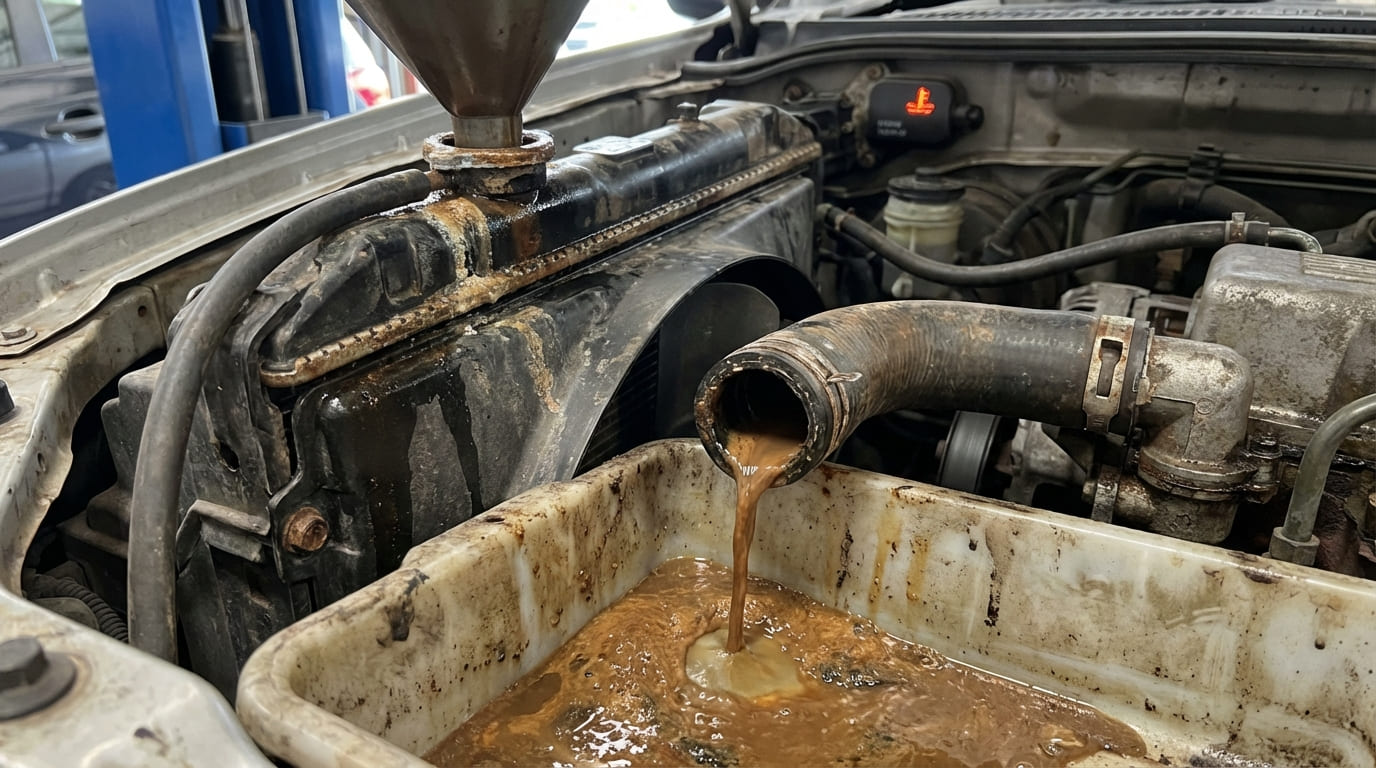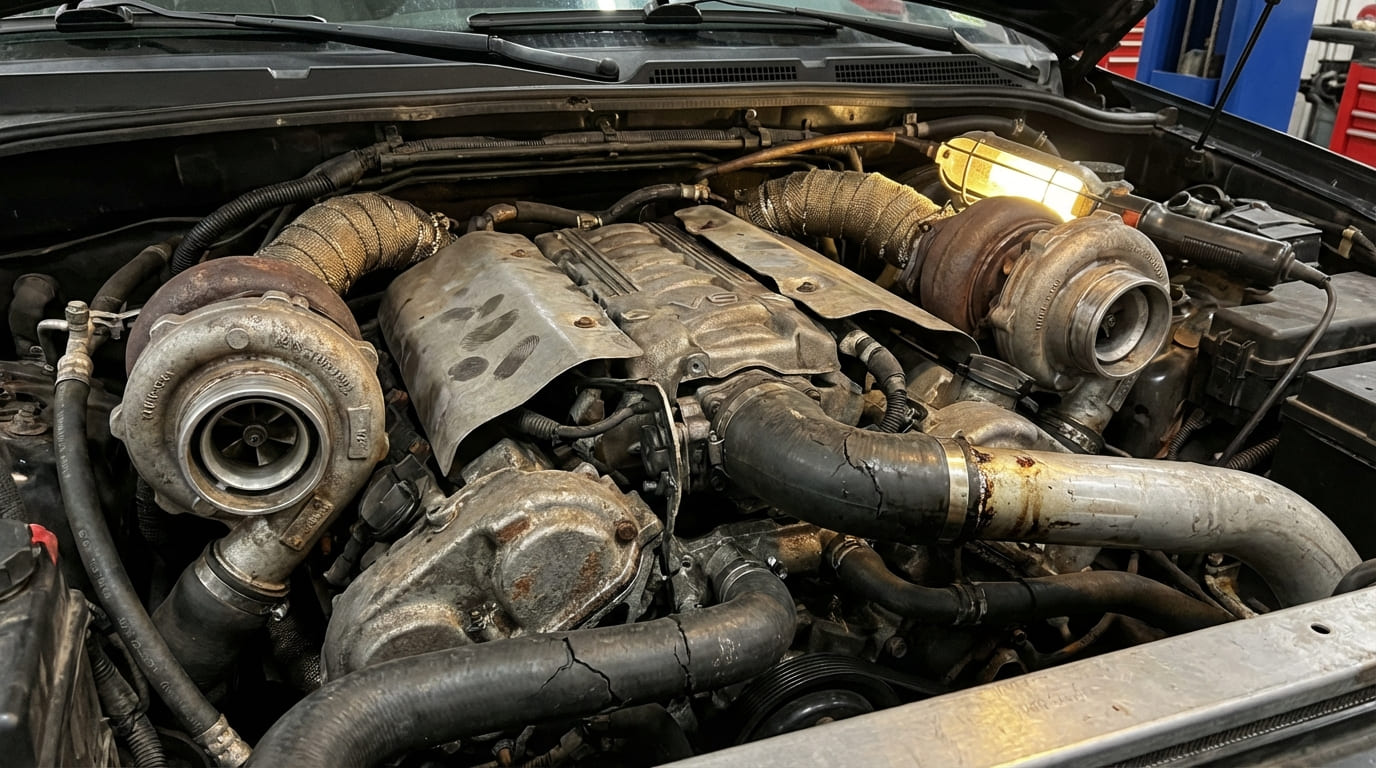
Over two decades in the bay, one thing’s clear: temperature issues are rarely about just the gauge. Fluctuating or inaccurate readings usually point to a deeper problem in the cooling, electrical, or engine control system. The key is not replacing parts on suspicion, but verifying each component with real-world tests. This guide walks you through the most common causes, how to check them, and what to do next—saving time, money, and comebacks.
1. Engine Coolant Temperature (ECT) Sensor Malfunction
The ECT sensor is often blamed, but it’s not always the culprit. Before replacing it, confirm it’s actually faulty. Most modern sensors are NTC (Negative Temperature Coefficient) types—their resistance decreases as temperature increases.
How to Check
Start with live data using an OBD2 scanner. Monitor ECT from cold start to operating temperature. A healthy engine should reach 85–100°C (185–212°F) within 10–15 minutes. Erratic jumps or no change? Suspect the sensor or circuit.
Next, use an infrared thermometer on the thermostat housing or intake manifold near the sensor. Compare that to the scanner reading. A difference over 5°C (9°F) indicates a problem.
Disconnect the sensor and measure resistance across the terminals. Typical values:
| Temperature | Resistance (approx.) |
|---|---|
| 20°C (68°F) | 2.5 kΩ |
| 80°C (176°F) | 0.3 kΩ |
| 100°C (212°F) | 0.2 kΩ |
Compare your reading to the OEM chart. If off by more than 5%, the sensor is suspect. But don’t replace it yet—check wiring and connector first.
Solution
Replacement cost: $20–$75 for the sensor, $75–$150 labor if outsourced. DIY is usually simple—just one or two bolts and a connector. After install, clear codes and recheck live data during a full warm-up cycle. If fluctuations return, the issue is elsewhere.
In my shop, we never replace an ECT sensor without testing resistance and comparing to live data. I’ve saved customers hundreds by cleaning a connector instead of replacing a perfectly good sensor.
2. ECT Sensor Wiring and Connector Issues
Wiring and connectors fail more often than the sensor itself. Corrosion, chafed wires, poor grounds, or a lost 5V reference can mimic a bad sensor.
How to Check
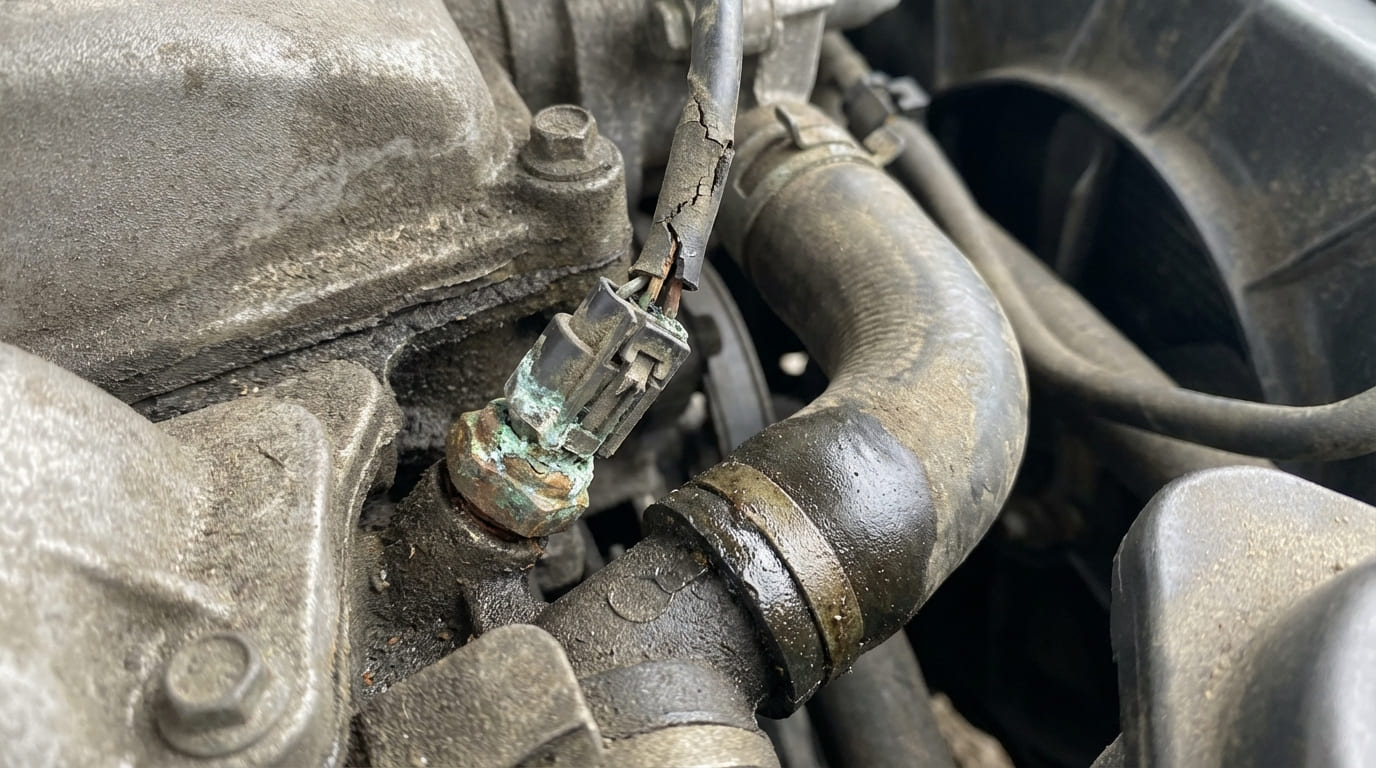
Inspect the connector for green or white corrosion—common in humid climates or if coolant leaks near the sensor. Disconnect and clean with electrical contact cleaner and a small brush. Check for bent or loose pins.
Test for 5V reference: With the sensor unplugged and ignition on, measure voltage between the reference and ground wires. Should read 4.8–5.2V. No voltage? Check for a shorted sensor on the same 5V rail (MAP, TPS, etc.) or a blown ECM fuse.
Check ground circuit: Measure resistance from the ground wire to battery negative. Should be less than 0.5Ω. Then, perform a voltage drop test: with ignition on, measure voltage between ground pin and battery negative. Over 0.1V indicates a bad ground—trace to ECM or body ground point.
Check signal wire continuity: Disconnect both ends and test resistance. Over 0.5Ω suggests a break or high resistance—common near the firewall where rodents chew harnesses.
Solution
Cleaning connectors is a $10 fix. Wiring repair costs $100–$300 at a shop. If you’re splicing, use crimp terminals with heat-shrink tubing—never wire nuts. A bad repair here can affect multiple sensors.
I once traced a fluctuating ECT to a ground bolt under the fender liner—rusted solid. Cleaned and sealed it, and the problem vanished. Always check grounds before blaming the ECM.
3. Cooling System Operational Problems
Sometimes the ECT sensor is telling the truth—the engine really is overheating or running cold. The issue is in the cooling system itself.
Low Coolant Level or Air Pockets
Air in the system causes erratic readings, especially after startup or during hard acceleration. The sensor may read high one moment, then normal the next.
How to Check
Check coolant level when the engine is cold. Top off if low. Then pressure test the system to 15–18 psi. If pressure drops more than 2 psi in 15 minutes, there’s a leak—external or internal.
No visible leak? Perform a block test (combustion leak detector). If the fluid turns yellow, combustion gases are entering the cooling system—likely a head gasket or cracked block.
Bleed the system per OEM procedure. Some vehicles require a scan tool to activate the electric water pump; others need the front end jacked up. Never skip this step.
Thermostat Failure
A stuck-open thermostat causes slow warm-up and poor heater output. Stuck closed leads to rapid overheating. Intermittent sticking causes ECT to swing 15–20°C during operation.
How to Check
Monitor ECT live data from cold start. Should reach operating temp in 5–15 minutes. Takes longer? Likely stuck open. Reaches temp in under 5 minutes? Likely stuck closed.
Use an infrared gun on the upper and lower radiator hoses at operating temp. If upper hose is hot and lower is cold, thermostat didn’t open. If both are hot immediately, it may be stuck open—but confirm with live data.
Solution
Thermostat cost: $25–$60. Labor: $100–$200. Replace only if testing confirms failure. Some “stuck” thermostats are just responding to air pockets—bleed the system first.
Water Pump Failure
A failing water pump may not leak or make noise. Impeller erosion reduces flow, causing ECT to rise at idle but drop at higher RPMs.
How to Check
Inspect the weep hole below the pump—wet means seal failure. Listen with a mechanic’s stethoscope at idle. A fluttering or grinding sound suggests bearing or impeller issues.
If the radiator has a filler cap, remove it (when cool) and watch flow at idle and 2000 RPM. Should be strong pulsing. Weak flow? Could be pump, air, or blockage.
ECT climbs at idle but drops when revving? Classic sign of low flow—likely the pump.
Solution
Water pump cost: $80–$200. Labor: $200–$500, especially if timing belt-driven. Replace in pairs with the timing belt if access requires major disassembly.
On modern aluminum pumps, mixing coolants can corrode the impeller. Always use the correct type—Dex-Cool, G12+, or OEM spec. I’ve seen pumps fail in 18 months due to chemical incompatibility.
4. Engine Control Module (ECM) or Instrument Cluster Faults
True ECM failure is rare, but possible. If sensor, wiring, and cooling system check out, the problem may be in the computer or gauge.
How to Check
Compare live ECT data on a scanner to the dashboard gauge. If the scanner shows stable temperature but the gauge fluctuates, the issue is in the cluster or CAN bus communication.
Many clusters have a self-test: cycle the odometer button with key on. Watch the gauge sweep. If it sticks or jumps, the stepper motor is failing—common on older GM and Chrysler vehicles.
Check cluster ground. A corroded or loose ground can cause erratic behavior—especially when electrical load increases (headlights, AC).
If multiple sensors read wrong, suspect a failed 5V reference or ground inside the ECM. Check power and ground circuits with a breakout box if available.
Solution
ECM replacement: $500–$1500 (parts and programming). Cluster repair: $200–$600. Often, a used unit from a salvage yard with proper coding is the most cost-effective fix.
5. Internal Coolant Leaks or Block Porosity
When coolant disappears without a trace and ECT swings persist, suspect an internal leak—head gasket, cracked block, or porous casting.
How to Check
Pressure test first. If pressure drops but no external leak, perform a block test. Yellow fluid = combustion gases in coolant.
Check oil for milky residue—sign of coolant in oil. High coolant pressure when cold? Could be blow-by entering the cooling system.
Borescope inspection: Look into spark plug holes or through the radiator neck. Steam cleaning marks or pitting on cylinder walls confirm leakage.
Solution
Chemical sealants (e.g., Bar’s Leaks) can temporarily fix small leaks—$20–$40. But they risk clogging heater cores, radiators, or oil passages. Use only as a stopgap.
Head gasket repair: $1000–$2500. Block replacement: often exceeds vehicle value. Weigh repair cost against car worth.
A 2014 Toyota Camry came in with fluctuating ECT and slow coolant loss. Customer replaced thermostat and sensor twice. Block test positive. Borescope revealed micro-cracks near cylinder 3. Lesson: Internal leaks don’t always drip—test for combustion gases when coolant vanishes.
A 2008 Honda Accord ran cold year-round. Infrared showed 92°C at highway speed, but ECT read 70°C. Sensor resistance was perfect. Connector had road grime—cleaned it, and readings normalized. Moral: contamination adds resistance. Clean connectors are part of the circuit.
A 2016 Ford F-150 showed ECT spikes under load. No codes, coolant stable. Upper radiator hose collapsed slightly at high RPM. Replaced hose—problem gone. Takeaway: mechanical restrictions can mimic thermal issues. Observe system under real load.
Diagnostic Decision Table: Symptoms and Likely Causes
| Symptom | Most Likely Causes | Less Common Causes |
|---|---|---|
| Erratic ECT readings | Loose connector, air pocket, failing ECT sensor | Intermittent ground, water pump cavitation |
| ECT stuck low, slow warm-up | Stuck-open thermostat, faulty ECT sensor | ECM calibration, wrong thermostat |
| ECT stuck high, overheating | Stuck-closed thermostat, low coolant, water pump failure | Head gasket, block crack, ECM fault |
| Gauge moves, live data stable | Instrument cluster fault, CAN bus issue | Cluster ground, software glitch |
| Consistently inaccurate ECT | Faulty sensor, contaminated coolant | ECM signal error, wrong sensor type |
Recommended Practices: Do vs. Avoid
- ✅ Use OEM service manual for resistance specs and bleed procedures—never assume.
- ✅ Clean sensor threads with a tap before install—debris affects heat transfer and torque.
- ✅ Bleed cooling system with heater on high—helps purge air from the core.
- ⚠️ Avoid replacing thermostat without verifying flow and temperature behavior.
- ⚠️ Avoid using generic coolant—can cause sludge, corrosion, or pump failure.
- ⚠️ Avoid trusting scanner data alone—cross-check with infrared thermometer.
Temperature problems demand a systematic approach. The sensor is just the messenger. Test the circuit, verify coolant flow, and confirm system integrity. When in doubt, consult vehicle-specific service data—because while patterns exist, every engine tells its own story.