Worn rocker arms compromise valvetrain function, leading to noise, performance loss, and potential engine damage. This guide cuts through the noise—literally—and gives you the diagnostic steps, repair logic, and field-tested tips to identify and address worn rocker arms with confidence.
How to Diagnose Worn Rocker Arms: A Step-by-Step Approach
Start with the symptoms you can hear or feel, then move to mechanical tests. Don’t guess—confirm.
Audible and Performance Symptoms
The first clues often come from sound and drivability. Here’s what to listen and watch for:
- Ticking or tapping noise from the valve cover area, rhythmic and tied to engine RPM.
- Misfire or rough idle, often isolated to one cylinder.
- Gradual power loss under acceleration or load.
- Metal shavings in oil or filter during oil changes—especially after high mileage.
In my shop, we never start tearing into the valvetrain based on sound alone. A ticking noise could be lifters, pushrods, or even fuel injectors. Always confirm with diagnostics before removing covers.
How to Check for Rocker Arm Noise
Use these steps to isolate the source:
- Start the engine cold and listen near the valve cover with an automotive stethoscope or long screwdriver against your ear.
- Move the probe over each rocker arm location. A sharp, metallic tap that increases with RPM points to valvetrain clearance.
- Compare noise between cylinder banks. A localized sound suggests a single bad rocker.
- If noise fades as the engine warms, suspect hydraulic lifters. If it persists or worsens, suspect mechanical wear in the rocker arm.
How to Diagnose Misfire or Power Loss
Performance issues require hard data:
- Scan for misfire codes using an OBD2 reader. Note the affected cylinder(s).
- Swap ignition coils and fuel injectors to that cylinder. If the misfire follows the part, it’s not the rocker.
- Perform a compression test. Low or inconsistent readings (more than 15% variance) indicate mechanical issues.
- Follow with a leak-down test. Air escaping through the intake or exhaust means the valve isn’t sealing—possibly due to reduced lift from a worn rocker.
Visual and Physical Inspection (After Valve Cover Removal)
Once you’re inside, here’s what to check:
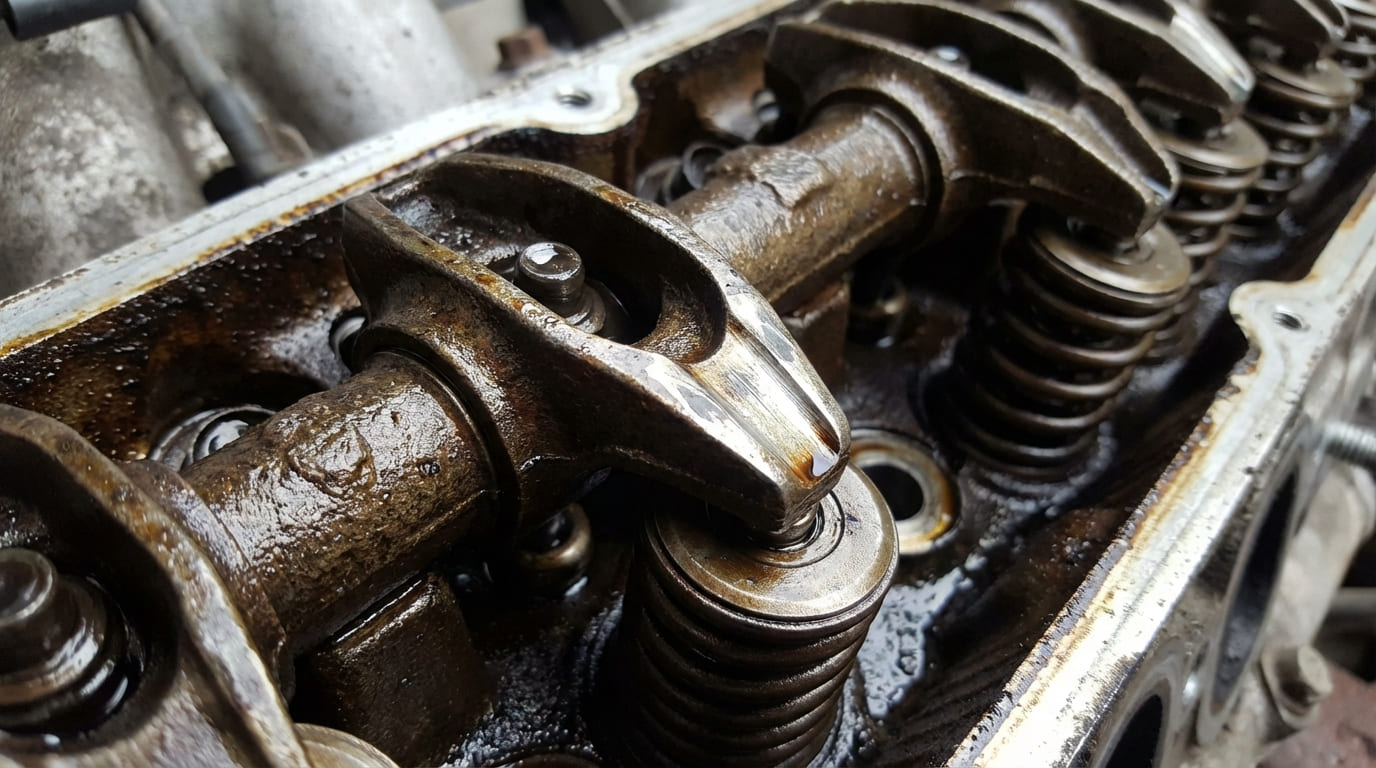
- Inspect the rocker arm pad (contact point with valve stem) for deep grooves, pitting, or flattening. Measure thickness if specs are available.
- Spin the roller tip by hand. Any roughness, binding, or side play means the needle bearing is failing.
- Check the trunnion (pivot point) for elongation, scoring, or excessive play. Use a feeler gauge to measure side clearance.
- Look for misalignment—rockers should sit squarely on the pushrod and valve stem.
- Measure critical dimensions: compare pad wear, roller diameter, and pivot bore to factory specs.
As a rule of thumb: more than 0.005 inch of side play at the trunnion means replacement. Aluminum shafts may allow up to 0.007 inch, but always check the service manual.
What’s Causing the Wear? Common Failure Points
Not all rocker wear is the same. Identify the pattern to find the root cause.
- Pad wear: Increases valve lash, causing impact noise and reduced lift. Common in high-mileage engines or those with poor lubrication.
- Trunnion or pivot wear: Allows up/down or side movement, leading to clunking and misalignment. Often due to inadequate oil flow or aggressive cam profiles.
- Roller bearing failure: Needle bearings seize or spall, creating grinding noise and uneven wear. Check for metal flakes in oil.
- Cracked or broken arms: Can result from fatigue, over-revving, or improper installation. A cracked pad may still seat but flex under load, causing intermittent misfires.
I’ve seen more than one DIYer replace lifters twice before discovering the real issue was a single worn rocker pivot. Always inspect the entire valvetrain stack-up—pushrod, rocker, valve stem—before replacing parts.
Repair vs Replace: Cost and Viability
Repair decisions depend on engine type, labor access, and extent of damage.
| Component | Replacement Cost (Part Only) | Labor Hours | Repair Advice |
|---|---|---|---|
| Single Rocker Arm | $15–$50 | 2–4 | Only replace one if damage is isolated and engine has low wear. Otherwise, replace in sets. |
| Rocker Arm Set (V8) | $120–$300 | 4–6 | Recommended for high-mileage engines or when multiple arms show wear. |
| Shaft-Mounted Rocker System | $200–$600 | 6–8 | More complex; inspect shafts, stands, and oil passages during replacement. |
Hydraulic roller lifters may cost $10–$25 each, but replacing them without fixing worn rockers is a temporary fix. Focus on the root cause.
Consequences of Ignoring Worn Rocker Arms
Left unaddressed, worn rockers don’t just make noise—they cause cascading damage.
- Cam lobe wear: Excessive rocker play increases load on the cam, especially in flat-tappet engines.
- Pushrod bending: Misaligned or wobbling rockers can bend pushrods over time.
- Valve stem/guide damage: Off-center contact wears valve stems and can lead to oil consumption.
- Oil contamination: Metal debris circulates through the engine, risking bearing damage and oil pump wear.
I once tore down an engine with scored main bearings—turns out the source wasn’t bottom-end failure, but disintegrating rocker arm roller bearings. Always cut open the oil filter and run oil analysis if you see metal.
Diagnostic Decision Table
| Symptom | Most Likely Causes | Less Common But Possible | Recommended Next Step |
|---|---|---|---|
| Localized ticking at valve cover | Rocker arm pad wear, pivot wear | Sticking hydraulic lifter, valve guide wear | Stethoscope check, then visual inspection |
| Misfire on one cylinder | Broken or dislodged rocker, severe pad wear | Cam lobe wear, bent pushrod, valve spring failure | Compression and leak-down test |
| General power loss, rough idle | Multiple worn rockers, widespread pad wear | Timing chain stretch, ECU issue | Compression test, inspect valvetrain |
| Metal in oil/filter | Severe trunnion wear, roller bearing failure | Timing set wear, bearing spall | Oil analysis, disassembly for inspection |
Best Practices: Do and Don’t
- ✅ Do clean pivot shafts and bores thoroughly. Carbon buildup or burrs restrict movement and accelerate wear.
- ✅ Do measure valve lash when hot if your engine requires adjustment. Cold lash settings can be misleading.
- ✅ Do replace rockers in sets if wear is evident on more than one. Mismatched components cause uneven performance.
- ⚠️ Don’t reuse torque-to-yield bolts. Rocker arm stand bolts are often one-time-use. Reusing them risks loosening or breakage.
- ⚠️ Don’t assume ticking is normal. Modern engines run quieter—any new or worsening tick needs investigation.
- ⚠️ Don’t ignore oil quality. Sludge, low pressure, or extended oil change intervals are often the root cause of premature wear.
Real-World Case Studies
Situation: A 5.7L GM V8 had a sharp ticking noise that worsened with RPM. Owner replaced lifters twice with no fix.
Diagnosis: One rocker arm showed 0.008″ trunnion ovality—well beyond the 0.005″ limit. Rest were okay.
Fix: Replaced the full set. Noise gone. Lesson: localized pivot wear can mimic lifter noise. Always measure.
Situation: Ford 4.6L with intermittent P0303 misfire. Coil and injector swaps didn’t move the code.
Diagnosis: Leak-down showed 28% loss through intake. Disassembly revealed a cracked intake rocker pad—flexing under load.
Fix: Replaced rocker set. Misfire eliminated. Lesson: cracks aren’t always visible. Flex can mimic valve sealing issues.
Situation: High-mileage diesel with power loss and metallic glitter in oil filter.
Diagnosis: Bearings clean, but exhaust rockers showed roller spalling. Oil analysis confirmed high chromium.
Fix: Replaced rocker arms and oil pump screen. Power restored. Lesson: top-end wear can contaminate oil just like bottom-end issues.
Rocker arm wear is rarely isolated. It’s often a symptom of poor lubrication, aggressive tuning, or incorrect assembly. Replacement is straightforward, but skipping root cause analysis leads to repeat failures.
Always consult the factory service manual for torque specs, adjustment procedures, and wear limits. What’s acceptable on a big-block V8 could be catastrophic on a modern DOHC four-cylinder.