In my shop, valve ticking complaints come in more often than you’d think—especially during colder months or on higher-mileage vehicles. While some folks write it off as “normal,” in my experience, a new or worsening ticking noise usually indicates something worth investigating. The key isn’t rushing to disassemble components, but methodically narrowing down possibilities based on noise character, engine design, and supporting evidence.
How to Confirm It’s Valve Ticking
Many engine noises mimic valve train ticking. Misdiagnosis leads to wasted time and money. Start by verifying the sound’s origin and behavior.
- Rhythm: Valve ticking occurs at half crankshaft speed—one tick per two engine revolutions—since the camshaft turns once for every two crankshaft rotations.
- Location: Use a mechanic’s stethoscope or chassis ear. Place the probe on the valve cover above rocker arms or cam lobes. If the noise intensifies over one cylinder, it may be isolated. But remember: aluminum heads conduct sound, so noise can travel.
- Temperature dependence: Does the tick go away when the engine warms up? That points to hydraulic lifter drain-down or oil viscosity issues.
- Load sensitivity: If the tick worsens under acceleration, suspect oil pressure problems.
Differentiating Valve Ticking from Other Noises
Rule out these common mimics before opening the valve cover:
- Injector noise: Higher-pitched, rapid ticking on direct-injection or diesel engines. Often persists regardless of oil condition. Check by unplugging injectors one at a time—if the tick doesn’t change, it’s not injector-related.
- Rod knock: Deep, low-frequency thud under load. Felt more than heard. Increases with RPM and load. Not RPM-synchronized like valve ticking.
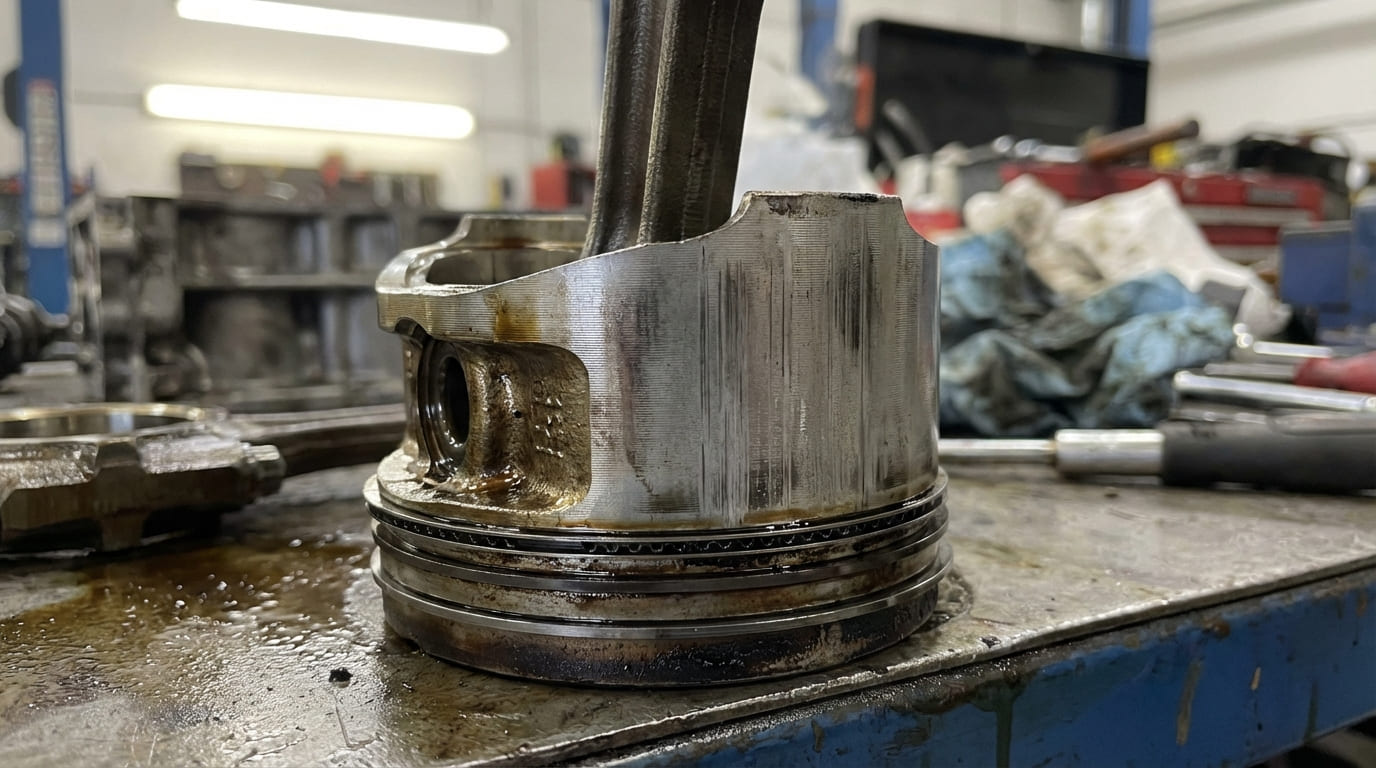
- Piston slap: Hollow knock on cold start, fades as engine warms. Common in high-mileage aluminum-block engines. Usually heard lower in the block.
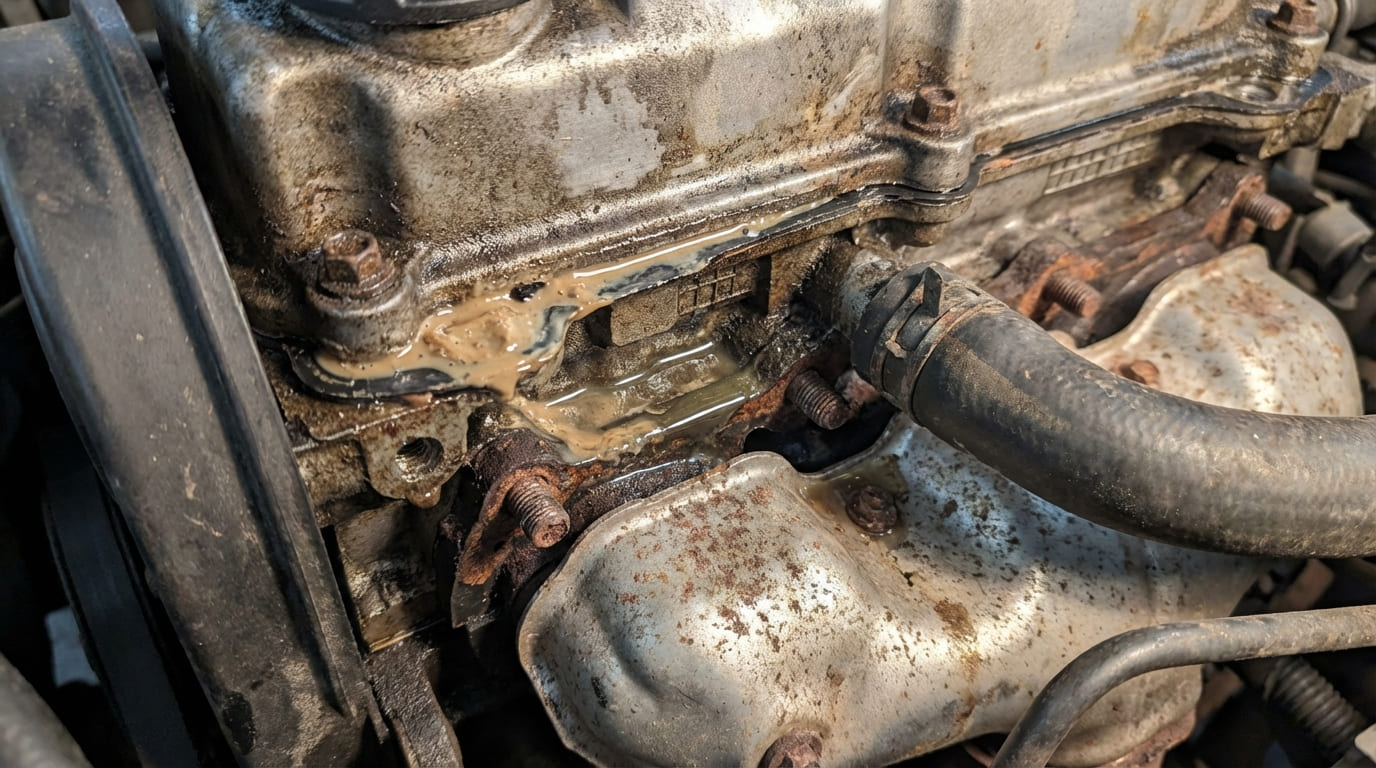
- Exhaust leak: Ticking or puffing sound at idle, often near the manifold. Use a rag to block potential leak points—if the sound changes, you’ve found it. Look for soot or discoloration.
Common Causes and How to Fix Them
Valve ticking stems from five main areas: oil level/viscosity, hydraulic lifters, mechanical lash, wear, or oil pressure. Diagnose in this order—simplest first.
1. Low Oil Level or Wrong Viscosity
The most common and cheapest fix.
✅ How to Check: Park on level ground. Shut off engine and wait 5–10 minutes. Pull dipstick, wipe, reinsert, and check. If below “min,” add oil in 0.5-quart increments until correct.
Verify oil viscosity matches the owner’s manual or oil cap decal. Using 10W-40 in a 0W-20 engine can delay oiling to the top end, especially in cold weather.
In my shop, we always check oil level first—even on vehicles with recent oil changes. One customer added oil but didn’t realize the filter wasn’t seated, causing a leak. The tick vanished after topping off.
2. Hydraulic Lash Adjuster (HLA) Failure
HLAs use oil pressure to maintain zero clearance. If they bleed down or can’t pump up, they tick—especially at startup.
✅ How to Check: If the tick fades as the engine warms, suspect draining lifters. Try an oil system flush and switch to a cleaner oil (e.g., one with detergents). If noise persists, remove the valve cover and inspect lifters for pitting, sticking, or collapse.
⚠️ Replacing a single lifter is rarely enough. If one failed, others may be near end-of-life. On some engines (e.g., GM LS, Ford Modular), lifters are deep in the block—labor-intensive to replace. Consider full set replacement if access requires major disassembly.
Cost: $15–$50 per lifter. Labor: 4–8 hours depending on engine. For high-mileage engines, factor in $800–$1,500 total repair cost. If the engine is otherwise tired, it may not be worth it.
Never assume a ticking lifter is bad. I’ve replaced multiple lifters only to find the real issue was a clogged oil gallery feeding the cam journal. Always verify oil delivery first.
3. Incorrect Valve Lash (Solid or Shim-Adjustable Systems)
Engines with solid lifters or shim-over-bucket designs require periodic adjustment. Too much clearance = ticking.
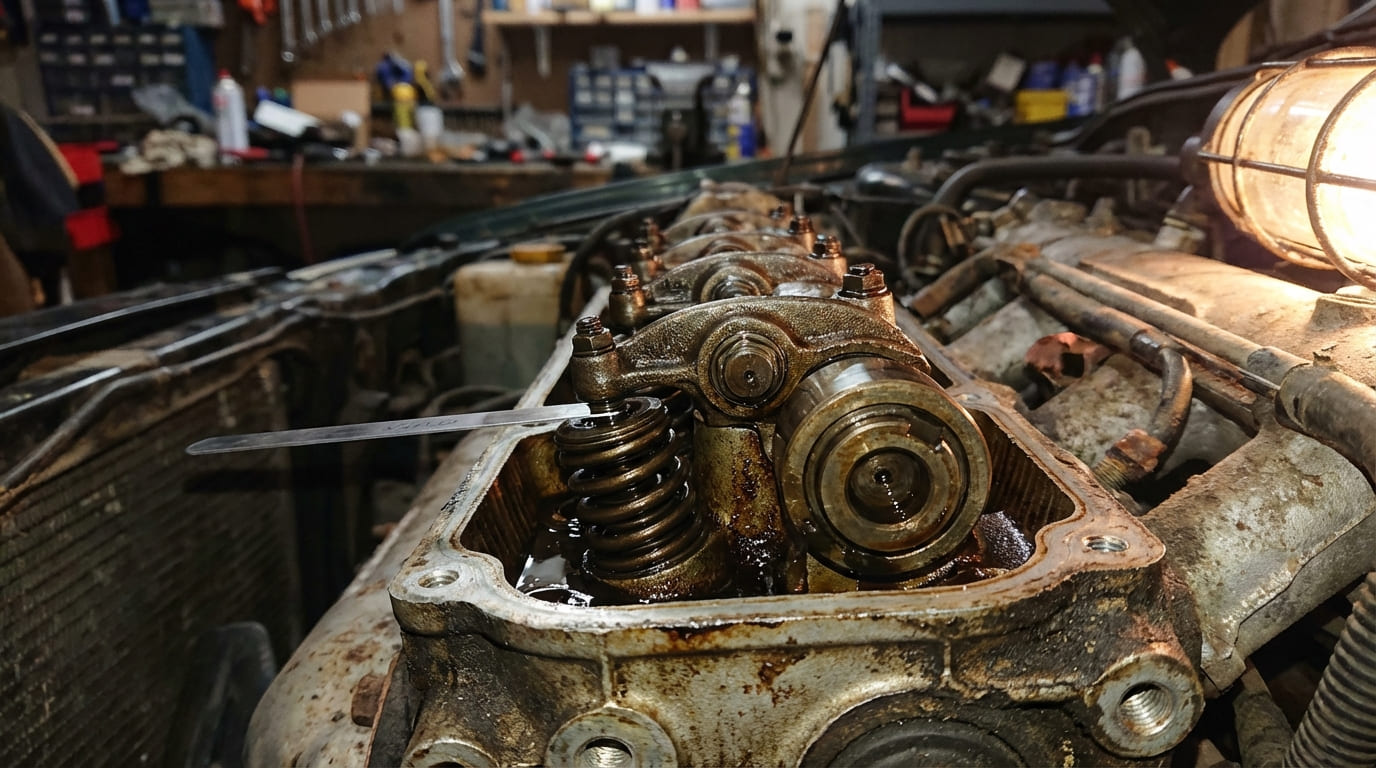
✅ How to Check: Refer to factory specs. For screw-type rockers, check lash with a feeler gauge while engine is cold. For shim-over-bucket, measure clearance, then calculate required shim thickness.
Adjustment procedure varies:
- Screw-and-locknut: Loosen locknut, adjust screw, recheck lash, torque locknut.
- Shim-over-bucket: Requires camshaft removal on most DOHC engines. Measure current shim, calculate new size, order parts, reassemble.
Cost: Shim kits: $50–$150. Labor: 6–12 hours. Total: $800–$1,800. Often bundled with valve service or cam replacement.
On performance engines with aluminum heads, thermal expansion changes lash. Always check adjustment at operating temperature if possible. Some builders set lash slightly tighter when cold to account for expansion.
4. Worn Valvetrain Components
Wear in rocker arms, cam lobes, or valve stems creates excess clearance and ticking.
✅ How to Check: Remove valve cover. Inspect rocker arm pads for cupping or wear. Use a micrometer to measure cam lobe height. Compare to factory specs—loss of 0.25 mm or more means replacement.
Check valve stem tips for mushrooming or pitting. Worn stems can cause rocker chatter.
Cost: Rocker arms: $100–$400 per bank. Camshaft: $200–$600. Labor: 8–15 hours. Total: $1,500–$3,000. Not viable on high-mileage engines unless rebuilding.
If you find cam lobe wear, don’t just replace the cam. Investigate why—was oil low? Filter clogged? Poor maintenance? Fix the root cause or the new cam will fail too.
5. Low Oil Pressure (Systemic)
If ticking is widespread and worsens under load, suspect oil pressure issues.
✅ How to Check: Install a mechanical oil pressure gauge at the block. Check pressure at idle (hot) and 2,500 RPM. Compare to spec—typically 10–15 PSI at idle, 40–60 PSI at operating RPM.
If pressure is low:
- Inspect oil pickup screen for debris (requires pan drop).
- Measure screen-to-pan distance—should be at least 1/4″ to prevent vortexing.
- Check main and rod bearing clearances with Plastigage. Excessive clearance (over 0.0025″) means engine rebuild.
- Test oil pump—if gears are worn or housing scored, replace.
Cost: Oil pump: $100–$300. Pan gasket and labor: $300–$700. Bearing replacement: $1,500+ with engine disassembly.
Oil pressure gauges can lie. I’ve seen faulty sending units read “low” when mechanical gauge showed normal pressure. Always verify with a direct mechanical test before tearing into the bottom end.
Diagnostic Decision Table
| Symptom Pattern | Most Likely Causes | Less Common But Possible | Initial Diagnostic Step |
|---|---|---|---|
| Tick present at startup, fades when warm | HLA draining overnight, low oil level | Viscosity too high, cold oil flow restriction | Check oil level and condition; verify viscosity |
| Constant tick, RPM-dependent, isolated to one cylinder | Failed HLA, worn rocker arm, cam lobe wear | Loose valve guide, broken valve spring | Stethoscope localization; remove cover for visual |
| Tick worsens with engine load | Systemic oil pressure drop, clogged pickup | Worn main bearings, faulty pressure relief valve | Install mechanical oil pressure gauge |
| Tick present only when cold, diminishes in 30 sec | Normal HLA pump-up time, especially in VVT systems | Low cold-flow oil performance, clogged oil gallery | Verify oil meets OEM cold-flow specs (e.g., 0W-20) |
Situation: A 2012 V6 sedan came in with a sharp tick at idle. Owner had just changed oil with a “high-mileage” 10W-30, thinking it would help.
Initial Assumption: We suspected worn HLAs—common at 150k miles.
Deep Dive/Discovery: Stethoscope pointed to cylinder 3, but oil pressure test showed 8 PSI at hot idle—below spec. Further inspection revealed the oil filter was a non-OEM brand with a faulty anti-drainback valve, starving the upper end on startup.
Nuanced Lesson Learned: Component failure can be misattributed when the root cause is upstream. Always verify oil delivery before condemning lifters.
Situation: A turbocharged four-cylinder had a rhythmic tap that increased with RPM. Noise was loudest over the intake cam.
Initial Assumption: Classic HLA failure—common on this model.
Discovery: After removing the valve cover, we found the camshaft journal had micro-pitting. Further investigation revealed the oil had been two quarts low for months, and the owner had skipped changes.
Nuanced Lesson Learned: Wear patterns matter. Isolated lifter noise may actually stem from cam journal distress due to poor lubrication—not just the lifter itself.
Situation: A high-performance V8 with solid lifters developed ticking after a cam swap.
Initial Assumption: Incorrect valve lash adjustment.
Discovery: Lash was set cold per specs, but the engine used aluminum heads with a different thermal expansion rate than the steel pushrods. As the engine warmed, lash increased beyond tolerance.
Nuanced Lesson Learned: Even “by-the-book” adjustments can fail if thermal dynamics aren’t considered. Some builders pre-load lash slightly when hot-testing performance engines.
Valve ticking isn’t one problem—it’s a symptom. The fix might be a $5 oil top-off or a $3,000 rebuild. The real skill is in diagnosis: start simple, verify each step, and never assume. Always consult the factory service manual for torque specs, adjustment procedures, and clearance limits—because what works on one engine can destroy another.