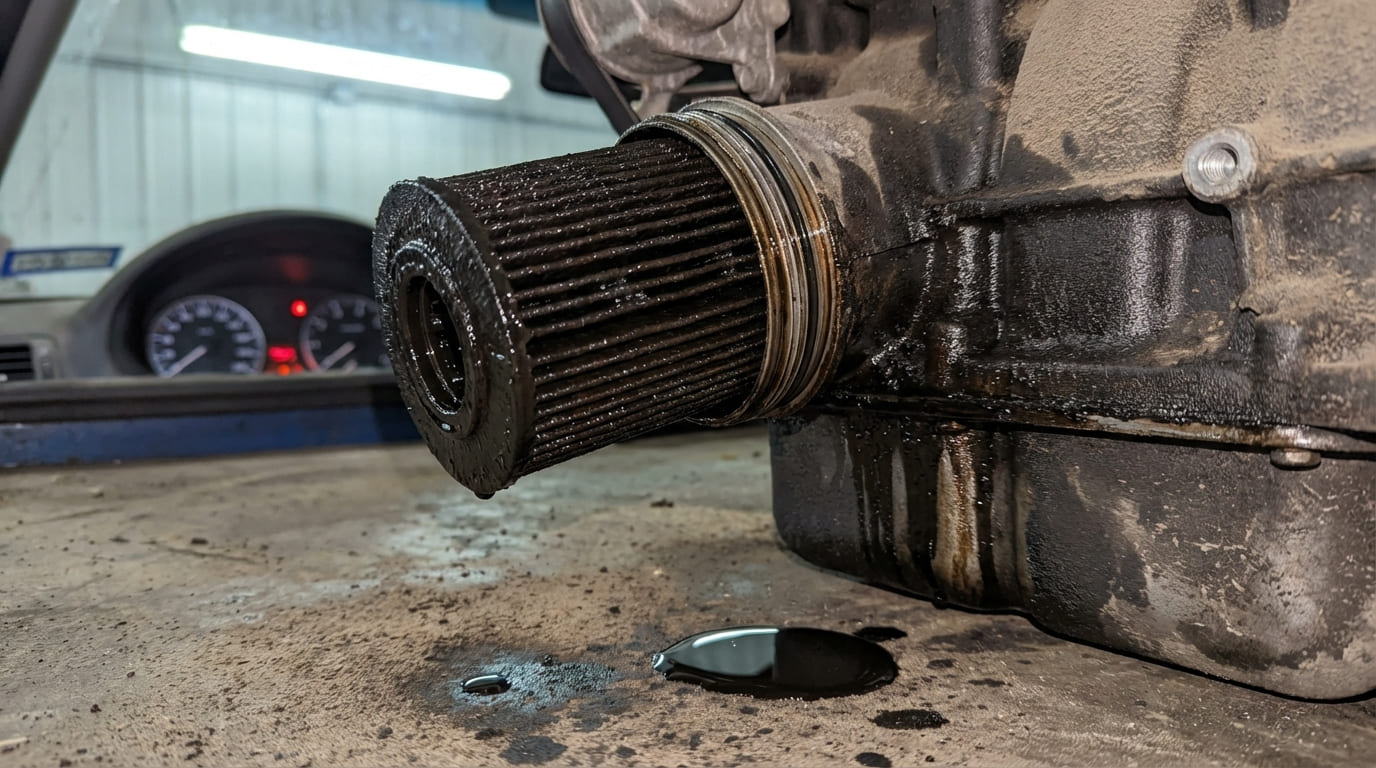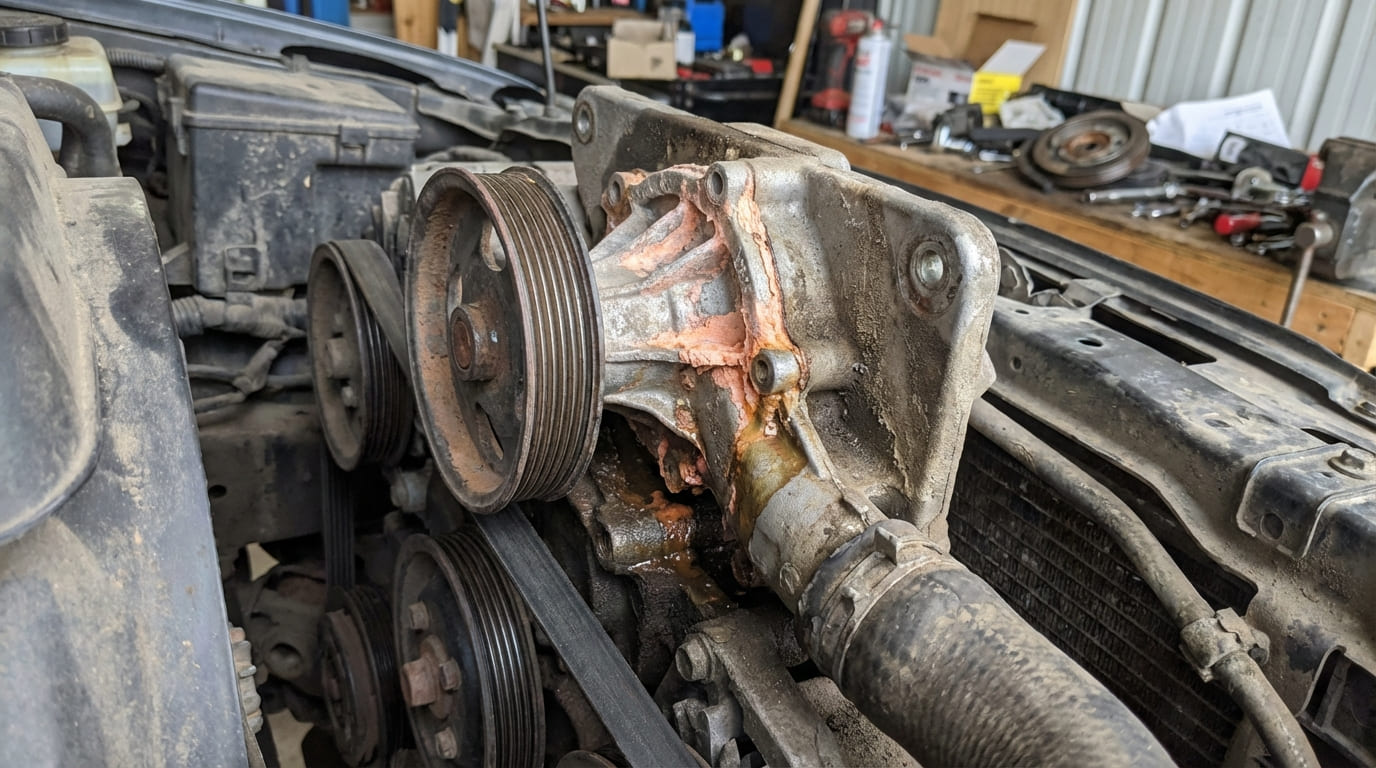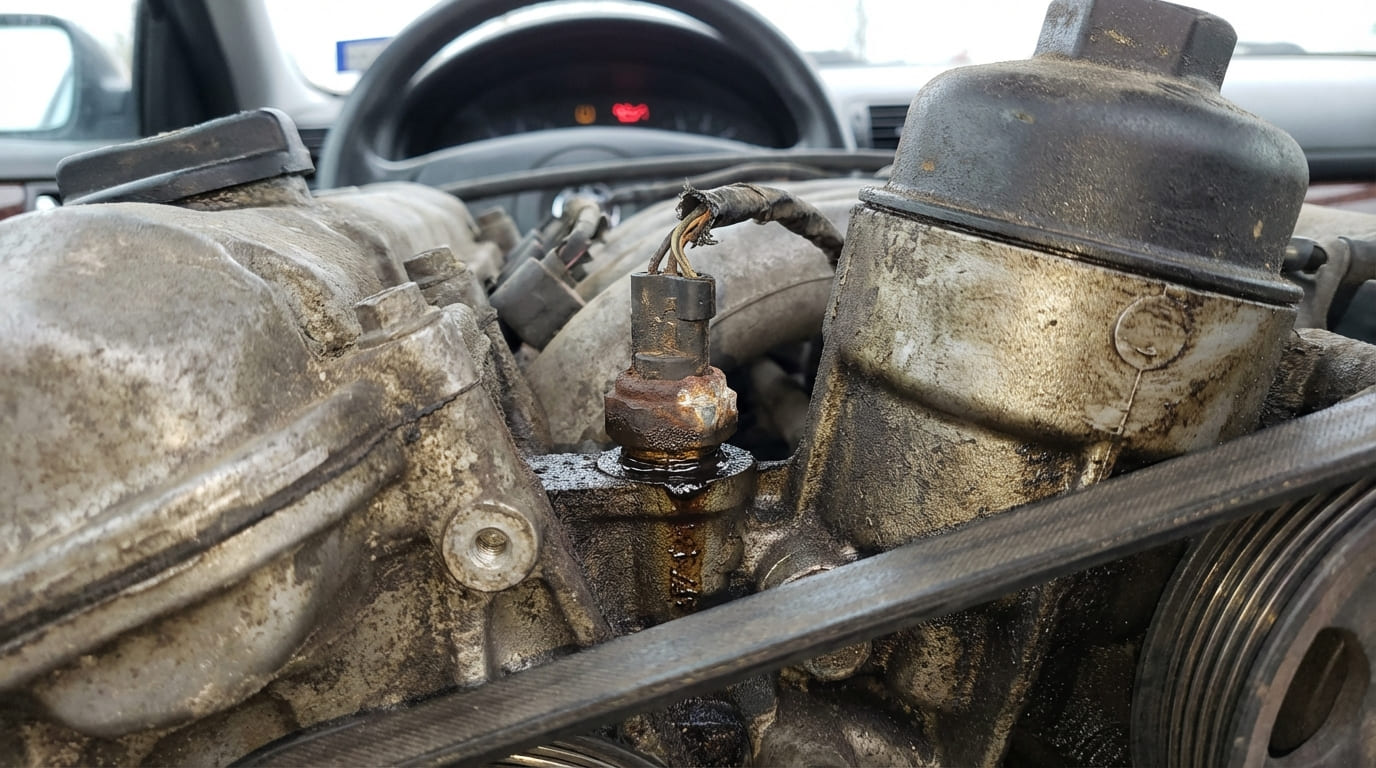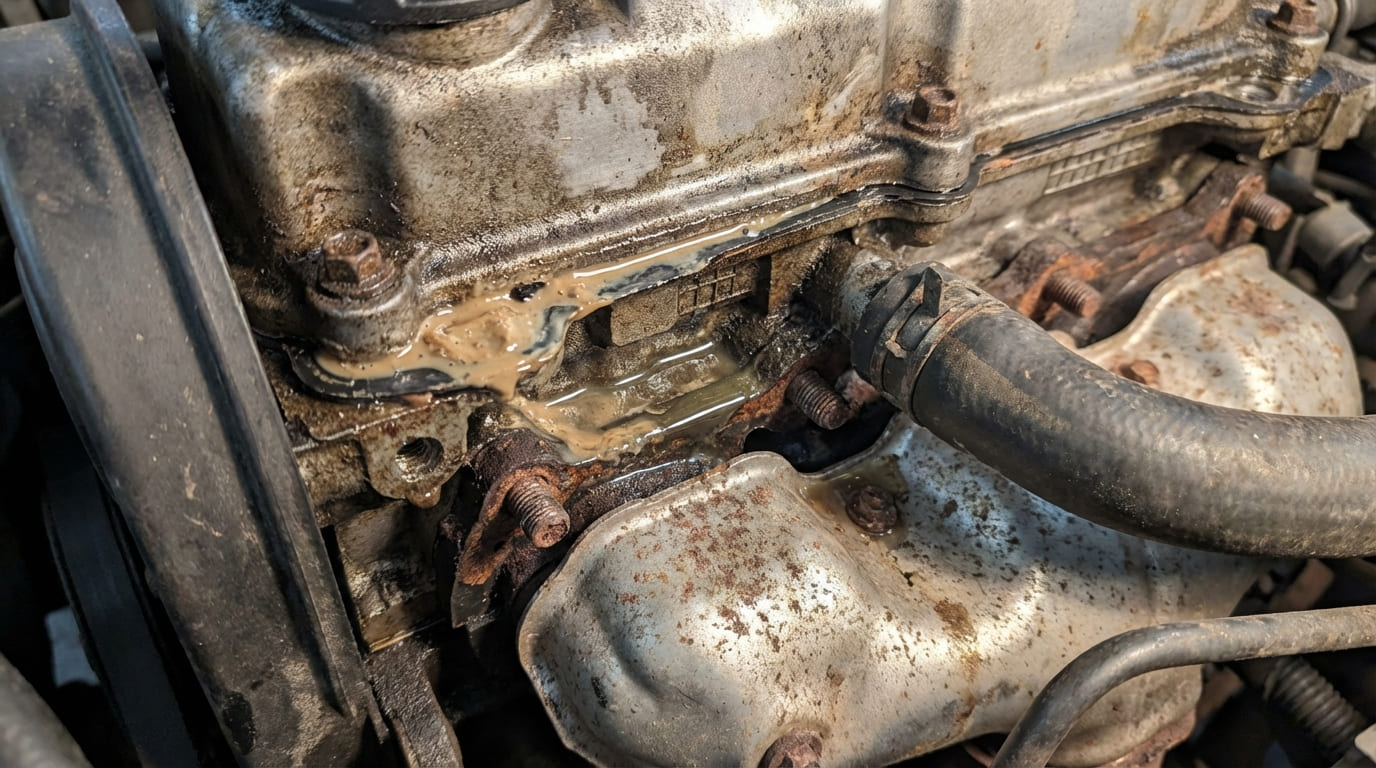
When oil and coolant mix, engine damage is imminent. This guide cuts through theory and delivers what matters: how to diagnose the source, prioritize repairs, and avoid costly mistakes. Whether you’re a DIYer or just want to understand your mechanic’s diagnosis, this is the actionable roadmap.
How to Confirm Oil and Coolant Are Mixing
Visual Inspection: Your First Diagnostic Step
Start with the basics—no tools required. Check these three points:
- Coolant reservoir: Look for a milky film, oil sheen, or sludge. A chocolate milkshake appearance means prolonged contamination.
- Oil dipstick and filler cap: Frothy, mayonnaise-like oil or a rising oil level (with no fuel dilution) signals coolant in the crankcase. Check under the filler cap—it often shows emulsification before the dipstick.
- Radiator cap (cold engine): Remove and inspect the underside. Creamy residue or gunk is a red flag.
Also note: Persistent white exhaust smoke after warm-up—not just at startup—can indicate coolant burning in the combustion chamber. But don’t jump to conclusions; rule out intake gasket leaks first, especially on V6 engines.
In my shop, we always check the filler cap before the dipstick. Early-stage coolant intrusion shows there first. Missing this delays diagnosis and risks engine failure.
Fluid Analysis: When You Need Proof
Visual signs can be misleading. Confirm with testing:
- Send oil for analysis—look for glycol (coolant) or water. Levels above 50 ppm are concerning.
- Test coolant for hydrocarbons (combustion gases) or oil content. Even 0.1% oil in coolant is abnormal.
False positives happen. I’ve seen trace glycol from a previous repair linger for months. But if levels rise or symptoms progress, you have an active leak.
Top Causes of Oil-Coolant Mixing (and How to Diagnose Them)
1. Head Gasket Failure (Most Common)
A blown head gasket is the usual suspect—especially with overheating, white smoke, or coolant loss. Multi-layer steel (MLS) gaskets fail from improper torque, warped heads, or thermal shock.
The breach often occurs where oil and coolant passages run close together. Some failures aren’t visible; carbon tracking can create micro-channels.
How to Diagnose
- Block test (chemical test): Use bromothymol blue in the coolant. A color change (blue to yellow/green) under engine operation indicates combustion gases—strong sign of gasket failure.
- Cooling system pressure test: Pump to 15 psi. If pressure drops without external leaks, and oil starts appearing in coolant, you likely have an internal breach.
- Cylinder leak-down test: Bubbles in the coolant reservoir while pressurizing a cylinder confirm the leak path.
- Post-disassembly check: Inspect gasket and head/block surfaces with a magnifier. Look for carbon trails near ports. Also verify head flatness—over 0.002″ warpage on aluminum is a problem.
I’ve replaced head gaskets only to find the real issue was reused TTY bolts or dirty threads. Always clean bolt holes with a bottoming tap and use new torque-to-yield bolts. It’s cheap insurance.
2. Cracked Cylinder Head or Engine Block
Less common but more severe. Cracks form from overheating, freezing, or thermal stress. Aluminum heads crack near valve seats or spark plug bores. Blocks crack between cylinders or near coolant jackets.
How to Diagnose
- Dye penetrant test: Clean the head/block, apply dye, and inspect under UV light. Hairline cracks glow.
- Off-engine pressure test in heated tank: Heat to 180–200°F, then pressurize cooling system. Bubbles reveal cracks. Cold tests can miss temperature-dependent leaks.
- On-engine pressure test post-repair: If you replace a gasket and the problem returns, suspect a crack. I once had a block that only leaked when hot—no cold test caught it.
Thermal cycling opens and closes micro-cracks. If you suspect a crack, simulate operating temperature during testing. Otherwise, you’ll miss it and replace good parts.
3. Internal Oil Cooler Failure
Often overlooked. Oil coolers sit between high-pressure oil and lower-pressure coolant. When the core fails, oil usually enters coolant due to pressure differential.
Symptoms: Milky oil, rising level, but no overheating. Coolant may look oily.
How to Diagnose
- Bypass the oil cooler: Install a block-off plate or jumper lines. Run the engine, then recheck fluids. If contamination stops, the cooler is bad.
- Off-vehicle pressure test: Submerge the cooler in water. Pressurize the oil side—bubbles in coolant side confirm leak (or vice versa).
Cost to replace: $150–$400 for part, $300–$600 labor. Bypassing costs under $50 and can save an engine teardown.
4. Failed ATF Cooler in Radiator
The radiator often houses the transmission cooler. When the internal core fails, coolant and ATF mix. Coolant pressure is higher, so it usually enters the transmission.
Symptoms: Pink, frothy transmission fluid; milky coolant.
How to Diagnose
- Check transmission fluid. Milky or pink tint? Suspect radiator.
- Bypass the internal cooler with an external unit. Flush both systems. If symptoms stop, the radiator is the culprit.
Cost: Radiator replacement $400–$900. External cooler kit: $100–$200. Often cheaper and faster than transmission rebuild.
I’ve seen “failed transmission” diagnoses that were just a $200 radiator fix. Always check fluid color before authorizing major repairs.
5. EGR Cooler Failure (Diesels & Turbo Gas Engines)
Common in modern engines. A cracked EGR cooler leaks exhaust into coolant, pressurizing the system. This can force coolant into the crankcase via PCV—especially if seals are worn.
Symptoms: Coolant loss, white smoke, soot in coolant, possible overheating.
How to Diagnose
- Block test positive? Check EGR cooler.
- Inspect coolant for soot. Remove EGR valve and look inside.
- Pressure test the cooler off-engine. Bubbles confirm failure.
Repair: Replacement only. No repair kits. Cost: $600–$1,500 depending on access.
6. Turbocharger Cooler Leak
Turbos have oil feed and coolant lines. If the housing cracks or seals fail, cross-contamination occurs.
Symptoms: Oil in intercooler, coolant in exhaust housing, smoke, or milky oil.
How to Diagnose
- Inspect intercooler for oil. Remove coolant lines from turbo—look for residue.
- Pressure test coolant side of turbo. Bubbles in oil passages mean failure.
Repair: Replace or rebuild turbo. Cost: $800–$2,000. Rule out other sources first—don’t assume it’s the turbo.
Diagnostic Decision Table
| Symptom | Most Likely Cause | Less Common Causes | Next Diagnostic Step |
|---|---|---|---|
| Milky oil, rising level, no overheating | Oil cooler failure | Turbo cooler, cracked block | Bypass oil cooler, retest |
| Milky oil, overheating, white smoke | Head gasket failure | Cracked head, EGR cooler | Block test, pressure test, leak-down |
| Pink coolant, milky ATF | ATF cooler in radiator | Transmission line leak | Bypass cooler, inspect ATF |
| White smoke, coolant loss, soot in coolant | EGR cooler failure | Head gasket, cracked head | Block test, visual inspection |
| Oil in coolant, oil level normal | Oil cooler or turbo leak | Head gasket | Isolate oil cooler, pressure test |
Repair vs. Replace: Cost and Viability
Before tearing into the engine, consider:
- Oil cooler: Replace or bypass. Often cheaper than engine work.
- Radiator with failed ATF cooler: Replace. No effective repair.
- Head gasket: $1,200–$2,500 labor-heavy. Verify head flatness first—resurfacing adds $150–$300.
- Cracked head/block: Repair possible via welding or sealing, but risky. Replacement may be safer. Junkyard units: $300–$800, but inspect carefully.
Rule of thumb: If repair cost exceeds 50% of vehicle value, consider replacement. On high-mileage cars, a bypass fix may buy time.
What to Do After Repair
Flushing is critical. Leftover glycol destroys new seals and bearings.
- Cooling system: Flush with distilled water and cleaner. Run engine to open thermostat. Repeat until water runs clear.
- Oil system: Perform two oil changes with detergent oil and flush additive (if OEM-approved). Final change with correct oil and new filter.
- Transmission: If coolant entered, flush multiple times with new filter. Residual coolant degrades clutches fast.
Recheck with fluid analysis after 500–1,000 miles. It’s the only way to confirm the fix held.
I don’t consider a repair complete until I see clean fluid analysis. Too many come back with “the problem’s back” because we skipped verification.
Final Warning: Don’t Drive It
Mixed oil and coolant destroy engines fast. Glycol reduces lubricity—bearings wear, cams spall, rods fail. I’ve seen engines run “fine” for 100 miles, then seize with no warning.
No short drives. No “just get it home.” Tow it. The cost of a tow is nothing compared to a new engine.