In my two decades turning wrenches in independent shops and seeing just about every failure mode imaginable, I’ve learned that valves are deceptively simple parts with profound responsibilities. They’re the gatekeepers of combustion—too often overlooked until something goes wrong. Let me walk you through what they actually do, how to diagnose issues, and what to watch for when repairs are needed.
What Intake and Exhaust Valves Do
Valves control the flow of air/fuel mixture into the cylinder and exhaust gases out. Their timing, seal, and condition directly impact power, efficiency, and emissions. Every misfire, compression loss, or oil consumption issue can trace back to valve performance.
Intake Valve: Letting Air and Fuel In
The intake valve opens during the intake stroke to allow the air or air/fuel mixture into the cylinder. It must seal completely during compression and combustion. Any leak here reduces cylinder pressure and hurts performance.
- Intake Stroke: Opens to draw in fresh charge using piston-induced vacuum or turbo/supercharger pressure.
- Compression Stroke: Must be fully closed. Leakage causes low compression and misfires.
- Power Stroke: Remains sealed—critical for containing high combustion pressure (often 500–600 psi).
- Exhaust Stroke: Stays closed while exhaust gases are pushed out.
Exhaust Valve: Removing Burned Gases
The exhaust valve remains closed during intake and compression, then opens during the exhaust stroke to let spent gases escape. It runs significantly hotter than the intake valve and is more prone to heat-related damage.
- Intake Stroke: Closed to prevent exhaust gases from re-entering the chamber.
- Compression Stroke: Sealed tightly—failure here mimics head gasket leaks.
- Power Stroke: Closed to harness full combustion energy.
- Exhaust Stroke: Opens to release high-pressure exhaust, often aided by header scavenging.
How to Diagnose Valve Problems
Before tearing into the engine, use these tests to confirm valve issues:
- Compression Test: Low compression in one or more cylinders suggests valve or ring problems. Compare readings across all cylinders—more than 15% variation is a red flag.
- Leak-Down Test: The gold standard for diagnosing valve sealing. If air escapes through the intake, the intake valve is leaking. If it escapes through the exhaust, the exhaust valve is faulty. Hissing from the oil cap indicates ring leakage.
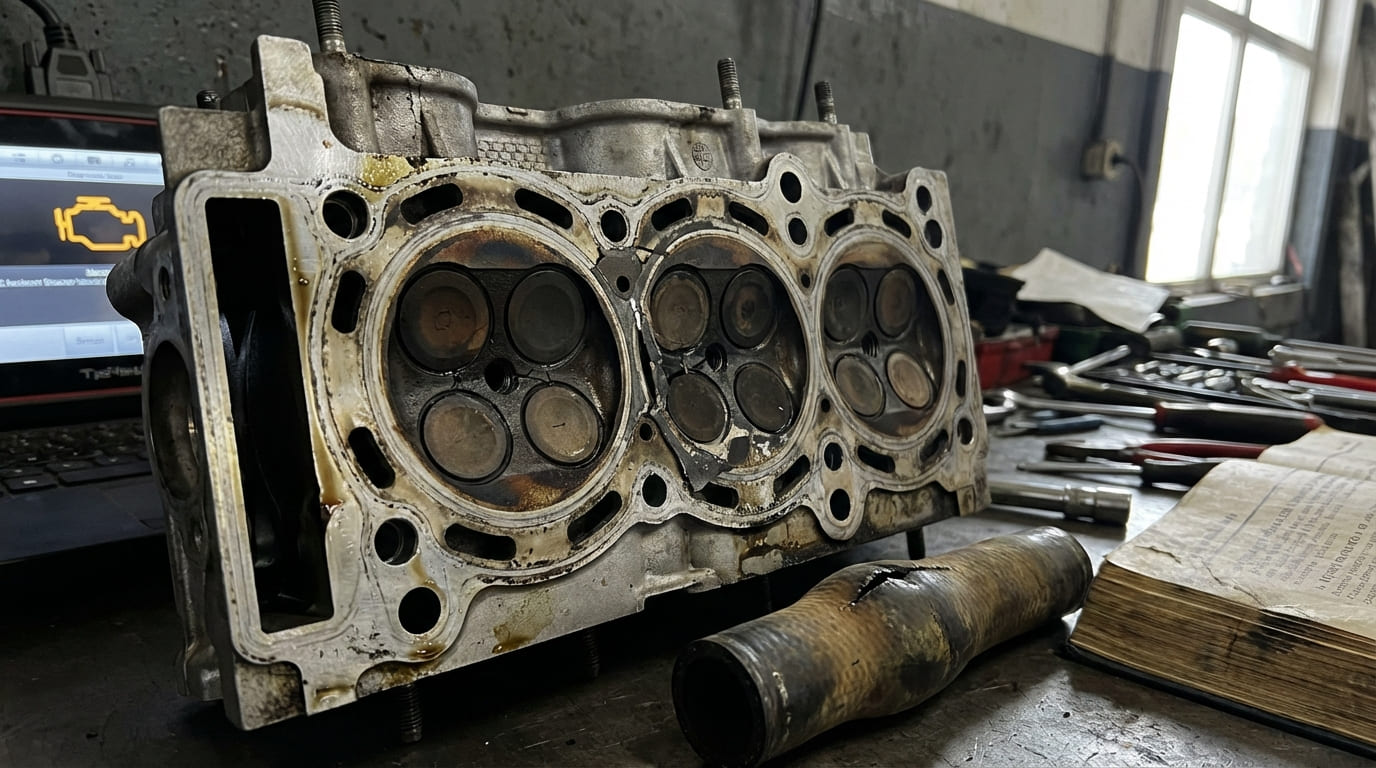
- Borescope Inspection: Remove spark plugs and inspect valves for carbon buildup, warping, or burning. Look for shiny spots on valve faces—signs of improper seating.
- Visual Inspection (Post-Disassembly): Check for valve stem wear, guide looseness, and seat recession. Measure stem-to-guide clearance with a dial bore gauge—exceeding 0.003″ on aluminum heads usually means replacement.
In my shop, we always run a leak-down test before pulling a head. It saves hours of labor and prevents unnecessary repairs. If air is escaping through the exhaust or intake manifold, you’ve got a valve issue. If it’s going into the crankcase, focus on rings or cylinder walls.
Valve Train Components and Real-World Failures
The camshaft controls valve timing, but the entire train must work in harmony. Wear or failure in any part affects valve operation.
Camshaft and Timing
Lift and duration are set by cam lobe profile. Overlap (when both valves are open) aids scavenging but can cause rough idle if excessive. Always verify cam timing with a degree wheel after timing belt/chain replacement—especially on performance engines.
Lifters, Pushrods, and Rockers
Hydraulic lifters self-adjust but can collapse with low oil pressure or sludge buildup. Solid lifters require periodic adjustment—typically every 15,000–30,000 miles on performance engines. Pushrods can bend during interference engine failures. Rocker arms must maintain proper geometry; misalignment causes premature valve stem wear.
Valve Springs and Retainers
Springs must close the valve fast enough to prevent float at high RPM. Check spring pressure with a valve spring tester—replace if below OEM spec by more than 10%. Inspect retainers for cracks, especially in high-performance or turbocharged engines. Never reuse keepers—they’re single-use safety items.
I once had a track car suffer a valve float at 7,000 RPM. The piston hit the valve, bending it. Post-mortem showed the springs had lost 15% of their pressure. Now I test springs on every high-mileage or performance rebuild—even if they look fine.
Valve Sealing: Where Most Failures Begin
Valve Seat and Face Seal
The seal between the valve face and seat is usually cut at 30° or 45°. Use a dial indicator to check valve stem runout—over 0.002″ indicates bending or guide wear. Check seat concentricity with a runout gauge; more than 0.001″ runout compromises sealing under load.
Valve Stem Seals
These prevent oil from seeping into the combustion chamber. When they harden or crack, you get blue smoke on startup—especially after the engine sits. Oil consumption of 1 quart per 1,000 miles or more often points to stem seals or guides, not PCV or turbo issues.
Don’t replace a turbo for blue smoke until you check the valve stem seals. I’ve seen customers spend $2,000 on turbos when a $50 seal job would’ve fixed it. Always rule out the simple, low-cost causes first.
Valve Materials and Design Differences
Intake and exhaust valves face different demands, leading to key design and material differences.
| Characteristic | Intake Valve | Exhaust Valve | Notes |
|---|---|---|---|
| Head Diameter | Larger | Smaller | Larger intake improves airflow; exhaust prioritizes heat dissipation. |
| Material | High-strength steel (e.g., EV8) | Heat-resistant alloy (e.g., Inconel, Nimonic 80A) | Exhaust valves may have sodium-filled stems for cooling. |
| Operating Temperature | 300–500°C | 600–750°C | Exhaust valves glow red under load—material must resist warping. |
| Common Failure | Carbon buildup, stem wear | Burning, warping, cracking | Burning often caused by lean mixtures, poor seating, or timing issues. |
Repair vs. Replace: Cost and Viability
Valve service costs depend on access and damage level.
- Valve Stem Seal Replacement: $300–$700 (labor-intensive; requires head removal on most engines). DIY possible with proper tools and patience.
- Valve Job (Reseat/Grind): $150–$400 per head. Often includes new guides, seals, and springs. Worth it if heads are otherwise sound.
- Complete Head Replacement: $800–$2,000 (OEM remanufactured). Often faster and more reliable than repairing old heads with multiple burnt valves.
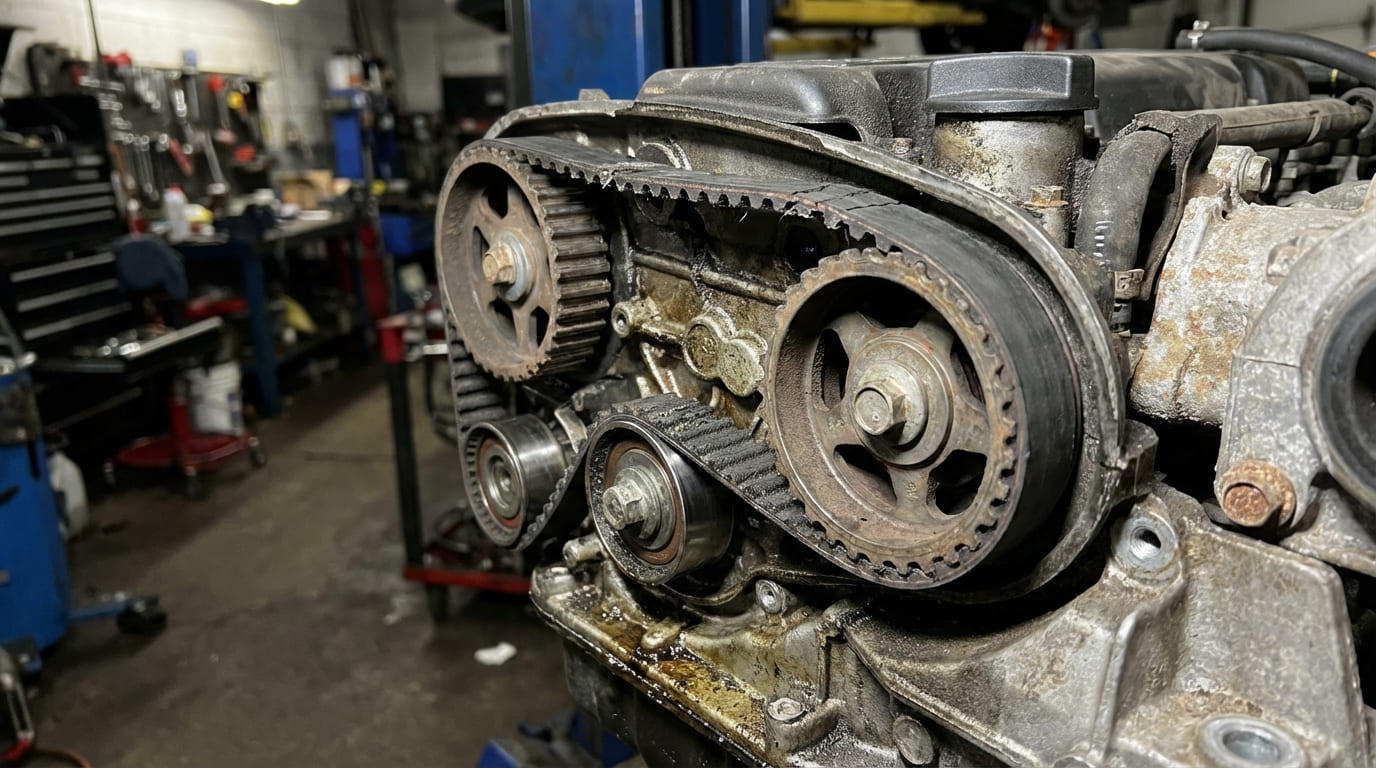
- Interference Engine Valve Replacement After Timing Belt Failure: Not all valves are always bent. Inspect with a borescope and measure straightness. Reuse valves within 0.002″ runout to save cost.
On a timing belt failure, don’t assume all valves are junk. Inspect each one. I’ve saved customers $1,000+ by reusing 7 out of 8 valves on a 4-cylinder. Measure, don’t guess.
Best Practices for Valve Service
- ✅ Recommended: Clean valve guide bores and stem seals thoroughly during reassembly. Contamination causes premature seal failure.
- ✅ Recommended: Use a dial indicator to check valve stem runout after grinding or replacement. Replace if over 0.002″ on cast iron or 0.003″ on aluminum heads.
- ✅ Recommended: Replace valve spring seats or shims if pitted or discolored. A compromised seat reduces spring pressure and increases float risk.
- ⚠️ Avoid: Reusing torque-to-yield (TTY) head bolts unless the manufacturer explicitly allows it. Reuse leads to head warping and gasket failure—replace them every time.
- ⚠️ Avoid: Installing valves without checking seat concentricity. A seat that looks good may leak under combustion pressure.
- ⚠️ Avoid: Adjusting valve lash on a hot engine unless the spec requires it. Aluminum heads expand more than steel stems—always measure cold unless instructed otherwise.
Modern engines may not need frequent adjustments, but wear still accumulates—especially in trucks and high-performance applications. Hydraulic lifters mask noise but don’t stop mechanical wear. Always verify valve train health during major services.