The Bottom Line: What You’ll Actually Pay
A complete cylinder head replacement typically costs $1,600 to $5,000 for most vehicles, with luxury and turbocharged engines exceeding $7,000. The head itself ranges from $600 (remanufactured I4) to $3,000+ (new OEM DOHC V6/V8). Labor dominates the bill—10–15 hours for simple inline-4 engines, but 20–40 hours for transverse V6/V8 or turbocharged applications. For most daily drivers, a remanufactured head with proper machining and new TTY bolts is the sweet spot: $2,200–$3,800 installed at an independent shop.
Total Installed Cost by Replacement Type
Not all cylinder heads are created equal. Here’s what you’ll pay out-the-door based on part sourcing and condition.
| Head Type | Parts Cost | Labor & Machining | Total Drive-Out | Warranty | Best For |
|---|---|---|---|---|---|
| Used (Salvage) Head | $200–$600 | $1,200–$2,500 | $1,400–$3,100 | 30–90 days | Budget repairs, older vehicles, must pressure-test first |
| Remanufactured Head | $600–$1,800 | $1,400–$3,000 | $2,000–$4,800 | 1–3 years | Most daily drivers, best value with new valves/guides |
| New OEM Head | $1,800–$3,000+ | $1,500–$3,200 | $3,300–$6,200 | 1–2 years | Turbocharged, high-compression, or luxury engines |
| Aftermarket (Quality Brand) | $500–$1,200 | $1,300–$2,800 | $1,800–$4,000 | 1 year | Common engines where OEM is overpriced |
| Complete Head Assembly (with cams/valves) | $2,500–$4,500 | $1,200–$2,500 | $3,700–$7,000 | 2–3 years | Complex DOHC engines, saves labor on valve train |
Cost Breakdown by Vehicle Class & Engine Type
Engine configuration and access difficulty drive major price differences. Transverse-mounted and turbocharged engines require extensive disassembly.
| Vehicle Class | Typical Examples | Installed Cost Range | Why It Costs This Much |
|---|---|---|---|
| Economy Inline-4 | Honda Civic, Toyota Corolla, Mazda3 | $1,600–$2,800 | Easy top access, minimal disassembly, cheap parts |
| Midsize Sedan (I4/V6) | Camry, Accord, Hyundai Sonata | $2,200–$3,800 | V6 rear bank requires intake removal, moderate complexity |
| Midsize SUV / Crossover | Highlander, Explorer, Cherokee | $2,800–$4,500 | Transverse V6, subframe drop often required, turbo piping |
| Full-Size Pickup (V8) | F-150 5.0L, Silverado 5.3L, Ram Hemi | $2,500–$4,200 | Longitudinal mount, easier access but heavy components |
| European Luxury | BMW 3/5 Series, Audi A4/A6, Mercedes | $3,800–$7,000+ | Tight engine bays, specialized tools, expensive OEM parts |
| Performance / Turbo | Mustang EcoBoost, WRX, 370Z, M3 | $3,500–$6,500 | Intercooler removal, boost piping, heat shielding, forged internals |
| Boxer Engines (Subaru) | Outback, Forester, WRX | $3,200–$5,500 | Engine removal required, dual heads, timing complexity |
| Heavy-Duty Diesel | Duramax, PowerStroke, Cummins | $4,500–$8,000+ | Extreme weight, high-pressure fuel system, expensive gaskets |
Regional Pricing: US, UK, Canada, Australia, NZ & Ireland
Labor rates vary dramatically by market. A 20-hour job is highly sensitive to local shop rates. All figures converted to USD for comparison.
| Country | Indie Shop Rate | Dealer Rate | Typical I4 Job | Typical V6 Job | Notes |
|---|---|---|---|---|---|
| 🇺🇸 United States | $90–$140/hr | $140–$195/hr | $1,800–$2,800 | $2,800–$4,500 | Dealerships often quote long block instead of head replacement |
| 🇨🇦 Canada | C$100–$150/hr | C$150–$210/hr | C$2,000–$3,200 | C$3,200–$5,000 | Machine shop queues add 1–2 weeks to timeline |
| 🇬🇧 United Kingdom | £65–£100/hr | £110–£160/hr | £1,400–£2,200 | £2,200–£3,800 | VAT (20%) included; strong reconditioned head market |
| 🇦🇺 Australia | A$110–$160/hr | A$160–$230/hr | A$2,400–$3,600 | A$3,600–$5,800 | High labor rates; shipping costs for Euro parts |
| 🇳🇿 New Zealand | NZ$100–$150/hr | NZ$150–$210/hr | NZ$2,200–$3,400 | NZ$3,400–$5,500 | JDM import heads common; verify casting numbers |
| 🇮🇪 Ireland | €70–€110/hr | €120–€175/hr | €1,600–€2,500 | €2,500–€4,200 | UK/EU parts supply; VAT at 23% |
Hidden Costs That Inflate the Bill
These line items get omitted from basic quotes but are common on overheated or high-mileage engines:
- Block deck resurfacing: $150–$400. Overheating warps the block surface. Installing a new head on a warped block guarantees gasket failure.
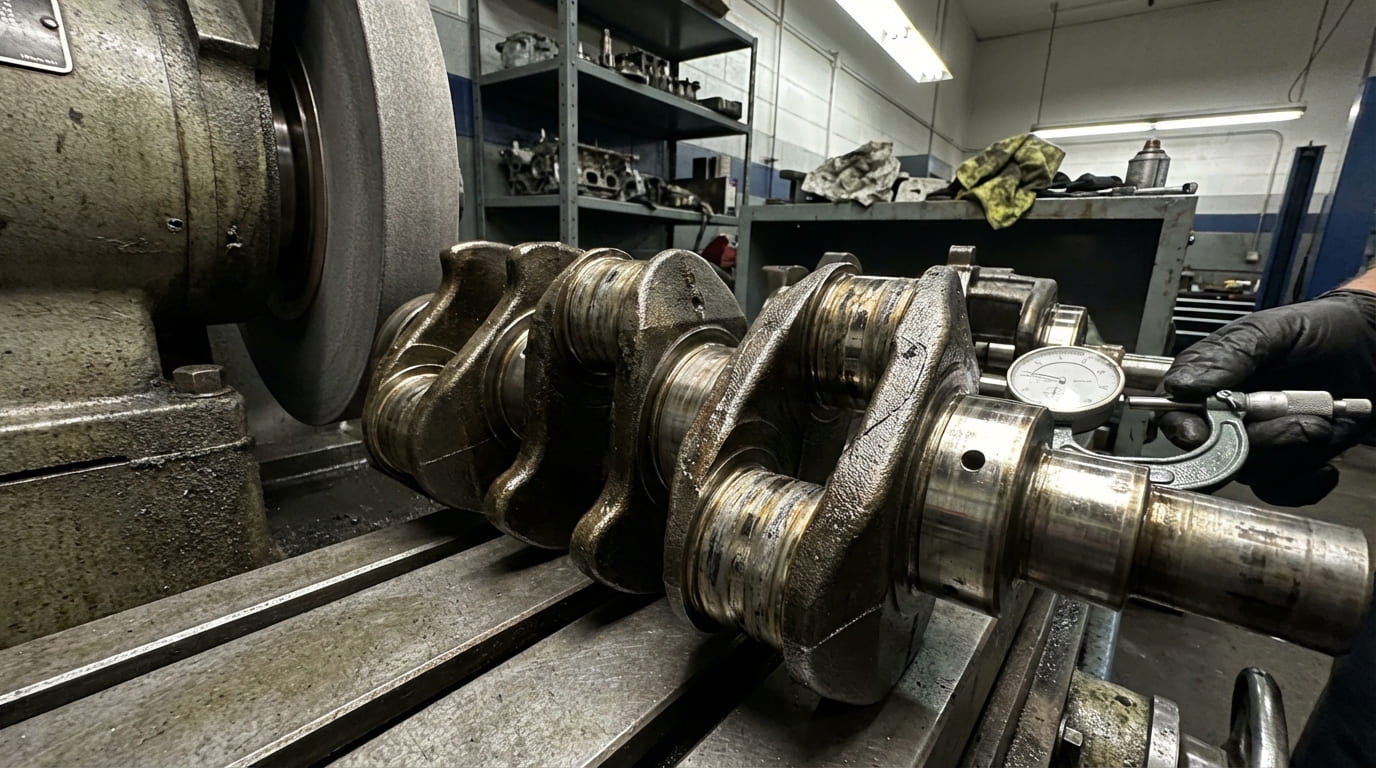
- Valve job (3-angle grind + new seals): $200–$500 per head. Burnt valves or hardened stem seals require machining.
- Pressure testing (used/reman head): $75–$150. Catches hairline cracks invisible to the eye. Mandatory for used parts.
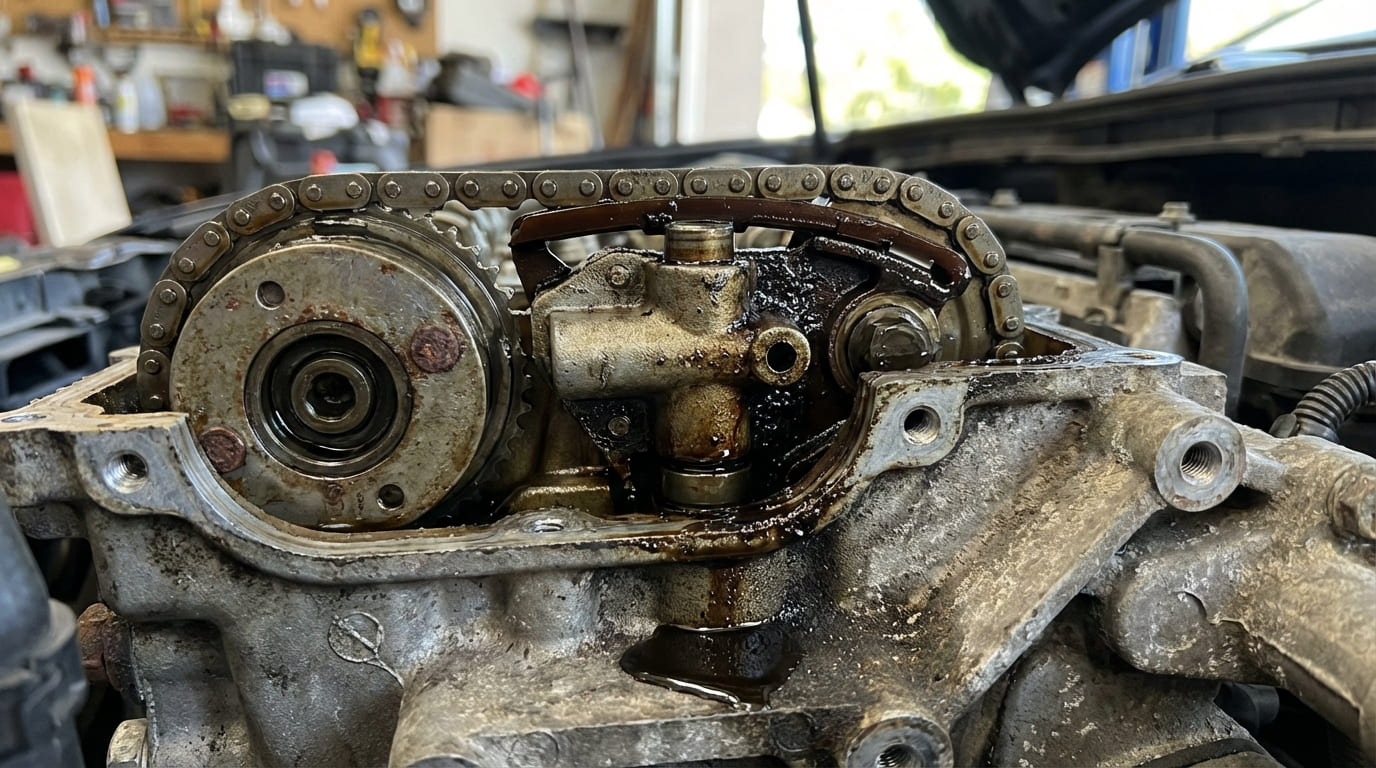
- Timing chain/belt kit: $200–$700. You’re already at the front of the engine; replace worn components now.
- Water pump (if timing-driven): $80–$250. Same logic as timing components.
- Turbocharger inspection/replacement: $800–$2,500. Oil starvation from head gasket failure can destroy turbos.
- Exhaust manifold studs/nuts: $50–$200. Often break during removal on high-mileage engines.
- Fuel injector O-rings or replacement: $100–$600. Damaged during removal or contaminated with coolant.
- Stripped spark plug threads: $150–$400 per hole. Requires Time-Sert inserts or head replacement.
- Bent valves (interference engines): $400–$1,200. Timing jump or overheating can cause piston-to-valve contact.
Parts: What You Actually Need (and What to Skip)
The head casting is just the beginning. Skipping related parts causes repeat failures.
Essential Parts (Always Replace)
- Cylinder head gasket set: $80–$300. Includes head gasket, valve cover, intake, exhaust, and all seals.
- Head bolts (TTY): $50–$200. Torque-to-yield bolts stretch permanently. Reusing them causes uneven clamping and gasket failure.
- Valve stem seals: $30–$100. Hardened seals cause oil consumption and blue smoke on startup.
- Spark plugs: $20–$100. Often contaminated with coolant or oil during head failure.
Smart Upgrades (Replace While You’re In)
- Timing chain/belt kit + tensioners: $200–$700. Labor is already paid; prevent future failure.
- Water pump: $80–$250. If timing-driven, replace now.
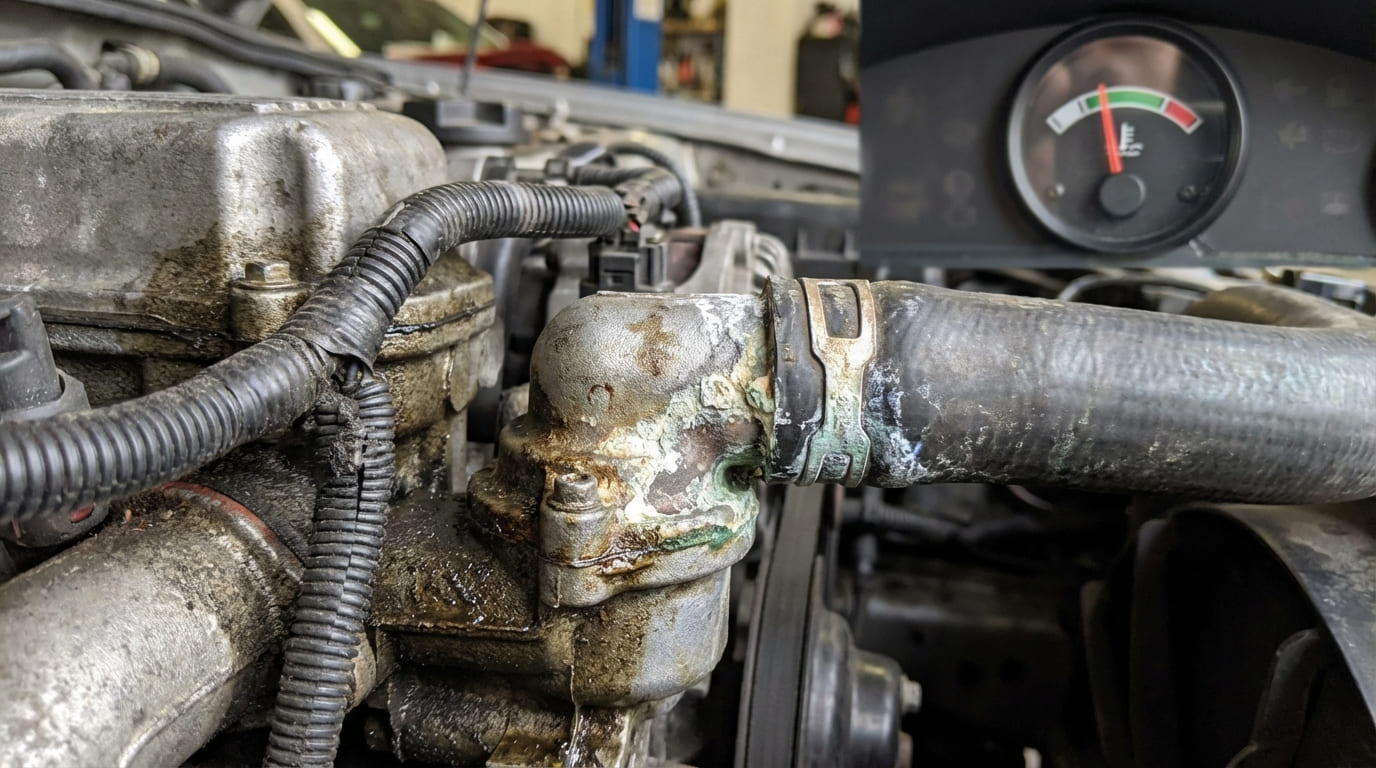
- Thermostat + housing: $50–$150. Often the root cause of overheating that killed the head.
- Coolant temperature sensor: $20–$60. Cheap insurance against future overheating events.
- PCV valve + hoses: $15–$40. Clogged PCV increases crankcase pressure and can cause gasket failure.
Shop Foreman Tip: We always pressure-test any used or remanufactured head before installation. I’ve caught internal cracks near coolant passages that were invisible to the eye. A $100 pressure test prevents a $3,000 comeback. Never skip this step.
Quick Diagnostic: Is It Really the Cylinder Head?
Don’t assume white smoke or coolant loss means a bad head. Verify before authorizing a $4,000 repair.
4-Step Verification Process
- Cylinder leak-down test: More accurate than compression. Air escaping into radiator = head gasket or cracked head. Air from exhaust = burnt valve. Air from oil cap = ring wear.
- Cooling system pressure test: Pump to 15 psi, hold for 15 minutes. Pressure drop without external leaks points to internal failure (head gasket, cracked head, or block).
- Exhaust gas in coolant test (BlockCheck): Chemical test detects combustion gases in coolant. Blue fluid turns yellow/green = confirmed head gasket or crack.
- Head flatness check (after removal): Use precision straightedge and feeler gauge. Warpage over 0.002″ requires resurfacing or replacement. Some specs allow 0.004″, but I recommend staying under 0.002″ for reliability.
Common Trap: A 2014 Subaru Forester came in with white smoke and overheating. Compression test showed two low cylinders. The shop said it needed a new head. After teardown, the head wasn’t cracked—but the block deck was warped from prior overheating. The gasket failed, but the root cause was poor coolant maintenance. Resurfacing the block and replacing the gasket saved the customer $1,800. Always check the block surface before condemning the head.
Critical Mistakes That Cause Repeat Failures
Even experienced mechanics ruin head jobs with preventable errors. Here’s what separates a one-time fix from a comeback:
✅ Do This
- Clean head bolt threads with a bottoming tap. Debris, old sealant, or trapped coolant in blind holes causes false torque readings and hydro-lock during tightening. This 10-minute step prevents gasket failure.
- Use a torque angle gauge for TTY bolts. Torque alone isn’t enough—angle ensures proper clamping force. Most modern engines require torque + angle (e.g., 30 ft-lbs + 90° + 90°).
- Check block deck flatness before installing new head. A warped block will ruin even the best head and gasket. Measure with straightedge; resurface if over 0.002″ warpage.
- Follow factory torque sequence exactly. Uneven clamping causes head warpage and gasket failure. Use a pattern, not random tightening.
- Inspect timing components on high-mileage engines. If you’re already this deep, replacing a worn chain is cheaper than a comeback for timing failure.
⚠️ Never Do This
- Don’t reuse torque-to-yield (TTY) head bolts. They stretch permanently during installation. Reusing them guarantees uneven clamping and gasket failure. I’ve seen this cause comebacks within 6 months.
- Don’t skip pressure testing used heads. Hairline cracks near coolant passages are invisible. A $100 test prevents a $3,000 comeback.
- Don’t assume the head is the problem. Always check block deck flatness. Many “head failures” are actually warped blocks from prior overheating.
- Don’t use generic RTV sealant. Use OEM-specified sealant at gasket corners. Wrong type can dissolve or fail under heat.
- Don’t ignore the root cause. If overheating killed the head, fix the cooling system (thermostat, water pump, radiator) or the new head will fail too.
Case Study: A 5.7L Toyota Tundra with a reman head installed six months prior started losing coolant. The shop claimed the head was defective. Discovery: The head was fine. The installer reused old head bolts and torqued them incorrectly. Uneven clamping caused gasket failure. Even a quality part can fail due to improper installation. Always follow fastener specs—don’t assume all bolts are the same.
Real Shop Case Studies: What Actually Goes Wrong
Case #1: The Warped Block (2014 Subaru Forester)
Symptom: White smoke, overheating, two low cylinders on compression test.
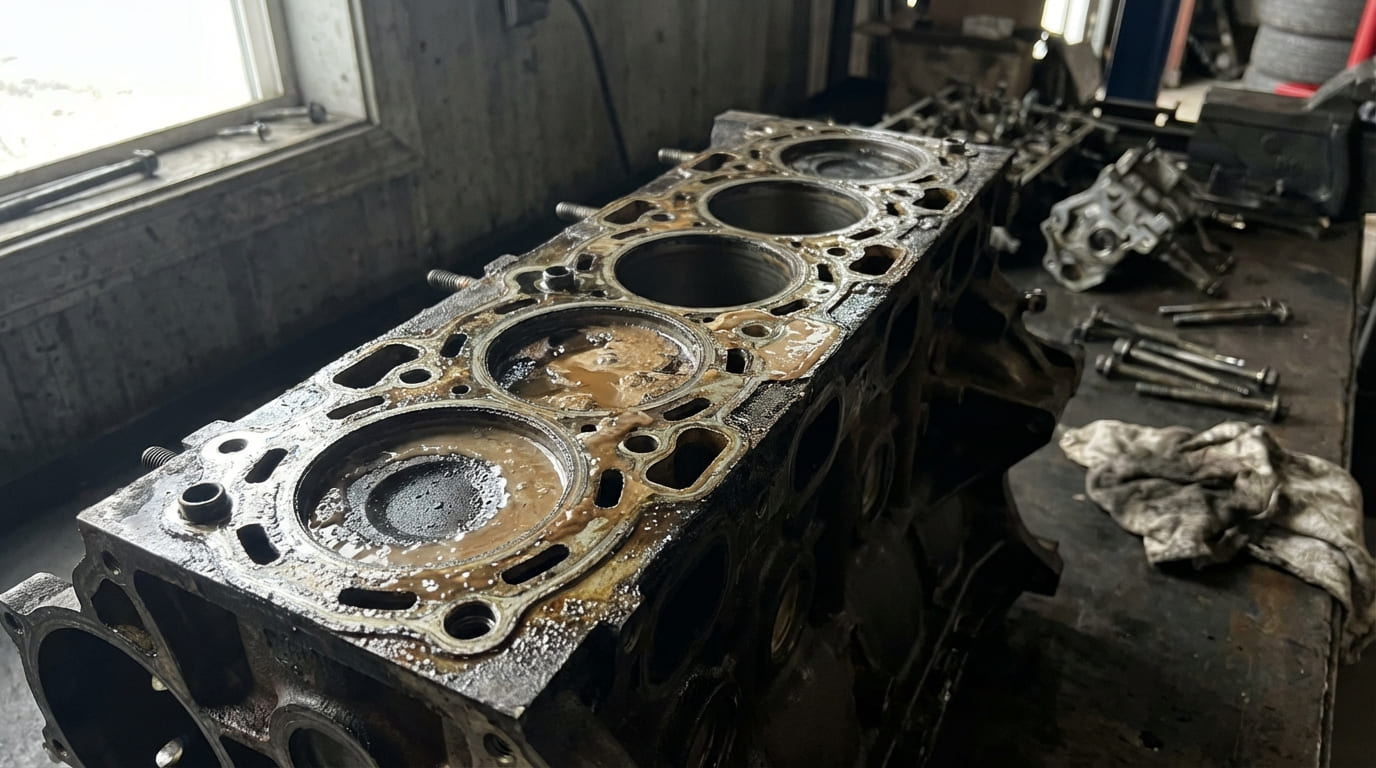
Discovery: After teardown, head wasn’t cracked—but block deck was warped 0.004″ from prior overheating. Gasket failed due to uneven surface.
Lesson: Don’t assume the head is the problem. Always check block surface flatness. Resurfacing block ($200) and replacing gasket saved $1,800 vs. new head.
Case #2: The Reused Bolts (5.7L Toyota Tundra)
Symptom: Coolant loss 6 months after reman head installation. Shop claimed defective head.
Discovery: Head was fine. Installer reused old TTY head bolts and torqued incorrectly. Uneven clamping caused gasket failure.
Lesson: Even quality parts fail with improper installation. TTY bolts stretch permanently—never reuse them. $80 in new bolts would have prevented a $2,500 comeback.
Case #3: The Cracked Used Head (2012 Ford F-150 EcoBoost)
Symptom: Blown head gasket. Owner wanted used head to save money.
Discovery: Salvage head looked good visually, but pressure testing revealed hairline crack near coolant passage.
Lesson: Used parts demand validation. A $100 pressure test prevents a $3,000 comeback. Never skip inspection to save time.
Decision Framework: Repair, Replace, or Scrap?
Use this matrix to decide the financial and mechanical path forward.
| Scenario | Recommendation | Why |
|---|---|---|
| Single overheating event, block flat, head cracked | Reman head + block check ($2,500–$4,000) | Isolated failure, block undamaged, worth repairing |
| Multiple overheating events, block warped | Block resurfacing + reman head ($3,000–$4,500) | Block must be machined; new head on warped block will fail |
| Burnt valve, head otherwise good | Valve job + new seals ($800–$1,500) | Head casting is fine; only needs machining |
| Stripped spark plug threads (2+ holes) | Reman head vs. Time-Sert inserts | Multiple inserts = $600+; reman head may be similar cost with warranty |
| High mileage (180k+), multiple issues, frame rust | Sell for parts / scrap | $4,000 repair won’t be recouped; cut your losses |
| European luxury, complex turbo engine | New OEM head or long block swap | Specialized tools, expensive parts; long block may be similar cost with less labor |
| Interference engine, timing jump, bent valves | Long block or used engine swap | Piston damage likely; head job alone won’t fix engine |
Frequently Asked Questions
Can I replace just one head on a V6 or V8?
Yes, but it’s often not recommended. If one head failed from overheating or age, the other is likely close behind. You’re already paying for 80% of the labor (intake removal, timing components, coolant system). Replacing both heads adds $600–$1,200 in parts but prevents a second failure within 6–12 months. Exception: if failure was isolated (e.g., single burnt valve from carbon buildup), one head may be sufficient.
How long does cylinder head replacement take?
Inline-4 engines: 10–15 hours (1–2 days). V6 engines: 15–25 hours (2–3 days). V8 or turbocharged engines: 20–40 hours (3–5 days). Add 2–5 days for machine shop work (pressure testing, resurfacing, valve job). Expect the car to be in the shop 1–2 weeks total.
Can a cracked cylinder head be repaired?
Sometimes. Small external cracks can be metal-stitched (pinning) for $300–$600. Some aluminum heads can be welded by specialists, but it’s risky and often cost-prohibitive. Cracks near coolant passages, combustion chambers, or valve seats almost always require replacement. Pressure testing will determine if repair is viable.
Will this fix my overheating problem?
Only if the head or head gasket was the root cause. Overheating can also be caused by failed thermostat, clogged radiator, water pump failure, or air in the cooling system. Always diagnose the cooling system before assuming the head is the problem. If overheating caused the head failure, fix the root cause or the new head will fail too.
Do I need to replace the head bolts?
If they’re torque-to-yield (TTY), absolutely yes. TTY bolts stretch permanently during installation and lose clamping force if reused. This is the #1 cause of repeat head gasket failure. Some older engines use standard bolts that can be reused if within spec—check the factory service manual. When in doubt, replace them.
What’s the difference between a head gasket and a cylinder head?
The cylinder head is the large aluminum or cast iron casting that sits on top of the engine block, containing valves, camshafts, and combustion chambers. The head gasket is the thin sealing layer between the head and block that prevents coolant, oil, and combustion gases from mixing. A head gasket replacement ($1,500–$3,000) reuses the existing head. A cylinder head replacement ($2,500–$5,000) replaces the entire casting due to cracks, warpage, or valve damage.
Can I drive with a bad cylinder head?
No. Continued driving risks catastrophic engine damage. Coolant in oil destroys bearings. Overheating warps the block. Combustion gas in coolant can blow radiator hoses or damage the radiator. In interference engines, a jumped timing chain can bend valves and destroy pistons. Stop driving immediately and have it diagnosed.
What voids the warranty on a cylinder head replacement?
Overheating events, missed maintenance (oil changes, coolant service), improper break-in, reusing TTY bolts, and failure to fix the root cause (e.g., bad thermostat). Document everything—receipts and maintenance records are your defense if a claim arises.
Final Takeaway
Cylinder head replacement isn’t just a part swap—it’s a system-level repair. The cost varies from $1,600 on a simple inline-4 to over $7,000 on a complex turbocharged V8, but the real value is in getting it right the first time.
Before authorizing the repair, verify the diagnosis with leak-down and pressure tests. Always check block deck flatness—many “head failures” are actually warped blocks from prior overheating. Use new TTY bolts, pressure-test used heads, and fix the root cause of the failure. Skip these steps and you’ll pay twice.
For most daily drivers, a remanufactured head with proper machining and installation is the smartest choice. But if your engine has 180k+ miles, multiple issues, or the block is severely warped, consider whether a long block swap—or a new vehicle—makes more financial sense. Measure twice, cut once.