As a senior automotive editor and master mechanic, I’ve seen countless diesel owners panic at the first sign of fuel trouble—assuming the injection pump is dead. But here’s the truth: real pump failure is less common than misdiagnosis. Before spending thousands, you need a clear, step-by-step plan to verify the problem, understand your repair options, and avoid costly comebacks. This guide cuts the fluff and delivers what matters: diagnostics, costs, labor realities, and pro tips from the shop floor.
Injection Pump Replacement: Real-World Costs
Costs vary widely by engine type, pump model, and whether you choose new, remanufactured, or rebuilt. Below are current market ranges based on actual shop invoices and supplier pricing.
New OEM Injection Pump
Factory-new pumps are the most reliable but come with a premium price. These are typically sourced through dealers or authorized distributors.
| Application | Pump Type | Cost Range |
|---|---|---|
| Light Duty (e.g., 6.7L Cummins, 6.6L Duramax) | CP4.2, Denso HP4 | $1,500 – $4,000 |
| Medium/Heavy Duty (e.g., CAT C15, Detroit Series 60) | Electronic Unit Injector (EUI), Common Rail | $3,000 – $10,000+ |
In my shop, we only use new OEM pumps on customer vehicles when the engine has high hours or we suspect contamination. The peace of mind is worth the cost—especially when warranty coverage is included.
Remanufactured Injection Pump
Reman units are rebuilt to factory specs and tested. Quality varies by supplier—stick with ISO-certified rebuilders for best results.
| Application | Cost Range | Core Charge |
|---|---|---|
| Light Duty Diesel | $800 – $2,500 | $200 – $600 |
| Medium/Heavy Duty Diesel | $1,500 – $6,000+ | $500 – $1,000 |
Core charges are non-refundable if your old pump is damaged beyond rebuildable specs. Always return the unit clean and unmodified.
I’ve had great success with remans from Bosch and reputable Cummins dealers—but I always bench test them before install. If the shop can’t provide flow and pressure data, walk away.
Injection Pump Rebuild (Bench Repair)
Rebuilding is only viable for older mechanical pumps. Modern common rail pumps (CP3, CP4) are not field-rebuildable due to micron-level tolerances and proprietary tooling.
- Applicable pumps: Bosch VE, Stanadyne DB2, Roosa Master
- Rebuild cost: $600 – $2,000 (includes calibration)
- Not recommended for: CP3, CP4, HP4, Denso HP0
We don’t rebuild modern pumps in-house. The risk of premature failure is too high. If you see “rebuild CP4” advertised online, be skeptical—unless it’s from an OEM-authorized facility, it’s likely a reman swap with a new label.
Total Installed Cost: What You’ll Actually Pay
The pump is only part of the bill. Labor, related parts, and shop rates significantly impact final cost.
Labor and Ancillary Costs
| Factor | Details | Cost Impact |
|---|---|---|
| Labor Hours | 6–8 hrs (older engines), 12–15 hrs (tight compartments), 20+ hrs (in-frame heavy duty) | $600 – $3,000+ (based on $80–$200/hr) |
| Fuel Lines, Seals, Gaskets | Always replace with new pump | $50 – $300 |
| Fuel Filters (Primary & Secondary) | Required during pump replacement | $30 – $150 |
| High-Pressure Fuel Lines | Replace if cracked, corroded, or per OEM recommendation | $100 – $500+ |
| Suction Control Valve (SCV) | Critical on CP3/CP4 systems—common failure point | $80 – $200 |
On every CP4 replacement, I install a new SCV and inspect the lift pump. A weak feed system kills new pumps fast. Spend $200 now to save $4,000 later.
How to Diagnose Injection Pump Failure (Step-by-Step)
Never replace a pump based on symptoms alone. Follow this diagnostic sequence to avoid costly mistakes.
Step 1: Check Low-Pressure Fuel System First
Over 60% of “pump failures” are actually low-pressure side issues. Start here.
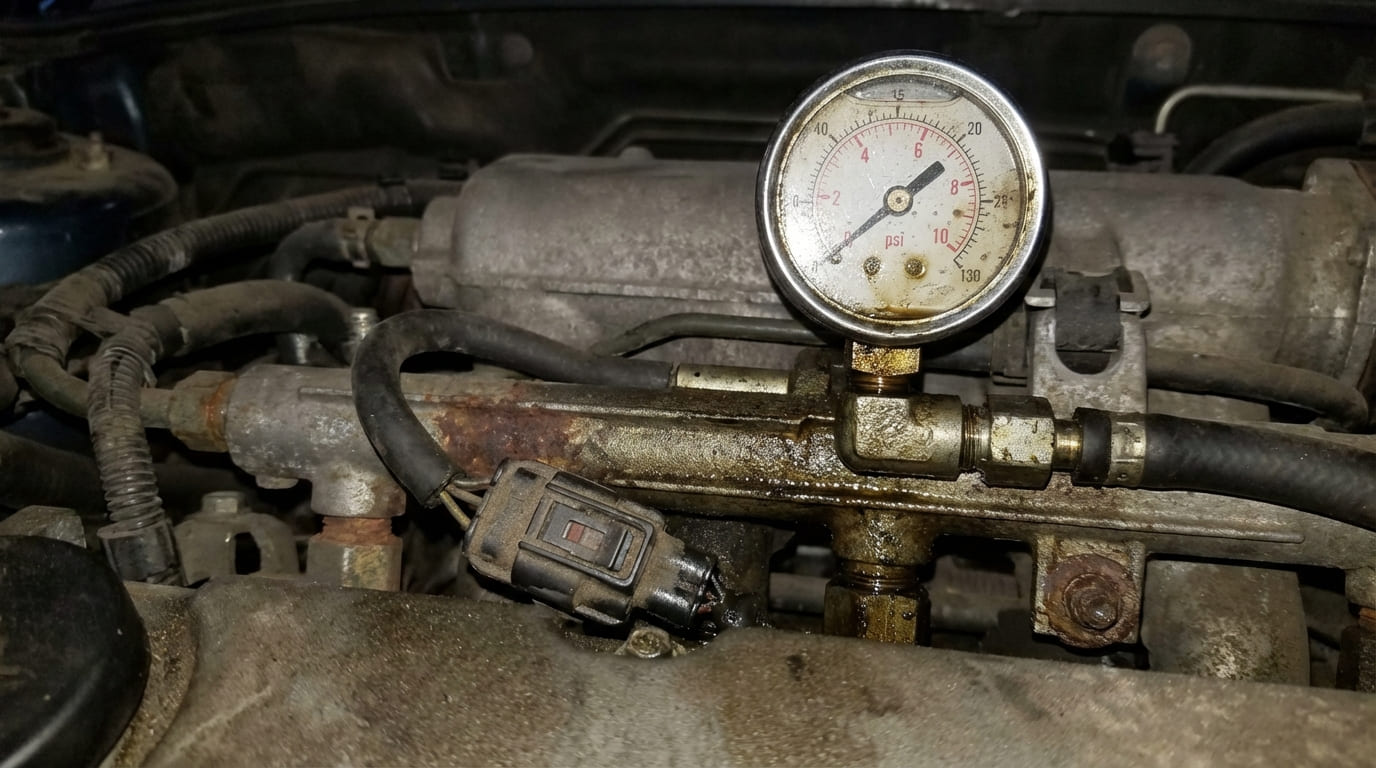
- Test lift pump pressure: Use a 0–100 psi gauge. Target: 5–7 psi at idle (varies by engine). Below 4 psi? Check lift pump, pickup tube, or clogged filter.
- Perform fuel flow test: Measure output in a graduated cylinder. Target: 1 liter in 30 seconds. Low flow? Inspect for kinked lines or collapsed sock filter.
- Inspect fuel filters: Cut open and check for metal, gel, or water. Debris indicates contamination—source must be found before new pump install.
Step 2: Electrical System Check (Electronic Pumps)
VP44, CP3, and HP4 systems rely on precise electrical signals. Faults here mimic mechanical failure.
- Scan for DTCs: Use OEM-level software (e.g., Cummins Insite, Ford IDS). Look for P0087 (low rail pressure), P0251 (pump control circuit), or timing faults.
- Check live data: Compare commanded vs. actual fuel pressure. If commanded is high but actual is low, mechanical issue is likely.
- Test wiring and grounds: Use a digital multimeter. Check for >0.5 ohms resistance in control solenoid circuit—especially ground connections.
Step 3: Injector Return Flow Test
Excessive return flow from injectors causes lean conditions and low rail pressure—often mistaken for pump failure.
- Disconnect return lines from each injector.
- Run engine at idle for 30 seconds into calibrated containers.
- Compare flow: more than 30–50 cc per minute per injector indicates failure.
I’ve saved customers thousands by finding one bad injector. Always test injectors before condemning the pump.
Step 4: Bench Test the Pump (Definitive Diagnosis)
If preliminary checks point to the pump, remove it and test on a calibrated bench (e.g., Bosch EPS, Hartridge AVM2).
This test measures:
- Fuel delivery per stroke
- Internal leakage
- Timing accuracy
- Response to electronic commands
If any parameter is outside OEM specs, the pump is faulty. Guessing is not an option.
Repair vs. Replace: Decision Guide
Use this logic to decide your next move.
| Symptom | Most Likely Cause | Diagnostic Priority | Repair Path |
|---|---|---|---|
| Hard start, low rail pressure | Weak lift pump, clogged filter | Check low-pressure side first | Replace filter, test lift pump |
| Engine misfire, high return flow | Faulty injector(s) | Perform return flow test | Replace injector, retest |
| Excessive smoke, power loss | Injector failure or ECU issue | Scan for DTCs, check live data | Diagnose electrical or fuel delivery |
| Fuel leak at pump housing | Failed seal or gasket | Inspect visually, pressure test | Replace pump or rebuild (if applicable) |
When a CP3 or CP4 fails, assume contamination. You must flush the entire fuel system, replace filters, lines, and possibly injectors. Installing a new pump without cleaning is a waste.
Best Practices: Do This, Avoid That
- ✅ Clean mounting threads: Use a tap to clean pump bolt holes. Debris causes false torque and housing cracks.
- ✅ Replace suction control valve: It’s cheap insurance on CP3/CP4 systems.
- ✅ Bench test reman pumps: Verify flow and pressure before install—even if the shop says it’s tested.
- ⚠️ Don’t reuse TTY bolts: Torque-to-yield bolts stretch. Reusing them risks leaks or failure.
- ⚠️ Don’t skip system flush: Old fuel debris will destroy a new pump.
- ⚠️ Don’t skip break-in: Run at idle for 5–10 minutes to seat internal components.
Real-World Case Studies
Situation: 2004 Dodge 5.9L Cummins, hard start, white smoke. DTCs showed low rail pressure.
Diagnosis: Lift pump delivered only 3 psi. Clogged filter full of algae.
Fix: New filter and fuel treatment. Rail pressure returned to normal.
Lesson: Always check the low-pressure side first. A $15 filter can save a $3,000 pump job.
Situation: 2010 Ford 6.7L Power Stroke, no-start. DTCs pointed to fuel pressure regulation.
Diagnosis: Bench test showed pump was good. Found cracked supply line sucking air.
Fix: Replaced line, bled system. Engine started immediately.
Lesson: Air in the system mimics pump failure. Pressure loss under load isn’t always mechanical.
Situation: 2003 Duramax LB7, rough idle, high return flow. Pump replaced twice.
Diagnosis: Return flow test showed one injector dumping 4x normal volume.
Fix: Replaced injector. Pump performed normally.
Lesson: Injector issues can overload and damage pumps. Always test injectors first.
Injection pump problems are rarely isolated. The system includes fuel quality, filtration, electrical integrity, and injector health. Before spending thousands, rule out the simple, cheap fixes. And always consult the factory service manual—procedures and specs vary too much to guess.