In my 20-plus years as a shop foreman, I’ve seen every flavor of valvetrain—from ancient flatheads to modern camless systems. But when it comes to overhead cam designs, the debate between SOHC and DOHC keeps coming up, especially from junior techs and serious DIYers trying to understand what’s under the hood. Let’s break it down not just by definition, but by real-world function, service challenges, and why one might be chosen over the other—even today.
Single Overhead Camshaft (SOHC) Configuration
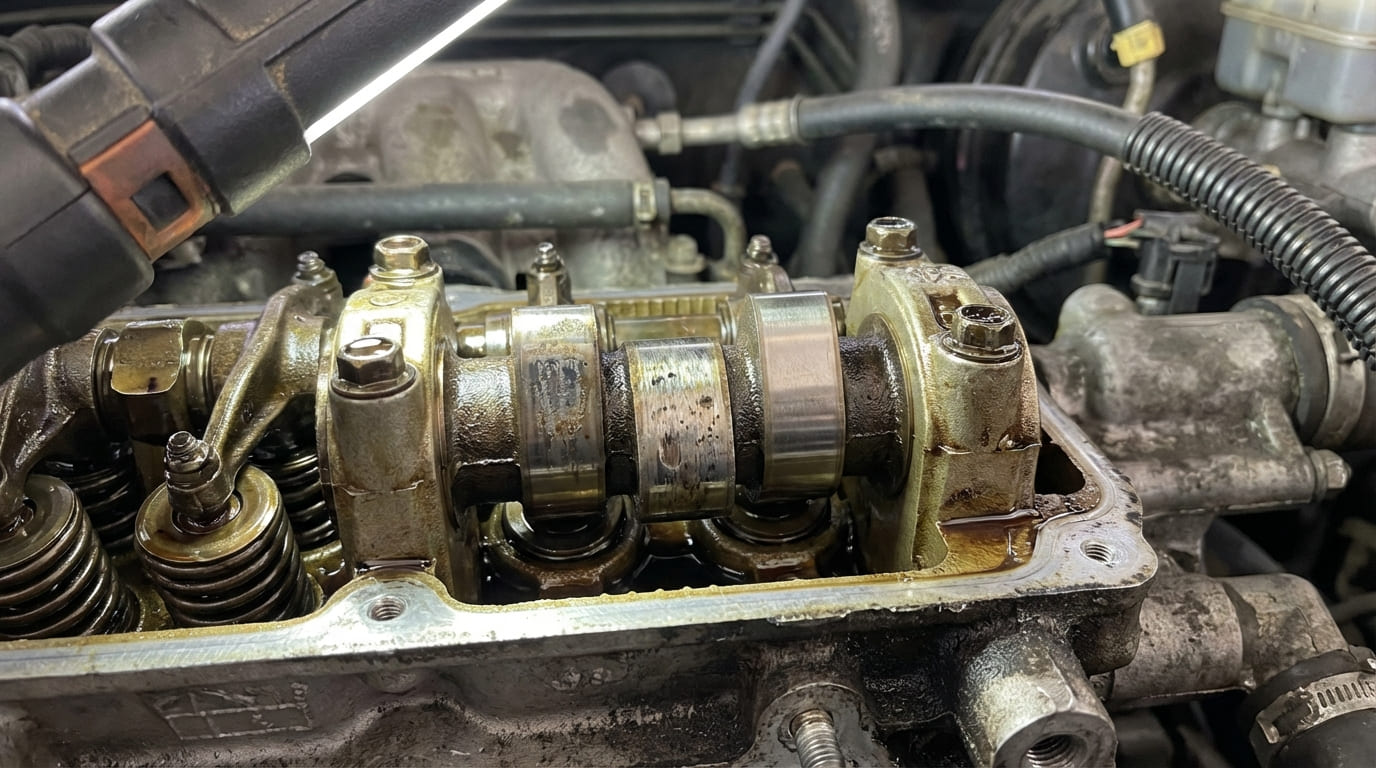
A single camshaft per cylinder head operates both intake and exhaust valves for that bank. It’s a design that struck a balance between the simplicity of pushrod engines and the performance of dual-cam setups. Most SOHC engines use rocker arms to transfer motion from the cam lobes to the valves, adding slight valvetrain mass but keeping the head compact.
Valve count is typically two per cylinder—one intake, one exhaust—though some models use three valves (two intake, one exhaust) to improve breathing without the complexity of DOHC. This design is common in budget-friendly or utility-focused engines where serviceability and low-end torque matter most.
The timing drive is straightforward: one cam sprocket, one tensioner, and a single belt or chain run from the crankshaft. This simplicity reduces the chance of misalignment during timing belt replacement—assuming you follow factory marks and tension specs precisely.
In my shop, we always label timing marks with paint before removal. Even a one-tooth error on an interference SOHC engine can bend valves. Don’t rely on memory—mark it.
Dual Overhead Camshaft (DOHC) Configuration
Two camshafts per head—one for intake valves, one for exhaust—allow independent control of valve timing. This separation enables better airflow, higher RPM capability, and advanced features like dual VVT (variable valve timing).
Valve actuation is typically direct, using bucket tappets or finger followers. This shortens the load path, reduces valvetrain inertia, and improves high-RPM stability. Most DOHC engines have four valves per cylinder (two intake, two exhaust), enhancing volumetric efficiency and power output.
Timing drives are more complex. Some engines use a single belt to drive the primary cam, then a short secondary chain or gear set for the second cam. Others use dual chains or a single wide belt with multiple sprockets. Misalignment during service is a real risk—especially on interference engines.
Always lock the cams and crank with factory tools when replacing a DOHC timing belt. Guessing alignment based on marks alone has cost shops thousands in bent valves.
Fundamental Mechanical Differences
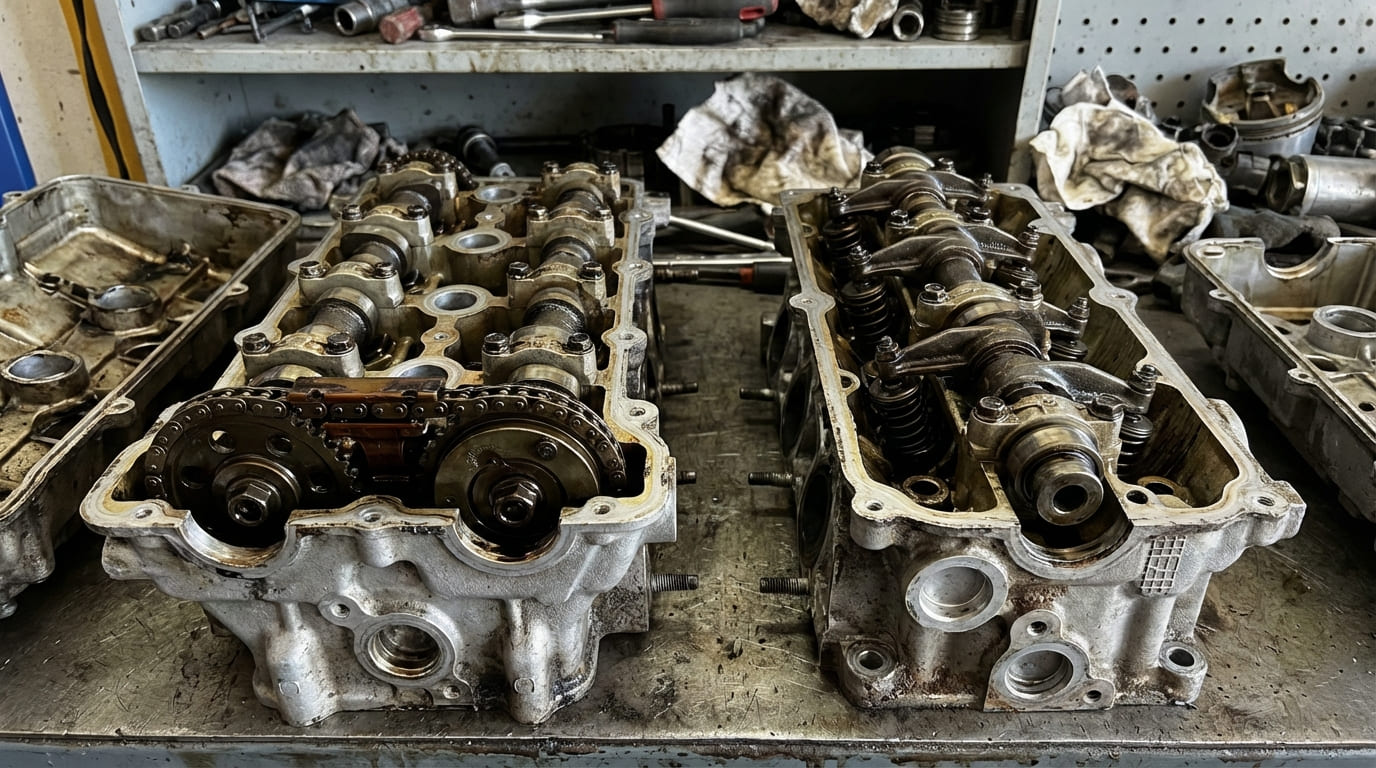
The core difference is camshaft count: SOHC uses one per head, DOHC uses two. This affects everything from head design to service complexity.
SOHC systems often use rocker arms, which add mass and potential flex. DOHC setups typically use direct-acting tappets, reducing moving mass and improving response. This makes DOHC better suited for high-RPM performance, though both can suffer valve float if springs are weak or maintenance is neglected.
Cylinder head design is simpler in SOHC engines—fewer oil galleries, one cam bore, less intricate tooling. DOHC heads require precise alignment of two cam bores, more journal surfaces, and complex oil routing. Cracks or worn journals are costlier to repair due to machining demands.
Performance and Efficiency Comparison
SOHC engines typically deliver strong low-end torque, making them ideal for daily drivers and light-duty applications. They often run out of breath above 6,000 RPM due to rocker arm dynamics and fewer valves. DOHC engines, with lighter valvetrains and four valves per cylinder, sustain power past 7,000 RPM—especially with performance cam profiles.
Valve timing flexibility favors DOHC. While modern SOHC engines can have VVT, it’s often limited to advancing or retarding a single cam—shifting intake and exhaust events together. DOHC allows independent control, optimizing torque at low RPM and scavenging at high RPM.
Port design is less restricted in DOHC heads—no rocker arms blocking airflow. This allows straighter intake ports and improved exhaust flow. On a flow bench, DOHC heads often show 15–20% better CFM ratings than comparable SOHC designs.
DOHC also enables more compact combustion chambers with centrally located spark plugs, promoting faster, more complete combustion. This reduces knock tendency and improves fuel efficiency, especially on lower-octane fuel.
On turbocharged engines, DOHC is almost universal. You need independent valve control to manage boost response and prevent reversion.
Cost, Maintenance, and Service Realities
SOHC heads are cheaper to manufacture and easier to service. Fewer parts mean lower component cost and simpler timing belt jobs. A typical SOHC four-cylinder timing belt replacement takes 3–5 hours, including water pump access.
DOHC engines require more precision. Dual VVT systems, multiple tensioners, and complex routing increase labor time. A DOHC timing job often takes 5–8 hours, especially if locking tools are needed. Labor costs can be 1.5x higher than SOHC.
Valve adjustments are more involved on DOHC engines with shim-under-bucket systems. You must remove the camshaft to access shims—adding hours to the job. SOHC engines often use screw-and-locknut adjusters, which are faster to service.
Engine bay packaging also differs. SOHC heads are narrower—helpful in tight transverse FWD layouts. DOHC heads are wider, sometimes interfering with strut towers or intake plumbing, forcing offset manifolds or taller hoods.
How to Identify SOHC vs. DOHC
Check the cam cover. A narrow, single cover on a four-cylinder engine? Likely SOHC. A wider cover, possibly split or labeled “DOHC” or “16-Valve”? That’s a strong indicator of DOHC. But don’t assume—some DOHC engines have smooth, unmarked covers.
Always verify using the VIN, service manual, or reliable database. Some heads have casting numbers that indicate configuration. I keep a notebook of common identifiers for frequent models in my shop.
If the engine code ends in “DOHC” or lists 16 valves, it’s a safe bet. But I’ve been fooled before—always cross-reference.
Diagnostic Logic: What Symptoms Point to Which Design?
The valvetrain type can guide your troubleshooting:
- Rough idle, high HC readings, poor cold start: Likely a faulty VVT actuator—especially on DOHC engines. But first check oil pressure and solenoid screen condition. Low pressure mimics phaser failure.
- Power loss above 5,000 RPM: Suspect valve float. Common in SOHC engines with worn rocker arms, but also possible in high-mileage DOHC engines with weak springs.
- Timing belt failure on interference engine: Expect bent valves. DOHC engines with four valves per cylinder have more valves at risk, but SOHC interference engines can suffer just as badly.
Recommended Best Practices
- ✅ Recommended: Clean camshaft bore surfaces and oil galleries during head reconditioning. Even a small burr or debris can starve cam bearings and cause premature wear.
- ✅ Recommended: Use a thread chaser on cylinder head bolt holes before reassembly. Built-up varnish or old thread locker can throw off torque readings and lead to head gasket failure.
- ✅ Recommended: Replace VVT solenoid screens during high-mileage service. I’ve traced half the “phaser rattle” complaints I’ve seen to clogged screens, not worn actuators.
- ⚠️ Avoid: Reusing torque-to-yield (TTY) head bolts unless the factory explicitly allows it. They stretch permanently and won’t maintain proper clamping force.
- ⚠️ Avoid: Assuming all timing marks are visible. Some engines require special locking tools. I’ve seen bent valves because someone aligned only the crank pulley.
- ⚠️ Avoid: Using generic gasket sealants on cam covers. They can squeeze into the crankcase, break down, and contaminate oil. Use OEM-recommended sealants.
Typical Specifications and Service Ranges
Flatness limits vary by material. Cast iron blocks: 0.002″–0.003″ over 6 inches. Aluminum DOHC heads: tighter—often 0.0015″–0.002″—due to higher thermal expansion. Always consult the factory manual. I’ve seen good heads scrapped because a tech used generic specs.
Valve lash depends on design. Hydraulic lifters: zero. Solid lifters: 0.008″–0.012″ intake, slightly more on exhaust. Shim tolerances: often ±0.0002″. Measure with a micrometer—calipers aren’t precise enough.
Common Failure Scenarios: A Comparative Table
| Symptom | More Likely in SOHC | More Likely in DOHC | Notes |
|---|---|---|---|
| Valve train noise (ticking) | Yes – often rocker arm wear or hydraulic lifter failure | Yes – but more often from finger follower wear or low oil pressure to phasers | Oil quality and maintenance history are major factors in both |
| Timing belt replacement complexity | Lower – fewer components, simpler routing | Higher – dual cams, VVT units, multiple tensioners | DOHC jobs often take 1.5x longer, especially with water pump access |
| Valve adjustment labor time | Lower – fewer points, often screw-and-locknut | Higher – shim-under-bucket requires disassembly | Some DOHC engines have self-adjusting hydraulic buckets |
| VVT-related driveability issues | Less common – limited VVT range | More common – dual actuators, higher sensitivity to oil condition | Always check oil viscosity and screen condition before replacing phasers |
Real-World Case Studies
Situation: A 2008 compact sedan came in with poor acceleration and a P0011 code (camshaft position timing over-advanced). The technician assumed the exhaust VVT actuator had failed.
Discovery: After replacing the actuator with no improvement, we checked oil pressure at idle and found it was below spec. The oil pump pickup screen was partially clogged with debris from a failing timing chain tensioner.
The Nuanced Lesson Learned: VVT systems depend on oil pressure. A code pointing to timing doesn’t always mean the actuator is bad—check the oil system first, especially on high-mileage DOHC engines.
Situation: A 2.4L SOHC engine had persistent overheating and white exhaust smoke. The shop assumed a blown head gasket.
Discovery: Cylinder leakage test showed good compression, but coolant was entering the #2 cylinder. Upon removing the head, we found a small crack near the exhaust port—not in the block, but in the head itself. The crack only opened under heat and pressure.
The Nuanced Lesson Learned: Not all coolant loss is due to head gasket failure. Thermal cracks in SOHC heads can mimic the same symptoms, and visual inspection after cleaning is essential.
Situation: A DOHC four-cylinder had a rattle at cold start that disappeared after warm-up. The customer had already replaced the timing chain with no improvement.
Discovery: Using a bore scope, we spotted excessive clearance in the secondary chain guide. The chain wasn’t jumping teeth, but slapping during cold idle due to slack. The guide was made of a wear-prone composite material.
The Nuanced Lesson Learned: Noise isn’t always from the main timing components. Secondary guides, tensioners, and phasers can wear independently—and sometimes fail before the chain itself.
Every engine tells a story, and the SOHC vs. DOHC debate isn’t about which is “better” in all cases. It’s about understanding the design trade-offs, service realities, and diagnostic paths. Always refer to the specific service manual for tolerances, torque specs, and procedures—because while patterns exist, no two engines are exactly alike in the details.