Running an engine with damaged pistons is not a “wait and see” situation—it is a ticking time bomb. The immediate result is a loss of compression and oil control, but the real danger lies in the cascading failure that follows. Metal shards from a crumbling piston don’t just stay in one cylinder; they circulate through the oil system, scoring bearings and clogging oil passages. Let’s cut through the noise and look at exactly what happens, how fast it progresses, and why continuing to drive is rarely an option.
The Immediate Chain Reaction
When a piston fails, the engine’s internal balance is destroyed. It’s not just about power loss; it’s about contamination and mechanical interference. The symptoms escalate from annoying to catastrophic often within miles, not months.
Loss of Compression and Power
A damaged piston cannot seal the combustion chamber. Whether it’s a cracked skirt, broken ring land, or melted crown, the result is the same: combustion pressure escapes into the crankcase. This leads to:
- Significant power drop, especially under acceleration or load
- Rough idle and frequent misfires as the affected cylinder contributes little to no power
- Poor fuel economy because the ECU tries to compensate for the lack of power by injecting more fuel
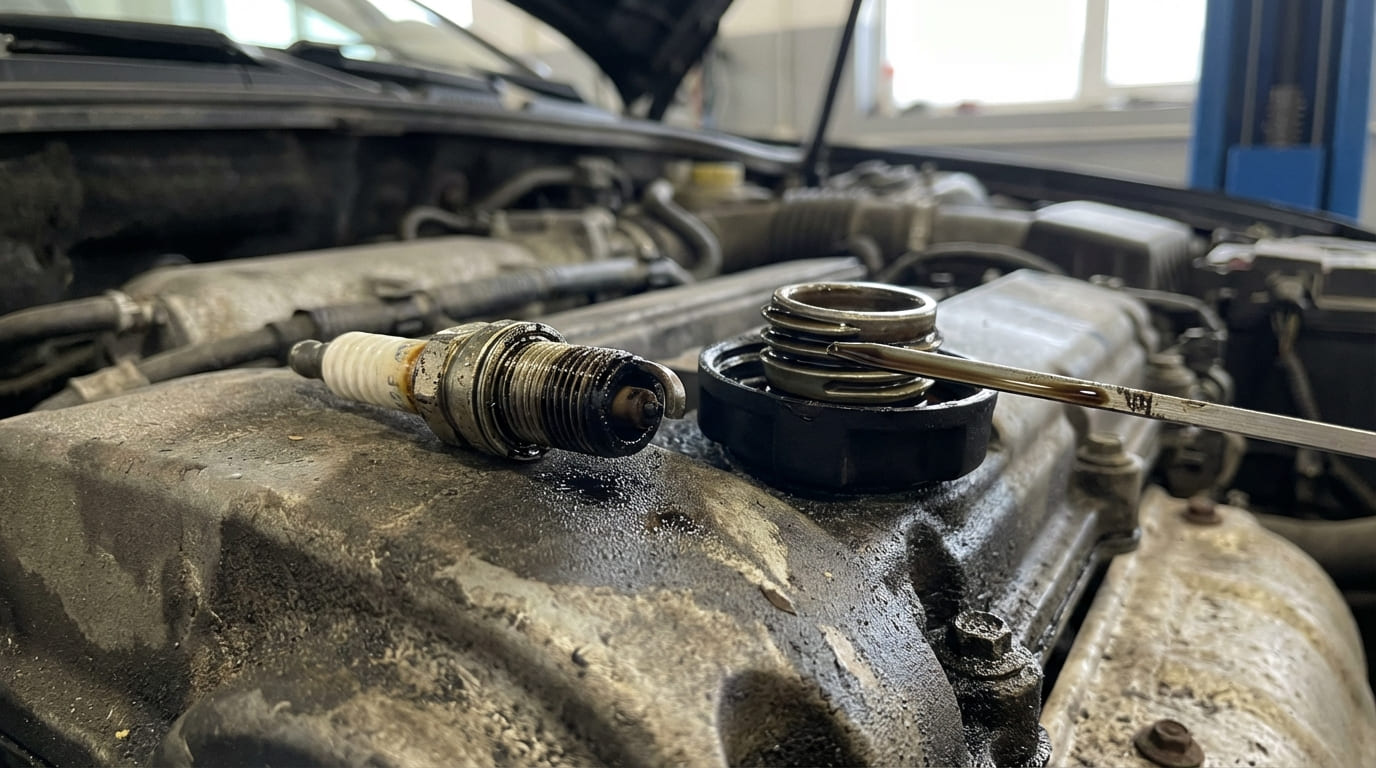
How to Check: A compression test will show a drastic drop in the affected cylinder (often 50% or more below spec). A leak-down test will confirm if air is escaping past the rings into the crankcase. If you hear hissing from the oil filler cap or dipstick tube while the engine runs, the piston seals are gone.
Oil Contamination and Lubrication Failure
This is the silent killer. Damaged pistons allow massive amounts of blow-by gases to enter the crankcase, pressurizing it and forcing oil out of seals. Worse, if the piston is shedding aluminum fragments, those particles mix with the engine oil.
- Oil pressure drops as debris clogs the oil pickup screen
- Bearings (rod and main) begin to wear rapidly due to abrasive aluminum particles
- The oil pump may fail if large fragments get lodged in its gears
How to Check: Pull the dipstick. If the oil looks metallic or glittery, stop immediately. Send an oil sample for analysis if you suspect early-stage wear, but visible metal means the engine is already compromised beyond simple repair.
Catastrophic Mechanical Interference
If a piston cracks severely or a piece breaks off, it can physically interfere with other components. A loose fragment can bounce between the piston and cylinder head, destroying valves. A collapsed skirt can wedge against the cylinder wall, locking the engine instantly.
- Valves bend or break upon contact with debris
- Cylinder walls score deeply, requiring block replacement or boring
- Connecting rods can bend or snap if the piston seizes
In my shop, we call this “the domino effect.” I once saw a customer drive half a mile with a cracked piston. The cost went from a $1,500 short block replacement to a $6,000 full engine swap because aluminum shavings destroyed the turbocharger, oil cooler, and every bearing in the engine. Don’t test your luck.
How Long Can You Drive with Damaged Pistons?
This is the most common question I get, and the answer is always the same: Zero miles. Unlike a bad spark plug or a leaking gasket, piston damage is structural and progressive. There is no “safe” distance to limp home if the piston is physically compromised.
- If it’s just worn rings: You might drive for weeks or months, but you’re risking catalytic converter damage from oil burning. It’s not an emergency, but it’s a ticking clock.
- If it’s a cracked skirt or broken land: You are minutes away from total engine failure. The crack will spread with every combustion cycle. Once a piece breaks off, it acts like a grenade in your cylinder.
- If you hear knocking or slap: Stop immediately. Every revolution grinds metal into metal. Driving another mile can turn a $2,000 repair into a $6,000 replacement.
The Verdict: Do not drive. Tow the vehicle. The cost of a tow truck ($100–$200) is negligible compared to the cost of replacing a destroyed engine block, turbo, and oil system. There is no such thing as “careful driving” when internal components are disintegrating.
Common Failure Modes and Their Specific Consequences
Not all piston damage behaves the same way. Understanding the type of failure helps predict how quickly the engine will die.
Cracked or Collapsed Skirts
Often caused by overheating or detonation. The piston loses its structural integrity and wobbles in the bore. This creates a loud “piston slap” noise that gets worse as the engine warms up. Eventually, the skirt fragments break off, scoring the cylinder wall irreparably.
Broken Ring Lands
The grooves that hold the piston rings crack or break off. This usually happens due to severe detonation (knocking). Without proper ring support, compression drops instantly, and oil control is lost. The engine will smoke heavily and run very poorly. This failure can happen suddenly and without much prior warning noise.
Melted Piston Crowns
Caused by pre-ignition or extreme lean conditions. The center of the piston melts, creating a hole. This allows high-pressure combustion gases to blast directly into the crankcase. The engine will lose power rapidly and may stall. The heat can also damage the cylinder head and valves above it.
Piston Pin Failure
If the wrist pin breaks or comes loose, the piston can rotate in the cylinder or slam into the cylinder head. This is an instant catastrophic failure. The engine will stop running immediately, often with a loud bang. Internal damage is total.
Cascading Damage: What Else Dies?
A bad piston rarely dies alone. It takes other expensive components with it. Here is what else you will likely need to replace if you keep driving.
Cylinder Walls
Aluminum is softer than the cast iron or steel liners in many blocks. As the piston disintegrates, it gouges the walls. Light scoring might be honable, but deep gouges mean the block is scrap. You cannot simply replace the piston; you must address the bore damage.
Connecting Rods and Bearings
Debris in the oil acts like sandpaper. Rod bearings are the first to go, leading to a knocking sound. If ignored, the bearing spins, welds to the crankshaft, and breaks the rod. A broken rod can punch a hole in the engine block, ending the engine’s life permanently.
Turbochargers
If your engine is turbocharged, any debris that exits the exhaust port will hit the turbine wheel. Turbo wheels spin at over 100,000 RPM. Even a tiny piece of aluminum can shatter the wheel, sending more shrapnel into the intercooler and intake manifold. Cleaning this debris out is nearly impossible without replacing the entire intake system.
Catalytic Converters
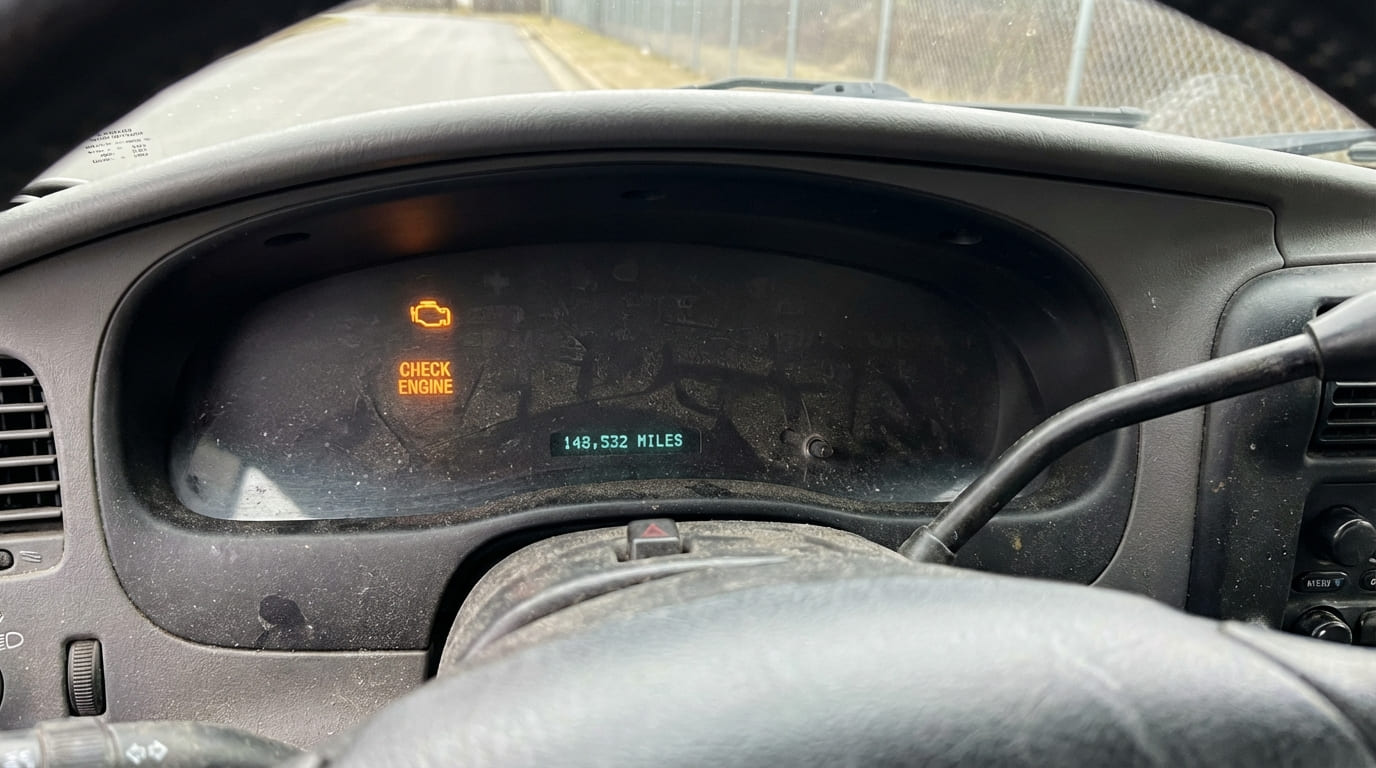
Burned oil and unburnt fuel from a misfiring cylinder will overheat and clog the catalytic converter. Additionally, physical debris from the piston can melt or block the converter substrate. This triggers check engine lights and causes further backpressure issues, worsening the engine’s performance.
Diagnosis: Confirming the Damage
Before tearing down the engine, confirm the diagnosis. Misdiagnosis leads to wasted money on parts that don’t fix the problem.
Step-by-Step Confirmation
- Listen for Noise: Piston slap is a hollow, double-knock sound that is loudest when cold. Rod knock is a deeper, heavier knock that gets louder with RPM. Use a mechanic’s stethoscope to isolate the cylinder.
- Check Exhaust Smoke: Blue smoke indicates oil burning (ring/piston seal failure). White smoke could indicate coolant entry (cracked piston/head), but smell it—coolant smells sweet, oil smells acrid.
- Compression and Leak-Down Tests: These are non-negotiable. Low compression plus high leakage into the crankcase confirms piston/ring failure. If leakage goes to the intake or exhaust, suspect valves first.
- Borescope Inspection: Remove the spark plug and insert a borescope camera. Look for vertical scratches on the cylinder wall, missing pieces of the piston crown, or carbon buildup patterns that indicate blow-by. This is the most definitive non-invasive test.
- Oil Analysis: If the engine is still running smoothly but you suspect wear, an oil analysis can detect elevated aluminum levels. This catches early-stage wear before catastrophic failure.
Repair vs. Replace: The Hard Truth
Once piston damage is confirmed, the question is whether to repair or replace. In most modern engines, repairing a single piston is not cost-effective due to labor costs.
| Damage Level | Symptoms | Repair Option | Verdict |
|---|---|---|---|
| Minor Skirt Scuffing | Light slap noise, normal compression | Hone cylinders, replace piston/rings | Feasible if caught early |
| Broken Ring Land | Low compression, blue smoke, misfire | Replace piston, clean carbon, check bore | Expensive, labor-intensive |
| Melted Crown/Hole | Severe power loss, heavy smoke, rough run | Full engine rebuild or replacement | Rebuild rarely worth it |
| Fragmented Piston | Engine locked or severe knock, metal in oil | Replace engine assembly | Do not repair—replace |
| Pin Failure | Sudden stop, loud bang, hole in block | Replace engine assembly | Total loss |
Costs vary by vehicle. A partial repair (one piston) often costs $1,000–$2,000 in labor and parts. A full rebuild ranges from $3,000 to $6,000. A used JDM or domestic long block might cost $1,500–$3,500 installed. For most daily drivers, a used low-mileage engine is the most reliable financial choice.
Best Practices: Do and Avoid
- ✅ Recommended: Stop driving immediately if you suspect piston damage. Towing is cheaper than a new engine.
- ✅ Recommended: Flush the entire oil system, including coolers and lines, if metal debris is present. Debris hides in tight spots.
- ✅ Recommended: Replace the oil pump and pickup screen whenever opening the bottom end for piston issues.
- ⚠️ Avoid: Trying to “fix” a knocking engine with thicker oil. This masks the symptom briefly but accelerates bearing failure.
- ⚠️ Avoid: Reusing head bolts on torque-to-yield engines. They stretch and must be replaced to ensure proper sealing.
- ⚠️ Avoid: Installing new pistons without checking ring end gaps. Incorrect gaps lead to rapid repeat failure.
Situation: A 2018 Subaru WRX came in with a slight tick on cold starts. Owner ignored it for three months. Initial Assumption: Simple lifter tick. Deep Dive: Borescope showed severe scoring on cylinder #4. Compression was 90 psi (spec is 170+). Oil analysis showed high aluminum. Nuanced Lesson Learned: The piston skirt had collapsed due to a tuning issue causing detonation. By the time he arrived, metal shavings had clogged the oil pickup. The engine needed a full replacement, not just a piston. Early diagnosis would have saved $4,000.
Situation: A diesel truck with excessive blow-by and power loss. Driver thought it was just “old age.” Initial Assumption: Worn rings. Discovery: Leak-down test revealed 60% leakage into the crankcase. Teardown showed a cracked piston crown from a faulty injector spraying too much fuel. Nuanced Lesson Learned: Diesel pistons are robust, but hydraulic pressure from excess fuel can crack them. The injectors had to be replaced along with the pistons. Fixing only the pistons would have caused immediate repeat failure.
Situation: A high-performance BMW with intermittent misfires. No noise, no smoke. Initial Assumption: Coil pack failure. Discovery: Compression test showed one cylinder at 50% spec. Borescope revealed a small hole in the piston crown from pre-ignition. Nuanced Lesson Learned: Not all piston failures are noisy. A hole can leak compression without immediate mechanical interference. However, the hot gases eroded the cylinder wall quickly. Catching it via compression test saved the block from needing replacement.
Running an engine with damaged pistons is a gamble with terrible odds. The initial symptom might seem minor—a tick, a bit of smoke, a slight loss of power—but the internal damage spreads rapidly. Aluminum debris destroys bearings, turbos, and oil systems. The smartest move is always to diagnose early with a borescope and compression test. If damage is confirmed, stop driving. The cost of a tow truck is a fraction of the cost of a new engine. Treat piston damage as a critical failure, not a maintenance item.