In my shop, when I pull an engine apart, the condition of the piston rings often tells me more about the engine’s life story than any other component. Over two decades, I’ve seen rings fail from neglect, poor maintenance, and misdiagnosis. This guide cuts through theory and gives you the real-world steps to diagnose, assess, and act on piston ring issues—whether you’re a DIYer or deciding whether to repair or replace.
What Are Piston Rings and Where Are They Located?
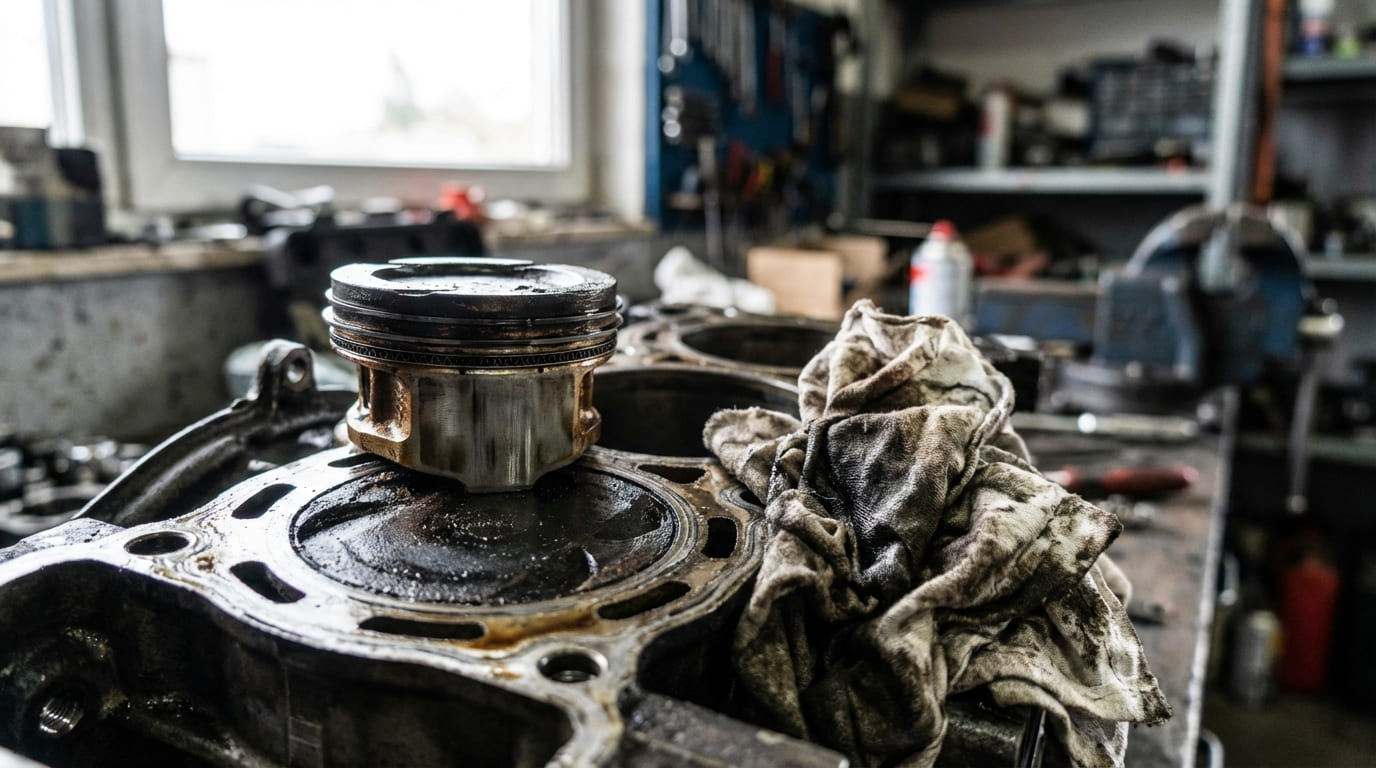
Piston rings are precision metal seals that sit in grooves around the piston. They maintain contact with the cylinder wall as the piston moves, sealing combustion pressure and managing oil. Most engines have three rings per piston: two compression rings on top, one oil control ring at the bottom. They’re not spacers—they’re critical for power, efficiency, and oil control.
Types of Piston Rings and What They Do
Understanding the function of each ring helps diagnose problems faster.
Compression Rings (Top and Second)
The top ring handles the most extreme conditions—over 600°F and 1,000+ psi in performance engines. It’s often coated with molybdenum or chrome to resist scuffing. The second ring assists in sealing but also helps scrape oil downward. Many modern second rings are reverse-tapered to improve oil return. I’ve found that a poorly sealing second ring can cause oil consumption even when the top ring is fine.
Oil Control Ring (Bottom)
This ring scrapes excess oil off the cylinder wall and returns it to the crankcase through oil drain holes in the piston. Two-piece designs use a cast iron ring with a spring expander. Three-piece setups (two thin rails and a center spring) are better for performance and turbo engines due to improved conformability. Cheap aftermarket oil rings often fail early—chrome plating can flake, reducing sealing and increasing oil burn.
Key Functions of Piston Rings
Rings do more than just seal—they’re central to engine health.
- Seal combustion pressure: Prevent blow-by, which robs power and increases emissions. More than 15% leak-down on a test usually means ring or cylinder issues.
- Control oil consumption: Stop excess oil from entering the combustion chamber. Worn or stuck oil rings cause blue smoke, especially on deceleration.
- Transfer heat: Rings move 20–40% of piston heat to the cylinder wall. When rings stick or lose tension, pistons overheat and can crack or seize.
- Stabilize the piston: Reduce side-to-side movement, minimizing skirt wear and piston slap. Worn ring grooves can cause noticeable rock, especially on cold start.
Signs of Piston Ring Failure
Symptoms often mimic other issues. Don’t jump to conclusions—test first.
- Blue smoke on acceleration or deceleration: Classic sign of oil burning. Decel smoke points more to rings; cold-start smoke often means valve seals.
- Low power, poor fuel economy: Caused by blow-by reducing cylinder pressure. Misfires and rough idle may follow.
- High crankcase pressure: Hissing from oil cap, oil leaks, or dipstick popping out. But a clogged PCV system can cause the same thing.
- Fouled spark plugs: Oily, black deposits on one or two plugs suggest localized oil entry—likely rings or guides.
- Catalytic converter failure: Burning oil coats the catalyst with phosphorus, triggering P0420 codes. I’ve replaced $1,200 converters only to find the real issue was worn rings.
How to Diagnose Piston Ring Problems
Diagnosis is about process, not guesswork. Use these tests in order.
Oil Consumption Test
Drain and refill with a known amount of oil. Drive 1,000 miles under normal conditions. Check level. Most manufacturers accept up to one quart per 1,000 miles. On turbo or high-performance engines, even half a quart may signal a problem.
Compression Test
Remove spark plugs, disable fuel and ignition, hold throttle open, and crank each cylinder. Note readings. A difference of more than 10–15% between cylinders is a red flag. Then do a wet test: add 5–10 ml of oil to a low cylinder and retest. If compression improves significantly, the issue is likely worn rings or cylinder walls. If not, suspect valves or head gasket.
Leak-Down Test
More accurate than compression testing. With piston at TDC on compression stroke, apply 100 psi of regulated air. Listen for leaks:
- Hissing from oil fill cap? Likely bad rings.
- From intake? Intake valve leak.
- From exhaust? Exhaust valve issue.
Generally, under 10% leakage is good. Over 20% means repairs are likely needed. But context matters—I’ve seen engines with 18% leak-down run reliably for years.
PCV System Inspection
Remove oil cap while engine idles. Strong pulsing or visible oil mist means high crankcase pressure. Use a manometer if possible. Some modern engines run slight vacuum—check specs before assuming failure.
Exhaust Smoke and Spark Plug Analysis
Blue smoke on deceleration? Strong indicator of oil entering via rings or guides. Cold-start-only smoke? Likely valve seals. Check spark plugs: oily fouling on all cylinders suggests PCV or oil control issues; one or two cylinders point to localized ring or valve problems.
Diagnostic Decision Table
| Symptom | Most Likely Cause | Less Common Causes | Recommended Test |
|---|---|---|---|
| Blue smoke on decel | Worn oil control rings | Worn valve guides, failed valve seals | Leak-down test, wet compression test |
| High crankcase pressure | Compression ring blow-by | Clogged PCV, failed turbo seal | Manometer check, PCV flow test |
| Oil on spark plugs | Stuck or worn oil rings | Excessive oil level, PCV over-pressurization | Inspect oil level, check ring mobility |
| Low compression, improves wet | Worn rings or cylinder | Carbon buildup, broken ring | Bore scope, measure cylinder taper |
| High oil consumption, no smoke | Internal leak (e.g., turbo feed) | PCV routing issue, external seepage | Visual inspection, pressure test |
Causes of Piston Ring Failure
Failure isn’t always wear. Often, it’s a symptom of deeper issues.
- Abrasive wear: Dirt in oil or intake air accelerates wear. In dusty areas, shorten oil change intervals.
- Poor lubrication: Low oil level, wrong viscosity, or clogged oil jets starve rings. I’ve seen engines fail from a blocked oil pickup after 15,000 miles.
- Excessive heat: Overheating, lean fuel mixtures, or detonation can soften rings. Towing in hot weather with low coolant is a common cause.
- Carbon buildup: Short trips and stop-and-go driving leave sludge. Rings stick and lose sealing ability. Direct-injection engines are especially prone.
- Installation errors: Rings installed upside down, wrong end gap, or reused torque-to-yield (TTY) head bolts can cause early failure. One rebuild failed because the installer reused TTY bolts—caused head gasket breach and ring land fatigue.
Repair vs. Replace: Cost and Practicality
Replacing piston rings means engine disassembly—partial or full rebuild. Here’s what to expect:
| Service | Labor Cost | Parts Cost | Viability |
|---|---|---|---|
| Ring and cylinder hone (in-frame) | $600–$1,000 | $100–$200 | Only viable if cylinder walls are in good condition |
| Short block replacement | $300–$600 | $1,500–$3,000 | Often faster and more reliable than rebuild |
| Complete engine rebuild | $1,500–$3,000 | $800–$2,000 | Best for high-performance or classic engines |
For most daily drivers, a remanufactured short block is the smartest move. Rebuilding takes time, requires precision tools, and mistakes are costly. Unless you’re restoring a rare engine or building performance, replacement usually wins on cost and reliability.
Best Practices: Do’s and Don’ts
- ✅ Clean ring grooves thoroughly: Use a ring groove cleaning tool. Even small carbon deposits prevent rings from seating and sealing.
- ✅ Measure ring end gaps: Check at top, middle, and bottom of bore. Excessive gap means cylinder wear—may need honing or boring.
- ✅ Use assembly lube: Not engine oil. It stays in place during startup and protects rings until oil pressure builds.
- ⚠️ Never reuse torque-to-yield (TTY) head bolts: On most modern engines, they stretch permanently. Reuse risks head gasket failure and warped heads.
- ⚠️ Check ring orientation: Many second rings have a “top” mark. Installing upside down reduces oil control and increases consumption.
- ⚠️ Don’t over-compress rings: Use a ring compressor and install slowly. I’ve seen rings break from excessive force, causing immediate blow-by.
Real-World Lessons from the Shop
Situation: 2015 turbo 4-cylinder burning a quart every 750 miles. Slight blue smoke on decel, low compression.
Assumption: Worn rings.
Truth: Leak-down showed 12–15% loss at oil cap, but bore scope revealed clean walls and mobile rings. Found a collapsed PCV hose.
Lesson: High crankcase pressure can force oil past good rings. Always test the whole system before tearing into the engine.
Situation: Rebuilt 5.7L V8 losing power after 8,000 miles. Compression down 20% on two cylinders. Wet test showed no improvement.
Assumption: Head gasket or rings.
Truth: No coolant in oil. Leak-down pointed to intake valves. Found incorrect valve lash from assembly.
Lesson: Low compression isn’t always rings. Valve sealing is just as critical—and easier to miss.
Situation: Diesel pickup with 200,000 miles, high blow-by and oil use. Owner wanted a rebuild.
Assumption: Worn rings and cylinders.
Truth: Bore scope showed stuck rings but minimal wear. We did a chemical decarbonizing treatment and switched to high-detergent oil.
Lesson: Sometimes rings aren’t worn—they’re just stuck. Try maintenance first. Saved the owner $3,000.
In my experience, piston rings are more than parts—they’re storytellers. Their condition reveals how the engine was driven, cooled, and maintained. Before committing to a rebuild, run the right tests. Often, the fix is simpler than you think. And when replacement is needed, follow factory specs exactly—ring gap, torque sequence, and break-in procedure make all the difference.