After two decades in the shop, I’ve seen more than a few engines saved—and some lost—because of how we interpret the knock sensor’s role. It’s not a glamorous part, tucked away on the block or deep in the valley, but its job is critical. In my experience, understanding what it actually does—and what it doesn’t do—can mean the difference between a quick fix and an unnecessary teardown.
What the Knock Sensor Actually Does
The knock sensor detects harmful combustion events—specifically detonation (pinging) and pre-ignition—by sensing high-frequency vibrations in the engine block. When it detects knock, it sends a signal to the engine control unit (ECU), which responds by retarding ignition timing to protect the engine. This is not a passive monitor; it’s an active protection system.
It does not control fuel trims, manage boost, or regulate cooling. Its sole purpose is to detect knock and allow the ECU to react. Misunderstanding this leads to misdiagnosis.
How to Check for Real Knock vs. Sensor Failure
Before replacing anything, confirm whether the engine is actually knocking or if the sensor is falsely reporting. Here’s how:
- Use a mechanic’s stethoscope or a long screwdriver against your ear to listen near the engine block under load. True knock sounds like a metallic rattle or ping during acceleration.
- Try a full tank of 91+ octane fuel. If the knock disappears, the issue is likely fuel-related, not the sensor.
- Perform a decarbon service if the engine has over 80,000 miles—especially on direct-injection engines where carbon buildup is common.
In my shop, we never replace a knock sensor without first verifying the engine isn’t actually knocking. More than half the time, the sensor is telling the truth—the engine is in distress. Fix the cause, not the messenger.
How the Knock Sensor Works: Practical Breakdown
Most sensors use a piezoelectric crystal that generates a small AC voltage when the engine block vibrates at knock frequencies (typically 5–15 kHz). The ECU filters out normal engine noise and reacts only to signals in this range.
Location matters: mounted on the engine block, it must make solid metal-to-metal contact. Even paint, oil, or old sealant under the sensor can dampen the signal. Always clean the bore and torque to spec.
ECU Response: What Happens When Knock Is Detected
When the ECU receives a knock signal, it takes immediate action:
- Retards ignition timing—usually by 3–8 degrees—to reduce cylinder pressure and stop the knock.
- May enrich the fuel mixture slightly on some platforms (e.g., GM, Ford) to cool combustion.
- If knock persists or the signal is invalid, sets a trouble code and may limit engine power.
You can see timing retard in real time using an OBD2 scanner. If timing doesn’t pull under load when you hear pinging, the system isn’t working—either the sensor, wiring, or ECU is at fault.
Common Causes of Engine Knock
Don’t assume a knock code means a bad sensor. These conditions cause real knock and will trigger the sensor correctly:
- Low-octane fuel—especially in turbocharged or high-compression engines
- Carbon buildup in combustion chambers
- Engine overheating (check coolant level, thermostat, fan operation)
- Lean air-fuel mixture (from vacuum leaks, dirty MAF, or clogged injectors)
- Incorrect spark plugs (wrong heat range or gap)
- Over-advanced timing (due to cam or crank sensor issues)
I’ve seen customers burn through three sensors before realizing their EGR valve was clogged. Always rule out root causes before replacing the sensor.
Symptoms of a Faulty Knock Sensor
A failing knock sensor may cause:
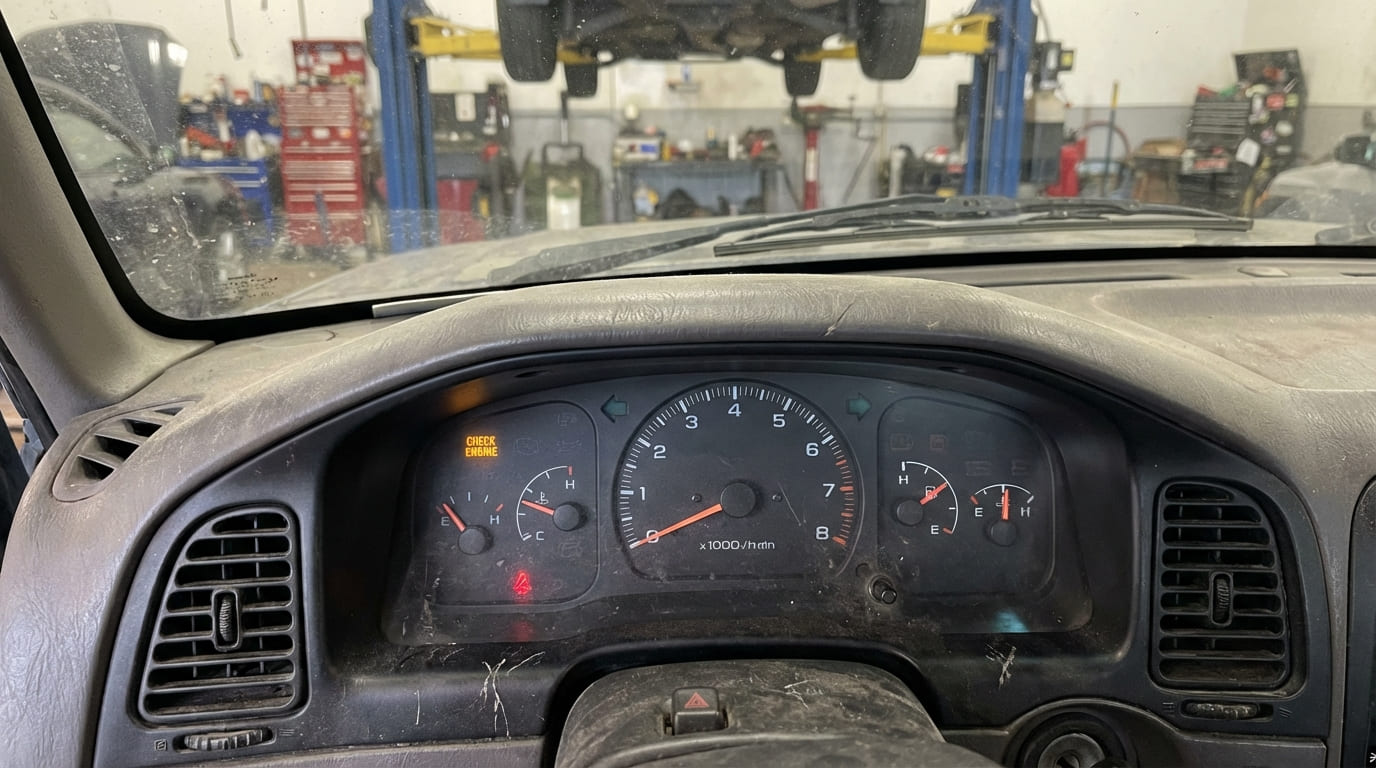
- Check Engine Light with codes P0325 (circuit malfunction), P0327 (low input), or P0328 (high input)
- Reduced power and acceleration (ECU in limp mode)
- Poor fuel economy (from constant timing retard)
- Audible engine knock under load
- Hesitation or misfire-like symptoms during hard acceleration
Diagnosing Knock Sensor Problems
Follow this step-by-step process before replacing parts:
1. Visual and Physical Inspection
Check the wiring harness for damage, especially near exhaust manifolds or sharp edges. Inspect the sensor for cracks, corrosion, or oil contamination. Ensure it’s properly tightened—loose mounting kills sensitivity.
2. OBD2 Live Data Test
Monitor knock sensor voltage and ignition timing advance:
- At idle: small fluctuations are normal.
- Under load: expect increased signal and timing retard (3–8 degrees).
- No signal or flatline? Possible open circuit or dead sensor.
- Constant high signal? Could be actual knock, wiring short, or failed sensor.
3. Simulated Knock Test (Key On, Engine Off)
With the scanner connected, lightly tap the engine block 2–3 inches from the sensor with a wrench. You should see:
- An AC voltage spike (typically 0.5–2V)
- Immediate ignition timing retard in live data
No response? Test the circuit with a multimeter or suspect the sensor.
4. Electrical Circuit Check
Refer to the service manual for resistance specs (some sensors are high-impedance). Check for:
- Reference voltage (if applicable—some systems provide 5V)
- Ground continuity
- Signal wire continuity to the ECU
I once found a P0327 code caused by corrosion in the ECU connector, not the sensor. Always test the full circuit—including the ECU side—before replacing parts.
Real-World Diagnosis Guide
| Symptom | Most Likely Cause | Less Common But Possible | Diagnostic Tip |
|---|---|---|---|
| CEL with P0327 (low input) | Open circuit in wiring | Failed sensor, ECU input failure | Check continuity to ECU first—many shops skip this and replace the sensor unnecessarily |
| Engine pings under load | Low octane fuel or carbon buildup | Faulty knock sensor, incorrect spark plugs | Try a tank of premium and a decarbon treatment before condemning the sensor |
| Timing stuck at 10° BTDC or less | Persistent knock signal (real or false) | ECU programming issue, cam timing off | Monitor live knock data while revving—look for false spikes |
| No signal during tap test | Dead sensor or broken wire | ECU input failure, incorrect test location | Tap within 2–3 inches of the sensor—further away, the signal may not register |
Replacement Tips and Cost Considerations
Knock sensor prices vary:
| Part Type | Cost Range |
|---|---|
| OEM Sensor | $80–$180 |
| Reputable Aftermarket (e.g., Denso, Bosch) | $50–$120 |
| Budget Aftermarket | $30–$60 |
Labor ranges from $100–$400 depending on access. On some engines (e.g., V6 in transverse layout), you may need to remove the intake manifold or exhaust components.
Ask: Is the repair worth it? On a high-mileage vehicle with no major symptoms, a P0327 code alone may not justify $500 in labor. But if the engine is losing power or ping is audible, fix it—ignoring it can lead to piston damage.
Best Practices During Replacement
- ✅ Clean the sensor bore with a thread chaser or tap—debris insulates the sensor.
- ✅ Torque to spec (typically 15–25 Nm; check manual). Over-tightening cracks the piezo element.
- ✅ Route the wiring away from exhaust and moving parts.
- ⚠️ Avoid cheap sensors—they often respond too slowly or to the wrong frequencies.
- ⚠️ Never assume the new sensor fixed it—clear codes and road-test under load.
After replacement, monitor live data during a drive. You should see normal signal activity and timing response. If timing stays retarded, the ECU may need relearning—or there’s still an underlying issue.