Worn piston rings lead to oil consumption, power loss, and excessive blow-by—but these symptoms overlap with other engine issues. Jumping to conclusions can cost you thousands. This guide gives you a step-by-step diagnostic path used in professional shops to confirm ring wear with confidence.
Symptom Recognition and Initial Screening
Worn rings don’t fail overnight. The signs build gradually. Recognizing the pattern early helps avoid misdiagnosis.
- Excessive oil consumption: More than 1 quart per 1,000 miles is a red flag. Track consumption over 1,000 miles after a fresh oil change.
- Blue exhaust smoke under load: Especially during acceleration or hard throttle. Cold-start smoke that clears up points more to valve seals.
- Low power and poor throttle response: Compression loss reduces cylinder efficiency. Feels like a fuel or ignition issue.
- High crankcase pressure: Dipstick pops out, oil cap blows off, or visible puffing from filler neck.
- Fouled spark plugs with oily deposits: Check plugs during routine changes. Oily residue on one or more cylinders suggests oil entering combustion chamber.
These symptoms alone aren’t proof of ring wear. Other components fail similarly and often at the same time.
Rule Out Common Mimics First
Before testing rings, eliminate these frequent culprits:
- Valve stem seals: Failures cause cold-start smoke and oil on intake valve stems. A leak-down test with air escaping through the intake indicates valve issues, not rings.
- Turbocharger seal leaks: Oil in the intercooler pipe or intake hose points to turbo, not rings. Disconnect the intake and inspect for pooling oil.
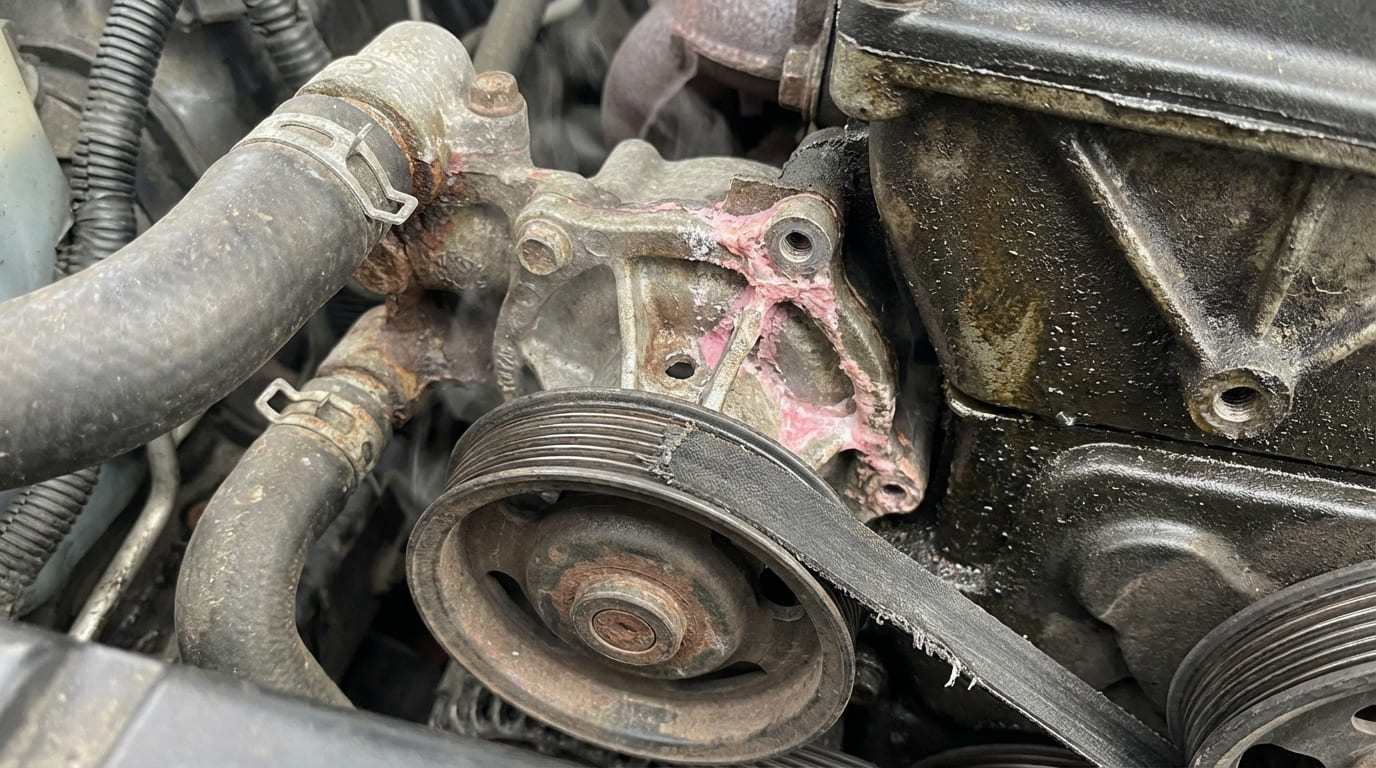
- External oil leaks: Oil dripping onto exhaust manifolds burns and looks like internal consumption. Inspect valve cover gaskets, oil pan, and rear main seal.
- Clogged PCV system: A blocked valve or hose traps crankcase pressure, forcing oil out and mimicking blow-by. Always test PCV function first.
- Head gasket failure: Coolant in oil, bubbles in radiator, or misfires across adjacent cylinders suggest gasket issues, not rings.
In my shop, we never pull a head or tear down an engine without first checking the PCV valve. A $12 part has saved customers from unnecessary $3,000 rebuilds more than once.
Core Diagnostic Tests for Piston Ring Wear
Use these three tests in sequence. Together, they confirm or rule out ring failure with high accuracy.
Compression Test (Dry and Wet)
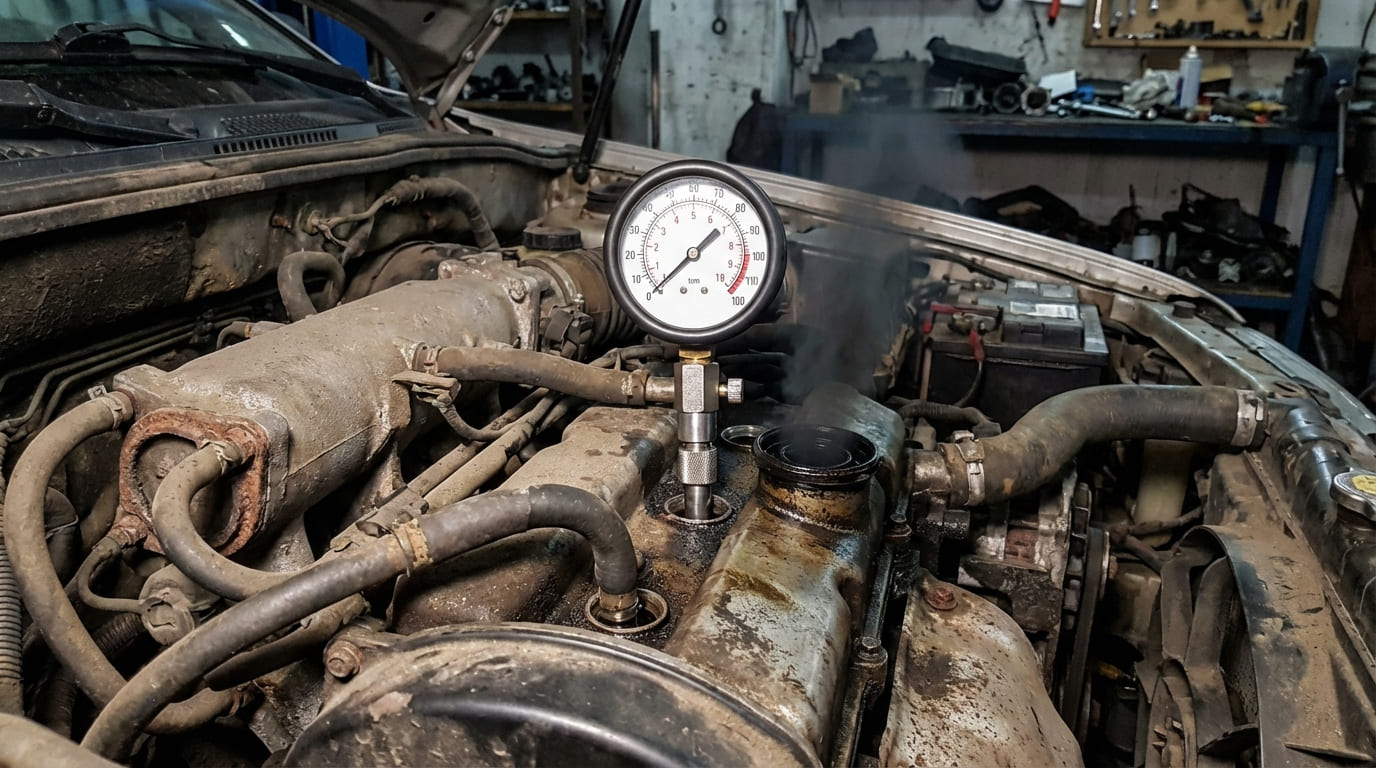
This is your first hard data point. It measures dynamic cylinder pressure during cranking.
How to Check:
- Charge the battery fully—low voltage reduces cranking speed and skews results.
- Warm engine to operating temperature (190°F+).
- Disable fuel (remove fuel pump relay) and ignition (unplug coil packs).
- Remove all spark plugs and label wires.
- Screw in compression gauge, hold throttle wide open, crank 4–6 full strokes.
- Record each cylinder’s peak psi.
Compare readings to factory specs. General guidelines:
- Healthy engine: 130–160 psi, with no more than 10% variation between cylinders.
- Low compression: Below 100 psi or 20% lower than highest cylinder.
Now perform a wet compression test: Add 5–10 ml of engine oil into the low cylinder and retest.
- If compression increases significantly (20–30+ psi), rings or cylinder wall wear are likely.
- If no change, the issue is likely valves or head gasket.
Leak-Down Test
This is more diagnostic than compression testing. It shows where pressure is escaping.
How to Check:
- Remove spark plugs and rotate engine to TDC (top dead center) on compression stroke for each cylinder.
- Use a dial indicator or watch rocker arms to confirm both valves are closed.
- Connect leak-down gauge, apply 100 psi shop air, and monitor percentage loss.
- Listen for air escaping at key locations.
| Leak Location | Indicates | Action |
|---|---|---|
| Oil filler cap or dipstick tube | Ring or cylinder wall leakage | High confidence in ring wear |
| Exhaust pipe | Exhaust valve leak | Check valve seating and guides |
| Intake manifold | Intake valve leak | Inspect for carbon buildup or bent stem |
| Radiator or coolant reservoir | Head gasket or cracked head | Check for bubbling with engine running |
A leak-down above 15% requires investigation. Below 10% is generally acceptable. 10–15% is borderline, especially on high-mileage engines.
I always double-check TDC with a piston stop tool. Being off by 10 degrees can open a valve slightly and send air into the intake—making you think you have a valve issue when rings are the real problem.
Oil Consumption Measurement
Quantify the problem. Guessing leads to misdiagnosis.
How to Check:
- Change oil and filter, reset oil level to full.
- Drive 1,000 miles under normal conditions.
- Check oil level and record how much is needed to refill.
- 1 quart per 1,500–3,000 miles: Acceptable for many modern engines.
- 1 quart per 500–1,000 miles: Excessive—requires diagnosis.
- 1 quart per 500 miles or less: Severe—internal engine wear likely.
But don’t assume rings. Turbo seals, PCV issues, and oil cooler leaks also cause high consumption.
Supporting Diagnostic Tools
These tests add context and increase diagnostic confidence.
Borescope Inspection
A flexible borescope lets you see inside the cylinder without disassembly.
What to look for:
- Loss of crosshatch pattern: Cylinder walls should have a visible honing pattern. Polished or glazed walls reduce ring seal.
- Vertical scoring: Indicates ring flutter or debris ingestion.
- Carbon buildup in ring lands: Prevents rings from floating freely and sealing.
- Oily residue above piston: Confirms oil is bypassing rings.
You can’t see the rings directly, but you can infer their condition from wall finish and deposits.
Used Oil Analysis (UOA)
Lab testing of engine oil reveals wear metals and contamination.
Key indicators:
- Iron (Fe) and Chromium (Cr): High levels suggest cylinder liner and ring wear.
- Aluminum (Al): Spikes may indicate piston-to-wall contact.
- Silicon (Si): Points to dirt ingestion—common with failed air filters.
- Fuel dilution: Gasoline or diesel in oil thins lubrication and accelerates wear.
UOA isn’t a standalone test, but it supports other findings. Send a sample if the engine has over 100,000 miles or unknown maintenance history.
Interpreting Results and Making the Call
No single test confirms worn rings. Use this decision matrix to weigh evidence.
| Test Result | Points to Rings | Other Causes | Confidence |
|---|---|---|---|
| Low compression, improves with wet test | Yes | Unlikely | High |
| Leak-down >15%, air at oil cap | Very likely | Minor bore scoring | High |
| Oil consumption + blue smoke | Possible | Valve seals, turbo | Moderate |
| High Fe/Cr in oil analysis | Supportive | Abrasive wear, poor maintenance | Moderate |
| Borescope shows glazing, no scoring | Possible | Improper break-in, infrequent oil changes | Low-Moderate |
If two or more high-confidence indicators are present, ring wear is likely. But consider repair cost versus vehicle value.
Repair vs. Replace: Cost and Viability
Ring replacement requires engine disassembly. Here’s what you’re up against:
| Option | Cost Range | Best For |
|---|---|---|
| Ring and cylinder service (honing, new rings) | $1,800–$3,000 | Engines with good block and crank |
| Short block replacement | $2,500–$4,500 | High-mileage or damaged engines |
| Used long block | $1,500–$3,000 + installation | Budget rebuilds, older vehicles |
| Stop-gap additives | $20–$50 | Temporary seal improvement, not a fix |
Additives may reduce smoke slightly but won’t restore compression or stop wear. They’re a band-aid, not a repair.
A 2012 F-150 came in burning oil and low on two rear cylinders. Leak-down showed 20% loss—but air was escaping through the intake. Borescope revealed carbon-jammed intake valves, not bad rings. A $300 valve cleaning saved the owner a $2,800 rebuild.
A diesel pickup had blow-by and oil from the breather. Compression and leak-down were fine. The culprit? A clogged crankcase vent filter—common on modern emissions systems. A $40 filter and 20 minutes of labor solved it.
Best Practices Summary
- ✅ Always test PCV system first—a blocked valve mimics severe blow-by.
- ✅ Perform both dry and wet compression tests—the wet test differentiates ring from valve issues.
- ✅ Use a calibrated leak-down gauge—cheap tools give false readings.
- ✅ Verify TDC before leak-down—misalignment causes misdiagnosis.
- ⚠️ Don’t assume oil consumption means bad rings—check turbo, PCV, and external leaks.
- ⚠️ Never reuse torque-to-yield head bolts—they stretch and lose clamping force.
- ⚠️ Avoid engine disassembly without confirming test results—many ring diagnoses are wrong.
After 25 years in the bay, I’ve learned: engines are complex, but diagnostics don’t have to be. Test methodically, interpret results in context, and always rule out the simple fixes first. Worn rings are real—but they’re rarely the first answer.