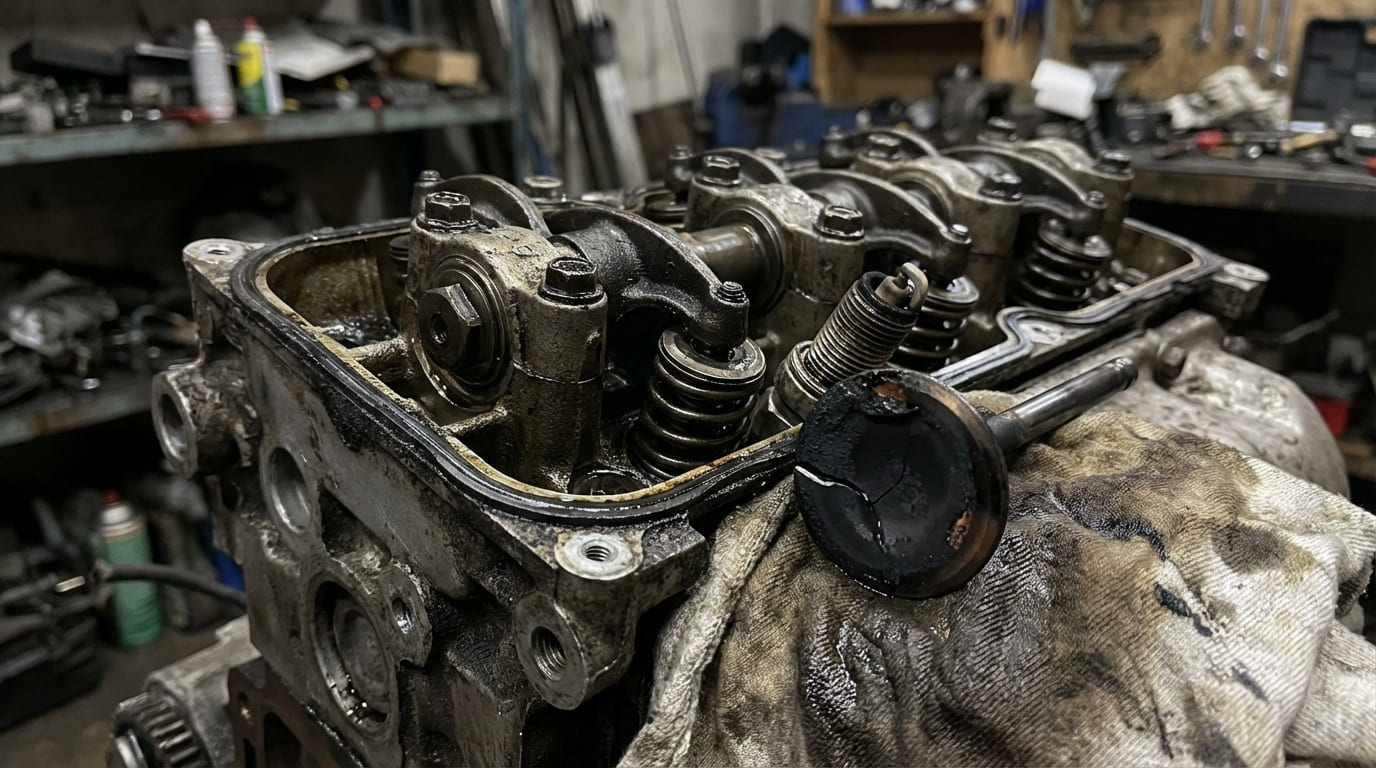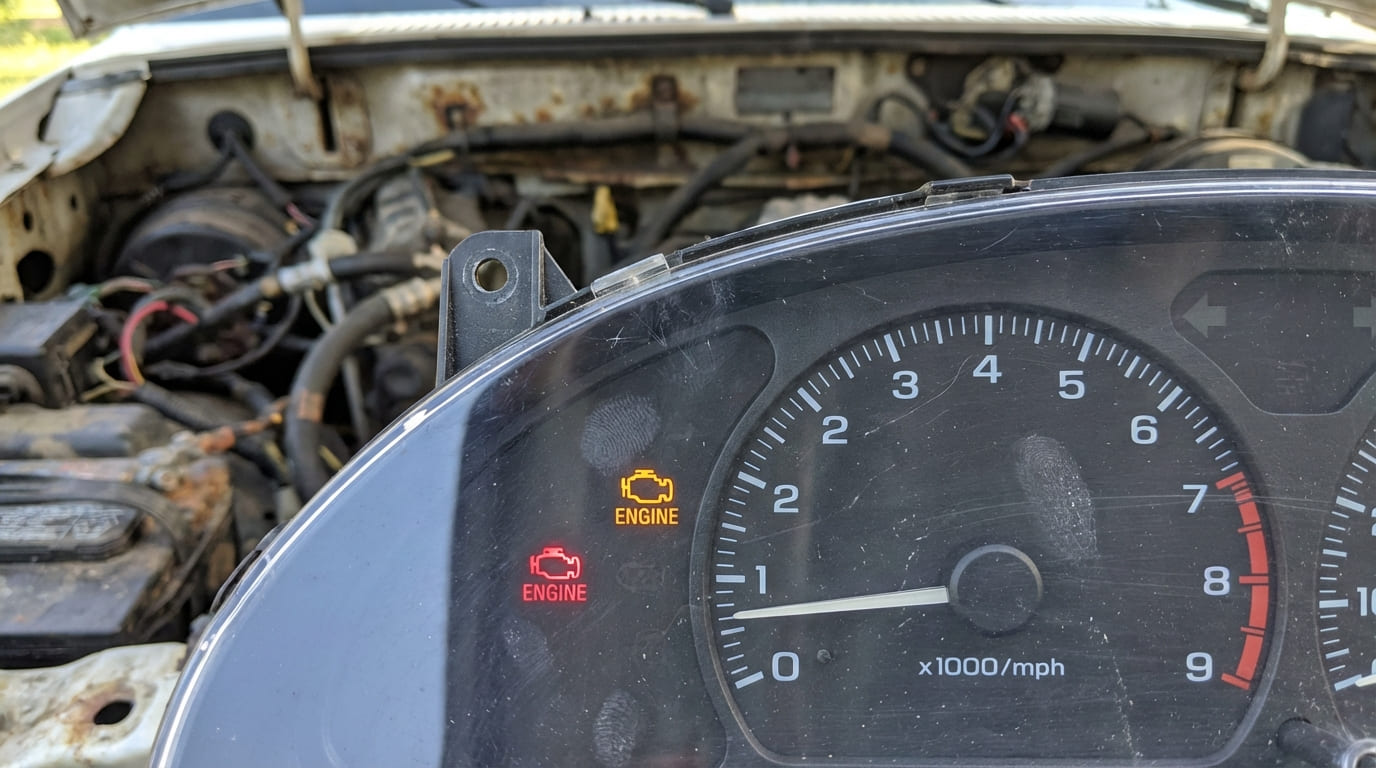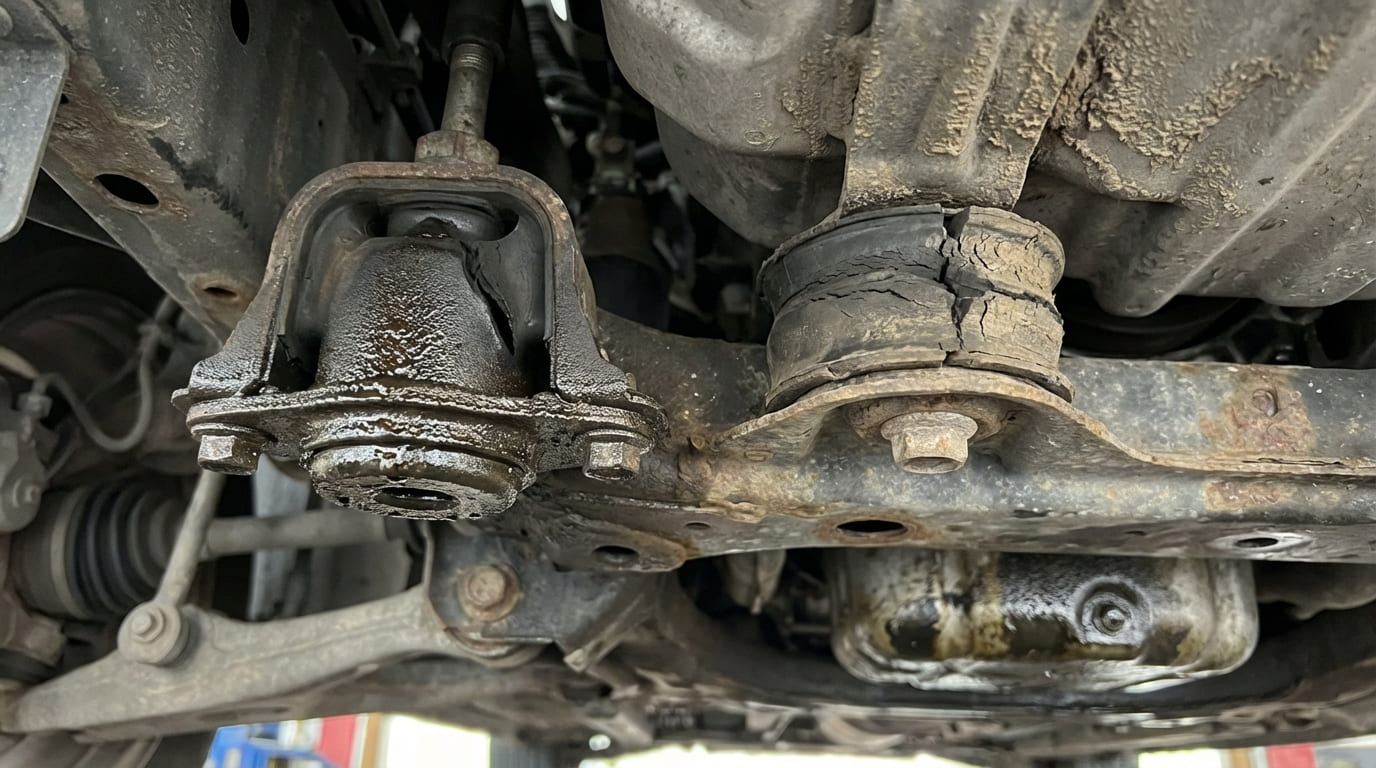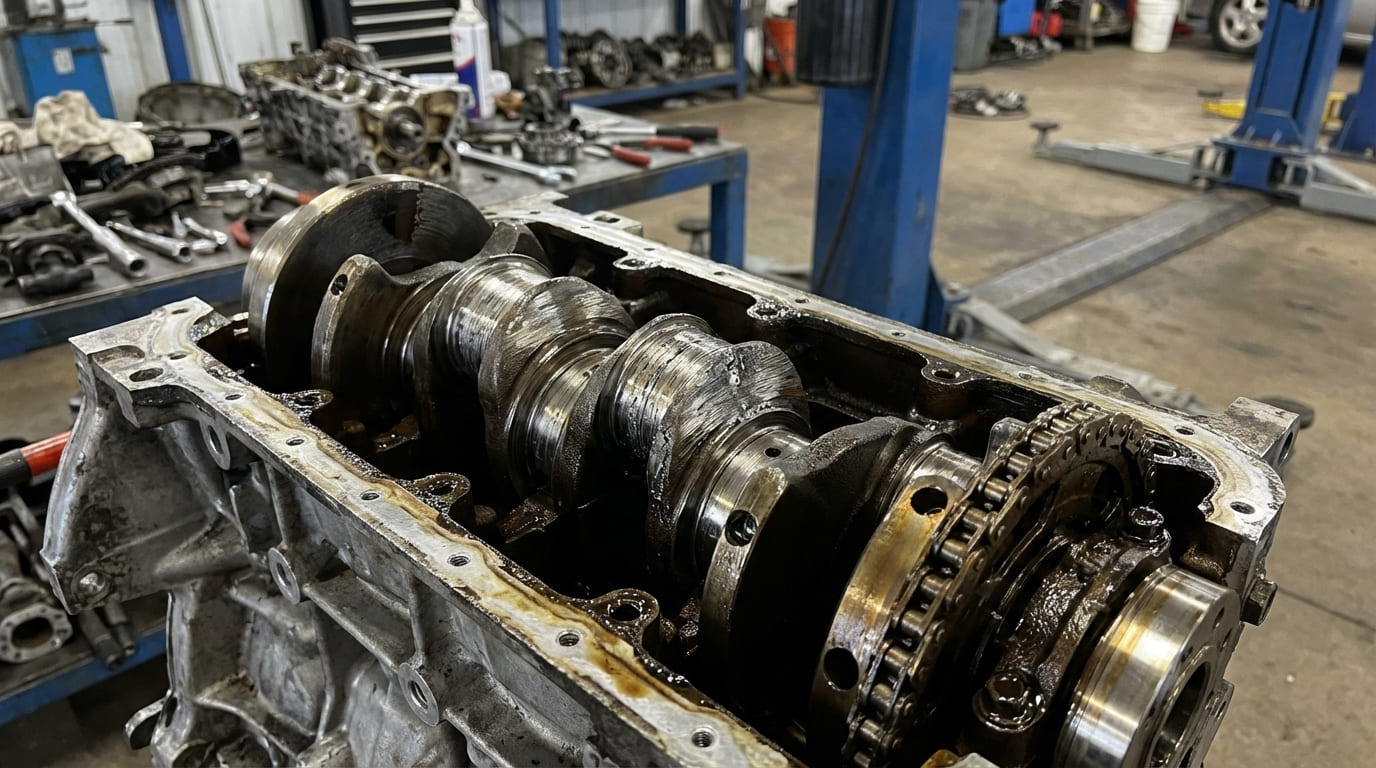
In my shop, a deep knock that changes with engine speed often points to crankshaft or bearing failure. But before discussing cost, understand this: crankshaft replacement isn’t a simple fix. It requires full engine disassembly, precision measurements, and expert assembly. I’ve seen too many shops jump straight to replacing the crank without confirming the root cause. Let’s break down what a crankshaft replacement really involves—and what you’ll pay.
Typical Crankshaft Replacement Cost
Most complete crankshaft replacements run $3,000 to $7,000. High-end or complex engines—especially those requiring engine removal or suffering collateral damage—can reach $15,000. Labor dominates the bill, often making up 60–70% of the total.
What Drives the Price?
- Vehicle type: A 4-cylinder economy car costs less than a V8 diesel or European luxury engine.
- Engine layout: Inline engines are easier to access than low-slung V or boxer engines.
- Parts source: OEM cranks cost more than aftermarket or reman units—but quality varies.
- Labor rates: $100/hour at independents; $180–$200+ at dealerships.
- Required components: Bearings, seals, gaskets, and fasteners must be replaced.
- Engine removal: Most vehicles require pulling the engine, adding 8–20 labor hours.
Parts Cost Breakdown
Never skip supporting parts. Reusing old bearings or seals risks immediate failure.
| Part | Cost Range | Notes |
|---|---|---|
| Crankshaft (OEM) | $800–$4,000+ | Higher for performance or European engines |
| Crankshaft (Aftermarket) | $400–$2,500 | Verify heat treatment and balancing |
| Crankshaft (Reman) | $300–$1,800 | Core exchange required; inspect before install |
| Used Crankshaft | $100–$800 | Only use after magnaflux, micrometer, and runout checks |
| Main Bearings | $50–$200 | Must match crank journal size (std or undersize) |
| Rod Bearings | $50–$200 | Same sizing rules as mains |
| Thrust Washers | $20–$80 | Prevents crank walk; often overlooked |
| Crank Seals (Front & Rear) | $30–$150 | Rear seal may require transmission removal |
| Engine Gasket Set | $150–$500 | Includes pan, cover, valve covers; add head gaskets if needed |
| Fasteners (TTY bolts) | $50–$300 | Replace torque-to-yield bolts unless specified otherwise |
| Oil, Coolant, Filter | $60–$180 | Fresh fluids critical for new install |
Optional but Common Add-Ons
These depend on damage found during teardown:
- Connecting Rods: $100–$500 each. Check for stretch or cap distortion if a bearing spun.
- Pistons & Rings: $50–$250 per cylinder. Replace if skirts are scored or ring lands cracked.
- Oil Pump: $100–$500. Replace if debris from bearing failure entered the pump.
- Timing Kit: $150–$800. Logical to replace when front cover is off.
- Harmonic Balancer: $100–$400. Inspect for wobble or separated rubber.
- Flywheel/Flexplate: $150–$800. Check runout and ring gear wear.
Labor Costs
Labor is the biggest cost driver. Here’s how time breaks down:
| Task | Hours | Notes |
|---|---|---|
| Engine Removal & Install | 8–20 | Subframe or transmission work increases time |
| Engine Disassembly & Reassembly | 10–30 | Includes pan drop, crank work, reassembly |
| Cleaning & Inspection | 2–8 | Essential for spotting hidden damage |
| Machining (outsourced) | 2–6 | Line boring, crank grinding, decking |
At $100–$200/hour, labor alone can reach $3,000–$6,000. Always get a detailed labor quote broken down by task.
How to Diagnose Crankshaft Problems
Don’t assume a knock means a bad crank. Confirm with these steps:
Symptoms to Watch For
- Deep knocking that increases with RPM (main or rod knock)
- Low oil pressure on a mechanical gauge
- Metal flakes in oil or filter
- Engine seizure or hard crank
How to Check: Step-by-Step Verification
- Remove oil pan: Inspect main and rod bearing caps for discoloration, scoring, or spinning.
- Measure crank end play: Use a dial indicator on the crank snout. Spec is typically 0.002–0.008″.
- Check crank runout: Mount crank in V-blocks with dial indicator. Max allowable: 0.001–0.002″ TIR.
- Test oil pressure: Use a mechanical gauge at sender port. Must meet factory spec at idle and 2,000 RPM.
- Inspect oil filter: Cut open and look for metal flakes—copper suggests bearing wear.
- Use a borescope: Check cylinder walls for rod contact or scoring.
In my shop, we always remove the serpentine belt and spin accessories by hand before opening the engine. A bad tensioner or alternator bearing can mimic a rod knock. Save time—rule out the simple stuff first.
Repair vs. Replace: When to Do What
Replacing the crank isn’t always the best move. Consider these scenarios:
| Symptom | Probable Cause | Recommended Action | Cost-Saving Tip |
|---|---|---|---|
| Knock + metal in oil, spun rod bearing visible | Localized bearing failure, journal scored | Replace crank, rods, bearings, oil pump | If block is intact, this is often cheaper than full rebuild |
| Knock + low oil pressure, main cap worn | Spun main bearing, possible block bore damage | Inspect block; may need line boring or new block | Line boring: $500–$1,000. Sometimes a reman long block is more cost-effective |
| Engine seized, multiple rods damaged, cylinder scoring | Catastrophic failure with collateral damage | Rebuild or replace engine | A quality reman long block may save $2,000+ vs. custom rebuild |
| Minor knock, slight bearing wear, high mileage | Normal wear or past oil starvation | Monitor oil pressure; consider early rebuild | Some engines tolerate minor knock—others fail fast. Know your engine’s reputation. |
Can the Crank Be Repaired?
Not every damaged crank needs replacement.
When Grinding Works
- Light scoring or taper within OEM limits (e.g., 0.010″, 0.020″)
- Journals ground undersize and polished smooth
- Must use corresponding undersize bearings
- Always recheck runout and magnaflux for cracks after grinding
When Replacement Is Required
- Cracks in fillet radii, webs, or near oil holes
- Bending beyond 0.003″ runout
- Journals worn past maximum undersize (e.g., already at 0.040″)
- Spun main bearing that damaged block bore—this is a block issue, not a crank fix
Situation: 2012 F-150 with low-frequency knock. Owner bought a new crank online.
Discovery: Main bearings were fine. Rod #5 cap was discolored—rod bolt had stretched.
Lesson: Not every knock means a bad crank. Always inspect all bearings and fasteners. Replacing the rod saved $2,800.
Situation: BMW 535i with deep knock. Previous shop quoted $6,500 for crank replacement.
Discovery: Crank was fine—harmonic balancer rubber had separated, mimicking a rod knock.
Lesson: Rule out accessory drive issues first. A borescope and belt removal can save a full teardown.
Situation: 2004 Silverado with rebuilt 5.3L knocked after 8,000 miles.
Discovery: Crank was scored, but oil pump pickup was loose—causing oil starvation.
Lesson: Fix the root cause, not just the symptom. Replacing the crank without fixing the pickup leads to repeat failure.
Post-Replacement Startup & Break-In
Your job isn’t done at torque specs. Follow this protocol:
- Prime the oil system before startup—never dry crank.
- Use a mechanical oil pressure gauge. Pressure must build within 10 seconds.
- Listen closely: any knock or ticking means shut down immediately.
- Follow break-in procedure—some engines require no idle, others specific RPM ranges.
- Change oil and filter at 500–1,000 miles. Inspect filter for metal.
Critical Do’s and Don’ts
- ✅ Clean block and cap threads with a tap. Dirty threads cause false torque readings.
- ✅ Use assembly lube on bearings and journals. Dry start kills new components.
- ✅ Torque main cap bolts in stages and sequence. Use a calibrated wrench.
- ⚠️ Never reuse torque-to-yield (TTY) bolts unless the factory allows it.
- ⚠️ Never skip bearing clearance checks with Plastigage or micrometers.
- ⚠️ Never install a crank without verifying main bore alignment—misalignment destroys bearings fast.
After 20 years in the bay, I’ve learned: crankshaft replacement is about process, not just parts. The cost reflects precision, patience, and proper diagnosis. Before authorizing the job, verify the damage, rule out look-alike issues, and consider all options—including engine replacement. And always consult the factory service manual. Trends exist, but every engine has its own rules.