The Bottom Line: What You’ll Actually Pay
Replacing piston rings is a major engine teardown, not a simple fix. A professional “ring job” (which actually requires honing, new bearings, and full gaskets) typically costs $3,500 to $6,000+. A “rings-only” teardown is a mechanical myth that leads to rapid oil consumption; if the engine is apart, the cylinders must be machined. For many modern aluminum engines, swapping in a remanufactured short block ($3,000–$5,000) is often cheaper, faster, and comes with a warranty compared to rebuilding your original block.
Total Installed Cost by Repair Scope
Most online guides quote “rings only” pricing, which is misleading. Here is what you will actually pay out-the-door based on the required machine work and parts.
| Repair Scope | Parts & Machine Work | Labor (25–45 hrs) | Total Drive-Out | Shop Foreman Verdict |
|---|---|---|---|---|
| “Rings Only” (Teardown + New Rings) | $400–$800 | $2,500–$4,500 | $2,900–$5,300 | Not Recommended. New rings won’t seat on worn, tapered cylinders. High failure rate. |
| Standard Overhaul (Rings, Bearings, Hone) | $800–$1,500 | $2,800–$4,800 | $3,600–$6,300 | The Standard. Mandatory honing and bearing replacement for a lasting seal. |
| Full Rebuild (Bore, Grind, Valve Job) | $1,500–$2,500 | $3,500–$5,500 | $5,000–$8,000+ | Required if block is scored or crankshaft is damaged. |
| Remanufactured Short Block Swap | $1,500–$3,000 | $1,500–$2,500 | $3,000–$5,500 | Often the Smartest Choice. Pre-assembled bottom end with a warranty. |
| Remanufactured Long Block | $2,500–$5,000 | $1,500–$3,000 | $4,000–$8,000 | Best if cylinder heads also need a valve job or have warped decks. |
Cost Breakdown by Vehicle Class & Engine Type
Engine configuration dictates labor time. Transverse FWD engines and Boxer engines require full engine removal, drastically increasing labor costs.
| Vehicle Class | Typical Examples | Installed Cost Range | Why It Costs This Much |
|---|---|---|---|
| Economy Inline-4 (RWD/FWD) | Honda Civic, Toyota Corolla, Mazda3 | $3,000–$4,500 | Engine removal often required in tight FWD bays; cheap parts. |
| Midsize V6 Sedan/Crossover | Camry V6, Accord, Highlander | $4,000–$6,000 | Complex timing chains, tight transverse access, dual head removal. |
| Full-Size V8 Truck | F-150 5.0L, Silverado 5.3L, Ram Hemi | $4,500–$7,000 | Engine can sometimes stay in chassis, but heavy components and AFM/DFM lifters add time. |
| Boxer / Flat Engines | Subaru Outback, WRX, Porsche 911 | $5,000–$7,500 | Engine and subframe must be dropped. Head removal is mandatory just to access pistons. |
| European Luxury / Turbo | BMW N54/B58, Audi 3.0T, Mercedes | $6,000–$10,000+ | Specialized locking tools, aluminum block sleeving, expensive OEM gaskets. |
| Heavy-Duty Diesel | Cummins 6.7, Duramax, PowerStroke | $7,000–$12,000+ | Extreme weight, high-pressure fuel system teardown, expensive forged internals. |
Regional Pricing: US, UK, Canada, Australia, NZ & Ireland
A 35-hour job is highly sensitive to local labor rates. All figures converted to USD for comparison.
| Country | Indie Shop Rate | Dealer Rate | Typical V6 Overhaul | Notes |
|---|---|---|---|---|
| 🇺🇸 United States | $100–$140/hr | $150–$200/hr | $4,500–$6,500 | Dealerships rarely do ring jobs; they will quote a crate engine instead. |
| 🇨🇦 Canada | C$110–$160/hr | C$160–$220/hr | C$6,000–$8,500 | Machine shop queues can add 1–2 weeks to the timeline. |
| 🇬🇧 United Kingdom | £70–£110/hr | £120–£180/hr | £4,000–£6,500 | VAT (20%) included; strong market for reconditioned short blocks. |
| 🇦🇺 Australia | A$120–$170/hr | A$170–$240/hr | A$7,500–$11,000 | High labor rates make short block swaps much more attractive. |
| 🇳🇿 New Zealand | NZ$110–$160/hr | NZ$160–$220/hr | NZ$7,000–$10,500 | JDM import engines often make used swaps cheaper than rebuilding. |
| 🇮🇪 Ireland | €75–€120/hr | €130–€190/hr | €4,500–€7,500 | VAT at 23%; Euro-spec engines often require specialized honing plates. |
The “Rings-Only” Myth & Hidden Machine Shop Costs
If a shop quotes you for “just dropping in new rings,” walk away. When rings wear out, the cylinder walls wear too. Installing round rings into an oval, tapered cylinder guarantees oil consumption within 5,000 miles.
Mandatory Machine Shop Services
- Cylinder Honing ($150–$300): A plateau hone creates the microscopic crosshatch pattern required for new rings to seat and hold oil.
- Cylinder Boring ($300–$600): Required if the bore is scored or out-of-round beyond 0.002″. Requires buying oversized pistons and rings.
- Head Resurfacing ($100–$250 per head): Aluminum heads warp during teardown. They must be milled flat to prevent head gasket failure.
- Valve Job ($200–$500 per head): If your engine was burning oil, the valve stem seals are likely hardened. A 3-angle valve job and new seals are mandatory.
Shop Foreman Warning: The Bore Taper Trap. I’ve seen engines with “acceptable” compression but 0.004″ of bore taper (wear at the top of the cylinder vs the bottom). New rings will never seal a tapered bore. We measure every cylinder with a dial bore gauge—no exceptions. If it’s out of spec, it gets bored or replaced.
Parts & Ancillary Costs (The “While It’s Out” List)
Labor is already paid. Skipping these parts guarantees a comeback.
- Piston Ring Set (OEM/Mahle/Hastings): $100–$400. Never use cheap no-name rings in turbo or high-compression engines.
- Rod & Main Bearings: $125–$350. If the engine is apart, old bearings are going back in the trash.
- Full Gasket & Seal Kit (OEM): $150–$500. Includes valve stem seals, rear main, and all O-rings.
- Head Bolts (TTY): $50–$150. Torque-to-yield bolts stretch permanently. Reusing them causes head gasket failure.
- Timing Chain/Belt Kit & Water Pump: $200–$700. You are already at the front of the engine; replace them now.
- Oil Pump & Pickup Screen: $100–$300. A clogged screen from old ring debris will starve your new bearings of oil.
Quick Diagnostic: Is It Actually the Piston Rings?
Blue smoke and low compression don’t automatically mean bad rings. Verify before authorizing a $5,000 teardown.
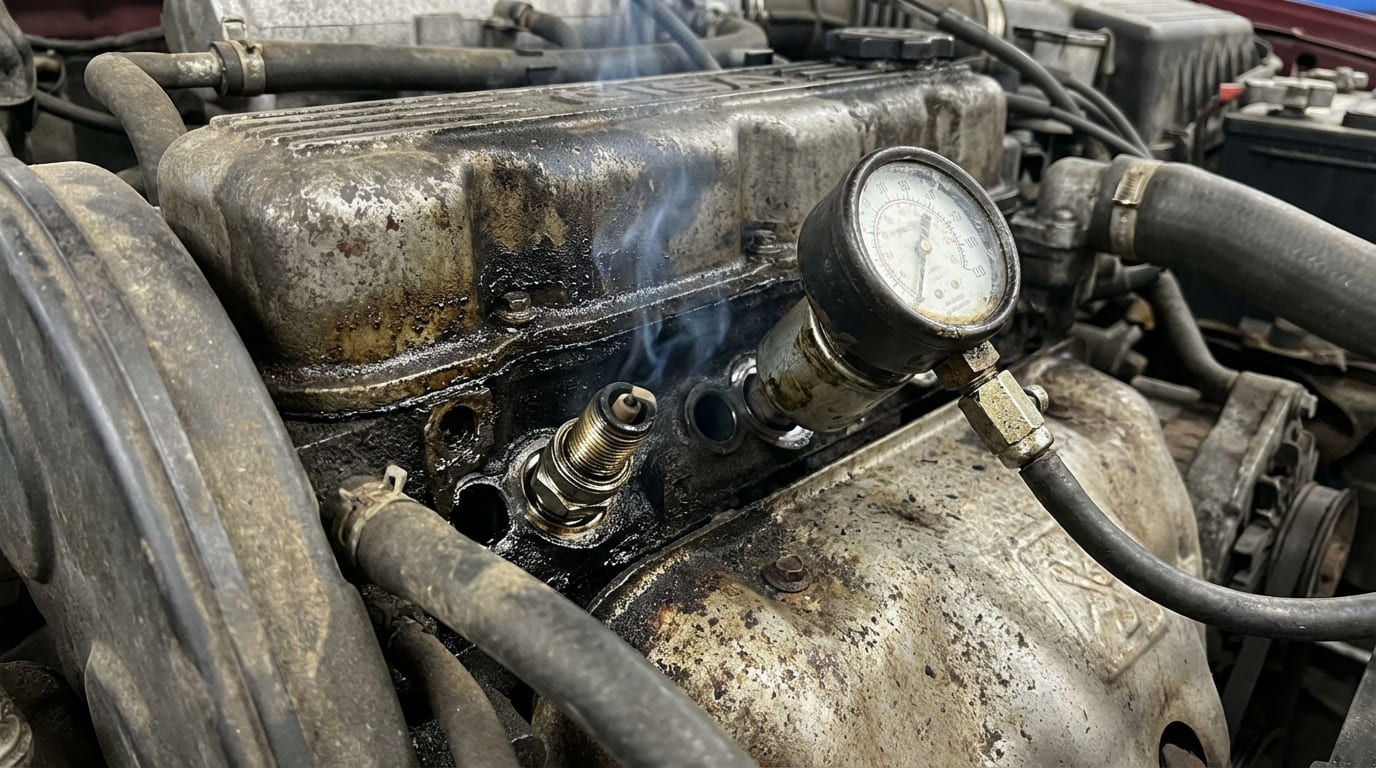
- The Wet vs. Dry Compression Test: Do a standard compression test. Then, squirt a tablespoon of oil into the cylinder and test again. If compression jumps significantly, the rings are worn. If it stays the same, the leak is in the valves or head gasket.
- The PCV System Check: A clogged PCV valve builds massive crankcase pressure, forcing oil past perfectly good rings and blowing out seals. Replace the $20 PCV valve before condemning the engine.
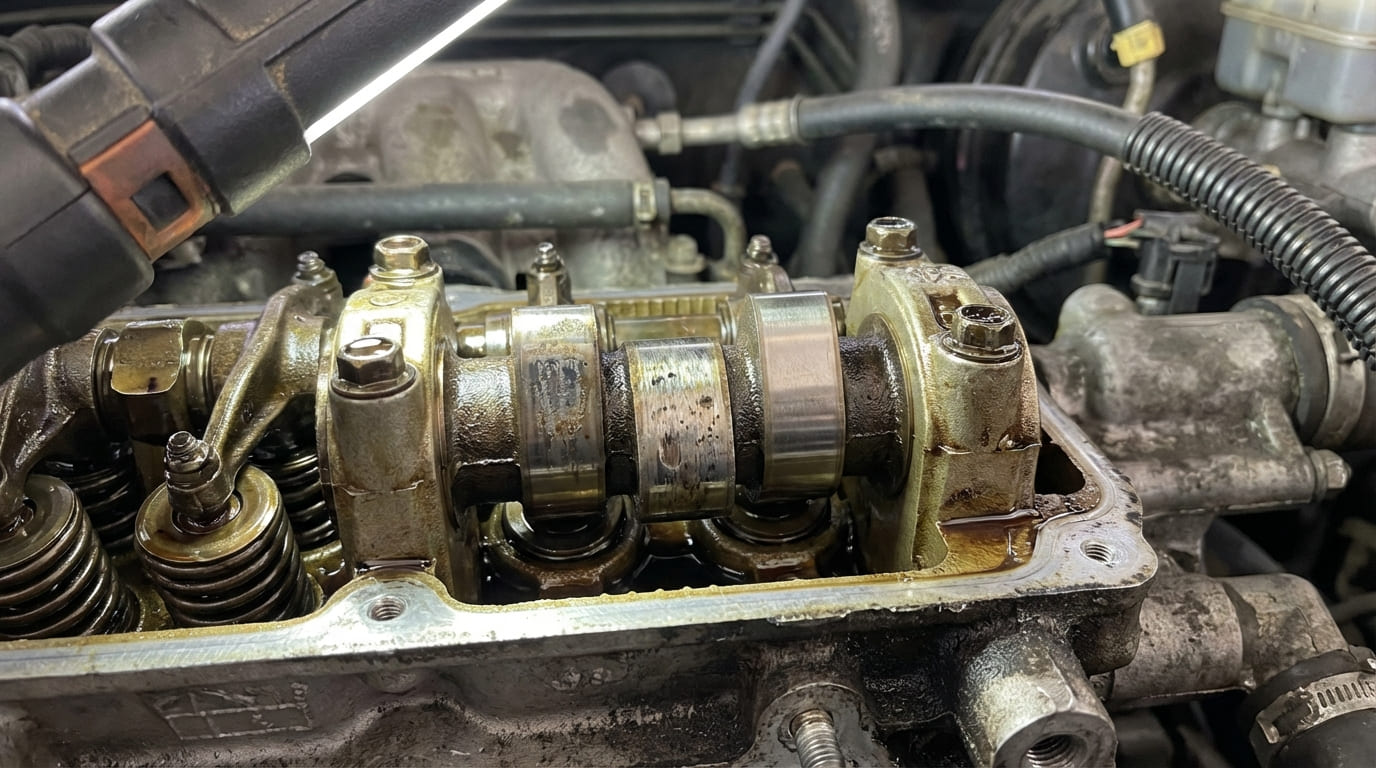
- Borescope Inspection: Remove the spark plugs and look inside. You aren’t just looking for scoring; you are looking for broken ring lands (the aluminum between the ring grooves), which is common on modern direct-injection engines.
Common Trap: A 2015 EcoBoost came in burning a quart of oil every 500 miles. The owner wanted a ring job. A borescope revealed severe carbon buildup wedged in the ring lands from the direct injectors. We did a chemical carbon clean and a PCV update for $300. Oil consumption stopped. Always look inside first.
Critical Mistakes That Destroy Fresh Rebuilds
If you or your mechanic make these errors, the new rings will fail before the first oil change.
✅ Do This
- Clean all block threads with a bottoming tap. Trapped oil or coolant in blind head-bolt holes will hydro-lock, crack the block, or cause false torque readings.
- Gap the rings properly. Never file rings while they are inside the cylinder bore. Use a ring filer and check the gap with a feeler gauge at the bottom, middle, and top of the bore to check for taper.
- Use ZDDP (Zinc) Break-In Oil. Modern synthetic oils lack the zinc and phosphorus required to protect flat-tappet cams and seat new rings during the first 500 miles.
- Run a leak-down test post-assembly. Confirm ring seal integrity before dropping the engine back into the chassis.
⚠️ Never Do This
- Don’t reuse TTY head bolts or rod bolts. They stretch. Reusing them guarantees clamping loss and catastrophic failure.
- Don’t use “Ring Seal” additives. In 20 years, I have never seen a chemical additive fix mechanical metal wear. They swell seals temporarily and increase sludge. It’s snake oil.
- Don’t skip the 500-mile oil change. New rings and bearings shed microscopic metal during break-in. Leaving that metal in the crankcase will destroy your new bearings.
Decision Framework: Rebuild, Swap, or Scrap?
Use this matrix to decide the financial and mechanical path forward.
| Scenario | Recommendation | Why |
|---|---|---|
| Cast iron block, minimal taper, high-value car | Standard Overhaul (Hone + Rings) | Block is durable and easily machined. Retains original matching numbers. |
| Aluminum block scored, taper >0.004″ | Remanufactured Short Block Swap | Sleeving or boring aluminum is expensive and risky. A factory short block is cheaper and warranted. |
| Cylinder heads also need valve job / warped | Remanufactured Long Block | Paying a machine shop to rebuild heads + block labor often exceeds the cost of a complete long block. |
| Car has 180k+ miles, frame rust, slipping trans | Sell for Parts / Scrap | A $5,000 engine repair will not be recouped in resale value. Cut your losses. |
| European / Complex Turbo Engine | Used Low-Mileage Swap or Long Block | Specialized tools, torque-to-angle specs, and aluminum metallurgy make DIY or local rebuilds highly prone to failure. |
Real Shop Case Studies: What Actually Goes Wrong
Case #1: The “Good” Compression Trap
Symptom: 2014 V6 SUV burning oil, but compression tested at 150 PSI across all cylinders (within spec).
Discovery: After teardown, dial bore gauge showed 0.004″ of taper. The rings were sealing dynamically under combustion pressure, but scraping oil past on the downstroke.
Lesson: Compression tests do not measure cylinder geometry. Always measure bore taper before ordering parts.
Case #2: The Phantom Ring Wear (2008 Honda Accord)
Symptom: Blue smoke, low compression on cylinder #3. Assumed worn rings.
Discovery: Borescope and teardown revealed a cracked piston ring land (the aluminum between the oil control rings). Common on early direct-injection and high-stress engines.
Lesson: You can’t fix a cracked piston with new rings. The piston must be replaced. Always borescope before quoting.
Case #3: The PCV Misdiagnosis
Symptom: 2018 Turbo truck blowing oil out of the dipstick tube and rear main seal.
Discovery: Rings were fine. The PCV baffle inside the valve cover had collapsed, pulling raw vacuum into the crankcase and blowing out the seals.
Lesson: High crankcase pressure mimics ring blow-by. Always test the PCV system vacuum before tearing down the bottom end.
Frequently Asked Questions
Can I replace piston rings without removing the engine?
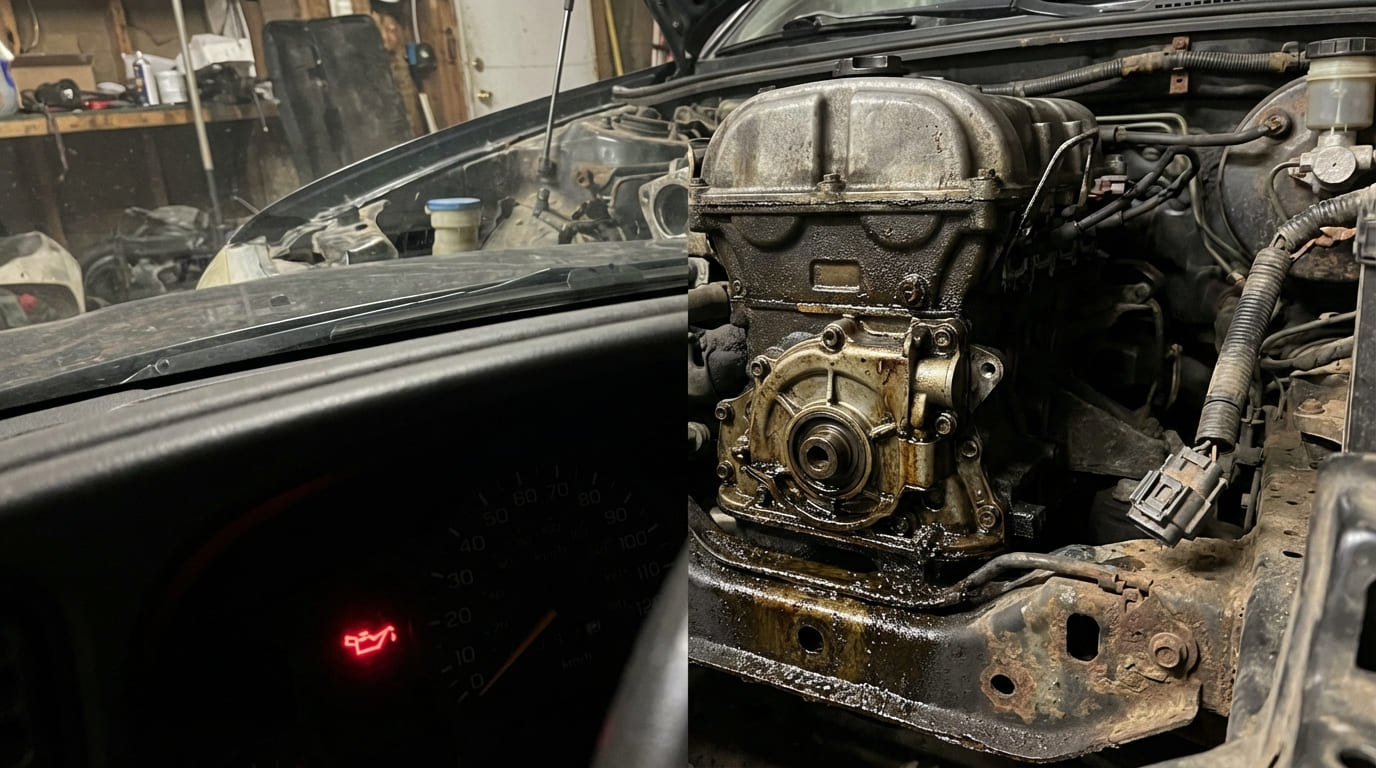
On some older, longitudinal RWD V8 trucks, you can drop the oil pan and pull the pistons out the bottom with the engine in the chassis. On 95% of modern vehicles (FWD, transverse V6, Boxer, Euro), the engine must be removed to safely access the block, hone the cylinders, and manage the wiring harness.
Will new rings fix my blue smoke?
Only if the smoke is caused by ring wear. Blue smoke on startup is often caused by hardened valve stem seals (which requires head removal, not bottom-end work). Blue smoke under heavy acceleration/boost is usually rings or turbo seals. A wet/dry compression test and leak-down test will tell you which it is.
How long does a piston ring job take?
Expect the car to be at the shop for 2 to 3 weeks. The actual labor is 30–45 hours, but machine shop queues (honing, head resurfacing) and parts shipping (bearings, gaskets) add significant downtime.
Do I need to replace the pistons too?
Not always, but you must inspect them. If the ring lands are cracked, the skirts are scuffed, or the wrist pins have play, the pistons must be replaced. If you are boring the cylinders oversized to fix taper, you must buy new matched pistons and rings.
What is the break-in procedure for new rings?
Start the engine and immediately bring it to 2,000–2,500 RPM. Do not let it idle. The cylinder pressure is required to force the new rings outward against the hone pattern. Vary the RPM for the first 20 minutes. Change the oil and filter at 500 miles to remove break-in metals.
Final Takeaway
Replacing piston rings is essentially a full engine rebuild. The cost isn’t in the $150 ring set; it’s in the 35 hours of labor, the machine shop honing, and the precision measurement required to ensure the cylinders are actually round.
Before spending $5,000, verify the diagnosis with a wet compression test and a borescope to rule out PCV failures, valve stem seals, or cracked pistons. And if your engine has severe bore taper or aluminum scoring, stop trying to save the original block—installing a warranted remanufactured short block is almost always the smarter, more reliable financial decision.