As a master mechanic with two decades in the bay, I’ve seen timing belt failures destroy engines that were otherwise in great shape. The good news? Most failures are predictable—if you know what to look for. This guide cuts through the noise and gives you the real-world signs, how to check them, and when to act. Whether you’re a DIYer or just want to understand what your mechanic is talking about, this is the practical breakdown you need.
How a Timing Belt Fails—And Why It Matters
Timing belts don’t usually snap without warning. They wear gradually: cracking, stretching, losing tension. The real danger isn’t just the belt—it’s the entire system: tensioners, idlers, and alignment. In interference engines (most modern engines), even a few jumped teeth can cause pistons to hit valves, leading to $2,000+ in damage. Non-interference engines are safer but still leave you stranded.
In my shop, we always assume a high-mileage engine has a worn timing system—even if it runs fine. Age and heat degrade rubber and bearings. If the belt hasn’t been changed by 90,000 miles or 8 years, it’s on borrowed time.
Common Symptoms and How to Diagnose Them
Don’t guess—test. Here’s how to assess each symptom like a pro.
Audible Noises from the Front of the Engine
A chirping or squealing noise on cold start or under load often points to the timing belt system. But it’s rarely the belt itself making the sound—it’s the tensioner or idler pulleys. As bearings wear, they create noise and allow belt slippage.
How to check: Use an automotive stethoscope or long screwdriver against your ear to pinpoint the source. Listen near the timing cover. If the noise changes with RPM and isn’t coming from the alternator or AC compressor, suspect the timing system. Remove the serpentine belt and restart—no more noise? Then it’s not the accessory drive.
Also inspect the belt edges through the cover access hole (if equipped). Fraying or glazing means the belt is slipping or misaligned.
Ticking or Knocking at Idle
A rhythmic ticking can be mistaken for lifter noise. But if cam timing is off due to belt stretch or weak tension, valve events shift, creating abnormal sounds.
How to check: Perform a cylinder leak-down test. Poor sealing across multiple cylinders suggests valve timing issues. Then, set the crankshaft to top dead center (TDC) and check camshaft alignment marks. If they’re off by even one tooth, the belt or tensioner has failed.
Note: Low oil pressure or worn lifters can mimic this. Rule those out first—especially if the noise goes away at higher RPM.
Engine Misfires and Rough Idle
A stretched belt can retard cam timing just enough to disrupt combustion. This shows up as misfires (P030X codes) or a rough idle, especially under light load.
How to check: Use an OBD2 scanner with live data. Monitor camshaft position (CMP) vs. crankshaft position (CKP). If the cam is consistently 3–5 degrees off, suspect belt wear. But don’t stop there—check for vacuum leaks, coil failures, and fuel pressure first. They’re far more common.
If misfires come with P0016 or P0017 (cam/crank correlation), the timing system is likely involved.
Loss of Power and Poor Acceleration
Incorrect valve timing reduces engine breathing. You’ll feel it as sluggish response or lack of power under load.
How to check: Run a compression test. If all cylinders read low (e.g., 110 psi vs. expected 160 psi) and are consistent, it’s likely a timing issue. But check air filter, exhaust flow, and fuel pressure before tearing into the timing cover.
Turbocharged engines can mimic this with boost leaks or wastegate issues—so verify boost levels first.
Check Engine Light with Cam/Crank Codes
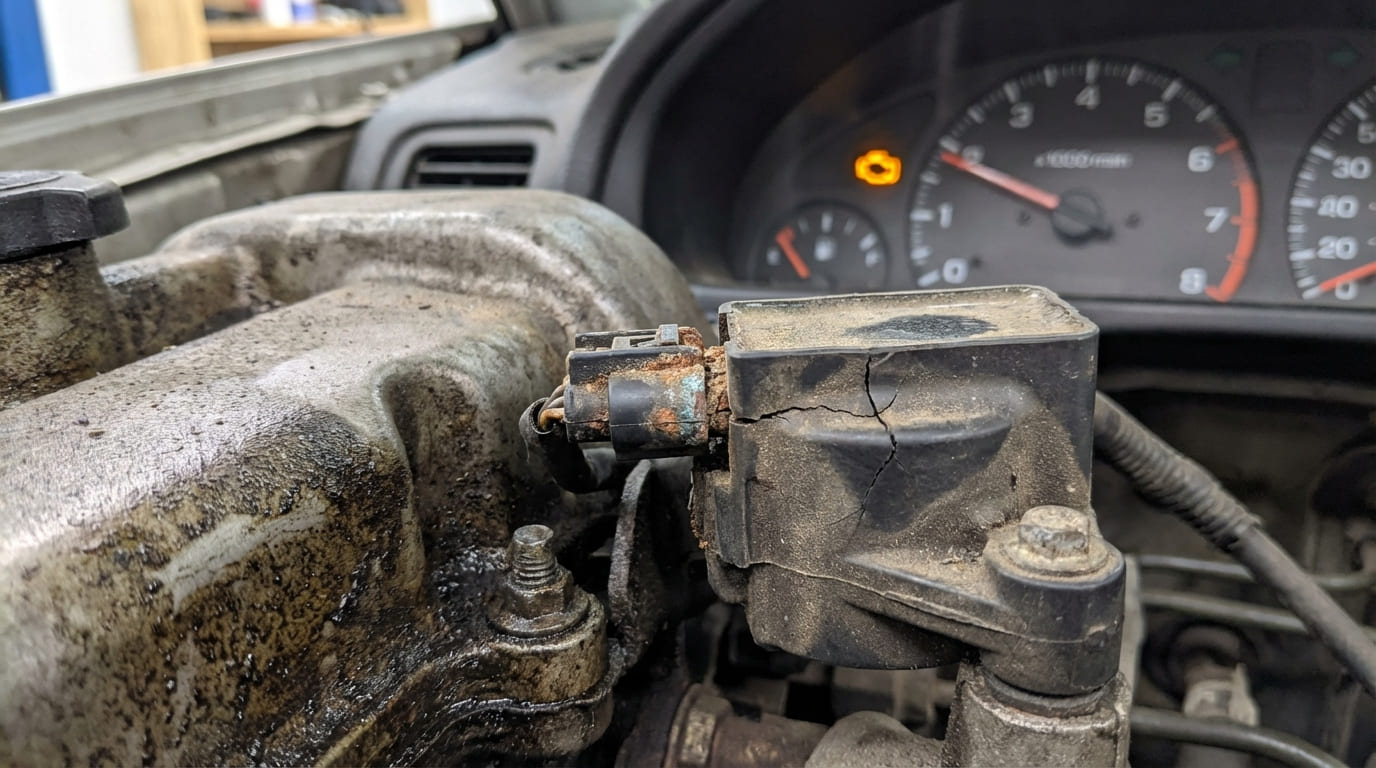
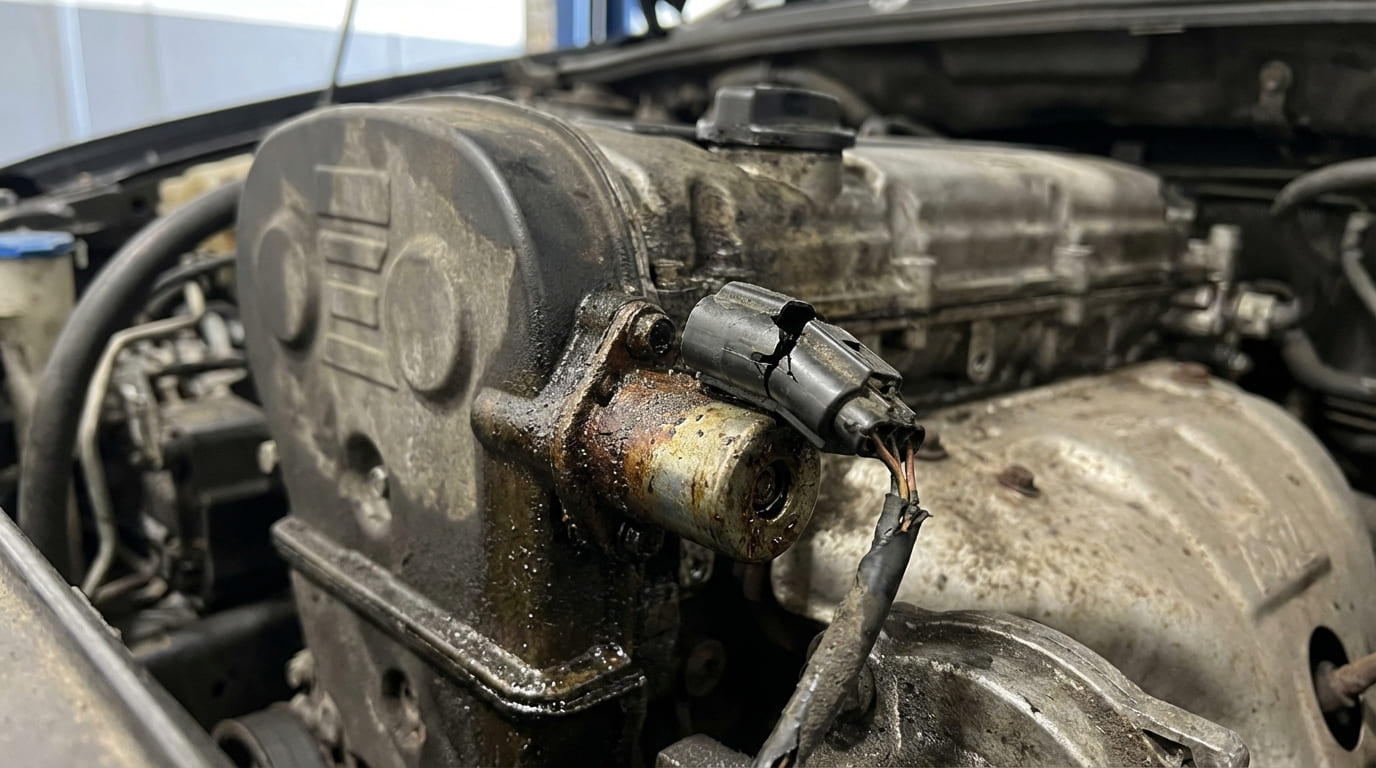
Codes like P0011, P0016, or P0340 often lead techs to replace VVT solenoids or sensors. But on high-mileage engines, the real culprit is belt stretch or a failing tensioner.
How to check: Confirm the VVT system works—check oil pressure, solenoid resistance, and screen cleanliness. If all are good, check physical timing alignment. A lab scope can show cam/ckp signal drift, but aligning timing marks is definitive.
Cost note: Replacing a VVT solenoid costs $200–$400. A timing belt job is $500–$900. But if you replace the solenoid and the belt fails, you’re looking at engine damage. Always verify timing first on high-mileage vehicles.
Visual Inspection: What You’ll See Under the Cover
Once the timing cover is off, the truth is revealed. Here’s what to look for—and how to interpret it.
Cracks, Fraying, or Glazing on the Belt
Cracks along the belt ribs, especially near the edges, mean the rubber is aging. Glazing (a shiny, smooth surface) indicates slippage—often from oil contamination or low tension.
How to check: Flex the belt. Deep cracks that open up mean it’s done. Even if it hasn’t jumped, it’s past safe service life.
Inspect the entire belt path for signs of misalignment—uneven wear on one side suggests a pulley is out of line.
Missing or Worn Teeth
This is critical. Missing teeth usually mean the belt jumped due to tension loss or impact. Even one missing tooth compromises synchronization.
How to check: Rotate the crankshaft slowly using the crank bolt (never the cam). Inspect the full belt length. If teeth are worn flat or missing, replace the belt and tensioner immediately.
Repair vs. replace: No such thing as “driving it a little longer” with missing teeth. Replace now.
Excessive Belt Slack
Too much slack increases the risk of tooth jumping. Most manufacturers specify a deflection (e.g., 5–10 mm at 20 lbs of pressure).
How to check: Use a calibrated tension gauge like the Gates 91132. “Finger pressure” is unreliable. If deflection exceeds specs, the tensioner is likely failed.
Master tip: Hydraulic tensioners can lose pressure over time, especially in hot climates. Always replace the tensioner with the belt—even if it looks fine.
Symptoms of Complete or Imminent Failure
These are red-alert signs. Stop driving and diagnose immediately.
Engine Cranks But Won’t Start
If the engine turns over but won’t fire, and you have no compression, suspect a broken or jumped timing belt—especially in interference engines.
How to check: Remove the oil filler cap and crank the engine. If the camshaft isn’t rotating, the belt is broken. Do a compression test—zero psi across all cylinders confirms it.
Differential diagnosis: A failed crank sensor or fuel pump can cause no-starts too. But if the engine died suddenly and won’t restart, timing belt is top suspect.
Sudden Stall While Driving
The engine cuts out instantly, often with no warning. In interference engines, this usually means internal damage.
How to check: Same as above—check cam rotation and compression. If the belt jumped or broke at speed, assume valves are bent. A borescope through the spark plug holes can confirm piston or valve damage without full teardown.
Worn vs. Broken: What’s the Difference?
A worn belt may still run—poorly. Symptoms include noise, misfires, and reduced power. A broken or jumped belt stops the engine dead. In interference engines, internal damage is likely. Don’t try to restart—further cranking can worsen damage.
Best Practices: What to Do (And What to Avoid)
- ✅ Replace the timing belt at or before the manufacturer’s interval—typically 60,000 to 105,000 miles or 7–10 years. Age matters as much as mileage.
- ✅ Replace the tensioner and idler pulleys every time. They wear at the same rate, and labor is the same.
- ✅ Inspect the water pump if it’s belt-driven. Preventive replacement saves $500 later.
- ✅ Clean bolt threads and use thread locker where specified. Corroded threads can cause incorrect torque and tensioner failure.
- ⚠️ Never reuse torque-to-yield (stretch) bolts. They’re one-time-use. Reusing them risks failure.
- ⚠️ Never rotate the camshaft alone to align marks. Always turn the engine from the crankshaft bolt to avoid valve-to-piston contact.
- ⚠️ Don’t rely on “feel” for tension. Use a gauge or follow manufacturer specs exactly.
Diagnostic Scenarios and What They Really Mean
| Symptom | Most Likely Cause | Less Common Causes | Urgency Level |
|---|---|---|---|
| Chirping from front of engine | Tensioner or idler pulley bearing wear | Accessory belt slip, belt glazing | Moderate – inspect soon |
| CEL with P0016/P0017 | VVT actuator or sensor issue | Timing belt stretch, wiring fault | High – monitor correlation data |
| Engine cranks, no start | Broken or jumped timing belt (interference engine) | No fuel, no spark, CKP failure | Critical – do not restart |
| Rough idle, misfires | Ignition or fuel issue | Timing belt stretch, valve timing drift | Low to moderate – rule out common causes first |
| Visible belt cracks | Aging, heat, or oil contamination | Improper installation, misalignment | High – replace immediately |
Situation: A 2014 Subaru with 98,000 miles had a P0017 code and hesitation. The cam sensor was replaced, but the code returned.
Initial Assumption: Faulty VVT solenoid—common on these engines.
Deep Dive/Discovery: After checking oil and solenoid function, I pulled the timing cover. The belt was original and cracked. The exhaust cam was 8 degrees retarded.
Nuanced Lesson Learned: Belt stretch can mimic VVT failure. Always verify physical timing before replacing electronic parts.
Situation: A Honda Accord cranked but wouldn’t start. No compression, no cam movement. Died while driving.
Initial Assumption: Broken timing belt in an interference engine.
Deep Dive/Discovery: The belt was intact—but the tensioner spring failed, letting the belt jump 12 teeth. Pistons hit several valves.
Nuanced Lesson Learned: A belt doesn’t need to break to cause damage. Tensioner failure is just as dangerous. Inspect the whole system.
Situation: A Toyota Camry had a ticking noise. The timing belt and tensioner were replaced, but the noise remained.
Initial Assumption: Timing issue due to 110,000 miles.
Deep Dive/Discovery: Stethoscope check revealed the sound came from the exhaust manifold. A crack was vibrating at certain RPMs.
Nuanced Lesson Learned: Not every front-engine noise is timing-related. Use tools and process of elimination. Save the customer time and money.
Timing belt diagnosis isn’t just about symptoms—it’s about context. Mileage, engine type, maintenance history, and climate all matter. Always consult the factory service manual for torque specs, alignment marks, and replacement intervals. What works for a 4-cylinder Honda won’t apply to a V6 Audi. Trust your tools, verify your assumptions, and when in doubt, measure twice.