In my experience across thousands of engine diagnoses, few noises generate more concern — and confusion — than piston slap. It’s a sound that can send a shiver down a DIYer’s spine, often mistaken for a death sentence. But the reality, more often than not, is more nuanced. Let me walk you through what it actually is, how to evaluate it properly, and what your real options are.
What Causes Piston Slap?
Piston slap happens when the piston rocks inside the cylinder bore due to excessive clearance between the piston skirt and cylinder wall. This rocking causes the piston to strike the wall, creating a metallic rapping or clicking noise—most noticeable at cold start. The key issue isn’t just clearance, but what’s causing it and whether it’s getting worse.
Here are the main causes you need to consider:
- Cold engine operation: Aluminum pistons expand faster than the block. At startup, clearance is greatest, leading to temporary slap that disappears as the engine warms.
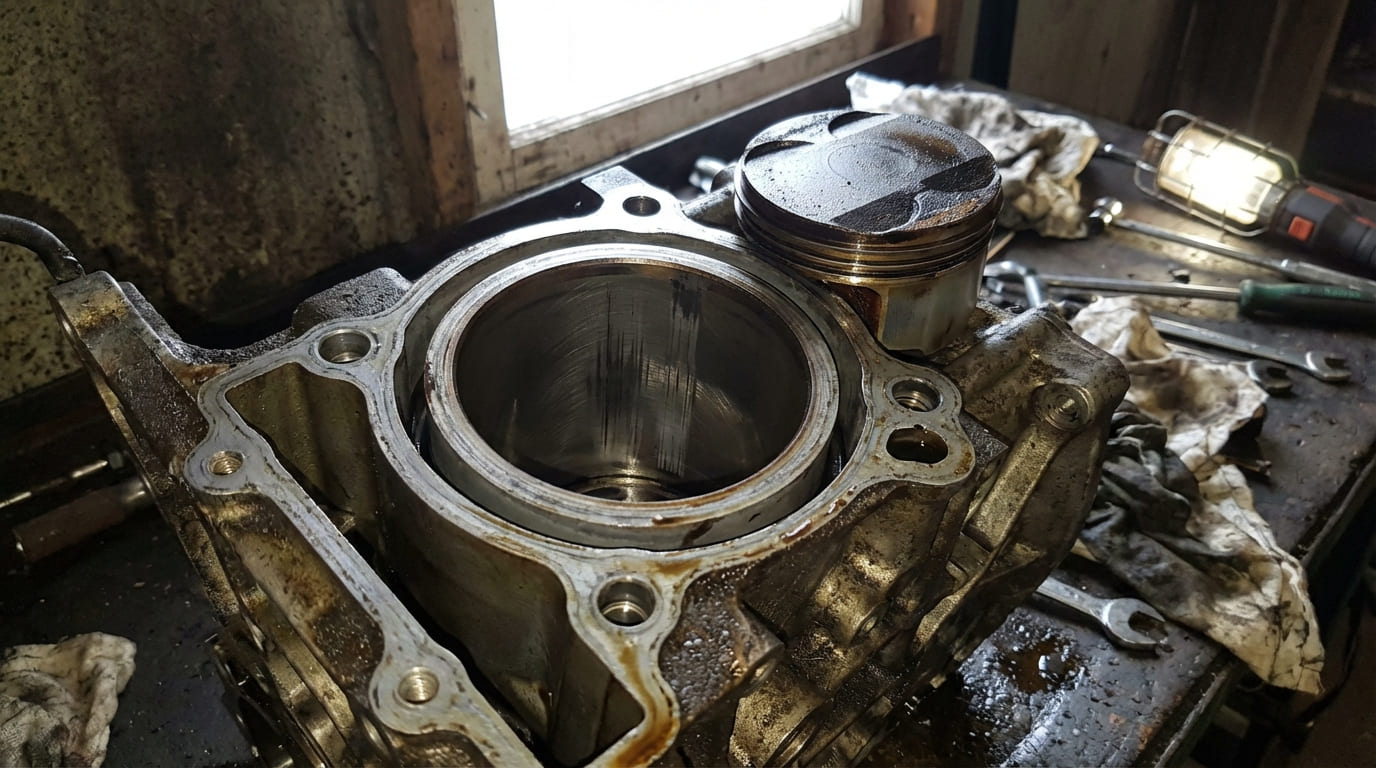
- Cylinder bore wear: Over time, bores wear unevenly—tapered or out-of-round—increasing clearance. Common in high-mileage engines with poor maintenance.
- Piston skirt damage: Overheating or detonation can warp or collapse skirts, reducing stability and increasing noise.
- Manufacturing tolerances: Some engines, especially modern aluminum-block V6s, are designed with looser cold clearances. A brief slap at startup may be normal.
- Insufficient oil film: Low oil pressure, wrong viscosity, or degraded oil reduces damping, making existing clearance more audible.
How to Identify Piston Slap
The sound is a sharp, rhythmic metallic rap or click, often loudest at idle or just off idle when the engine is cold. It usually fades as the engine reaches operating temperature. Under light load or deceleration, the noise may become more pronounced because combustion pressure isn’t pushing the piston against the thrust side of the bore.
But don’t rely on sound alone. Misdiagnosis is common. Here’s how to rule out other noises:
- Hydraulic lifter tick: Higher-pitched, constant ticking near the valve cover. Doesn’t change much with temperature or load.
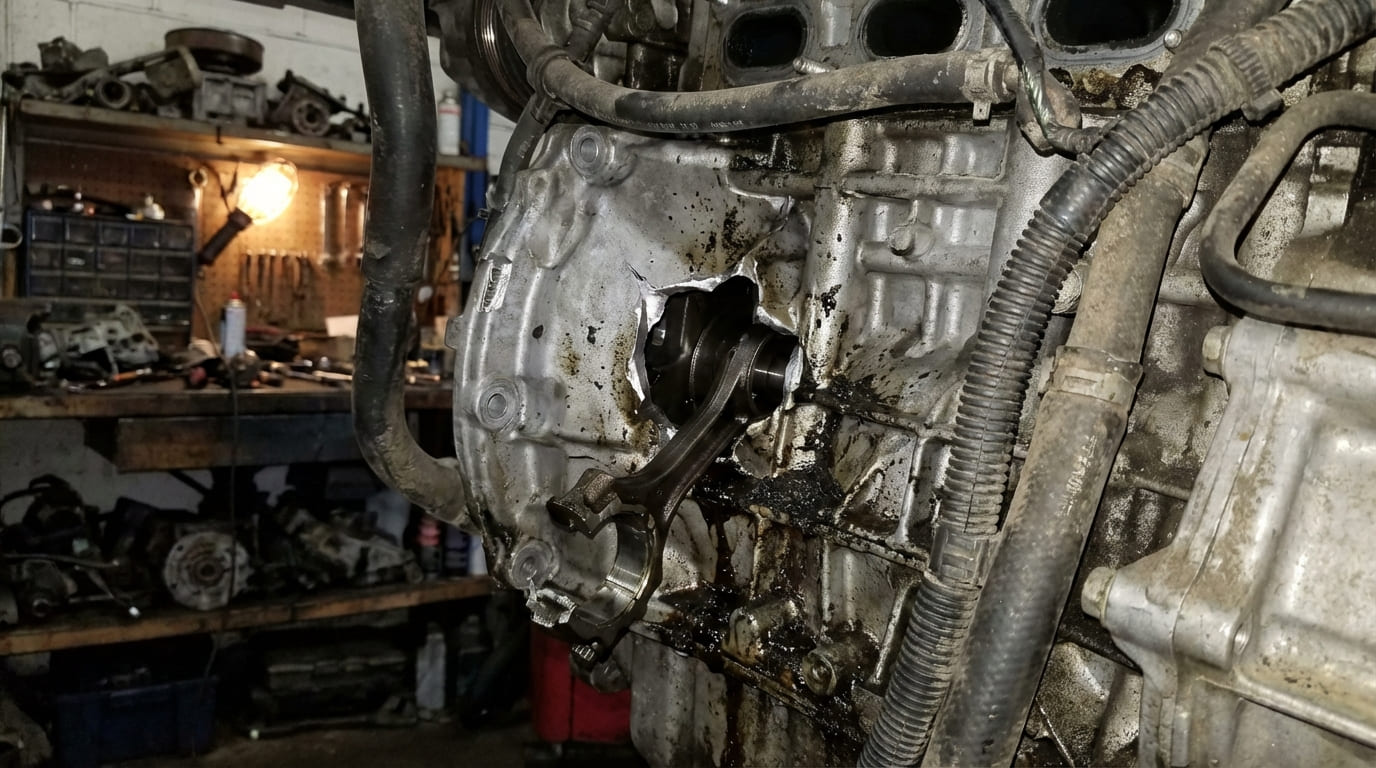
- Connecting rod knock: Deeper, heavier thud that gets worse under load and persists when hot. Loudest near the oil pan rail.
- Wrist pin knock: Similar to slap but often double-clicks and remains consistent across temperatures.
- Valve train noise: Located in the upper end, changes with RPM but not necessarily with engine heat.
How to Check for Piston Slap
Use these diagnostic steps to confirm:
- Stethoscope test: Place a mechanic’s stethoscope or ChassisEAR sensor at mid-block height near each cylinder. Piston slap peaks in this area and fades toward the head or pan.
- Temperature behavior: Start the engine cold. If the noise disappears within 1–2 minutes, it’s likely benign cold slap.
- Load test: With engine idling, gently rev and release throttle. Slap often increases during deceleration due to reduced damping.
- Oil analysis (UOA): Submit a sample. Rising aluminum levels indicate piston wear. Silicon suggests dirt ingestion.
- Compression test: Perform a dry and wet test. If compression improves significantly with oil, it suggests ring or bore wear—corroborating slap concerns.
- Leak-down test: If air escapes through the oil filler or PCV system, you’ve got ring seal issues—common with advanced slap.
- Borescope inspection: Insert through the spark plug hole. Look for vertical scoring, skirt contact marks, or visible piston movement.
How Serious Is It? Assessing Severity
Not all slap is equal. Use this guide to evaluate risk:
| Severity | Characteristics | Likely Causes | Recommended Action |
|---|---|---|---|
| Mild | Noise only at cold start, gone in 1–2 minutes, no oil use, normal performance | Normal thermal clearance, design tolerance | Monitor; likely acceptable |
| Moder grinding | Persists when warm under light load, slight oil consumption increase | Early bore wear, skirt wear, poor oil control | Investigate UOA, leak-down; consider viscosity adjustment |
| Severe | Loud, constant noise, high oil consumption, power loss, excessive blow-by | Advanced bore wear, skirt fracture, ring land damage | Rebuild or replacement advised |
Costs vary widely. A compression test: $50–$100. Leak-down: $100–$150. Borescope rental: $80–$150. UOA: $30–$50. These are small investments compared to the cost of an unnecessary rebuild ($3,000–$6,000).
Situation: A 2012 V6 sedan came in with a sharp tapping noise at startup, gone within a minute. Owner was convinced it was rod knock.
Discovery: Stethoscope pointed to mid-block, UOA showed normal aluminum levels, compression and leak-down were within spec. The noise matched textbook cold slap.
Nuanced Lesson Learned: Not every noise requires a teardown. Sometimes, the engine is operating within design tolerance — and the owner just needs education, not a rebuild.
What Should You Do About It?
Depends on severity and progression. Here’s your action plan:
Try a Viscosity Adjustment (Temporary Fix)
Switching to a slightly heavier oil—like 5W-30 instead of 0W-20—can dampen noise by improving oil film strength. Only do this if it’s within OEM specs for your climate.
Warning: Too thick an oil can reduce flow to lifters and bearings, increase drag, and hurt fuel economy. I’ve seen cases where this masked noise but accelerated bearing wear.
Repair: Rebuild or Replace?
If testing confirms wear, you have two real options:
- Engine rebuild: Requires pulling the engine, inspecting block and crank, measuring bore taper, and installing new pistons, rings, and possibly sleeves. Cost: $3,000–$6,000. Best for engines with sentimental or off-road value.
- Engine replacement: A remanufactured long block or crate engine often makes more sense. Cost: $4,000–$8,000 installed. Look for updated pistons or bore coatings that address known slap issues.
Repair vs. replace? If the car is worth $5,000 and needs a $4,500 rebuild, walk away. If it’s a low-mileage engine with sentimental value, rebuild may be worth it.
Situation: A high-mileage truck had persistent slap even when warm, with blue smoke on startup.
Discovery: Leak-down test showed 22% loss on one cylinder, breather noise confirmed ring seal failure. Bore scope revealed cross-hatching wear and skirt contact marks.
Nuanced Lesson Learned: When slap persists hot, it’s not just clearance — it’s wear. The noise was a symptom, not the disease.
Situation: A freshly rebuilt engine developed slap after 5,000 miles.
Discovery: Tear-down revealed incorrect piston orientation — the front mark was 180° off, causing the thrust face to impact the wrong side of the bore.
Nuanced Lesson Learned: Even new parts can cause slap if installed wrong. Clearance isn’t just about size — it’s about alignment and dynamics.
Best Practices for Long-Term Management
Whether you’re living with slap or preventing it, follow these rules:
- ✅ Use OEM-specified oil viscosity and change it on schedule. Proper oil film is your first line of defense.
- ✅ Allow 30–60 seconds of warm-up time in cold weather. Lets oil circulate and components expand gradually.
- ✅ Run regular UOAs on high-mileage engines. Trends in aluminum or silicon levels can catch problems early.
- ⚠️ Don’t assume all cold-start noises are piston slap. Rule out exhaust manifold cracks, fuel injectors, and lifters first.
- ⚠️ Never rebuild based on noise alone. Confirm wear with leak-down, compression, and borescope.
- ⚠️ Avoid “miracle” oil additives. In my shop, they’ve never fixed slap and sometimes clog oil passages.
Engine design, operating conditions, and maintenance history all influence whether piston slap is a quirk or a warning. I’ve seen engines with minor slap run reliably for years, and others fail prematurely despite no audible symptoms. The key is not to react to noise alone, but to build a complete picture using data, observation, and methodical testing. Always refer to the specific service manual for your engine — because what’s normal for one can be a red flag in another.