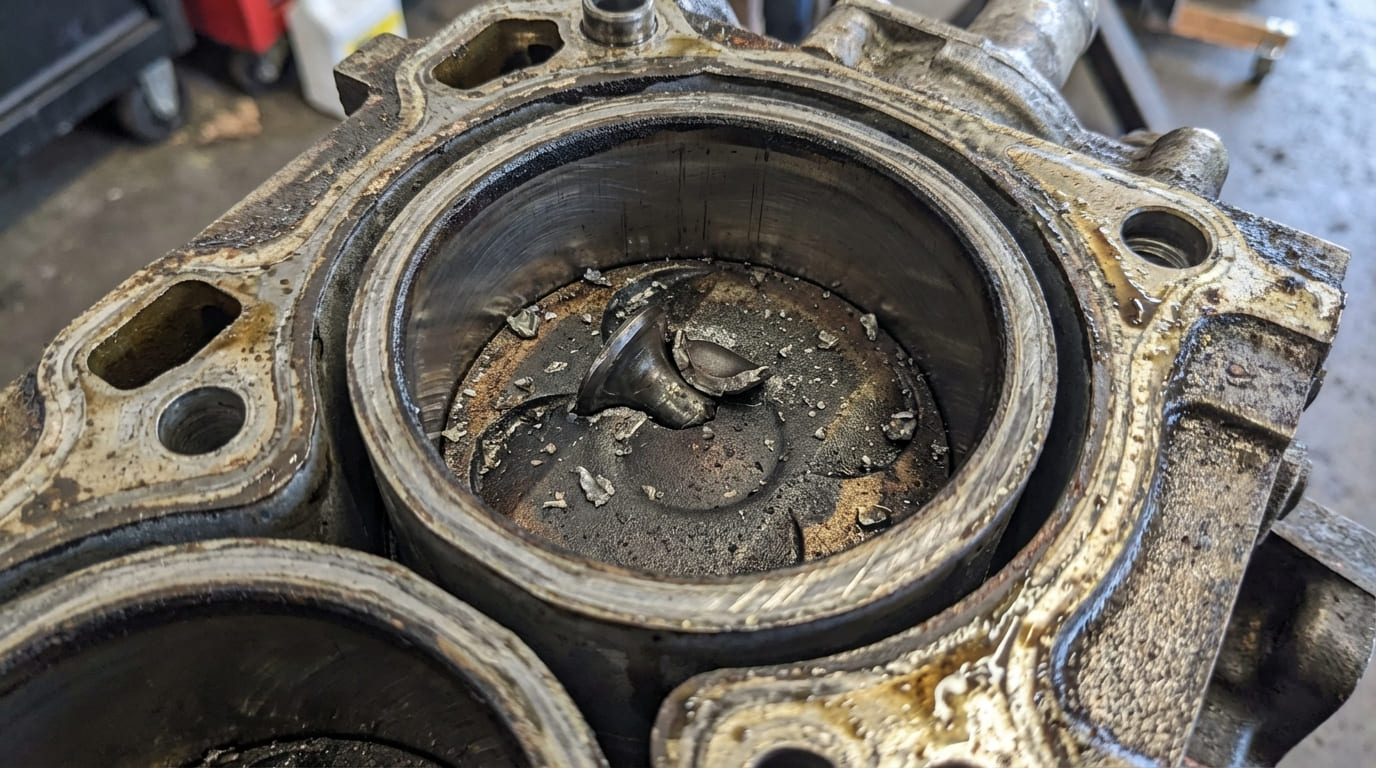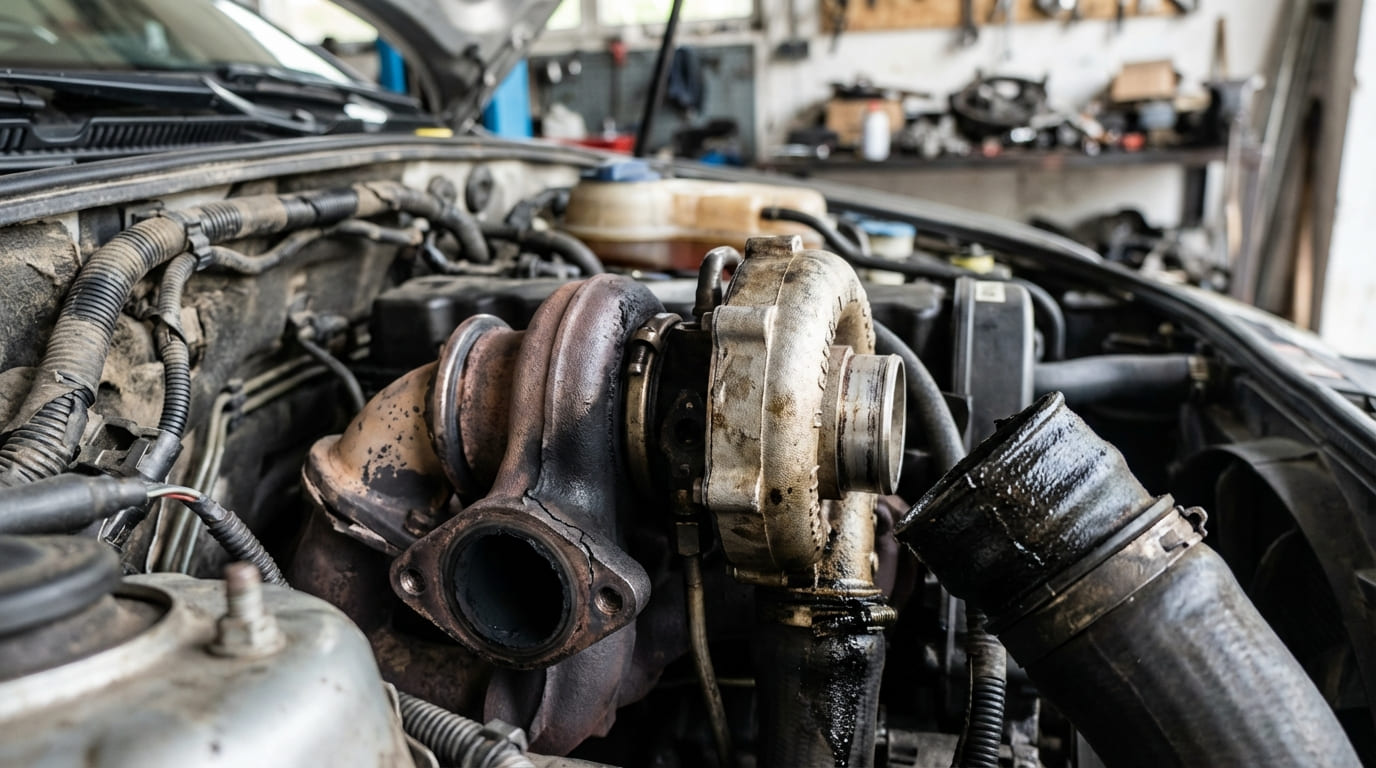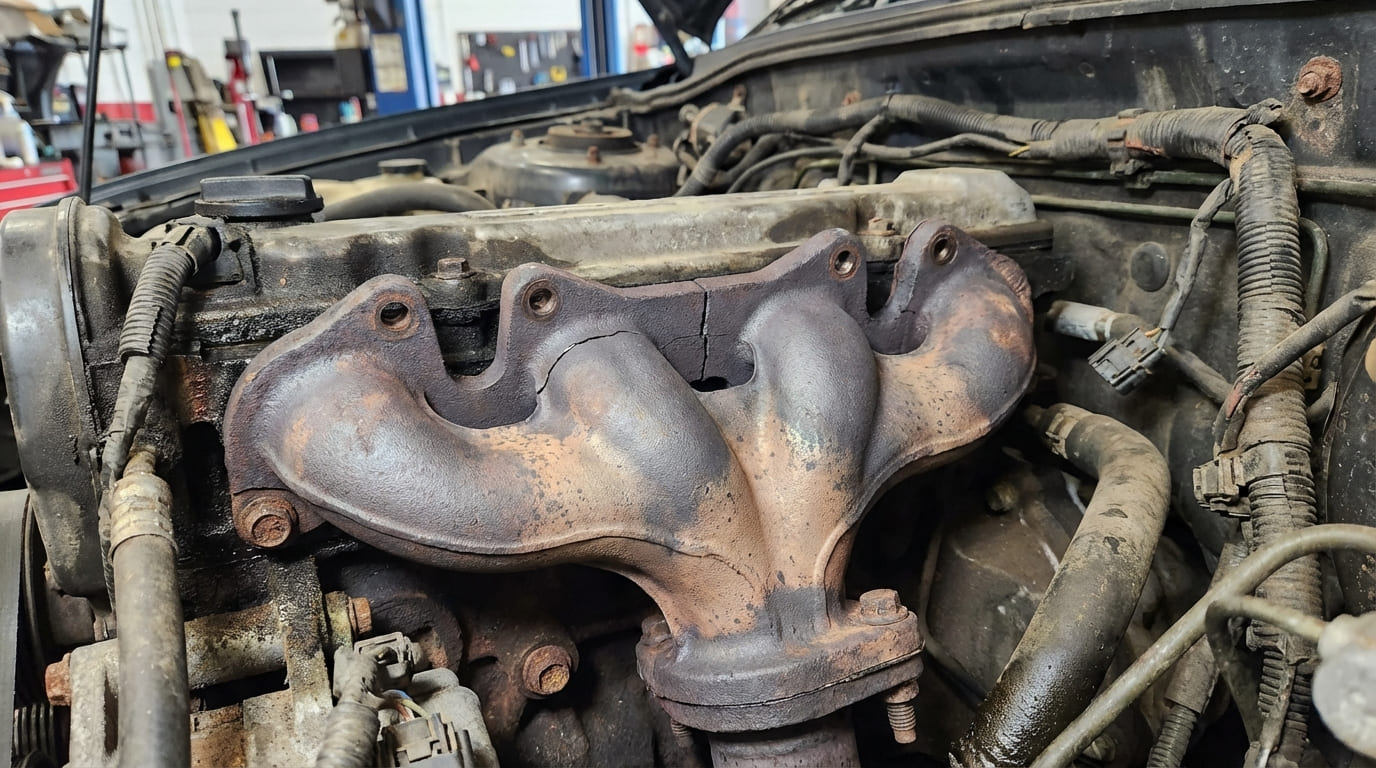
In my shop, cracked or warped exhaust manifolds are a common issue—especially on engines with over 100,000 miles. The root cause is rarely just age. More often, it’s a mix of thermal stress, mechanical load, and overlooked engine issues. Diagnosing correctly prevents wasted time and money. I’ve seen ticking noises blamed on cracked manifolds when the real issue was a loose bolt or misfire. Let’s break down the real causes and how to confirm them.
Thermal Stress Cycling
Exhaust manifolds expand when hot and contract when cool. Do this thousands of times, and metal fatigues. Cast iron and steel can only handle so much before cracks form. The worst damage happens during rapid or uneven temperature changes.
Rapid Temperature Fluctuations and Localized Overheating
Sudden cooling—like driving through deep puddles after highway towing—causes uneven contraction. This stress concentrates at corners, welds, and bolt holes, where cracks often start. I’ve seen manifolds crack from shutting down a red-hot engine and immediately washing the undercarriage.
Lean fuel conditions make one cylinder run hotter, creating hot spots. Use a pyrometer to check exhaust gas temps (EGTs) at each runner. A 200°F+ difference means uneven expansion, which warps flanges over time. Check for clogged injectors, vacuum leaks, or lazy O2 sensors before replacing the manifold.
A clogged catalytic converter traps heat. Perform a backpressure test: connect a pressure gauge to the pre-cat O2 sensor port. More than 1.25 psi at 2,500 RPM indicates restriction. This heat buildup accelerates manifold fatigue.
Engine Misfire
A misfiring cylinder dumps raw fuel into the exhaust. It can ignite in the manifold, causing mini explosions. These spikes in temperature—sometimes over 1,500°F—can warp or crack metal fast.
If the Check Engine Light flashes and you hear a rhythmic ticking in sync with engine RPM, scan for P030x codes. Soot trails at the manifold joint confirm exhaust is escaping due to pressure spikes. Fix the misfire first—otherwise, the new manifold will fail quickly.
Mechanical Stress
Heat isn’t the only enemy. Physical forces from improper installation, vibration, or added weight play a major role in failure.
Improper Installation or Fastener Torque
Over-torquing one bolt while others are loose creates bending stress. This warps the flange and leads to cracks. Always use a torque wrench and follow the factory sequence—usually a spiral pattern from center to edge.
Clean bolt holes with a bottoming tap. Corrosion or debris causes false torque readings. Reusing old bolts is risky—especially Torque-to-Yield (TTY) types. They stretch and lose clamping force. Replace them unless the manual says otherwise.
In my shop, we always torque in three stages: 30%, 60%, then 100%. This ensures even load and prevents warping. Skipping this step is the fastest way to ruin a new manifold.
Engine Vibration and Mount Failure
Worn engine mounts let the engine rock, transferring stress to the manifold. This is common on transverse 4-cylinder engines. If the exhaust system is rigid, the manifold takes the brunt of the movement.
Inspect engine mounts—especially the dogbone or torque strut. If one is broken, replace it before installing a new manifold. I’ve seen replacements fail in under 10,000 miles because the vibration wasn’t addressed.
Weight of Attached Components
Turbochargers and heavy catalytic converters add leverage. If exhaust hangers are broken or missing, that weight pulls on the manifold flange. A seized flex pipe makes it worse by eliminating movement.
Check all hangers and the flex joint. Replace missing hangers and ensure the system has some give. A rear hanger failure can put excessive strain on the front manifold mount during acceleration.
Material Defects and Fatigue
Even with perfect conditions, manifolds fail due to material flaws.
Cast iron can have internal porosity from manufacturing. These voids become stress risers and grow into cracks over time. Tubular steel headers use thinner walls and rely on good welds. Poor penetration or rapid cooling during welding creates weak spots.
Corrosion eats away at flange thickness, especially in salt-heavy climates. Pitting reduces strength and promotes cracking. Inspect flanges closely—surface rust might hide deeper damage.
I once had a turbo Subaru fail at 40,000 miles. The crack started at a weld with micro-porosity. An aftermarket header with subpar welding couldn’t handle thermal cycling. Lesson: cheap parts cost more in the long run. Stick to reputable brands, especially with forced induction.
Diagnosis: How to Confirm a Bad Manifold
Don’t guess—verify. Many symptoms mimic other issues. Use a systematic approach.
Common Symptoms and What They Mean
- Ticking noise on cold start that fades when warm: likely crack or warp
- Exhaust smell in cabin: leak near firewall or passenger compartment
- P0171/P0174 (lean codes): exhaust leak upstream of O2 sensor
- P0420 (catalyst efficiency): can be caused by pre-cat leak, not just a bad converter
- Soot stains at manifold-to-head joint: clear sign of leakage
Step-by-Step Inspection
Start cold. Warm metal expands and can hide small cracks. Use a flashlight and mirror to check hard-to-see areas. Look for soot trails—they point directly to the leak.
Use a mechanic’s stethoscope or long screwdriver to pinpoint ticking. Press the handle to your ear and the tip to different parts of the manifold. Be cautious near moving belts and fans.
For warping: remove the manifold and place a precision straight edge across the flange. Check gaps with a feeler gauge. Cast iron manifolds typically allow up to 0.005″ warpage over 6 inches. Aluminum manifolds are tighter—often 0.002″. Always check the factory spec.
Smoke test for hidden leaks: seal the exhaust outlet and inject smoke. Watch for escaping smoke at joints. This works best cold and finds leaks too small to hear.
| Symptom | Most Likely Cause | Less Common But Possible Causes |
|---|---|---|
| Ticking noise on cold start, goes away when warm | Cracked manifold or warped flange | Loose heat shield, exhaust hanger rattle |
| P0171 (Lean Code) | Exhaust leak upstream of O2 sensor | Vacuum leak, contaminated MAF, fuel pressure issue |
| Visible crack in manifold body | Thermal fatigue or mechanical stress | Material defect, previous overheating event |
| Carbon buildup on one flange corner | Local warping or uneven bolt torque | Worn stud, missing washer, distorted head surface |
Situation: A 2012 F-150 had a loud cold-start tick. First diagnosis: cracked manifold—common on that model. Quote for replacement was $600.
Discovery: On inspection, the bolt was loose and vibrating against the heat shield. Missing lock washer was the real issue. Tightened and added new washer—noise gone.
Nuanced Lesson Learned: Always check fasteners and shields before pulling the manifold. Save time and money by ruling out simple causes first.
Situation: A V6 Accord had P0420. Owner replaced O2 sensor and catalytic converter—code returned in 3 months.
Discovery: Smoke test revealed a hairline crack in the rear manifold. It was only visible under magnification. The leak fooled the pre-cat O2 sensor, making the cat appear inefficient.
Nuanced Lesson Learned: Don’t replace the cat without checking for upstream leaks. A $20 smoke test can save you a $1,000 mistake.
Repair vs Replace: Cost and Viability
Small cracks in cast iron can sometimes be repaired with a high-temp epoxy or brazing, but success is hit-or-miss. On aluminum manifolds, welding is possible but requires TIG and proper heat control. Most of the time, replacement is more reliable.
Aftermarket manifolds range from $80 to $300. OEM units cost $200–$600. Labor is 2–5 hours depending on engine layout. On some V6 engines, rear manifolds take twice as long to access.
If the engine has underlying issues—misfires, lean conditions, bad mounts—fix those first. A new manifold under stress will fail again. Spend $50 on diagnostics to save $600 on premature replacement.
Best Practices to Prevent Future Failure
- ✅ Clean bolt holes with a bottoming tap to ensure accurate torque
- ✅ Use new gaskets and OEM-specified fasteners—never reuse TTY bolts
- ✅ Torque in stages (30%, 60%, 100%) using factory sequence
- ⚠️ Avoid RTV on exhaust gaskets—most seal dry and RTV burns off
- ⚠️ Never over-tighten bolts to stop a leak—this warps flanges and strips aluminum heads
- ⚠️ Address engine issues early—misfires and lean codes lead to manifold failure
Exhaust manifold failure is rarely random. It’s the result of repeated stress, poor installation, or ignored engine problems. I’ve seen manifolds last 200,000 miles when conditions are right—and fail at 60,000 when they’re not. The difference is maintenance and attention to detail.
Always consult the factory service manual for torque specs, warpage limits, and fastener policies. What works on one engine can damage another. When in doubt, measure, test, and verify—don’t assume.