As a master mechanic with over 20 years in the shop, I’ve seen fuel injector leaks cause everything from minor fuel odors to hydro-locked engines. The key isn’t just spotting the leak—it’s knowing whether it’s external (visible) or internal (hidden), and diagnosing the real cause. This guide cuts through the noise and gives you actionable steps to identify, confirm, and fix both types of leaks—plus when to repair vs. replace.
External Injector Leaks: Fuel You Can See
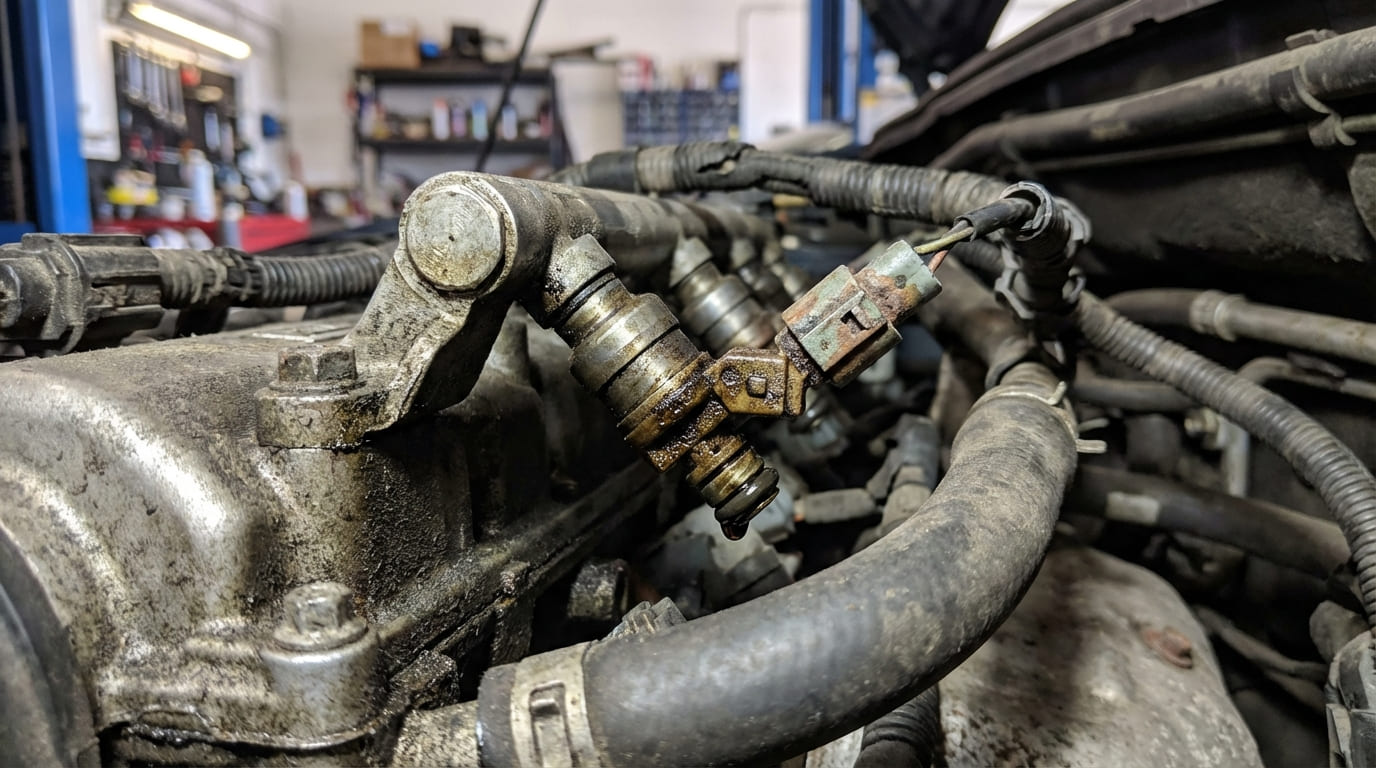
External leaks drip or mist fuel onto engine components. They’re dangerous—fuel on a hot exhaust manifold can start a fire. Common signs: fuel smell under the hood, wet spots near injectors, or fuel pooling on the intake.
Common Causes and How to Check
Failing O-rings (Most Common)
O-rings seal the injector at two points: top (fuel rail) and bottom (intake manifold). They degrade from heat, ethanol, or improper installation.
How to Check: With the engine off and fuel pressure released, remove the intake plenum or injector covers. Use a flashlight and mirror to inspect O-ring areas. Re-pressurize the system (turn key to ON, then OFF) and look for seepage. Even a faint sheen means the seal is failing.
Solution: Replace all O-rings on the affected injector. Use Viton (FKM) O-rings—they resist ethanol and heat better than standard rubber. Cost: $5–$15 per set. Pro tip: Replace them every time you pull an injector. They’re cheap insurance.
In my shop, we always replace O-rings during injector service—even if they look fine. I’ve seen too many comebacks from reused rings that failed after two heat cycles.
Fuel Rail or Injector Seat Damage
If the injector isn’t seating flush in the rail, fuel can leak at the connection. This isn’t the injector’s fault—it’s the rail or hardware.
How to Check: Remove the injector and inspect the rail bore. Look for scratches, dents, or debris. A misaligned or broken retaining clip will also prevent sealing.
Solution: Clean the rail bore with a non-abrasive solvent and brass brush. If the bore is scored, replace the rail—repair isn’t reliable. Cost: $80–$200 for a used rail, $200–$500 new. Never reuse torque-to-yield clips—they lose clamping force.
Cracked or Porous Injector Body
Physical damage or casting flaws can cause fuel to seep from the injector housing.
How to Check: Clean the injector and pressurize the system. Use a magnifying glass to scan for pinhole leaks. Wipe the area, re-pressurize, and check for fresh fuel.
Solution: Replace the injector. No field repair exists. Epoxy fixes are unsafe—fuel pressure can exceed 60 psi, and leaks near hot surfaces are fire hazards.
Internal Injector Leaks: Fuel Dripping Into the Cylinder
These are stealthier but more damaging. Fuel drips into the combustion chamber when the engine is off, fouling spark plugs, washing down cylinder walls, and thinning engine oil. Left unchecked, it can hydro-lock the engine or destroy the catalytic converter.
Stuck or Worn Injector Nozzle (Pintle/Valve)
The injector’s pintle should seal tightly when closed. Contamination or wear prevents full closure, allowing fuel to drip.
How to Check: Perform a fuel pressure drop test. Install a gauge, prime the system (key ON, engine OFF), then shut off the pump. If pressure drops more than 2–3 psi in 5 minutes, a leak is likely. To confirm it’s the injector:
- Remove spark plugs and crank the engine. A wet or fuel-smelling plug indicates internal drip.
- Do a cylinder leak-down test. If you hear hissing from the intake or exhaust with a fuel odor, the injector is leaking.
Solution: Replace the faulty injector. Ultrasonic cleaning may help with varnish, but won’t fix worn pintles. Cost: $100–$250 per OEM injector. Aftermarket units vary—avoid no-name brands with inconsistent flow rates.
I once diagnosed a P0172 code as a MAF issue—turned out injector #2 was dripping due to varnish buildup. Always check the plugs. A soaked plug with good compression points straight to the injector.
Internal Component Leakage (Rare)
Fuel leaks between internal passages—say, from the solenoid housing into the pintle guide—instead of through the nozzle.
How to Check: Nearly impossible in the field. Requires a flow bench to detect leakage from non-nozzle areas. Diagnosis is usually by elimination: no external leak, fuel pressure drops, but the nozzle seals fine.
Solution: Replace the injector. This is a manufacturing or corrosion-related failure—no repair possible.
Electrical Issues That Mimic Leaks
A stuck-open injector circuit can cause continuous fueling, acting like a mechanical leak.
How to Check: Use a lab scope to check the injector control signal. A constantly grounded driver means the ECU or wiring is commanding the injector open. Check for shorted harnesses or failing driver modules.
Solution: Repair wiring or replace the ECU driver. Don’t replace injectors until you’ve ruled out electrical causes.
A diesel van came in with fuel in the oil. Everyone assumed a cracked block. Turned out the ECU was sending a constant ground to one injector. Always test the signal before pulling parts.
Repair vs. Replace: Cost and Viability
For external leaks: O-rings and rail cleaning are cost-effective fixes. For internal leaks or body cracks: replacement is the only safe option.
| Issue | Repair Option | Replace Option | Cost Range |
|---|---|---|---|
| Faulty O-rings | Yes (recommended) | No need | $5–$15 |
| Dented fuel rail | Rarely (reconditioning not cost-effective) | Yes | $80–$500 |
| Cracked injector | No | Yes | $100–$250 |
| Internal nozzle leak | No (cleaning rarely works) | Yes | $100–$250 |
Must-Do Checks and Pro Tips
- Always relieve fuel pressure before working on the system—loosen the Schrader valve on the rail with a rag over it.
- Use OEM-spec or Viton O-rings. Cheap rubber won’t last with ethanol fuels.
- Torque fuel rail bolts to spec—over-tightening warps the rail and causes leaks.
- Replace the fuel filter every 30,000–50,000 miles. A clogged filter stresses the pump and can cause pressure swings that wear injectors.
- Check engine oil for fuel dilution. If oil smells like fuel or the level is high, stop driving—fuel is washing past the rings.
Diagnostic Decision Table: What to Do Based on Symptoms
| Observation | Most Likely Cause | Less Common Cause | Next Step |
|---|---|---|---|
| Wetness at injector base (manifold side) | Faulty lower O-ring | Cracked injector, warped manifold | Replace O-ring, re-pressurize, recheck |
| Fuel at fuel rail connection | Damaged rail bore, missing clip | Debris, wrong injector length | Inspect rail, clean, verify clip |
| Pressure drop after shutdown | Internal injector leak, bad regulator | Pump check valve failure | Pinch return line to isolate pump |
| Wet spark plug, no external leak | Internal nozzle leak | Valve guide seal (oil) | Check for fuel smell, leak-down test |
| Oil smells like fuel | Severe internal leak | Faulty fuel pressure regulator | Check fuel pressure, inspect injectors |
A 2014 F-150 came in with a fuel smell and rough idle. The owner replaced one injector—leak persisted. I found fuel weeping at the rail on another cylinder. The rail was bent from prior work. Lesson: Always inspect mating surfaces. A bent rail can look fine but leak under pressure.
Diagnosing injector leaks starts simple: look, test pressure, check plugs. Don’t replace parts blindly. Confirm O-rings, rail condition, and electrical signals before pulling injectors. And remember: a fuel smell isn’t just a nuisance—it’s a warning. Address it fast, test methodically, and never assume the injector is the culprit.