In my experience across two decades in the shop, hydraulic lifter noise is one of the most commonly misunderstood issues—especially among DIYers who often write it off as a “normal” ticking sound. While some engines are noisier by design, a change in valvetrain noise usually indicates something’s off in the lubrication or mechanical condition of the upper end. The real question isn’t just whether you can drive with noisy lifters, but how much risk you’re accepting with every mile.
Immediate Safety Assessment
Driving with lifter noise is conditionally safe—but only under strict criteria. If the noise is faint, only at startup, and disappears within 30 seconds, short-term driving may be acceptable. However, any persistent, loud, or worsening ticking demands immediate attention. In my shop, we advise against extended driving once performance issues appear or if the noise changes suddenly. The cost of a tow is minor compared to a seized engine.
In my shop, we always tell customers: “If you’re asking whether it’s safe, the engine is already telling you it’s not.” Listen early, act fast.
How to Confirm It’s Hydraulic Lifter Noise
Many sounds mimic lifter tick. Misdiagnosis leads to wasted repairs. Use these steps to isolate the source.
Diagnostics: Step-by-Step Check
Follow this sequence before assuming lifters are the issue:
- Check oil level and condition—low or dirty oil is the most common cause.
- Start the engine cold and note when noise occurs. Fades in 10–30 seconds? Likely normal bleed-down.
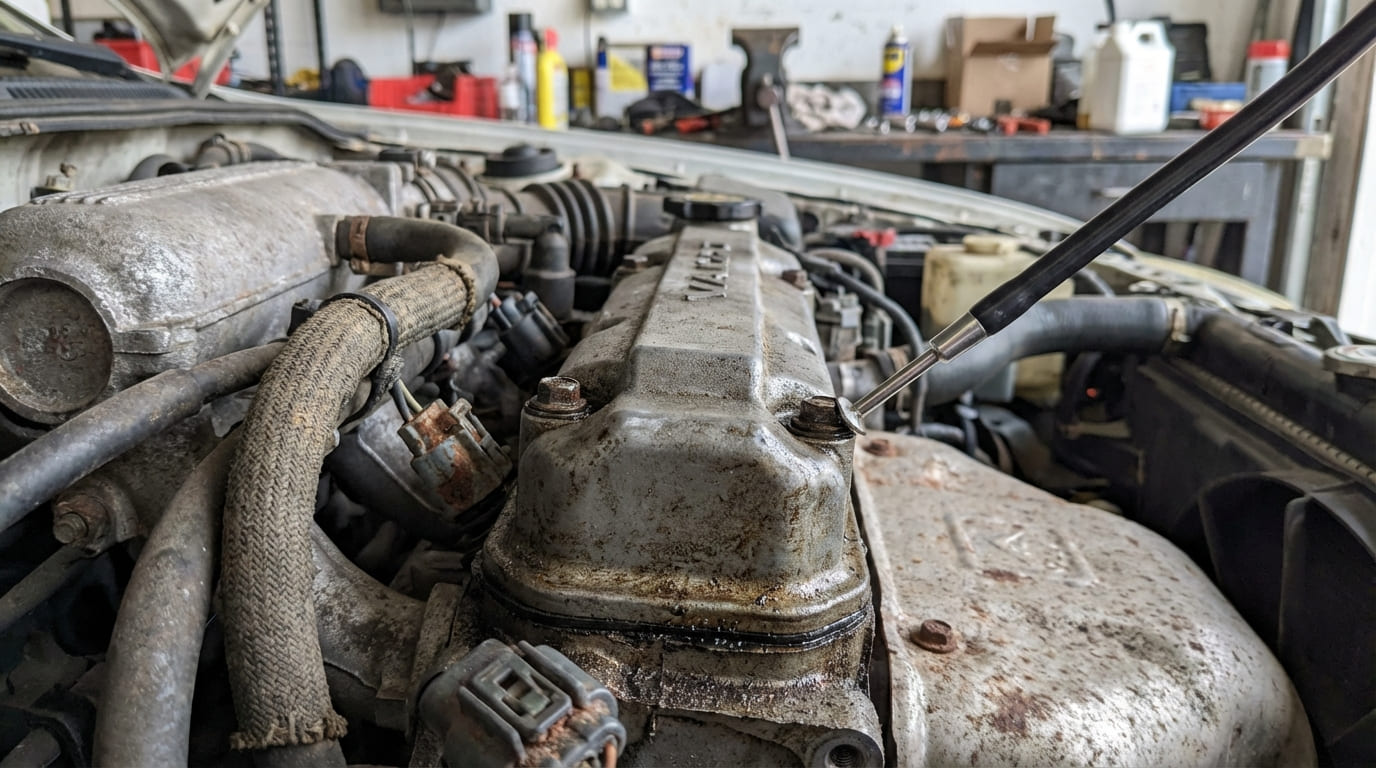
- Use a mechanic’s stethoscope: place it on the valve cover above each cylinder bank. Lifter noise peaks near the cam/lifter location and increases with RPM.
- Verify oil pressure with a mechanical gauge installed at the block’s sender port—never rely on the dashboard gauge.
- Scan for trouble codes: pending cam timing or misfire codes support valvetrain issues.
Common Misdiagnoses
These issues are often mistaken for lifter noise:
- Rod knock: deep, rhythmic thud from lower engine, worsens under load.
- Piston slap: cold-start rattle that fades as engine warms.
- Exhaust leak: hissing or puffing at manifold, often visible as black carbon streaks.
- Fuel injector tick: high-pitched, consistent clicking, isolated to fuel rail area.
Root Causes, Risks, and Repair Outlook
Below is a breakdown of the most frequent causes of lifter noise, ranked by frequency and urgency. This helps prioritize your response.
| Probable Cause | Likelihood | Urgency Level | DIY-Feasible? | Typical Repair Cost (Parts + Labor) |
|---|---|---|---|---|
| Low oil level | High | Moderate | Yes | $0–$50 |
| Incorrect oil viscosity | High | Low-Moderate | Yes | $30–$80 (oil change) |
| Contaminated or degraded oil | Moderate | Moderate | Yes | $50–$120 |
| Worn hydraulic lifters | Moderate | High | No | $600–$1,500 |
| Worn camshaft lobes | Lower | Very High | No | $1,200–$2,500+ |
| Low oil pressure (systemic) | Variable | Critical | No | $800–$2,000+ |
Repair vs. replace logic: If the engine has over 150,000 miles and multiple wear indicators (high oil consumption, sludge, low compression), consider long-term reliability. Rebuilding or replacing the engine may be more economical than piecemeal repairs.
In my shop, we never replace a single lifter. Always do a full set. One failed lifter means others are near end-of-life. Mixing old and new causes imbalance and accelerates wear.
Recommended Actions by Severity
Match your response to the symptoms. This prevents overreaction—or dangerous delay.
Mild Noise: Faint Tick at Startup, Clears Quickly
Most likely benign, but verify:
- Check oil level and top off if needed.
- Confirm oil meets OEM viscosity and API specs (e.g., 5W-20 with API SP).
- Change oil and filter with high-detergent synthetic.
- Monitor for change over next 500 miles.
Moderate Noise: Persistent Ticking After Warm-Up
Indicates flow restriction or wear. Take action:
- Install mechanical oil pressure gauge—test at idle and 2,000 RPM.
- Expected: 10–25 psi at idle, 40–60 psi at 2,000 RPM (consult manual for your engine).
- If pressure is low, investigate oil pump, pickup tube, or bearing clearance.
- Consider oil flush only if sludge is confirmed—avoid on high-mileage engines.
Severe Noise: Loud, Metallic, or Accompanied by Misfires
Stop driving immediately:
- Engine may have collapsed lifters, worn cam lobes, or critical oil starvation.
- Towing is cheaper than a new short block.
- Professional teardown needed to assess cam, lifters, and bearing condition.
I’ve seen engines with “just a tick” turn into $3,000 repairs because the owner drove 500 more miles. If the noise scares you, it should. Trust your gut.
Progression of Damage
Ignoring lifter noise leads to escalating damage:
- Stage 1 – Wear: Cam lobes and lifters wear due to oil film collapse. No performance loss yet.
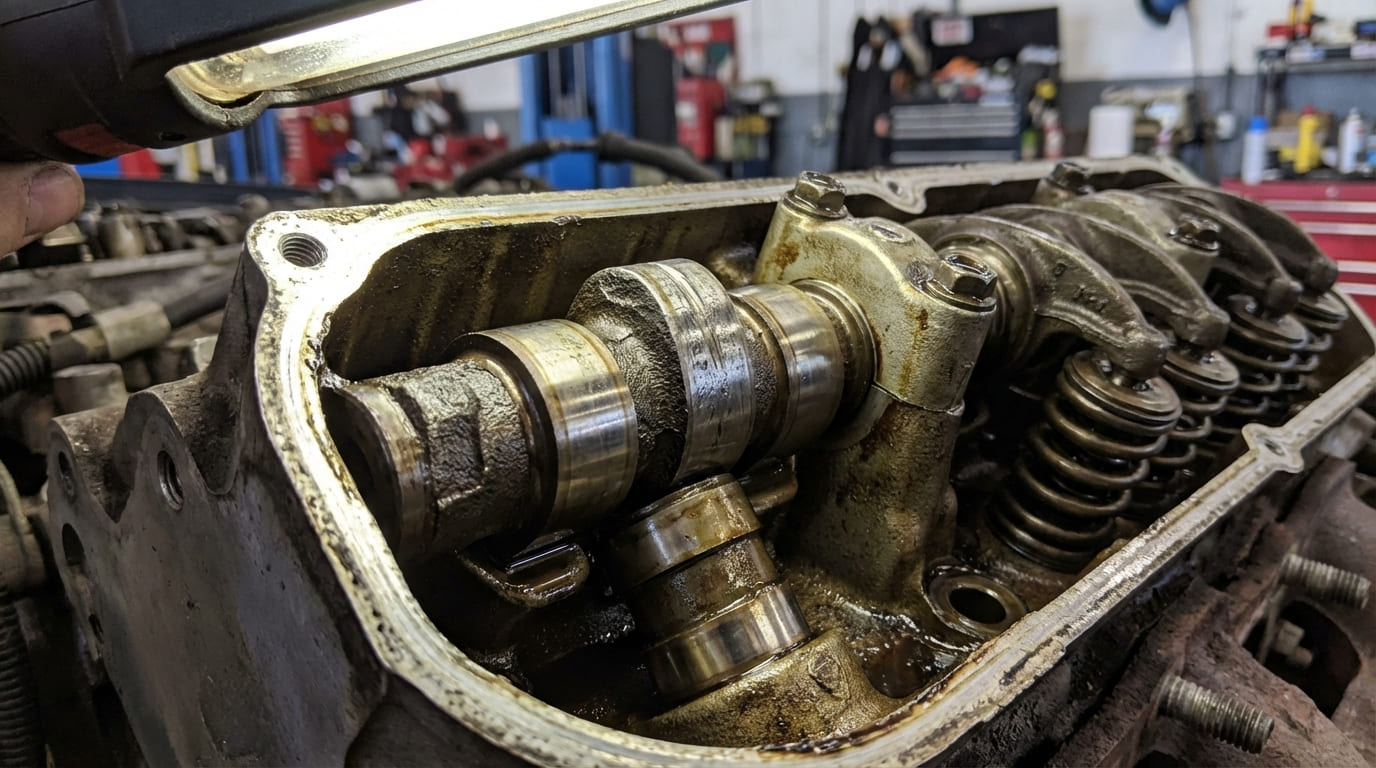
- Stage 2 – Component Failure: Collapsed lifter leads to bent pushrod, broken rocker arm, or valve not closing.
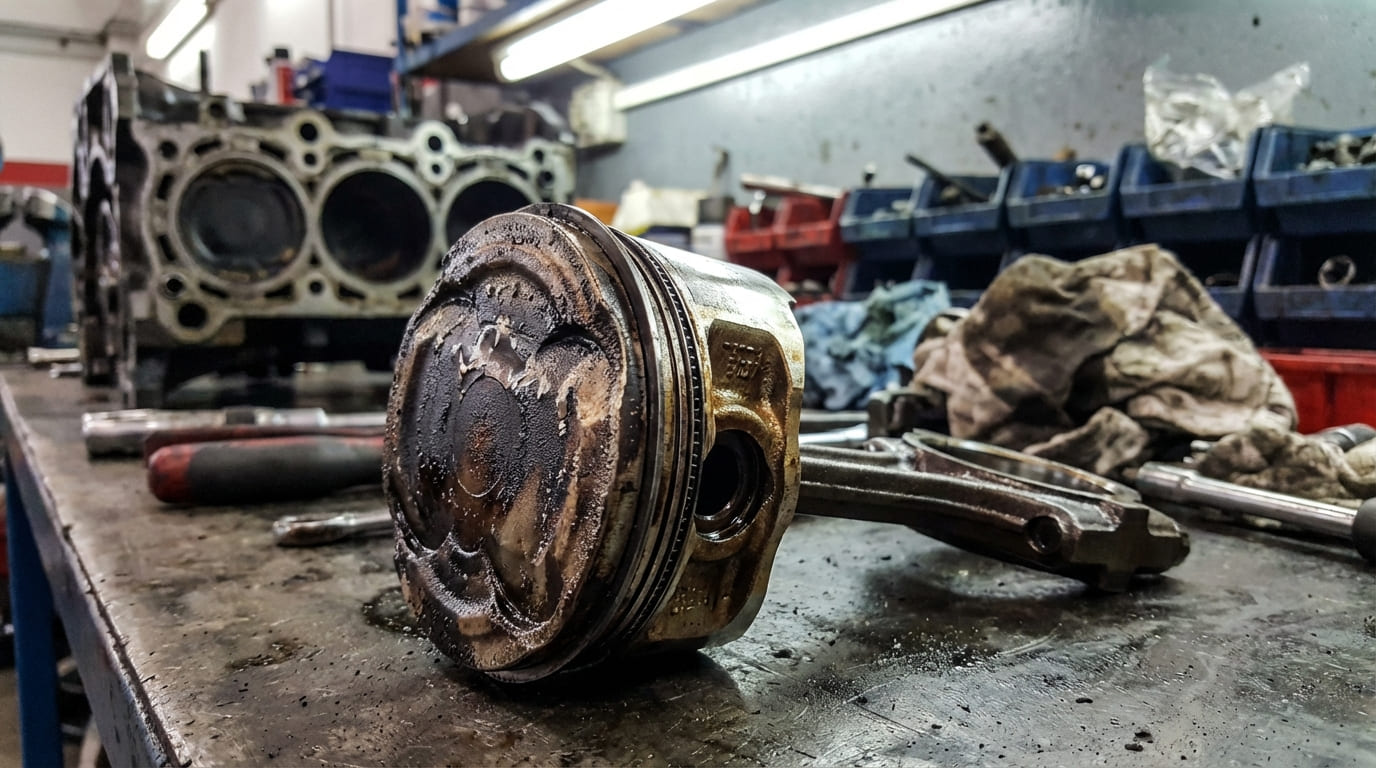
- Stage 3 – Catastrophe: In interference engines, open valve contacts piston—bent valves, cracked piston, possible head damage.
Timeline varies: some engines last months, others fail in days. High RPM use accelerates failure.
Verification After Repair
After any repair, confirm success with these checks:
- Run engine to full operating temperature—noise should be gone or match known baseline.
- Recheck oil pressure with mechanical gauge across idle and 2,000 RPM.
- Perform road test: smooth throttle response, no misfires.
- Scan for codes: clear any stored, then recheck after driving.
Final test: let engine sit overnight. Cold start should show minimal noise that clears in under 10 seconds. Return of ticking indicates unresolved issue—likely oil flow or contamination.