Loss of turbo boost robs your engine of power, hurts fuel economy, and can lead to long-term damage if ignored. As a senior automotive editor and master mechanic, I’ve diagnosed hundreds of underboost cases—from simple hose leaks to melted catalytic converters. This guide cuts through the noise and gives you a real-world diagnostic path used in professional shops. We’ll focus on actionable checks, cost-effective fixes, and how to avoid costly misdiagnoses.
Confirming Actual Boost Loss
Before tearing into the engine, verify that boost is truly low. Many drivers mistake normal turbo lag or ECU derate events for mechanical failure. Start with the basics.
How to Check: Use Live Data or a Mechanical Gauge
Plug in an OBD2 scan tool that reads live boost pressure. Compare “Actual Boost” vs. “Desired Boost” under load. Perform a WOT (Wide Open Throttle) pull in 3rd or 4th gear at 2,500–3,500 RPM. A healthy system stays within 1–2 PSI of target. If actual is consistently 3+ PSI below desired, you have a real issue.
No scan tool? Install a mechanical boost gauge. Tap into a boost reference port post-throttle body—never use a vacuum line. Run the same WOT test. If the needle doesn’t reach expected levels, move to diagnostics.
In my shop, we never replace a turbo without confirming boost loss with either live data or a mechanical gauge. Too many “bad turbos” turn out to be sensor errors or wiring issues.
Root Causes and How to Diagnose Them
Boost loss stems from three main areas: air leaks, exhaust flow problems, or turbo component failure. Attack them in order—simplest first.
1. Intake System Leaks (Most Common and Cheapest to Fix)
Over 60% of underboost cases I see are due to pressurized air escaping after the turbo compressor. The turbo spins fine, but boost never reaches the engine.
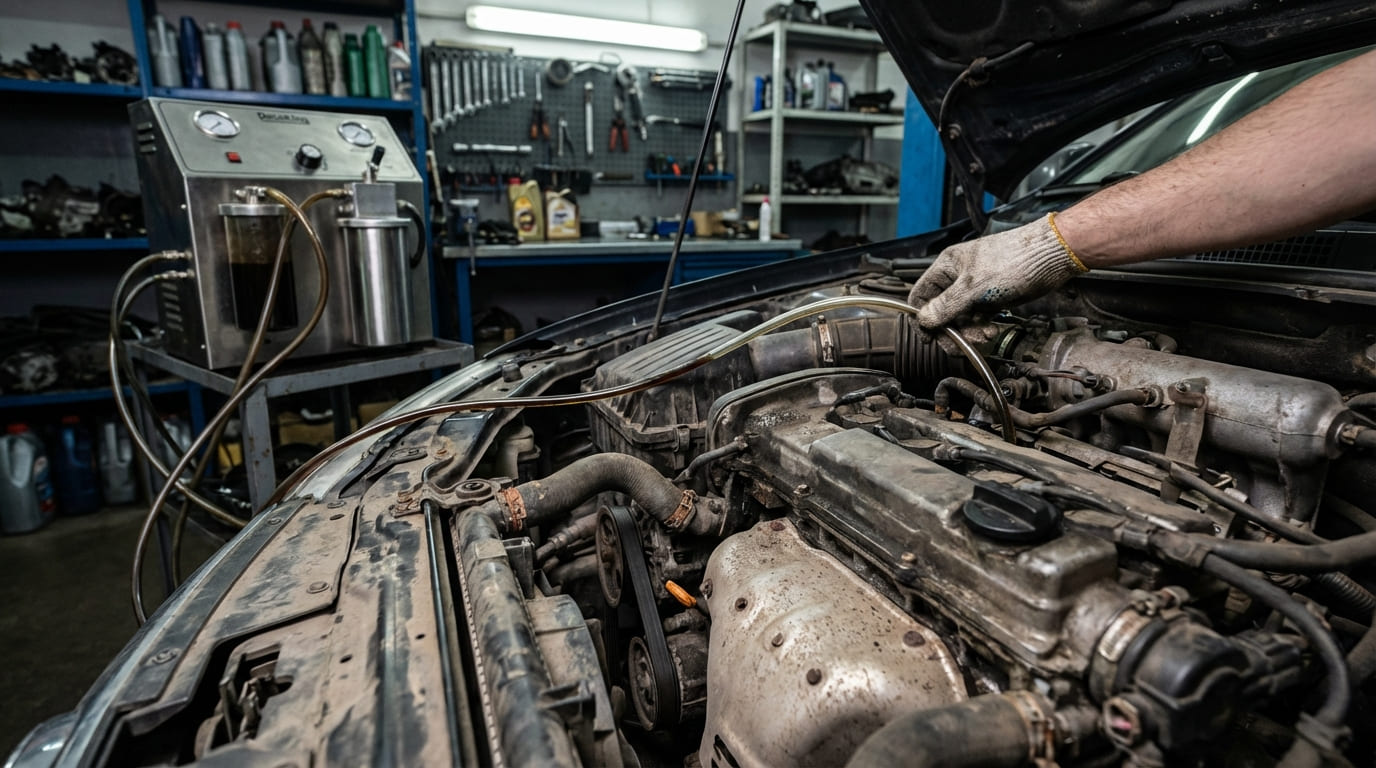
How to Check: Perform a smoke test on the pressurized intake system. Block the turbo inlet, connect a smoke machine to the charge pipe, and pressurize to 15 PSI. Look for smoke at:
- Intercooler end tanks or fins (common on off-road vehicles)
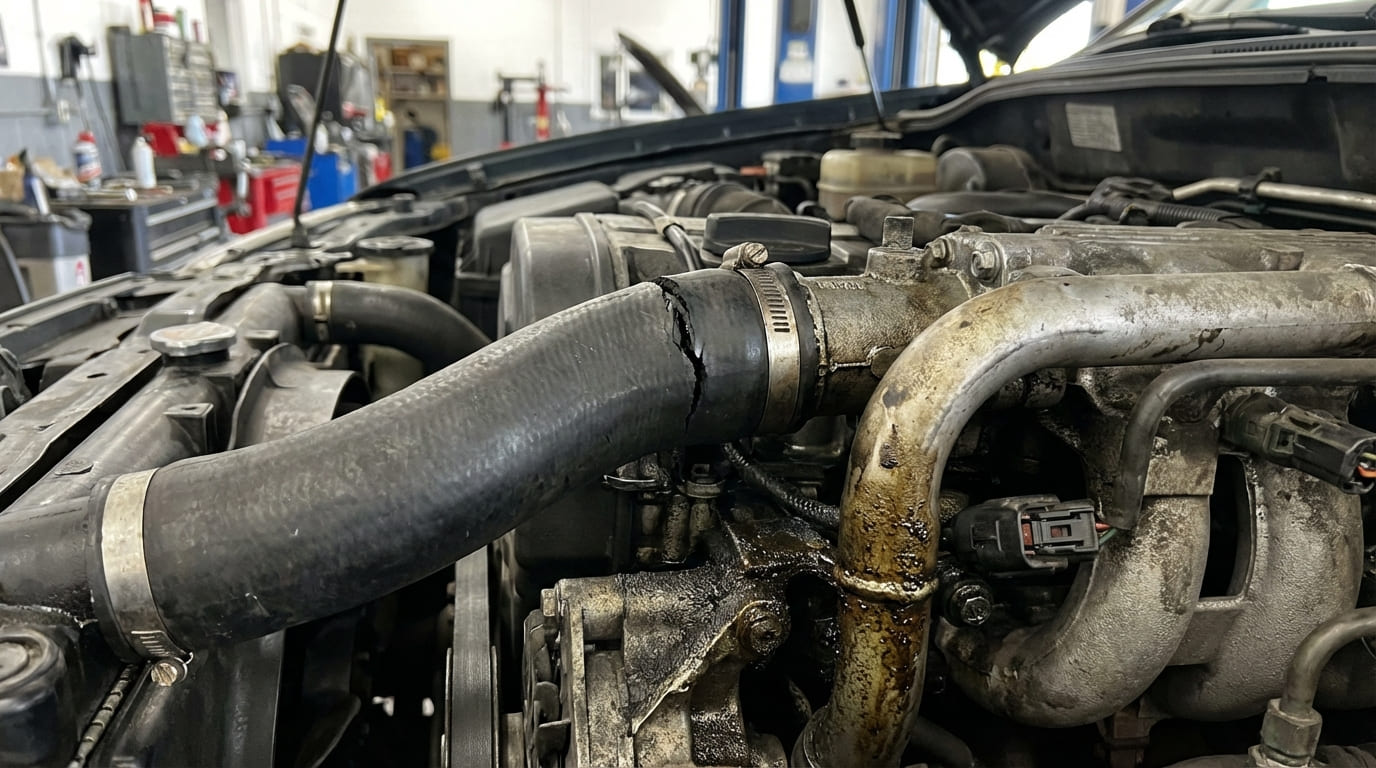
- Silicone couplers and clamps (especially near the turbo and throttle body)
- Intake manifold gaskets (common on Ford EcoBoost and GM LTG engines)
- Throttle body seal (often missed—remove to inspect)
- PCV system hoses (a $10 leak can mimic a dead turbo)
If no smoke test? Squeeze and twist every boost hose under the hood. Look for soft spots, bulges, or cracked silicone. A collapsed hose under boost restricts flow and kills performance.
I once diagnosed a “blown turbo” on a Subaru WRX that was just a loose clamp on the inlet hose. Fixed it in 10 minutes with a $3 hose clamp. Always check the cheap stuff first.
2. Exhaust System Issues (Affects Turbo Spool)
The turbo turbine is driven by exhaust pressure. Leaks before the turbo or restrictions after it prevent proper spool-up.
How to Check:
- Exhaust leak pre-turbo: Listen for ticking or puffing at idle. Inspect the up-pipe gasket and manifold for soot trails. A cold engine makes leaks easier to spot.
- Catalytic converter restriction: Remove the upstream O2 sensor and thread in a pressure gauge. At 2,500 RPM, backpressure should be under 2.5 PSI. Over 3 PSI? The cat is likely clogged. Melted substrate from a rich fuel condition is a common cause.
- Exhaust manifold cracks: Use a stethoscope or thermal camera. Cracks often seal when hot—test while engine is cold.
Cost note: Replacing a clogged catalytic converter runs $400–$1,200 OEM. Aftermarket units are cheaper but may trigger codes. If the engine has a history of misfires or oil burning, fix the root cause first—otherwise the new cat will fail.
3. Turbocharger and Control System Failures
If intake and exhaust are clear, the turbo or its controls may be at fault. But don’t condemn the turbo yet—many issues are external.
How to Check:
- Wastegate actuator: Remove the vacuum hose and apply 15–20 inHg with a hand pump. The arm should move smoothly and hold vacuum. If it leaks or sticks, replace it. Cost: $80–$200.
- Variable geometry turbo (VGT/VNT): Use a scan tool to command vane position. Watch actual vs. target. No movement? Check the actuator first, then inspect the vane linkage for carbon binding. Cleaning vanes can restore function—replacement costs $1,000+.
- Boost pressure sensor (MAP/Boost): Compare sensor readings with a known-good gauge. A failing sensor sends bad data to the ECU, causing incorrect boost control.
- Turbo internal damage: Remove the intake hoses and inspect the compressor wheel. Look for blade damage, shaft play (axial or radial), or oil in the charge pipes. Any movement beyond slight wiggle means bearing failure.
Repair vs. replace: A rebuilt turbo costs $300–$600. A new OEM unit runs $800–$2,000. If the turbo is damaged from oil starvation or contamination, replacing it without fixing the root cause (e.g., clogged oil feed line, bad PCV) guarantees repeat failure.
On a Ford 6.7L Powerstroke, I found the VGT linkage disconnected due to carbon buildup. The actuator worked fine—no need to replace the turbo. Clean the vanes and linkage, and you save $1,500.
Diagnostic Decision Table: Fast-Track Your Fix
| Symptom / Test Result | Most Likely Causes | Less Common But Possible | Initial Diagnostic Step |
|---|---|---|---|
| Actual boost 3–5 PSI below desired; no CEL | Boost hose leak, intercooler crack | PCV leak, minor throttle body gasket leak | Smoke test pressurized intake system |
| P0299 code; boost builds slowly | Exhaust leak pre-turbo, wastegate actuator weak | Clogged air filter, VGT vane sticking | Inspect up-pipe gasket; test actuator response |
| Oil in intercooler or charge pipe | Compressor seal failure, clogged oil return line | Excessive crankcase pressure, wrong oil type | Check oil return line for kinks; inspect PCV |
| Whining noise under boost; shaft play | Bearing wear, oil starvation | Foreign object damage, imbalance | Inspect compressor wheel; review oil history |
| Boost spikes then drops; erratic control | Faulty boost pressure sensor, EGR valve leak | MAP sensor drift, ECU software glitch | Compare sensor readings; check for EGR flow at idle |
Best Practices: What to Do (and Not Do)
- ✅ Recommended: Clean all threaded holes with a bottoming tap before installing turbo bolts. Dirt or old sealant prevents proper torque.
- ✅ Recommended: Replace all rubber/silicone hoses in the boost system when doing turbo work. Old hoses are time bombs.
- ✅ Recommended: Flush or replace the turbo oil feed line. Coking is a leading cause of turbo failure.
- ⚠️ Avoid: Reusing torque-to-yield (TTY) bolts. They stretch and won’t hold proper clamping force.
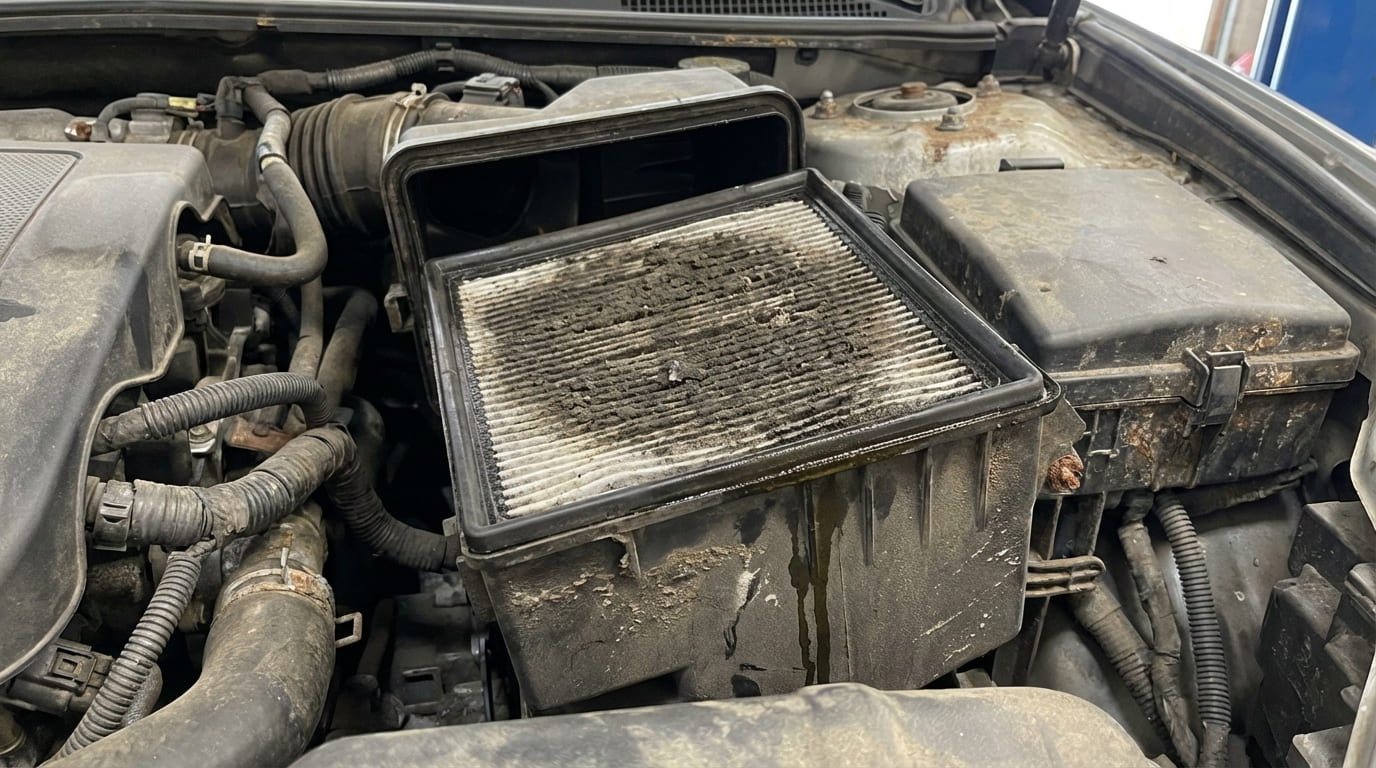
- ⚠️ Avoid: Installing a new turbo without checking the air filter and PCV system. Contaminants kill turbos fast.
- ⚠️ Avoid: Assuming the turbo is bad. Rule out leaks and sensor issues first—most aren’t.
A 2014 VW Passat TDI came in with P0299 and poor acceleration. Smoke test was clean. Then we found a cracked EGR cooler letting exhaust gas into the intake. The ECU leaned out the mixture and cut boost. Fixed the cooler—no turbo work needed. Lesson: EGR and sensor issues can mimic mechanical boost loss.