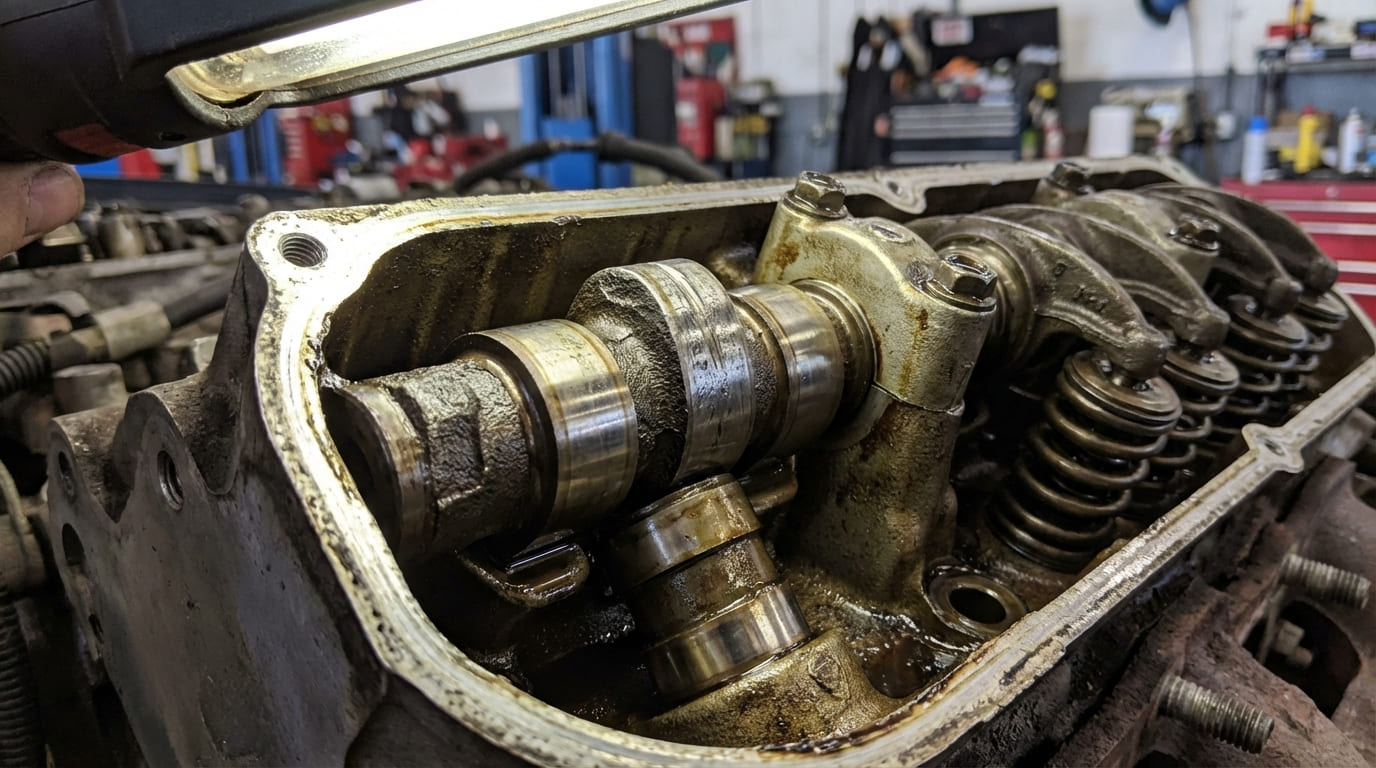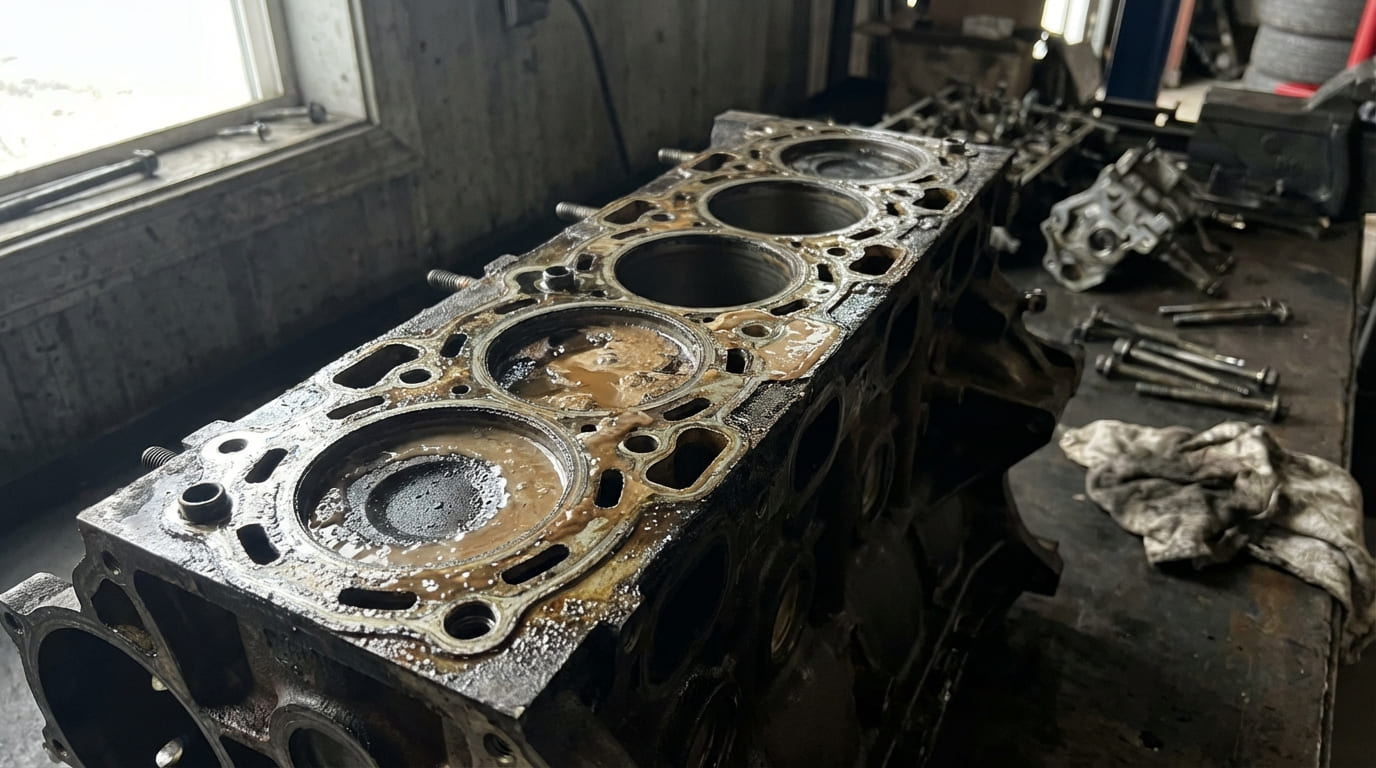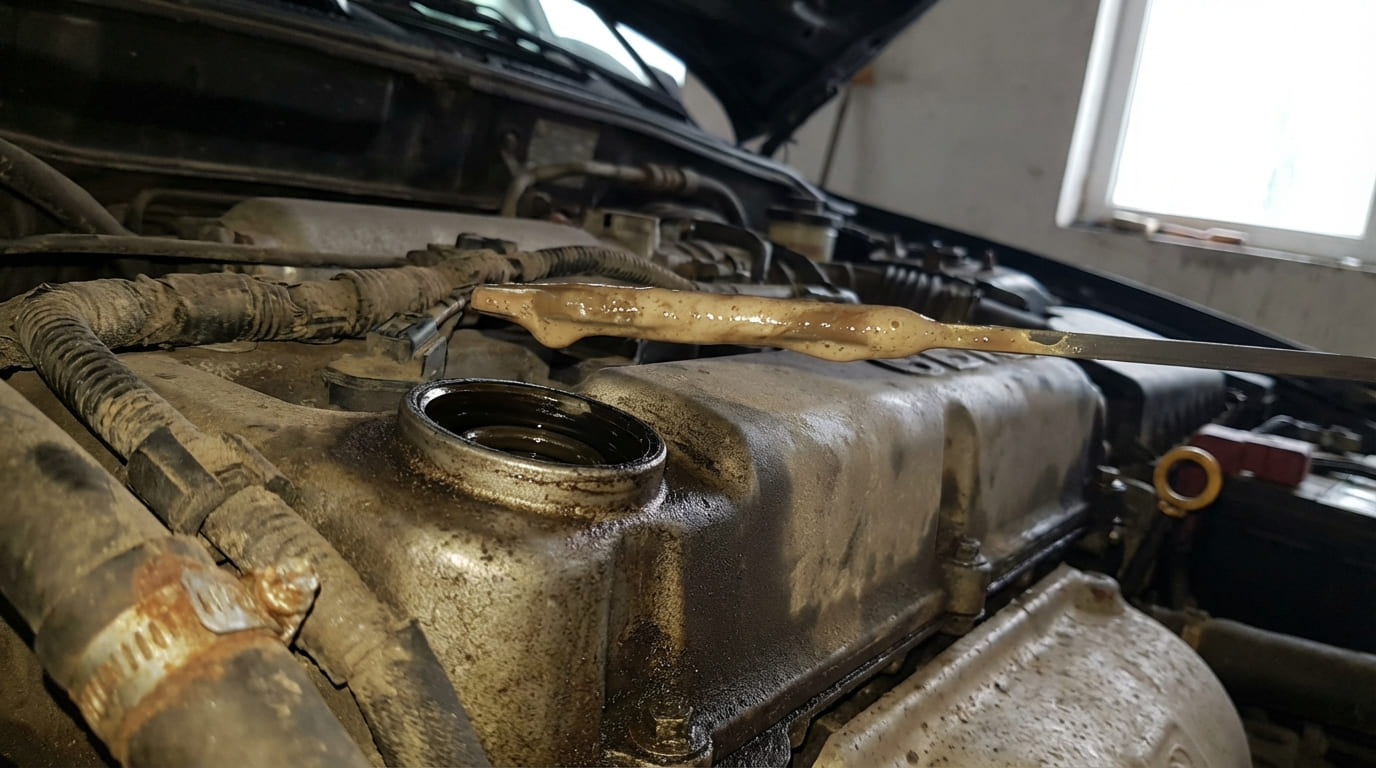
Seeing a milky, mayonnaise-like substance on the oil dipstick or fill cap is a red flag. While it often means coolant mixing with oil, not every case requires a full engine teardown. The real issue could be a failed gasket, cracked component, or even simple condensation. Misdiagnosis leads to wasted time and money. This guide cuts through the noise with field-tested diagnostics, repair logic, and cost-aware decisions.
Common Causes and How to Diagnose Them
Start here: milky oil forms when water or coolant mixes with engine oil. The source determines the fix—and the cost. Below are the top causes, ranked by severity and frequency, with clear diagnostic steps.
1. Failed Cylinder Head Gasket
A blown head gasket is a common culprit, especially in engines that have overheated. When the gasket fails between a coolant passage and an oil return gallery, coolant leaks into the oil, creating the classic milky residue.
How to Check:
- Perform a cooling system pressure test. Pump the system to 15 psi (or OEM spec) and monitor for 30 minutes. A drop indicates a leak—internal or external.
- Use a chemical block tester (combustion leak tester). Draw air from the radiator neck through the test fluid. A color change (blue to green/yellow) confirms exhaust gases in the coolant—strong evidence of head gasket or crack.
- Inspect spark plugs. White, chalky deposits or a cylinder that won’t fire may indicate coolant entering the combustion chamber.
Oil analysis can detect sodium or potassium (coolant additives), but it’s not always practical. Field tests are faster and more accessible.
In my shop, we never pull a head without confirming combustion leakage. I’ve saved customers thousands by ruling out the gasket when the real issue was the intake manifold.
2. Cracked Cylinder Head or Engine Block
Cracks often follow overheating or freeze damage. Aluminum heads are prone to cracking near coolant jackets. Cast iron blocks are tougher but not immune—especially around main bearing saddles.
How to Check:
- After disassembly, inspect the head and block with a borescope. Look for hairline cracks near coolant passages.
- For a non-invasive check, pressure test the cooling system and watch for external leaks or bubbles in the radiator when the engine runs.
- Dye penetrant testing or hydrostatic testing (submerging and pressurizing) can reveal hidden cracks—but usually requires removal.
Repair viability varies:
| Component | Crack Location | Repairable? | Approximate Cost |
|---|---|---|---|
| Cast Iron Head | Edge, away from combustion | Yes (welding or pinning) | $300–$600 |
| Aluminum Head | Coolant jacket or combustion area | Rarely | $800–$1,500 (replace) |
| Engine Block | Main bearing saddle or cylinder wall | No (economically) | $2,000+ (short block) |
If a customer overheats their engine and gets milky oil, I assume a crack until proven otherwise—especially in aluminum V6s. These engines don’t forgive thermal stress.
3. Failed Engine Oil Cooler
Diesel trucks, performance cars, and some SUVs use oil coolers that share coolant lines. Internal corrosion or thermal fatigue can rupture the barrier, allowing fluids to mix.
How to Check:
- Bypass the cooler: disconnect the lines and connect them directly. Drive the vehicle under load for 20–30 minutes. If the milky oil stops forming, the cooler is likely at fault.
- Remove and pressure test the cooler off the engine. Apply 15 psi to the coolant side and submerge in water. Bubbles = leak.
- Check for oil in the coolant reservoir or coolant in the oil pan—cross-contamination is two-way.
Replacement is the only real fix. Repairs don’t hold.
| Part | Cost (Part Only) | Labor Difficulty |
|---|---|---|
| Oil Cooler (compact) | $80–$150 | Moderate |
| Oil Cooler (integrated in filter housing) | $200–$400 | High |
Always bypass the cooler as a diagnostic step—not a permanent fix. Running without it risks oil overheating, especially under load.
4. Water Ingress (External or Condensation)
Not every milky film means disaster. Short trips in cold weather prevent the engine from reaching full temperature, so moisture can’t evaporate. The result? Condensation mixes with oil and forms a temporary milky layer—especially on the fill cap.
How to Check:
- Inspect the oil fill cap and dipstick. If only the cap shows residue and the oil on the dipstick looks clean, it’s likely condensation.
- Run the engine at operating temperature for 30+ minutes on the highway. Recheck the cap after cooling. If the milky film disappears, it was moisture burning off.
- Check for external sources: loose oil cap, missing dipstick, or recent deep water exposure. Inspect the air filter housing and PCV breather tube for water traces.
If oil analysis shows water but no sodium/potassium (coolant additives), it’s likely plain water ingress—not internal engine failure.
I’ve seen customers panic over a milky cap after winter short trips. A 45-minute highway drive cleared it up. Always rule out condensation before tearing into the engine.
5. Damaged Intake Manifold Gasket
Engines like GM’s 3.1L/3.4L V6 or some Ford V8s route coolant through the intake manifold. If the gasket fails, coolant can leak into the valley and drain into the crankcase via lifter bores or pushrod holes.
How to Check:
- Remove the intake cover and inspect the valley. Look for coolant residue, rust, or puddling.
- Pressure test the cooling system and watch for leaks around the manifold.
- Check for coolant smell in the oil or white residue under the oil cap.
This fix is far less labor-intensive than a head gasket job—usually 4–6 hours vs. 12+.
| Component | Repair Cost (DIY vs. Shop) |
|---|---|
| Intake Manifold Gasket (GM 3.4L) | $50 (parts) / $400–$600 (labor) |
| Head Gasket (same engine) | $200 (parts) / $1,200–$1,800 (labor) |
On GM 3.1L/3.4L engines, I check the intake manifold first. It fails more often than the head gasket and looks identical on the dipstick.
Diagnostic Decision Tree: Match Symptoms to Causes
| Symptom / Observation | Most Likely Causes | Next Diagnostic Step |
|---|---|---|
| Milky oil only on cap, oil on dipstick normal | Condensation | Run engine at temp 30+ mins; recheck |
| Milky oil + white exhaust smoke + coolant loss | Head gasket, cracked head/block | Block test, inspect spark plugs |
| Milky oil + coolant loss, no smoke or gas in coolant | Intake manifold gasket (if applicable), oil cooler | Inspect intake valley, bypass cooler |
| Milky oil after river crossing or off-roading | External water ingress | Check oil cap, dipstick seal, breather |
Best Practices: What to Do (and Avoid)
- ✅ Recommended: Clean head bolt threads with a bottoming tap before reassembly. Debris or old sealant affects torque and clamping force.
- ✅ Recommended: Use a straightedge and feeler gauge to check head and block flatness. Warpage over 0.002″–0.004″ requires resurfacing—especially on aluminum.
- ✅ Recommended: Replace thermostat and coolant hoses during any cooling system repair. Old parts compromise new ones.
- ⚠️ Avoid: Reusing torque-to-yield (TTY) head bolts unless the manual explicitly allows it. In my shop, we treat them as single-use.
- ⚠️ Avoid: Skipping the cooling system pressure test after repair. A small leak may not show up until highway driving.
- ⚠️ Avoid: Assuming the head gasket is the only cause. Intake gaskets, oil coolers, and condensation mimic the same symptoms.
Real-World Case Studies
Situation: 2005 Chevy Impala 3.4L with thick mayonnaise on cap and low coolant. Owner assumed blown head gasket.
Diagnosis: Block test negative. No combustion gases. Pressure test held, but coolant pooled in intake valley.
Fix: Failed intake manifold gasket. Coolant drained into lifter bores.
Lesson: On engines with coolant-carrying intakes, check the manifold first. It’s cheaper, faster, and often the real culprit.
Situation: 2012 Ford F-150 5.0L with milky oil after river crossing. No smoke, no overheating.
Diagnosis: Oil sample showed water but no coolant additives. Cap was loose from recent oil change.
Fix: Oil change and cap replacement. Problem cleared after highway drive.
Lesson: External water ingress is common. Always review driving conditions and maintenance history.
Situation: Diesel pickup with milky oil two weeks after head gasket replacement.
Diagnosis: Head pulled. Block warped 0.006″—beyond spec. Previous shop didn’t check flatness.
Fix: Block milled and reassembled with new gasket.
Lesson: Torque specs alone don’t guarantee a seal. Surface condition is just as important—especially on high-compression engines.
Milky oil demands attention—but not panic. Use a logical process: rule out condensation, test for combustion gases, inspect for external leaks, and verify with pressure tests. Skip the guesswork, follow the evidence, and always consult your engine’s service manual for specs. The right diagnosis saves time, money, and your engine.