When a misfire or rough idle prompts a spark plug inspection, the condition of the plug’s firing end can reveal the root cause. As a master technician, I’ve found that distinguishing between oil fouling and fuel wetness early saves time, money, and unnecessary part replacements. Both conditions cause misfires, but their sources—and fixes—differ drastically. This guide delivers a field-tested, step-by-step approach to accurate diagnosis and effective repair.
Step 1: Identify the Type of Fouling
Before tearing into the engine, visually inspect the spark plug. The texture, smell, and appearance tell you whether oil or fuel is the culprit. Misdiagnosing here leads to wasted effort.
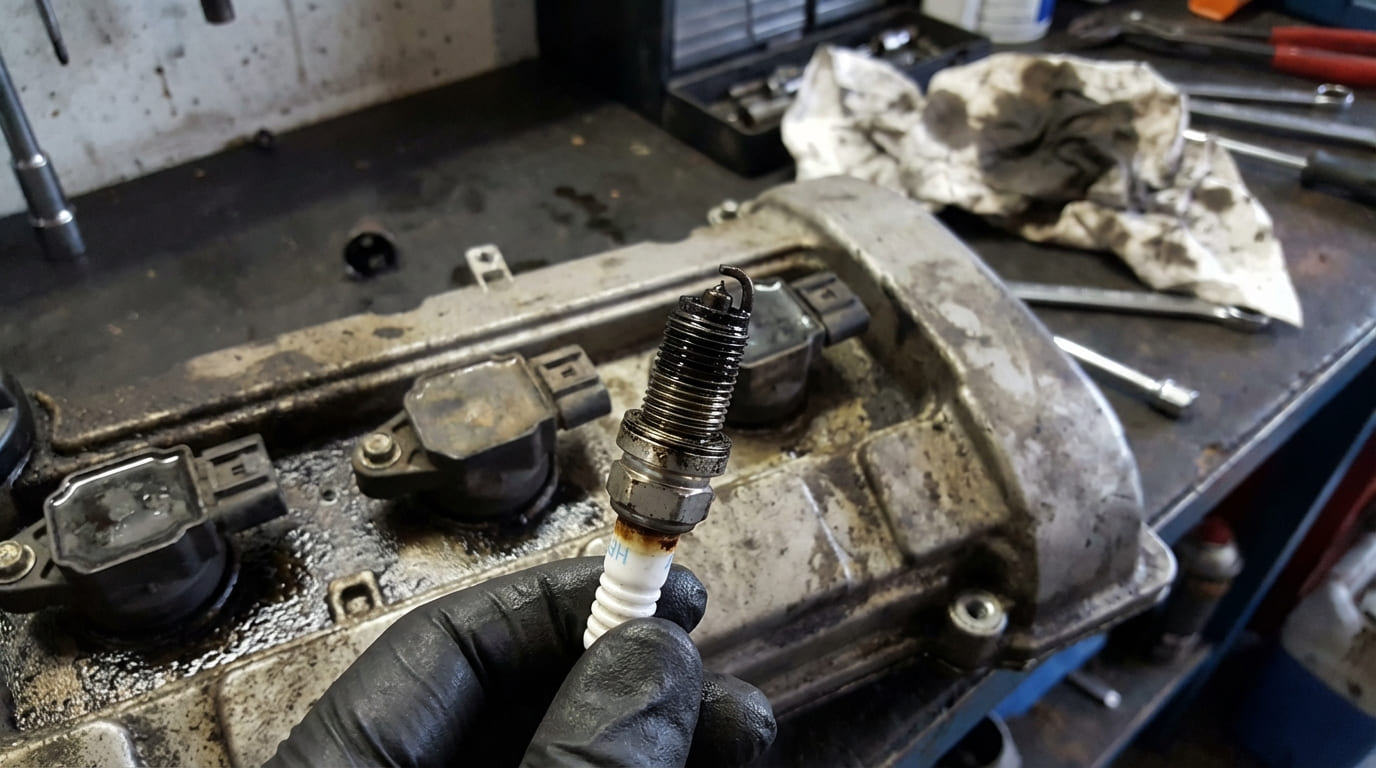
Oil Fouling: What to Look For
- Visual: Black, greasy deposits on the insulator tip, electrodes, and shell threads. Oil may drip from the plug when removed.
- Odor: Burnt oil smell, sometimes metallic.
- Texture: Slippery or viscous residue; smears easily on a rag.
Fuel Wetness: What to Look For
- Visual: Black, dry soot (rich mixture) or wet, fuel-soaked electrode (flooding).
- Odor: Strong raw gasoline smell.
- Texture: Dry soot = chronic rich condition; liquid fuel = ignition failure or injector leak.
In my shop, we always photograph the plug as removed—before touching it. That first look is the most honest clue.
Step 2: Diagnose Oil Fouling – Common Causes and Tests
Oil entering the combustion chamber typically comes from above (valvetrain) or below (pistons/rings). Turbo engines add another path: the turbocharger.
1. Worn Valve Stem Seals or Guides
Most common in high-mileage OHC engines. Oil leaks past worn seals during intake stroke, especially at startup.
How to Check:
- Observe for blue smoke on cold start that clears after a few seconds.
- Use a borescope to inspect intake ports for oil residue near valve stems.
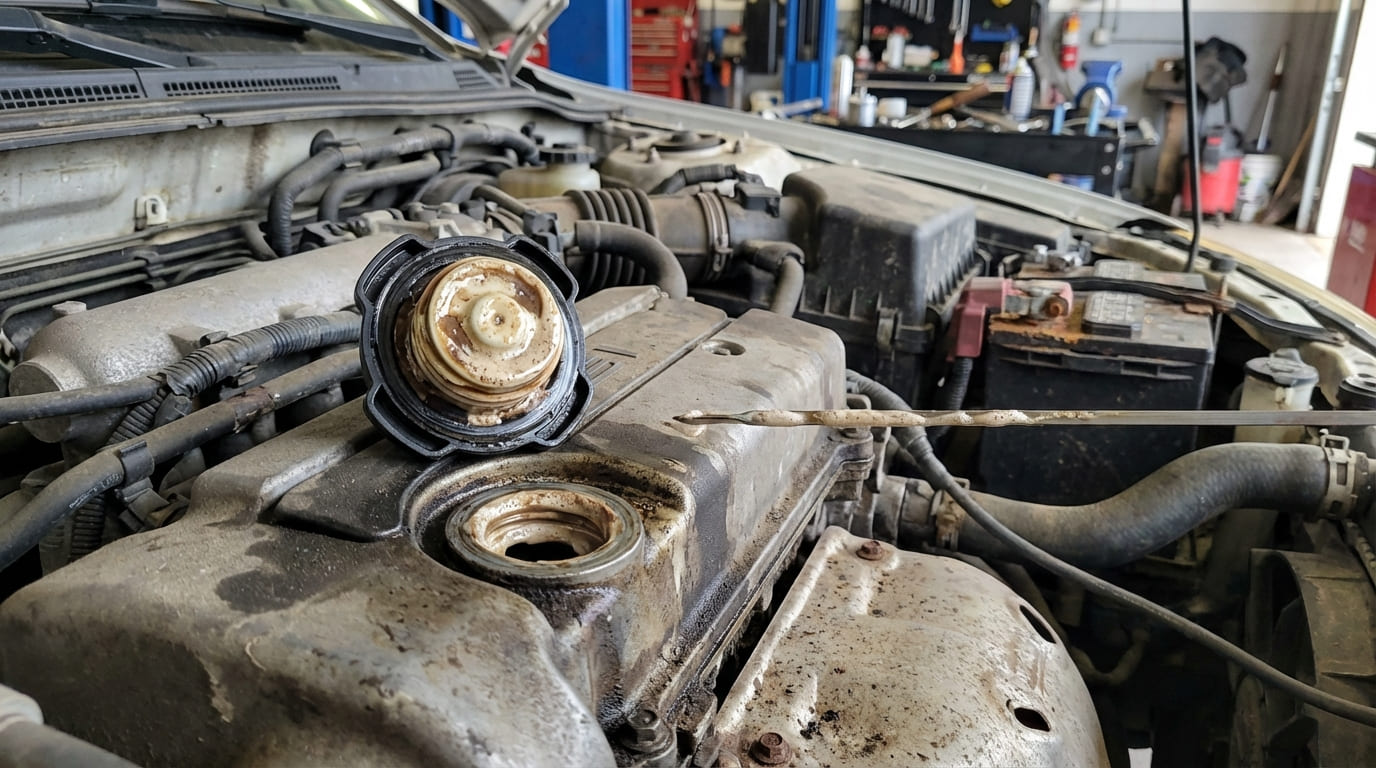
- Perform a cylinder leakage test; listen for hissing at the oil cap (indicates guide/seal leak).
Repair vs Replace: Replacing seals is labor-intensive (~3–6 hours). If guides are worn (>0.003″ radial play), they must be reamed and bushed. On many engines, this makes a full head rebuild more cost-effective.
Cost Range: Seal replacement: $300–$600 (parts and labor). Guide repair adds $200–$400.
On older engines, I always measure guide wear before replacing seals. A new seal on a worn guide fails in months. If the guide is loose, replace or repair it—don’t waste time.
2. Worn Piston Rings or Cylinder Walls
Oil enters through the bottom end. Affects multiple cylinders. Blue smoke under acceleration is a telltale sign.
How to Check:
- Perform a compression test. Low numbers across multiple cylinders suggest ring wear.
- Do a wet compression test: add 1–2 squirts of oil into the spark plug hole and retest. If compression jumps significantly, rings are likely worn.
- Leak-down test: high leakage with sound at the oil filler indicates ring/cylinder issues.
Repair vs Replace: Ring replacement requires engine disassembly. Often not cost-effective on high-mileage engines unless rebuilding.
Cost Range: Short block replacement: $1,500–$3,500. Rebuild: $2,000–$4,000.
3. PCV System Failure
A clogged PCV valve or hose increases crankcase pressure, forcing oil into the intake manifold and combustion chambers.
How to Check:
- Inspect PCV valve for gumming or blockage. Shake it—should rattle.
- Check for vacuum at the PCV hose while engine is running (use vacuum gauge).
- Inspect intake manifold and throttle body for oil sludge.
Repair: Replace PCV valve and clean hoses. On some turbo engines, the entire separator system may need replacement.
Cost Range: PCV valve: $20–$50. Full system cleaning: $150–$300.
I’ve fixed oil-fouled plugs on turbo engines just by replacing a $25 PCV valve. Always test this before assuming turbo or ring failure.
4. Turbocharger Oil Seal Leak
Common on high-mileage turbo engines. Oil leaks from the compressor side into the intake tract.
How to Check:
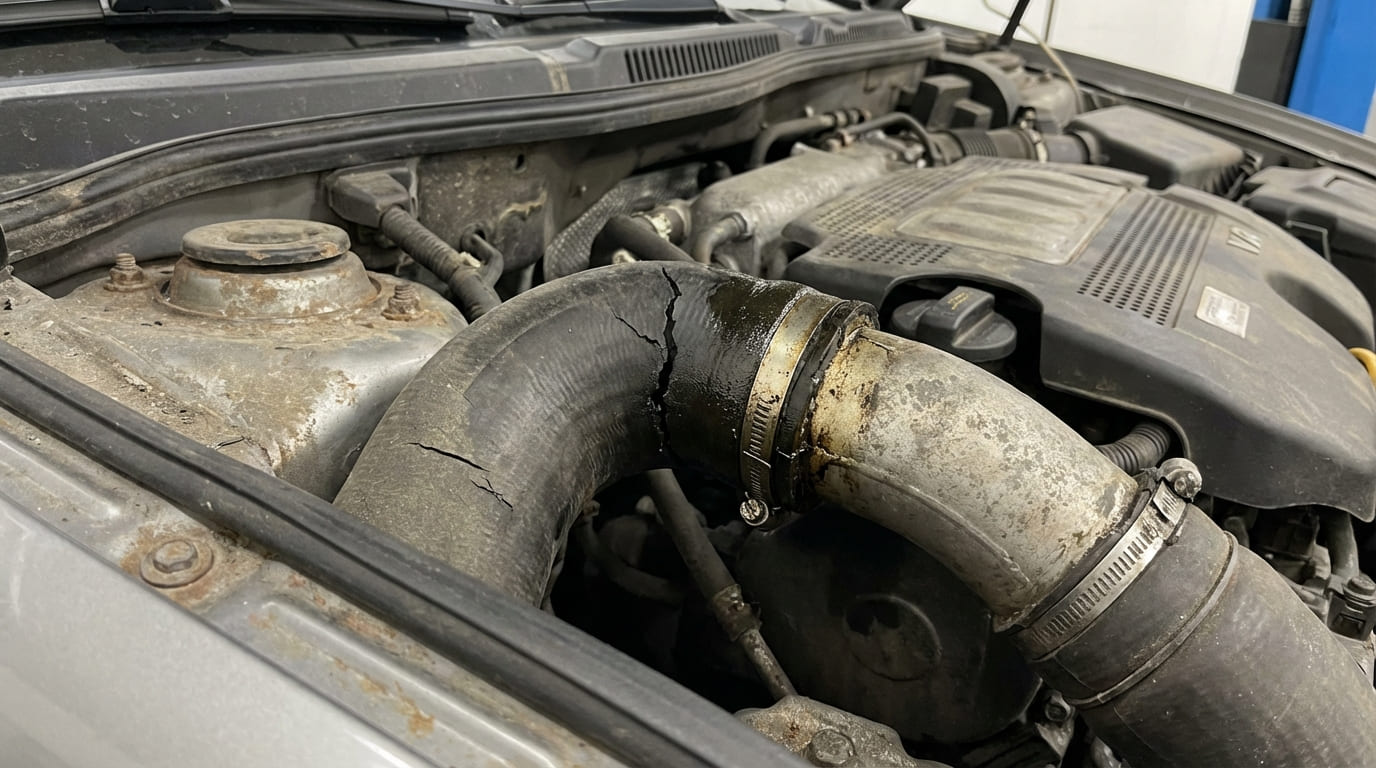
- Inspect charge pipe and intercooler inlet for oil residue.
- Check for blue smoke under boost.
- Inspect turbo shaft for excessive play (wiggle the compressor wheel).
Repair vs Replace: Turbo rebuilds cost $400–$800. New unit: $800–$1,500. If the engine has high miles, consider a remanufactured unit with warranty.
5. Head Gasket or Block Porosity
Rare but possible. Oil gallery cracks or gasket failure can allow oil into the chamber.
How to Check:
- Perform cylinder leakage test with coolant reservoir cap off. Bubbles indicate combustion-to-coolant leak.
- Check oil for coolant contamination (milky residue).
- Lab analysis of coolant for oil content.
Repair: Head gasket replacement: $1,000–$2,000. Block repair is often not viable.
Step 3: Diagnose Fuel Wetness – Common Causes and Tests
Fuel wetness means combustion isn’t happening. The plug is soaked because fuel isn’t burning. Focus on ignition, fuel delivery, and compression.
1. Ignition System Failure
Weak or no spark leaves fuel unburned. Most common cause of single-cylinder wetting.
How to Check:
- Use a high-energy spark tester (15–20mm gap). No spark or weak spark indicates coil, plug, or wiring issue.
- Swap coil with a known-good cylinder. If misfire follows, replace coil.
- Inspect coil boots for carbon tracking (use UV light in dark bay).
- Verify plug gap with a feeler gauge—even new plugs can be mis-gapped.
Cost Range: Coil: $80–$150. Spark plug: $10–$30 each.
Never assume a new plug is gapped correctly. I check every one—even OEM. Factory errors happen.
2. Leaking Fuel Injector
A stuck-open or leaking injector floods the cylinder with raw fuel.
How to Check:
- Perform fuel pressure leak-down test: shut off pump, monitor pressure. Drop >5 psi in 5 minutes suggests leak.
- Use a scan tool to command individual injectors off and listen for ticking (use stethoscope).
- Remove intake manifold and inspect for fuel pooling around injector tips (on port injection).
Repair: Replace faulty injector. Always clean fuel rail and replace O-rings.
Cost Range: Injector: $100–$250. Labor: $200–$400 (intake removal).
3. Engine Management Sensor Faults
Faulty sensors cause the ECU to deliver too much fuel.
Common Culprits:
- Coolant Temperature Sensor (CTS) stuck in cold mode
- Contaminated MAF sensor
- Lazy or dead oxygen sensor
How to Check:
- Scan for DTCs, but don’t rely on them—sensors can be faulty without setting codes.
- Read live data: compare CTS reading to actual temp. Check MAF grams/sec at idle—compare to known-good specs.
- Observe fuel trims: LTFT consistently below –10% indicates chronic rich condition.
Repair: Replace faulty sensor. Clean MAF with proper spray (never touch the wire).
Cost Range: CTS: $20–$50. MAF: $150–$300. O2 sensor: $100–$250.
4. Low Cylinder Compression
No compression = no combustion = wet plug. Cause could be mechanical: bent valve, worn cam lobe, blown head gasket.
How to Check:
- Perform compression test. Low reading? Do a wet test.
- If wet test doesn’t increase compression, problem is valvetrain (bent valve, weak spring, worn cam).
- Leak-down test: listen for air escaping into intake (intake valve), exhaust (exhaust valve), or coolant (head gasket).
Repair: Depends on cause. Valve job: $800–$1,500. Head gasket: $1,000–$2,000. Camshaft: $1,200–$2,500.
I once diagnosed a wet plug as an injector issue—turned out to be a bent intake valve. Always test compression before replacing fuel or ignition parts.
Diagnostic Decision Guide: Wet or Oily Plugs?
| Symptom Pattern | Most Probable Causes | Less Common But Possible | Initial Diagnostic Steps |
|---|---|---|---|
| Single cylinder, oily plug, blue smoke on startup | Worn valve stem seals | Valve guide wear, localized ring wear | Borescope intake port, check for smoke on startup |
| Multiple oily plugs, blue smoke under load | Worn piston rings, PCV blockage | Turbo seal failure, crankcase pressure issue | Compression/leak-down test, inspect PCV flow |
| Single wet plug, fuel smell, no spark | Ignition coil or plug failure | Leaking injector, valve issue | Spark test, swap coil to verify misfire follow |
| Single wet plug, strong spark, fuel pooling | Leaking fuel injector | Low compression, ECU fault | Fuel pressure hold test, check compression |
| Multiple wet plugs, rich condition | Faulty MAF, O2 sensor, CTS | Fuel pressure regulator, ECU calibration | Scan for DTCs, analyze fuel trims, check sensor data |
Best Practices: Do’s and Don’ts
- ✅ Do: Label ignition coils or wires before removal. A crossed wire causes misfires that mimic other issues.
- ✅ Do: Clean spark plug threads with a thread chaser. Debris can cause pre-ignition or poor heat transfer.
- ✅ Do: Torque spark plugs to spec—especially on aluminum heads. Over-tightening strips threads; under-tightening causes arcing.
- ⚠️ Don’t: Replace plugs without checking fuel trims or compression. You’re masking the real problem.
- ⚠️ Don’t: Assume a clean plug means a healthy cylinder. Marginal ignition or slight mechanical issues can still cause misfires.
- ⚠️ Don’t: Use non-OEM-spec plugs. Heat range and electrode design affect performance and longevity—especially in direct-injection engines.
Situation: A 2012 turbocharged 4-cylinder came in with oil-fouled plugs and intermittent misfire. Owner had replaced plugs twice and cleaned the intake.
Initial Assumption: We suspected worn valve guides or turbo seal failure due to the turbo setup and mileage.
Deep Dive/Discovery: Borescope showed oil in the intake manifold but minimal play in the turbo shaft. PCV valve was clogged with sludge. After replacement, oil accumulation stopped.
The Nuanced Lesson Learned: Turbo engines rely heavily on proper crankcase ventilation. Even without turbo failure, a blocked PCV system can push oil into the intake—mimicking a turbo seal leak. Always test the simple stuff first.
Situation: A V8 with fuel-wet plugs on two adjacent cylinders. Owner had replaced coils and plugs multiple times.
Initial Assumption: Thought it was a recurring ignition issue or injector problem.
Deep Dive/Discovery: Compression was low on both cylinders. Leak-down test showed air entering the coolant reservoir. Head gasket was breached between those cylinders and a water jacket.
The Nuanced Lesson Learned: Coolant intrusion doesn’t always cause overheating or visible mixing. A partial gasket failure can allow just enough leakage to quench combustion and wet the plug—without classic symptoms.
Situation: A high-mileage 6-cylinder with oil-fouled #1 plug. Blue smoke only on cold start.
Initial Assumption: Classic valve stem seal wear—common on this model.
Deep Dive/Discovery: Replaced seals, but problem returned in 3 months. Borescope revealed excessive intake valve guide wear—seals were seating improperly.
The Nuanced Lesson Learned: On older engines, replacing seals without assessing guide wear is often a temporary fix. The seal can’t do its job if the guide is out of spec.
Spark plug condition is a symptom, not a diagnosis. Oil fouling points to a mechanical or ventilation issue. Fuel wetness points to ignition, fuel, or compression failure. The key is systematic testing—not guessing. Always verify with compression, leak-down, and live data. And remember: the cheapest fix isn’t always the right one, but the right fix starts with asking the right questions.