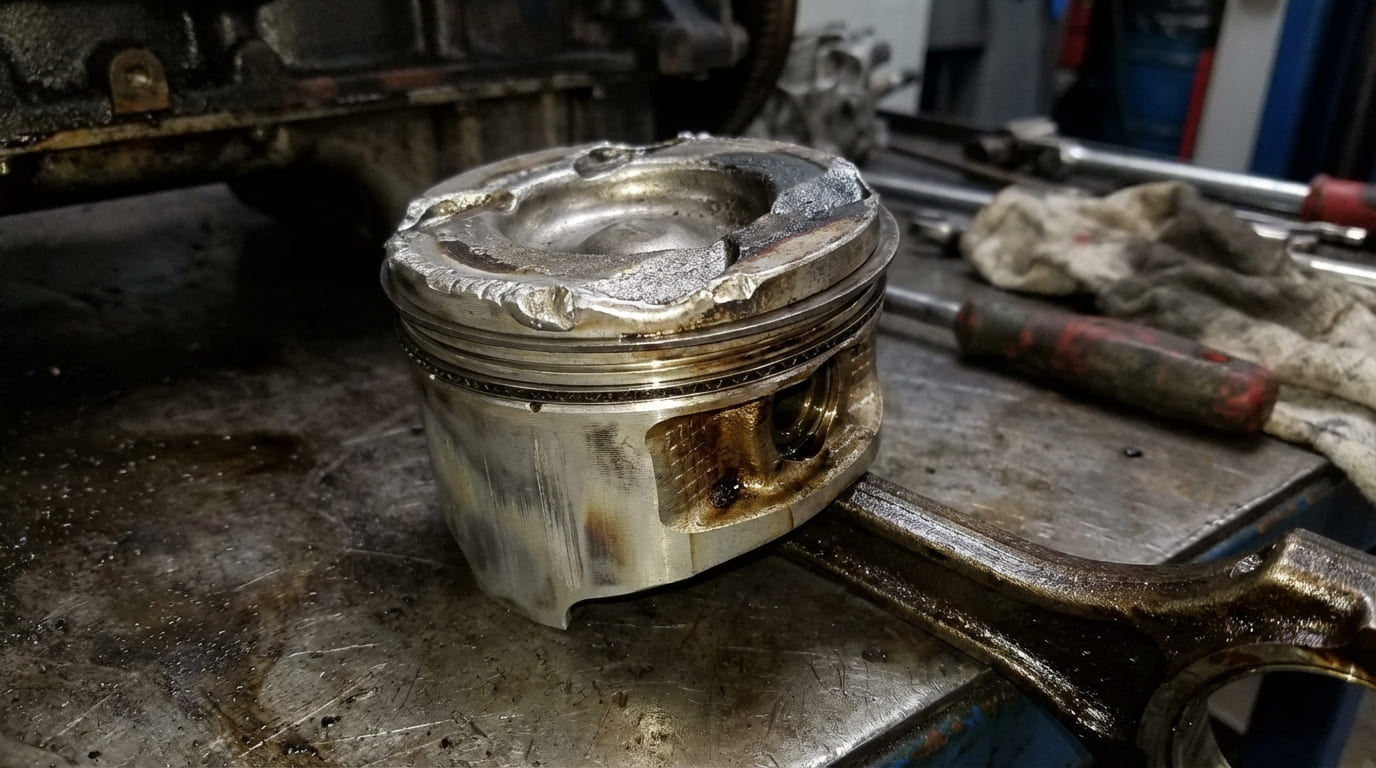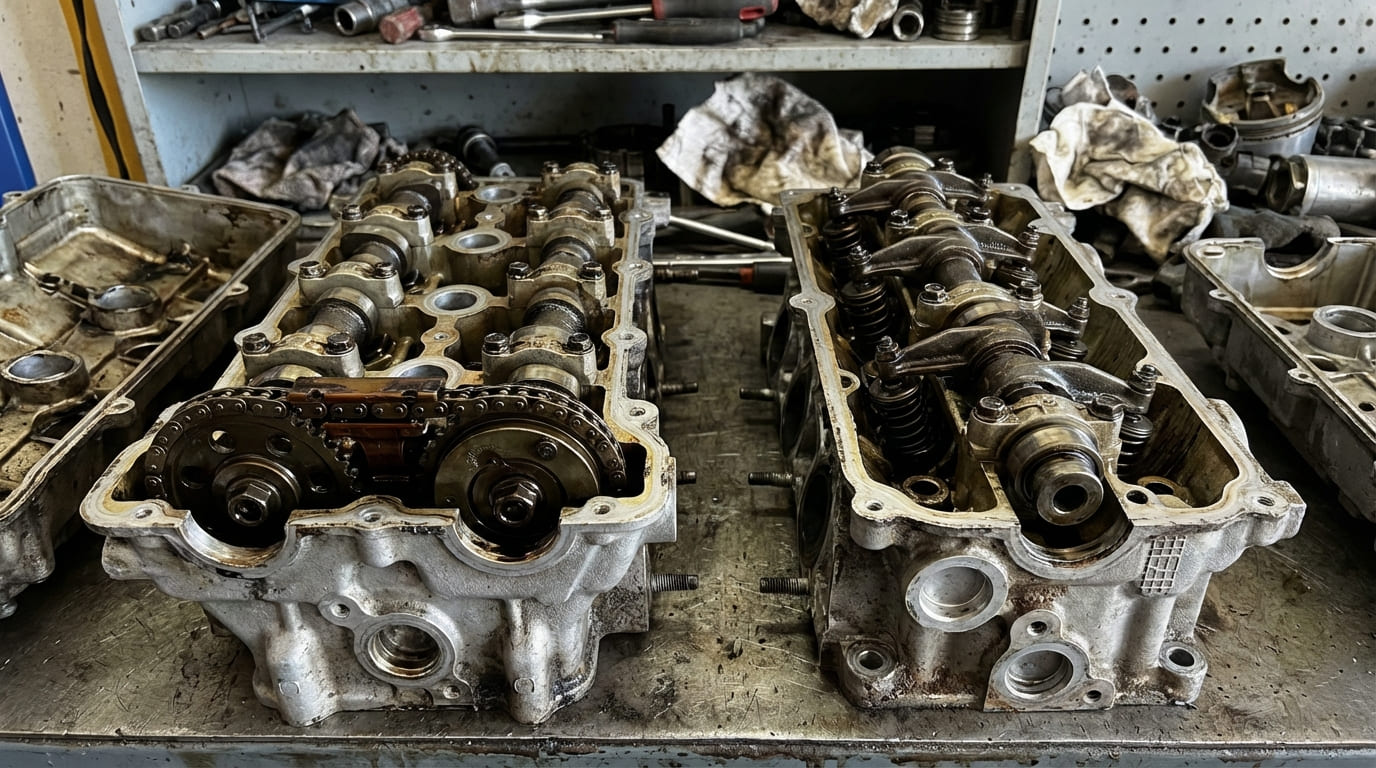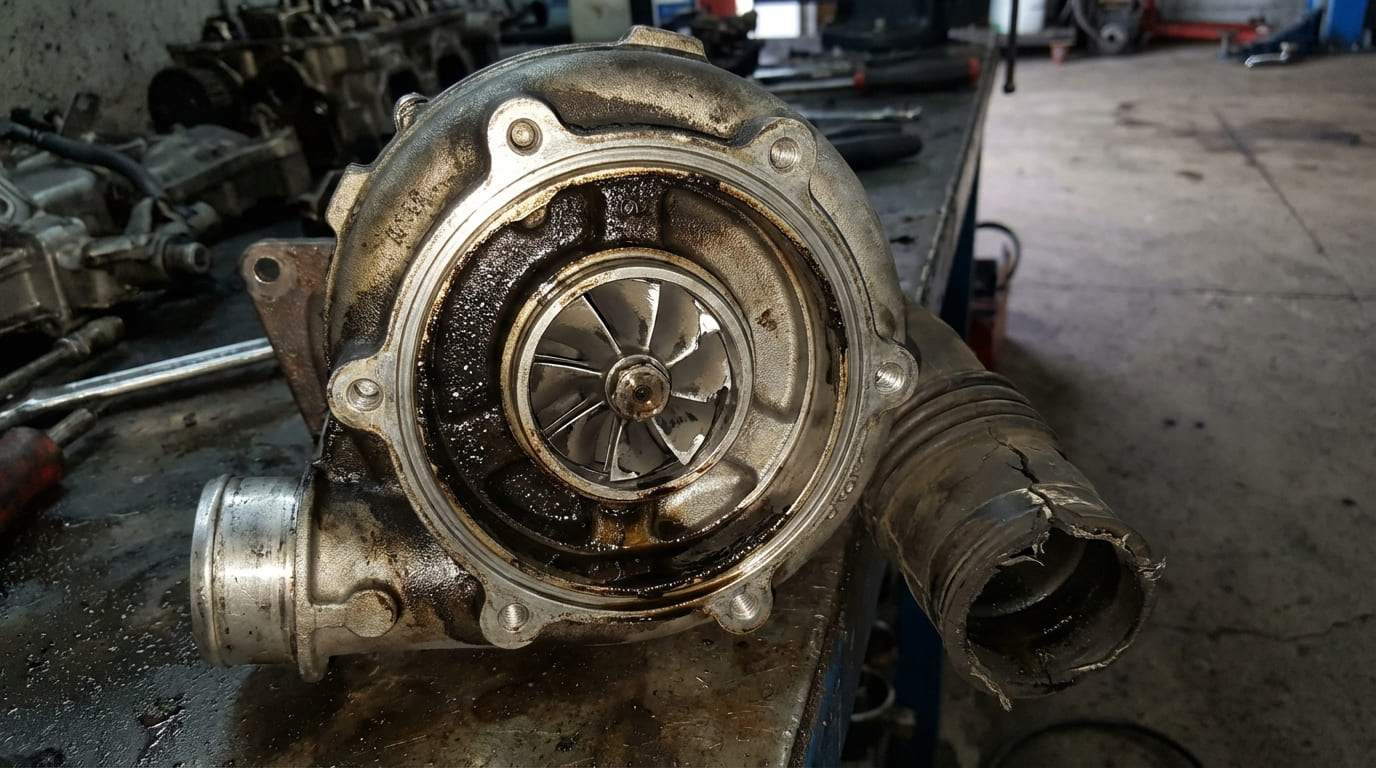
In my two decades as a shop foreman and master technician, I’ve seen turbochargers fail in every conceivable way—some predictable, some baffling. While many assume turbo failure means “replace the unit,” the real work is in understanding why it failed. Replacing a turbo without diagnosing the root cause is just a temporary fix. Below is a breakdown of the most common failure modes I’ve encountered, based on real-world teardowns, diagnostics, and hard-earned lessons.
Oil Starvation or Insufficient Lubrication
Oil starvation is the leading cause of turbo failure. It’s not just about low oil—it’s about the entire oil delivery system. Bearings run on a microscopic oil film; without it, metal-to-metal contact destroys the turbo fast.
How to Check for Oil Starvation
- Inspect oil level and condition—look for sludge or low volume.
- Remove and inspect the oil feed line for carbon buildup or kinks. Use a bright light and bore scope if needed.
- Check oil pressure with a mechanical gauge at idle and 2,500 RPM. Compare to factory specs.
- Verify oil filter type—aftermarket filters may lack proper anti-drainback valves or flow rates.
Discoloration (blue/black) on the turbo shaft or housing, scoring on bearing surfaces, and excessive shaft play are telltale signs. But don’t stop there—check the oil pump and main bearing clearances if pressure is low.
Situation: A 2015 VW TDI came in with a whining turbo and low boost. Owner had replaced the turbo twice in 18 months.
Initial Assumption: Faulty remanufactured turbo units.
Deep Dive/Discovery: After checking oil pressure and feed line, I found a partially collapsed steel oil line near the firewall—barely visible. It restricted flow under high RPM.
Nuanced Lesson Learned: Even if oil pressure reads normal at idle, restriction in the feed line can starve the turbo under load. Always inspect the entire oil path, not just the level and filter.
Prevention and Best Practices
- Change oil and filter at OEM intervals—especially critical on modern low-SAPS oils for diesels.
- Use only OEM-specified or equivalent oil filters. I’ve traced multiple turbo failures to cheap filters with poor flow.
- Allow a 1–2 minute cool-down period after sustained high-load driving to prevent oil coking.
Oil Contamination
Dirty oil destroys turbo bearings just like no oil. Contaminants include carbon, metal, coolant, fuel, and dirt. Damage often mimics oil starvation, so inspection is key.
How to Diagnose Oil Contamination
- Check oil for milky appearance (coolant) or gasoline smell (fuel dilution).
- Run oil analysis—elevated silicon means dirt; high iron suggests engine wear.
- Inspect the turbo’s bearing housing for abrasive wear—fine scratching instead of deep scoring.
- Look for flaking in bronze or bimetal bearings.
If metal debris is found, trace it back. A cracked intake boot downstream of the filter can suck in dirt even with a clean filter.
Situation: A turbo on a 2012 Ford Powerstroke failed with metal debris in the bearing housing. Oil analysis showed high iron and silicon.
Initial Assumption: Bad turbo or oil filter failure.
Deep Dive/Discovery: Further inspection revealed a cracked air intake boot downstream of the filter, sucking in road dust. The filter was clean, but unfiltered air entered post-filter.
Nuanced Lesson Learned: Contamination doesn’t always come from inside the engine—inspect the entire intake path, including boots, clamps, and intercooler connections.
Prevention Tips
- Use OEM-specified oil and filters.
- Fix misfires quickly—raw fuel dilutes oil and reduces lubricity.
- Replace PCV valves on schedule—clogged systems increase crankcase pressure and contamination risk.
Foreign Object Damage (FOD)
FOD causes immediate, visible damage—bent blades, impact marks, imbalance. It’s preventable with careful maintenance.
Common Sources and How to Check
- Compressor side: Inspect air filter, intake hose, and clamps. Look for loose parts or shop debris.
- Turbine side: Check catalytic converter or DPF for disintegration. Look for valve seat or spark plug fragments.
- Remove turbo inlet and inspect compressor wheel with a flashlight or bore scope.
Fragments from failing EGR valves or cracked intake manifolds are common in high-mileage engines.
Prevention
- Inspect intake and exhaust systems during every major service.
- Use OEM parts—some aftermarket EGR valves shed carbon excessively.
- Double-check work—never leave tools or rags near the intake.
Thermal Stress and Overheating
Turbine housings exceed 1,000°C. Chronic overheating leads to cracking, warping, and oil coking.
How to Diagnose Thermal Stress
- Look for blue or purple discoloration on turbine housing.
- Inspect for cracks—especially near wastegate ports.
- Check for carbon buildup in oil drain passages—indicates coking from heat soak.
- Scan for lean codes or misfires—both increase exhaust gas temperatures (EGT).
If available, pull EGT logs. Repeated excursions above 950°C suggest chronic overheating.
Situation: A turbo on a Subaru WRX had a cracked turbine housing. Owner claimed it was from “boost spikes.”
Initial Assumption: Overboost due to wastegate failure.
Deep Dive/Discovery: Boost levels were normal. But EGT sensor data from a log showed repeated excursions above 950°C due to a faulty upstream O2 sensor causing lean conditions.
Nuanced Lesson Learned: Cracked housings aren’t always mechanical—thermal fatigue from chronic lean running can be the real culprit. Always check engine trim and EGT data if available.
Prevention
- Fix misfires and lean conditions immediately.
- Ensure cooling system is functioning—low coolant affects oil cooling.
- Address exhaust restrictions—clogged cats increase backpressure and heat.
- Let engine idle 1–2 minutes after hard driving.
Primary Bearing Failure
Not all bearing failures are due to oil issues. Some stem from overspeed or control faults.
How to Diagnose
- Measure shaft play—radial: 0.05–0.15 mm, axial: 0.025–0.075 mm. Consult service manual for exact specs.
- Look for contact marks between wheels and housings.
- Listen for whining or grinding under load.
Overspeed can occur if wastegate is stuck open on VGT turbos or if tuning disables safety limits.
Actuator and Control System Failures
Modern turbos rely on precise control. A faulty actuator or sensor can destroy a good turbo.
Common Failures and Checks
- Wastegate actuator: Check for vacuum leaks, diaphragm rupture, or carbon buildup.
- VGT vanes: Inspect for carbon binding—common in stop-and-go driving.
- Boost sensor: Clean port if clogged; check electrical signal with scan tool.
Address boost-related DTCs immediately—don’t assume it’s “just a sensor.”
Non-Turbo Failures That Mimic Turbo Problems
Not every low-boost or smoke issue is a turbo failure. Many symptoms originate elsewhere.
- Exhaust manifold cracks reduce exhaust energy—check with thermal camera or pressure test.
- Intercooler or charge pipe leaks cause pressure drop—perform a boost leak test.
- Air filter restriction can cause compressor surge—inspect and replace if dirty.
- Low engine compression or timing issues reduce exhaust flow—run compression and leak-down tests.
Situation: A turbo on a BMW N54 engine had oil in the intercooler pipe. Customer assumed turbo seal failure.
Initial Assumption: Failed turbo center housing.
Deep Dive/Discovery: No shaft play, no scoring. But PCV system was clogged, creating extreme crankcase pressure forcing oil past normal seals.
Nuanced Lesson Learned: Oil in the intake doesn’t automatically mean turbo failure—check the PCV system first. I’ve replaced more PCV valves than turbos for this symptom.
Diagnostic Decision Guide: Common Symptoms and Probable Causes
| Symptom | Most Probable Causes | Less Common But Possible |
|---|---|---|
| Low boost pressure | Wastegate stuck open, VGT actuator fault, charge pipe leak | Turbine damage, exhaust restriction, ECU software issue |
| Overboost | Wastegate stuck closed, boost control solenoid failure | ECU fault, incorrect tuning, sensor failure |
| Whining or grinding noise | Bearing wear, imbalance from FOD | Compressor surge, gear train noise (in compound systems) |
| Excessive oil consumption via turbo | Seal failure due to oil coking or restriction | Crankcase pressure issues, PCV system fault |
| Visible damage to compressor wheel | FOD from intake system | Improper handling during install, shipping damage |
Best Practices: What to Do and What to Avoid
- ✅ Recommended: Clean oil feed and drain lines with solvent and compressed air during turbo replacement. I’ve saved more than one comeback by flushing the drain line.
- ✅ Recommended: Use new oil and filter at installation. Never reuse old oil—it may contain contaminants from the failed unit.
- ✅ Recommended: Check oil pressure with a mechanical gauge before installing a new turbo if failure was sudden.
- ⚠️ Avoid: Reusing torque-to-yield (TTY) bolts unless the service manual explicitly allows it. Most don’t.
- ⚠️ Avoid: Skipping the break-in procedure—some manufacturers recommend a low-RPM run-in cycle.
- ⚠️ Avoid: Assuming the new turbo is defective if it fails quickly—more often than not, the root cause wasn’t addressed.
Situation: A reman turbo failed after 3,000 miles on a Cummins diesel. Vendor insisted it was a “bad unit.”
Initial Assumption: Defective remanufacturing process.
Deep Dive/Discovery: Oil analysis showed high silicon. Traced to a torn turbo inlet seal allowing dust ingress. The air filter was fine, but the seal between the filter housing and turbo was compromised.
Nuanced Lesson Learned: Even with a clean filter, unfiltered air can enter downstream. Always inspect the entire induction path, not just the filter element.
While some say “if it smokes, replace the turbo,” I’ve found that patience and methodical testing save time and money. Always verify oil supply, check for contamination, inspect the intake and exhaust paths, and scan for relevant DTCs. And above all—consult the specific service manual for tolerances and procedures. What’s true for a 1.9L TDI may not apply to a 6.7L Powerstroke.