Hydraulic lifter tick is a common complaint, but before jumping into cleaning, you need to confirm the source. Many engine noises mimic bad lifters, and treating the wrong issue wastes time and money. As a senior mechanic, I focus on a systematic approach: verify the diagnosis, assess feasibility, and apply safe, proven cleaning methods only when appropriate.
How to Check: Diagnosing Hydraulic Lifter Noise
A rhythmic ticking from the valve cover area—especially worse on cold start and improving as the engine warms—is a classic sign. But don’t assume it’s lifters. Use these steps to confirm:
- Listen and characterize the noise: Lifter tick is metallic, rhythmic, and RPM-dependent. It usually comes from the top end and may quiet slightly at higher RPMs if oil flow improves.
- Use a mechanical stethoscope: Place the probe directly on the valve cover above each lifter. A strong, localized tap points to a specific lifter. Move the probe to the fuel injectors, timing cover, and exhaust manifold to rule out other sources.
- Check oil level and condition: Low oil or dirty, sludgy oil restricts flow. Pull the dipstick and inspect. If the oil is dark, thick, or smells burnt, it’s a red flag.
- Verify oil pressure: Install a mechanical gauge at the oil pressure sender port. Minimum acceptable pressure is typically 10 psi at hot idle and 25 psi at 2,000 RPM. Lower than that? The problem isn’t the lifters—it’s oil delivery.
Common Imposters: What Sounds Like Lifters But Isn’t
Many components create ticking sounds. Rule these out before treating lifters:
- Fuel injectors: Produce a sharp, high-frequency click. Noise is consistent and unaffected by oil changes or additives.
- Exhaust leaks: A small leak at the manifold gasket (especially near cylinder one) can sound exactly like a lifter tick at idle.
- Worn rocker arms or valve train components: On engines with adjustable rockers, loose lash can mimic lifter noise.
- Timing chain tensioners: A failing tensioner may produce a rhythmic tap that resonates through the valvetrain.
- Accessory drive noise: A glazed belt or failing tensioner bearing can create chirping or ticking that seems internal.
In my shop, we always rule out oil pressure and external noise sources before touching additives. I’ve saved customers hundreds by finding a loose manifold bolt instead of selling them a “lifter flush.”
Can You Really Clean Lifters Without Removal?
Yes—but only in specific cases. Hydraulic lifters fail due to:
- Varnish or soft sludge restricting the internal check valve or plunger.
- Collapsed lifters from wear or low oil pressure.
- Debris blocking oil passages.
Chemical cleaning only works on the first—varnish and sludge. If the lifter is worn, pitted, or collapsed, no additive will fix it. And if oil pressure is low, cleaning lifters won’t help until the root cause is fixed.
Situation: A 2012 V6 had a cold-start tick that faded after 30 seconds. Owner used two bottles of “miracle” lifter cleaner.
Deep Dive: Oil pressure test showed 8 psi at hot idle—below spec. Inspection revealed a clogged pickup screen, likely from sludge broken loose by the additive.
Lesson: Never treat lifters without checking oil pressure first. Additives can make things worse if flow is already compromised.
Safe Chemical Cleaning Procedure
If diagnosis confirms varnish or mild sludge and oil pressure is good, in-situ cleaning may help. Follow this process:
Step 1: Oil and Filter Change
Start fresh. Use the OEM-specified oil viscosity and a high-quality filter with a good anti-drainback valve. Avoid high-ZDDP “performance” oils unless required—thicker oil can delay lifter pump-up on cold starts.
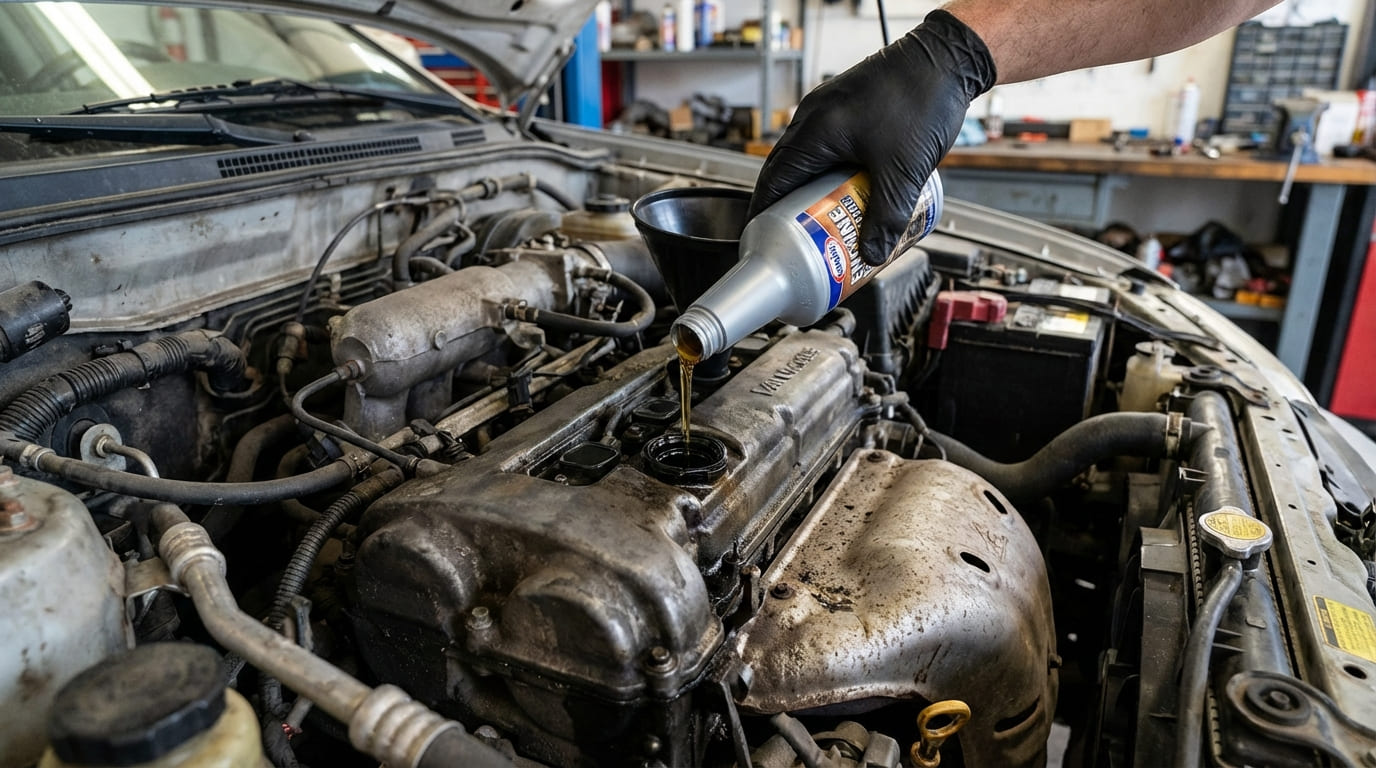
Step 2: Add a Quality Lifter Additive
Use reputable brands like Liqui Moly, Sea Foam, or OEM-recommended products. Avoid kerosene, diesel, or transmission fluid—they can damage seals and dilute oil.
Dosage: Follow the product label. Typically 8–12 oz added to the crankcase.
Step 3: Drive the Vehicle Normally
Drive 500–1,000 miles under normal conditions. Avoid towing, high RPMs, or aggressive driving. Moderate engine load helps circulate the additive without stressing oil flow.
Step 4: Change Oil and Filter Again
This step is non-negotiable. You’re removing suspended sludge and spent chemicals. Reusing the filter risks recontamination.
Situation: A high-mileage inline-4 had a persistent tick. Previous owner used a kerosene-based flush.
Discovery: After teardown, two lifters were full of sludge—and the oil filter bypass valve was ruptured, allowing unfiltered oil through.
Lesson: System cleanliness is critical. A compromised filter or aggressive flush can do more harm than good.
When Not to Attempt In-Situ Cleaning
Stop and consider disassembly if any of these apply:
| Scenario | Probable Cause | Recommended Action |
|---|---|---|
| Noise persists after two additive treatments | Mechanical wear or severe blockage | Inspect lifters or cylinder head |
| Metal flakes or heavy sludge in drained oil | Internal wear or poor maintenance history | Disassembly and system flush advised |
| Low oil pressure at idle and load | Pump wear, clogged pickup, or bearing clearance | Fix oil pressure issue first |
| Confirmed lifter collapse or bore wear | Mechanical failure | Removal and replacement required |
| Engine has high mileage and neglected oil changes | Systemic contamination risk | Proceed with caution; consider teardown |
Costs and Repair vs. Replace
Chemical cleaning is low-cost: $20–$50 for additives, plus two oil changes (~$100 total). If it works, it’s a win.
But if lifters are mechanically failed, replacement is needed. Labor-intensive: valve cover off, lifters removed, often requiring camshaft inspection. Total cost: $600–$1,500 depending on engine design.
Repair vs. replace logic: On high-mileage engines with multiple symptoms, consider long-term reliability. One bad lifter today may mean more tomorrow. Sometimes, a full valvetrain refresh is smarter than repeated band-aids.
Best Practices: Do and Avoid
- ✅ Do: Test oil pressure with a mechanical gauge before any lifter treatment.
- ✅ Do: Use OEM-specified oil and a premium filter with anti-drainback valve.
- ✅ Do: Clean oil drain plug threads with a bottoming tap—ensures proper torque and prevents leaks.
- ⚠️ Avoid: Kerosene, diesel, or transmission fluid flushes—they damage seals and reduce lubrication.
- ⚠️ Avoid: Reusing oil filters after a flush—they’re likely loaded with debris.
- ⚠️ Avoid: High-RPM driving during additive treatment—risks oil starvation if flow is marginal.
Situation: Customer added a high-ZDDP “performance” oil after a DIY change—lifter tick appeared.
Discovery: Oil was too thick for the engine. Cold flow was restricted, delaying lifter pump-up.
Lesson: Stick to OEM specs. More additives or higher viscosity isn’t better—it can cause more problems.
There’s no magic fix for lifter noise. Additives work in the right conditions—clean oil, good pressure, and varnish-only blockage. But when mechanical wear or systemic issues are present, cleaning won’t help. The key is knowing the difference. Always consult your factory service manual for oil specs, tolerances, and lifter design. When in doubt, open it up—because guessing can cost you a lot more down the road.