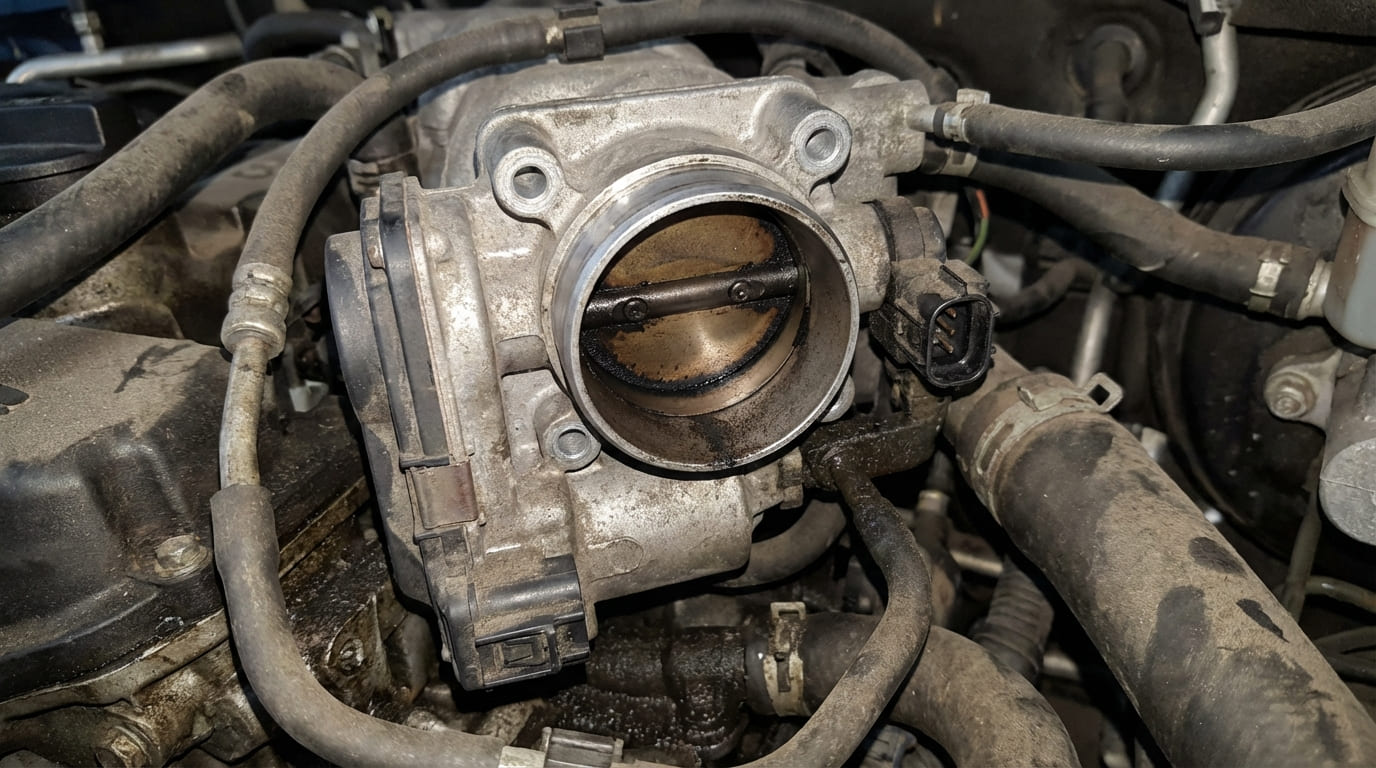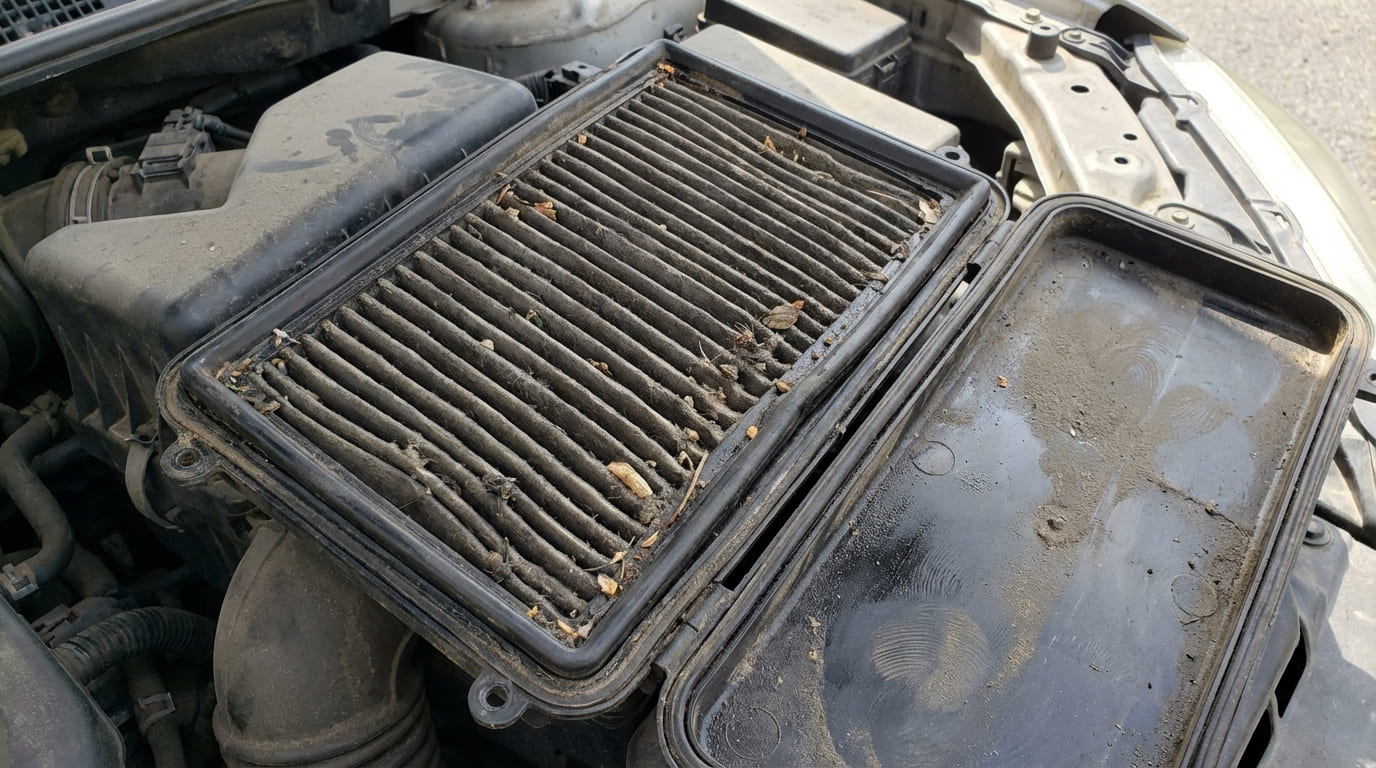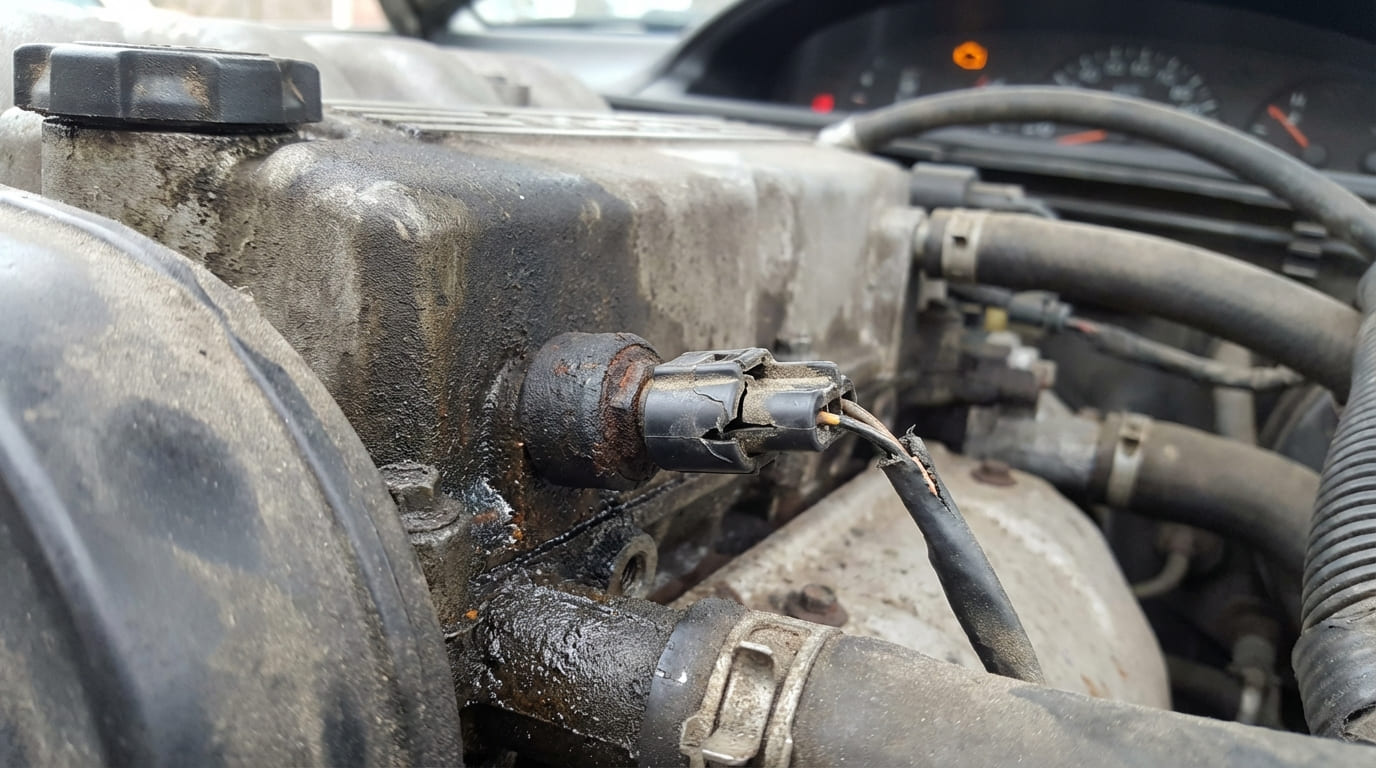
In my shop, I’ve seen more than a few customers roll in with a check engine light and a P0325 code, asking if it’s “safe” to keep driving. My answer, based on two decades of teardowns and diagnostics, is never a simple yes or no. The knock sensor plays a critical role in engine protection, but the real-world consequences of its failure depend on several factors: the ECU’s fail-safe logic, driving conditions, and how long the fault goes unaddressed.
Immediate Risks of Driving with a Faulty Knock Sensor
When the knock sensor fails, the ECU can no longer detect detonation—abnormal combustion that creates damaging pressure spikes. Most modern engines respond by retarding ignition timing and enriching the fuel mixture to prevent damage. While this protects the engine in the short term, it creates new risks.
- Ignition timing is pulled back 5°–15°, reducing power and fuel economy.
- Fuel enrichment increases exhaust temperatures and unburned hydrocarbons.
- Long-term enrichment can overheat and destroy the catalytic converter.
- The engine feels sluggish, but the real danger is invisible: cumulative stress.
In my shop, we always assume the ECU is in limp mode—but that doesn’t mean the car is safe. High exhaust temps from enrichment often kill catalysts faster than knock destroys pistons. If you must drive, keep trips short and light on the throttle.
Long-Term Damage: What Happens Over Time
Even with ECU protection, prolonged driving with a faulty knock sensor increases the risk of internal damage. The system can’t correct what it can’t detect, and borderline detonation may go unnoticed.
- Piston crown erosion from repeated low-level knock, especially in turbocharged engines.
- Accelerated connecting rod bearing wear due to sustained high cylinder pressure.
- Thermal stress on cylinder head gaskets, particularly in aluminum-headed engines.
- Rare but possible: micro-cracking in the block deck from chronic detonation.
These issues don’t show up immediately. They accumulate silently, often revealed only during engine rebuilds. If you’re planning to keep the car long-term, treat this as a priority repair.
How to Diagnose a Faulty Knock Sensor
Don’t assume the sensor is bad just because of a code. Wiring, connectors, and other engine issues are common culprits. Follow a structured diagnostic path.
Step-by-Step Diagnostic Process
Start with the most common failures and work toward component replacement.
- Scan for DTCs: Look for P0325 (circuit malfunction), P0326 (range/performance), P0327 (low input), P0328 (high input), or P0330 (Bank 2).
- Check live data: Use an OBD2 scanner to monitor knock sensor voltage and ignition timing under load. If timing is consistently retarded, the ECU may be in protection mode.
- Inspect wiring and connector: Look for chafing, especially near exhaust manifolds. Check for corrosion or loose terminals. Clean with contact cleaner and inspect under magnification.
- Test mounting and torque: A loose or improperly torqued sensor (typically 15–25 Nm) won’t transmit vibrations accurately.
- Rule out other causes of knock:
- Using fuel with lower octane than required
- Carbon buildup in combustion chambers (common in GDI engines)
- Incorrect spark plugs (wrong heat range or gap)
- Lean air/fuel conditions from vacuum leaks or clogged injectors
- EGR system failure, especially on high-mileage trucks
Electrical Testing Guide
| Test | Tool | Expected Result | Notes |
|---|---|---|---|
| Resistance (if applicable) | DMM | 100k–500k ohms (OEM dependent) | Not all sensors have measurable resistance; consult service manual |
| Signal output (tap test) | DSO or DMM (AC mV) | >50mV spike when tapping block near sensor | Use soft hammer; avoid direct sensor impact |
| Wiring continuity | DMM | <5 ohms end-to-end | Disconnect ECU to avoid damage |
I once replaced a knock sensor twice before realizing the harness was capacitively picking up heat from the exhaust manifold—creating false knock signals. Always test the entire circuit, not just continuity. Thermal and EMI interference are real and often overlooked.
Repair vs. Replace: Cost and Practicality
Knock sensor replacement is usually cost-effective compared to potential engine damage. But labor varies significantly by engine layout.
| Component | Part Cost | Labo | Notes |
|---|---|---|---|
| Knock Sensor | $50–$150 | 1–3 hours | Some V6 engines require intake manifold removal |
| Wiring Harness | $80–$200 | 2–4 hours | Often damaged by heat; replace in sections if needed |
| Catalytic Converter | $600–$2,000+ | 2–5 hours | High risk if enrichment runs unchecked for weeks |
If the sensor is accessible (e.g., on many inline-4 engines), DIY replacement is feasible. On transverse V6s, labor can exceed $500—making professional diagnosis essential.
Replacement Best Practices
Proper installation prevents repeat failures and misdiagnosis.
- Clean the sensor bore with a bottoming tap and wire brush. Debris dampens signal transmission.
- Never reuse torque-to-yield fasteners unless specified. Stretch bolts lose clamping force.
- Torque to spec—typically 15–25 Nm. Use a calibrated torque wrench.
- Avoid thread locker unless OEM-approved; it can insulate the ground path.
- Route the harness per factory path. Secure with loom and zip ties to prevent chafing.
- If coolant lines were disturbed, bleed the system to avoid air pockets and overheating.
I’ve seen a rebuilt engine ping because the installer left a thin film of RTV under the sensor. Metal-to-metal contact is critical. Clean the boss with emery cloth and verify no sealant migrates into the bore.
Verifying the Repair
Clearing the code isn’t enough. Confirm the system functions under real conditions.
- Clear DTCs and reset fuel trims.
- Perform the manufacturer’s drive cycle—some ECUs require multiple cycles to exit limp mode.
- Monitor live data: ignition timing should return to normal advance curves under load.
- Check knock sensor voltage: stable at idle, brief spikes during acceleration or tap test.
- Test drive under load: listen for pinging during hard acceleration. None should be present.
If timing remains retarded or the code returns, recheck wiring, connector integrity, and exhaust system health.
Final Verdict: Can You Drive It?
Short-term driving (a few days, light loads) is possible with a faulty knock sensor—thanks to ECU protection. But it’s not risk-free. The longer you wait, the higher the chance of secondary damage, especially to the catalytic converter.
- ✅ OK: Short commutes, light throttle, immediate repair planned.
- ⚠️ Risky: Highway driving, towing, hot climates, or long distances.
- ❌ Not Safe: Turbocharged engines, high-mileage vehicles, or if pinging is audible.
I wouldn’t let a family member drive across state lines on a known knock sensor fault. The engine might survive, but the repair bill could include a $1,500 catalyst or a full rebuild down the road. Fix it right, fix it fast.