In my years as a shop foreman, I’ve seen more than a few engines come in with vague performance complaints that trace back to the knock sensor. It’s not always the first thing a tech checks, but when performance, fuel economy, or timing behavior feels off, it’s worth considering. The knock sensor acts as the engine’s “ear,” listening for destructive vibrations. When it fails—or sends false signals—the ECM often overreacts, mimicking other problems. This guide will help you diagnose and address knock sensor issues with confidence.
Key Symptoms of a Faulty Knock Sensor
A failing knock sensor doesn’t always trigger a check engine light, but it disrupts ignition timing and fuel trims, leading to noticeable drivability issues. Below are the most common signs—and how to interpret them.
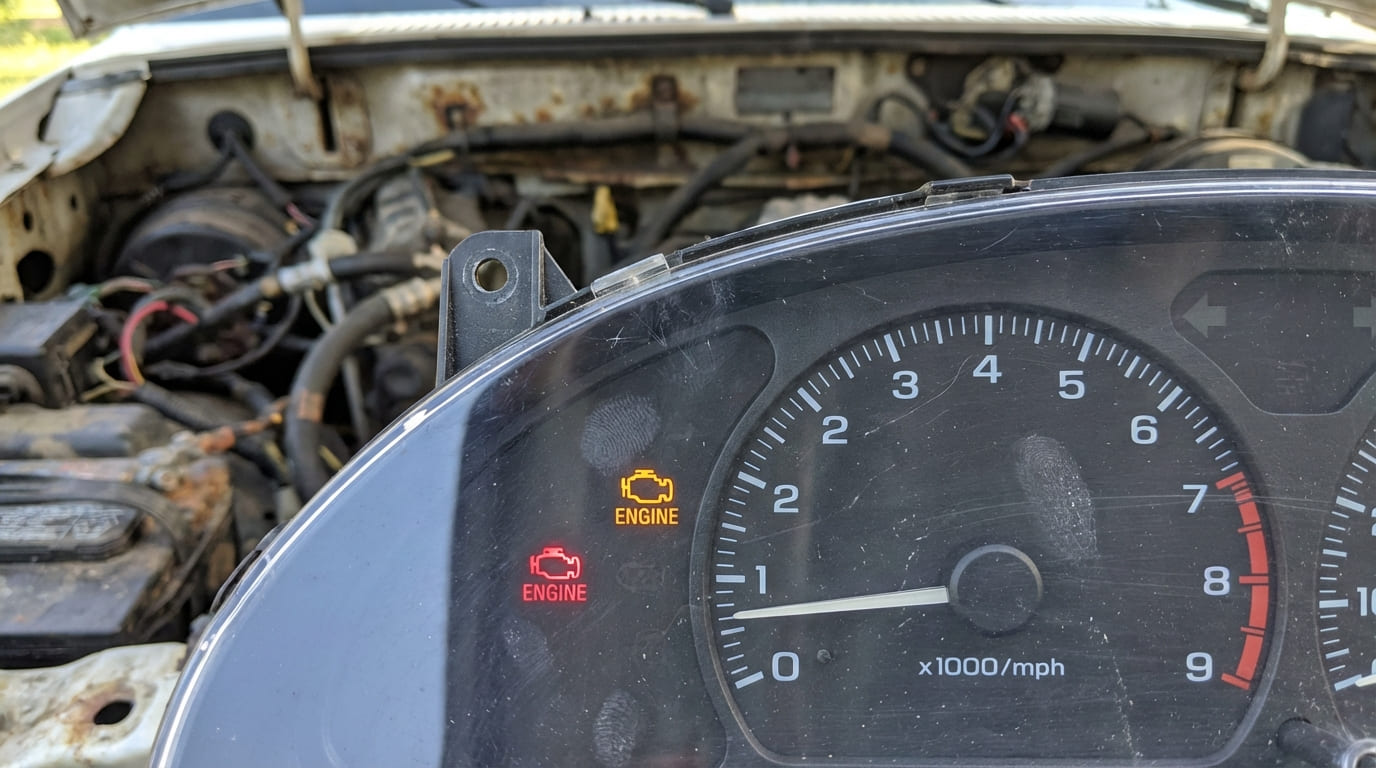
Check Engine Light with Knock Sensor Codes
The most direct clue is the MIL illuminated with knock sensor-related DTCs. Common codes include:
- P0325 – Knock Sensor Circuit Malfunction
- P0326 – Knock Sensor Input Low
- P0327 – Knock Sensor Circuit Low Voltage
- P0328 – Knock Sensor Circuit High Voltage
- P0329 – Knock Sensor Circuit Intermittent
How to Check: Use an OBD2 scanner to pull codes. P0327 and P0328 often point to wiring or connector issues. P0325 may indicate internal sensor failure. Always verify with live data before replacing parts.
Reduced Engine Performance
A faulty sensor can cause the ECM to retard ignition timing permanently, even when no knock is present. This results in sluggish acceleration, especially under load—like climbing hills or merging on the highway.
How to Check: Monitor knock retard (KR) values via live data. Sustained KR of -5° or more without audible knock strongly suggests a false signal or circuit fault.
Decreased Fuel Economy
To protect the engine, the ECM may enrich the fuel mixture if it thinks knocking is occurring. This can drop fuel economy by 2–3 MPG or more, especially in turbocharged engines.
How to Check: Scan for long-term fuel trims. Values consistently above +10% alongside knock codes may indicate the system is in survival mode due to a faulty sensor or circuit.
Audible Knocking or Pinging
A bad sensor doesn’t cause knock—but it can fail to detect real detonation. If the ECM doesn’t respond, you’ll hear pinging under load. Conversely, a shorted sensor can force constant timing retard, causing rough running or misfire-like symptoms.
How to Check: If you hear knock but see zero KR correction in live data, the sensor may be dead. If there’s no knock but high KR, the sensor is likely sending false signals.
ECM Behavior and Indirect Symptoms
The knock sensor is part of a closed-loop system. When it fails, the ECM’s protective responses create secondary symptoms that can mislead DIYers.
Ignition Timing Retardation
The ECM uses knock feedback to adjust timing in real time. A failed sensor can cause timing to lock at a conservative setting—often 5–8° BTDC—even at cruising speeds. This causes poor performance, increased exhaust temps, and higher fuel consumption.
In my shop, we always check base timing and KR values with a scan tool before touching the sensor. If timing is locked retarded and there’s no actual knock, the issue is likely the sensor, wiring, or ECM input circuit.
Fuel Mixture Enrichment
On many GM, Ford, and Asian platforms, false knock signals trigger fuel enrichment to cool combustion. This can spike fuel trims to +15% or higher, wasting fuel and fouling spark plugs over time.
Limp Mode Activation
European and some modern vehicles enter limp mode if knock sensor input is missing or implausible. Power is severely limited, and the MIL stays on. The car remains drivable but feels underpowered.
How to Check: Confirm limp mode by testing throttle response and scanning for active torque reduction flags. Rule out actual knock first.
How to Diagnose a Faulty Knock Sensor
Replacement is simple—but premature swaps are costly. Follow this diagnostic path to avoid mistakes.
Visual and Physical Inspection
Start here. Many knock sensor issues stem from wiring or installation errors.
- Inspect the wiring harness for chafing, especially near exhaust components or sharp engine edges.
- Check the connector for corrosion, bent pins, or moisture. Clean with electrical contact cleaner if needed.
- Verify sensor torque. Most specs range from 15–25 Nm. Under-torqued sensors rattle; over-torqued ones crack internally.
- Ensure the mounting surface is clean. Use a thread chaser on the block hole—debris can insulate the sensor and block vibration transfer.
Electrical Testing
Use a multimeter and scan tool for basic checks. An oscilloscope is ideal but not required for most DIYers.
Live Data Analysis (Best DIY Method)
This is the most effective way to assess sensor function without special tools.
- Use a scan tool that reads knock retard (KR) or timing correction.
- Start cold and drive under light and moderate load.
- Normal: occasional 1–2° KR spikes during acceleration.
- Red Flag: Sustained KR of -5° or more with no audible knock.
- Test Response: Climb a hill in a high gear to induce light knock. KR should spike briefly and recover. No response? Sensor or circuit is likely faulty.
Dynamic Voltage Test (Oscilloscope)
For advanced users: back-probe the signal wire and tap the engine block near the sensor with a plastic mallet. You should see clean AC voltage spikes between 0.5 and 2.0V peak-to-peak. A flat line = dead sensor. A constant high signal = internal short.
Differential Diagnosis: What Else Could It Be?
Don’t assume the sensor is bad. Real engine knock causes identical symptoms. Rule these out first.
| Symptom | Most Likely Causes | Less Common But Possible |
|---|---|---|
| Reduced power + high KR | Faulty knock sensor, wiring issue, ECM calibration | Actual knock due to low octane, carbon buildup, EGR failure |
| Poor fuel economy + enrichment | False knock signal, MAF/O2 sensor error | Plugged fuel injectors, restricted exhaust |
| Audible knock + no KR correction | Dead knock sensor, severe carbon deposit | Incorrect spark plugs, overheating, low coolant |
| MIL with P0327 (low voltage) | Open circuit, loose connector, broken wire | ECM input circuit failure (rare) |
Situation: A 2012 Ford F-150 with P0325 and sluggish acceleration. Owner replaced plugs and filter.
Discovery: Live data showed -7° KR at cruise. Intake inspection revealed heavy carbon buildup on valves. Walnut blasting restored airflow.
Lesson: The sensor was working—it detected real knock. Clean combustion issues first.
Situation: 2008 Honda Accord with P0327 and rough idle. Sensor replaced twice.
Discovery: Back-probing revealed intermittent signal. Found chafed wire near exhaust manifold.
Lesson: Circuit problems mimic sensor failure. Inspect the entire harness path.
Situation: 2015 Subaru WRX, no MIL, but power loss. No codes.
Discovery: Live data showed constant -4° KR. Sensor had been under-torqued during prior repair.
Lesson: Not all knock issues set codes. Always check timing corrections.
Repair vs Replace: Cost and Viability
A new knock sensor costs $50–$150, depending on the vehicle. Labor ranges from 1 to 3 hours, as some are buried under intake manifolds or near the starter.
When to Replace: Confirmed open/short circuit, cracked body, or failed dynamic test.
When to Repair Wiring: If voltage or resistance issues trace to the harness, repair with heat-shrink splice kits. Avoid butt connectors near hot surfaces.
Pro Tip: Always use a torque wrench. Over-torquing is a leading cause of premature failure.
Best Practices: Do and Don’t
- ✅ Clean the sensor bore and threads before installation—debris dampens vibration.
- ✅ Replace the sensor if it’s been exposed to oil or coolant—the piezoelectric element is fragile.
- ✅ Inspect harness routing. Keep knock sensor wires away from ignition coils and alternators.
- ⚠️ Don’t replace the sensor without checking live data first—many are swapped unnecessarily.
- ⚠️ Don’t use thread sealant unless specified. Most sensors seal via crush washer or tapered seat.
- ⚠️ Don’t ignore other DTCs. A P0171 (lean) with a knock code may mean a vacuum leak is causing real knock.
Consequences of Ignoring the Problem
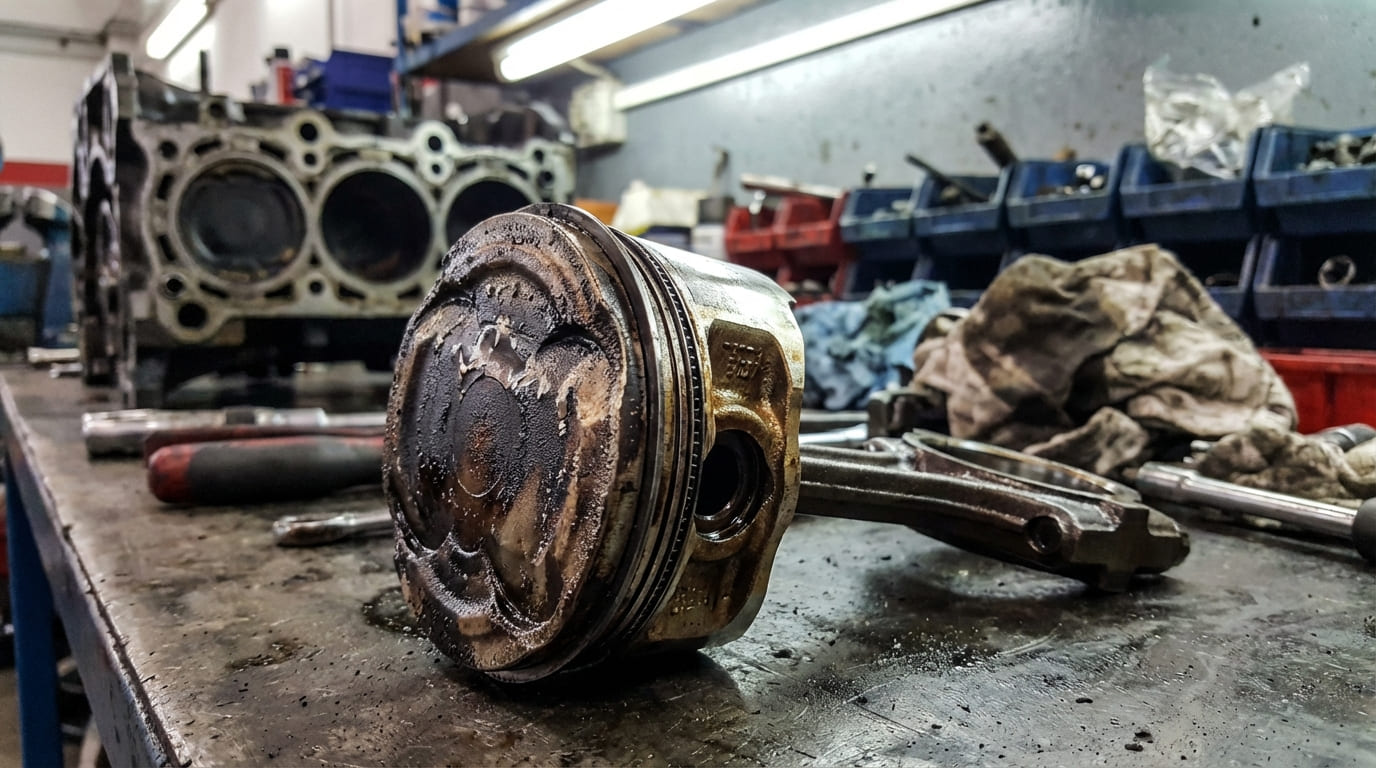
A failed sensor can lead to long-term damage. If it fails open, the engine runs inefficiently. If it fails shorted, timing may be so retarded that the engine overheats under load. Worst case: a silent failure while real knock occurs can result in piston damage—especially in turbocharged or high-compression engines. I’ve seen melted piston crowns on a VW TDI from ignored P0328 codes.
Knock Sensor Location
Most sensors are threaded into the engine block, typically near the oil pan rail or mid-block. Inline engines usually have one; V-types may have one per bank. Some (like BMWs) are under the intake manifold; others (like certain Toyotas) are near the starter. Always consult a vehicle-specific service manual—guessing the location risks damage and wasted time.
The knock sensor isn’t a “set and forget” part. It’s a critical player in engine protection and efficiency. When symptoms appear, diagnose thoroughly. The fix might be a $50 sensor—or it might be a clue pointing to carbon buildup, wiring damage, or combustion issues. Either way, your scan tool and a methodical approach will save time, money, and engine life.