In my 20-plus years as a master technician and shop foreman, one of the most misunderstood yet critical components I’ve worked on is the camshaft. It controls the engine’s ability to breathe by opening and closing the intake and exhaust valves at precise times. Without proper camshaft function, the engine loses power, runs inefficiently, or won’t run at all. This article gives you a practical, hands-on understanding of how the camshaft works, how to diagnose problems, and whether repair or replacement makes sense—no fluff, just what matters to a car owner or DIYer.
Camshaft Function: Controlling Engine Breathing
The camshaft’s job is simple in concept but critical in execution: it opens and closes the intake and exhaust valves in sync with the piston’s movement during the four-stroke cycle. This timing ensures air and fuel enter the cylinder when needed, the mixture is sealed for combustion, and exhaust gases are expelled efficiently. If valve timing is off by even a few degrees, performance drops, emissions rise, and the engine may misfire or stall.
How the Camshaft Operates the Valves
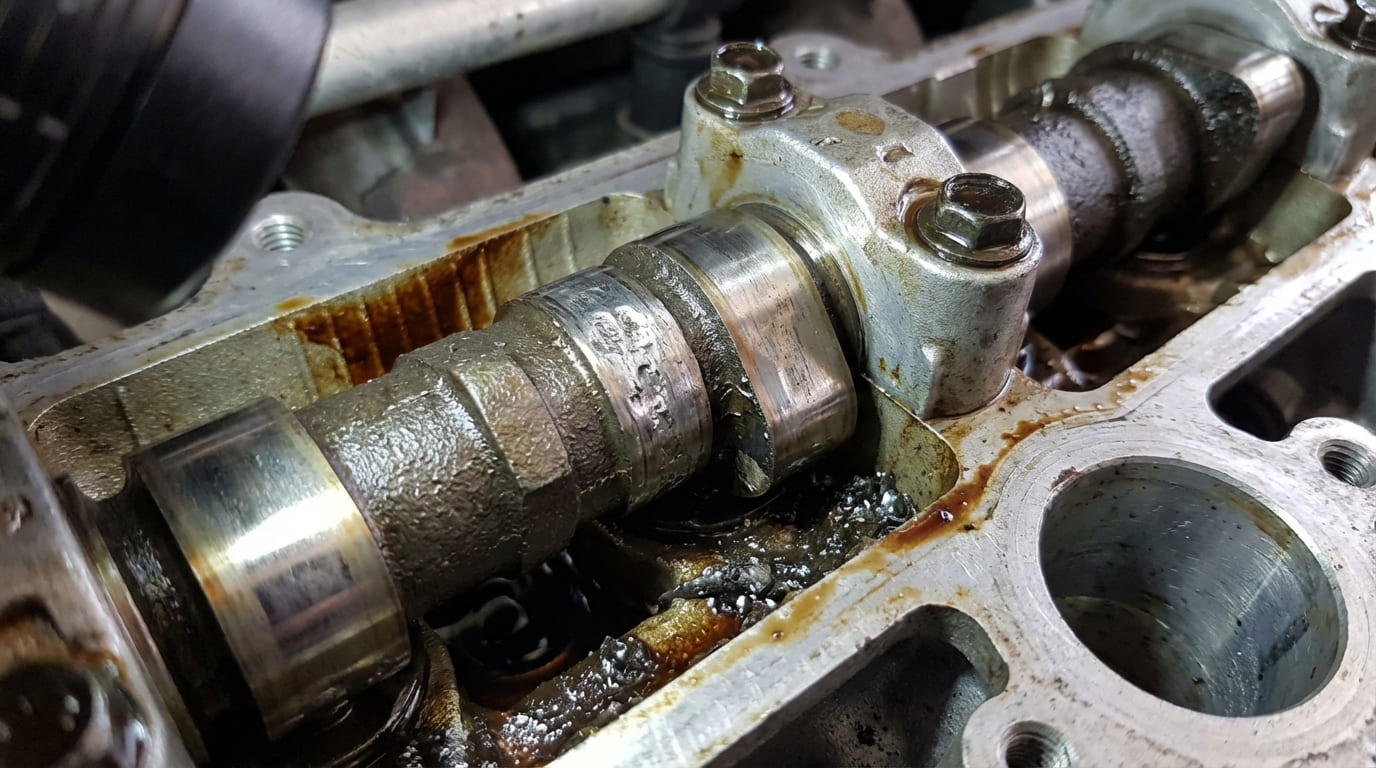
The camshaft uses egg-shaped lobes to push against components in the valve train. As the cam rotates, each lobe lifts a component (like a lifter or follower), which in turn opens the valve. When the lobe rotates away, the valve spring closes the valve. The exact design of the lobe determines how fast, how far, and how long the valve opens.
Depending on engine type, the camshaft interacts with different parts:
- Lifters (tappets): Sit directly on the cam lobes. Hydraulic lifters self-adjust but can collapse if oil pressure is low or they wear out.
- Pushrods: Used in overhead valve (OHV) engines to transfer motion from the lifter to the rocker arm. Bent or worn pushrods disrupt valve timing.
- Rocker arms: Pivot to push the valve open. Wear on the tip or pivot point reduces effective valve lift.
- Valve springs: Close the valves and keep the system tight. Weak springs can lead to valve float at high RPM.
- Valves: The final link. Their timing and lift are entirely dependent on the camshaft profile.
In my shop, we always check lifter preload and pushrod length before assuming cam wear. A collapsed lifter mimics a worn lobe, but costs ten times less to fix.
Camshaft Design: How It Affects Performance
The shape of the cam lobes—called the cam profile—determines engine behavior. Three key specs define this:
- Lift: How far the valve opens. Stock engines typically have 0.300″ to 0.500″ lift. Higher lift increases airflow but requires checking piston-to-valve clearance.
- Duration: How long the valve stays open, measured in crankshaft degrees. Factory cams run 200°–220° at 0.050″ lift. Longer duration helps high-RPM power but hurts idle quality and low-end torque.
- Overlap: When both intake and exhaust valves are open. More overlap improves exhaust scavenging at high RPM but can cause rough idle. Modern engines use variable valve timing to adjust this on the fly.
A performance cam isn’t always better. I’ve seen customers install aggressive cams on daily drivers only to complain about poor fuel economy and lumpy idle. Match the cam to the driving use.
Camshaft Timing: Synchronization with the Crankshaft
The camshaft spins at half the speed of the crankshaft (2:1 ratio) because the valve events repeat every two crankshaft revolutions. This timing is maintained by one of three systems:
- Timing chain: Durable and oil-lubricated. Most last 150,000+ miles, but tensioner or guide wear can cause slack and timing errors. Replacement cost: $600–$1,200.
- Timing belt: Quieter but requires replacement every 60,000–100,000 miles. Failure often bends valves. Replacement cost: $400–$900.
- Gear drive: Used in racing engines. No stretch, but noisy and expensive. Rare in street vehicles.
Incorrect timing—whether from a jumped chain, stretched belt, or failed tensioner—throws off valve events and can destroy the engine.
How to Check Camshaft Timing
If you suspect timing is off:
- Remove the timing cover and locate the timing marks on the crank and cam sprockets.
- Rotate the crankshaft to top dead center (TDC) on cylinder #1 compression stroke.
- Verify the cam sprocket mark aligns with the timing cover or head mark.
- On engines with VVT, use a scan tool to check cam vs. crank correlation (P0008, P0011, etc.).
Never assume the timing marks are correct if the engine ran poorly after recent work. I’ve found sprockets installed one tooth off—enough to kill performance.
Camshaft Configurations: OHV, SOHC, DOHC
Different engine designs place the camshaft in different locations, affecting serviceability and performance.
Overhead Valve (OHV) / Pushrod
The cam sits in the engine block. Motion travels through lifters, pushrods, and rocker arms to the valves. Common in GM and Ford V8s. Pros: compact, durable. Cons: heavier valve train limits RPM. Typical repair cost for cam replacement: $1,500–$2,500 due to partial teardown.
Single Overhead Cam (SOHC)
One cam per cylinder head operates both intake and exhaust valves, usually via rocker arms. Lighter than OHV, allows higher RPM. Easier to service than DOHC. Common in older Hondas, Fords, and economy engines.
Dual Overhead Cam (DOHC)
Two cams per head—one for intake, one for exhaust. Allows better airflow and more valves. Standard in modern performance and efficient engines. More complex, especially with VVT. Repair cost: $2,000–$3,500 due to labor and potential phaser issues.
Variable Valve Timing (VVT): Modern Camshaft Control
VVT systems adjust cam timing dynamically using oil pressure and electronic controls. This improves torque, fuel economy, and emissions. Common systems include Toyota VVT-i, Honda VTEC, and Ford Ti-VCT.
Key components:
- Cam phasers: Rotate the cam slightly to advance or retard timing. Vane-type phasers can clog with oil sludge.
- Oil Control Valve (OCV): A solenoid that directs oil to the phaser. Clogged or failed OCVs are a common cause of VVT trouble.
How to Diagnose VVT Problems
If you have a VVT-related code (e.g., P0011, P0020):
- Check oil level and condition. Sludge or low oil pressure kills VVT systems.
- Inspect the OCV screen for debris. Remove and clean if needed.
- Test OCV resistance with a multimeter (typical spec: 5–15 ohms).
- Use a scan tool to monitor camshaft actual vs. desired timing.
- If phaser is stuck, check for oil flow and internal vane movement.
Over 60% of VVT codes I see are due to dirty oil or clogged OCVs—not bad cams or phasers. Always rule out oil issues first.
Common Camshaft Problems and How to Diagnose Them
Camshaft issues are often misdiagnosed. Many symptoms point to oil, sensors, or timing systems instead.
| Symptom | Probable Causes | Diagnostic Approach |
|---|---|---|
| Ticking or tapping noise | Lifter failure, low oil pressure, worn cam lobes, collapsed hydraulic lifter | Check oil level and quality. Use a mechanic’s stethoscope to locate noise. Measure lifter preload. Bore scope the cam if needed. |
| Rough idle or misfires | VVT phaser failure, stretched timing chain, cam position sensor fault | Scan for DTCs. Check cam-to-crank correlation with a lab scope or scan tool. Inspect timing marks. |
| Loss of power or poor performance | Worn cam lobes, incorrect cam timing, restricted oil flow to phasers | Measure valve lift with a dial indicator. Compare to spec. Inspect oil passages and OCV screen. |
| Oil pressure drops at idle | Cam bearing journal wear, worn cam seals, low oil viscosity | Remove cam and check bearing clearance with Plastigage. Verify oil pump condition. |
Repair vs. Replace: Cost and Practicality
Camshaft replacement is labor-intensive. Before committing:
- Confirm actual cam wear—don’t rely on noise alone.
- Check if the engine is VVT-equipped; phasers and OCVs are cheaper fixes.
- On high-mileage engines, consider long-term reliability. If the engine has other wear, a full rebuild may be more cost-effective.
Typical costs:
| Repair | Labor Hours | Cost Range |
|---|---|---|
| Replace OCV (VVT solenoid) | 1–2 | $150–$300 |
| Replace cam phaser | 3–5 | $500–$900 |
| Replace camshaft (OHV) | 6–8 | $1,500–$2,500 |
| Replace camshaft (DOHC) | 8–12 | $2,000–$3,500 |
On engines over 150,000 miles, I recommend replacing timing components (chain, tensioner, guides) and phasers when doing a cam job. It’s only slightly more money and saves a second teardown.
Best Practices: What I Do in the Shop
- ✅ Clean cam bores and bearing journals thoroughly before installation. Debris blocks oil passages and kills new cams.
- ✅ Prime the oil system after cam replacement. Spin the engine with no spark/fuel until oil pressure builds.
- ✅ Use new camshaft bolts, especially torque-to-yield (TTY) types. Reused bolts can stretch and fail.
- ⚠️ Never install a new cam with old lifters. Mismatched wear accelerates lobe wear—especially on flat-tappet cams.
- ⚠️ Follow break-in procedures for flat-tappet cams: 2,000 RPM for 20–30 minutes with correct break-in oil.
- ⚠️ Don’t assume the cam is bad because power is down. Rule out vacuum leaks, fuel pressure, and sensor faults first.
Real-World Case Studies
Situation: 2012 Honda Accord with P0011 code and rough idle. Previous shop replaced cam and phaser—problem returned in three weeks.
Discovery: OCV screen clogged with sludge. Oil hadn’t been changed in 12,000 miles. Phaser wasn’t failing—it wasn’t getting oil.
Lesson: VVT issues are often oil-related. Always inspect oil condition and clean OCV before replacing expensive parts.
Situation: 5.3L GM truck with ticking noise. Told cam was “flat-lobed” and needed rebuild.
Discovery: Lifters were collapsed due to worn pushrod cups. Bore scope showed cam lobes were intact.
Lesson: Noise doesn’t equal cam failure. Check lifter preload and pushrod length before teardown.
Situation: 2010 Toyota Camry with P0020 code and poor acceleration. Cam timing off, but chain and phaser looked fine.
Discovery: OCV solenoid was electrically functional but mechanically stuck. Replaced solenoid—fixed the issue.
Lesson: Many VVT faults are electrical or hydraulic. Test the full system before assuming mechanical damage.
The camshaft is the conductor of the engine’s breathing cycle. Its condition and timing directly affect power, efficiency, and reliability. But before replacing it, always verify the diagnosis. In my experience, most cam-related issues stem from oil, sensors, or timing components—not the cam itself. Use a methodical approach, consult the factory service manual, and never skip the basics—oil level, cleanliness, and electrical checks can save you thousands.