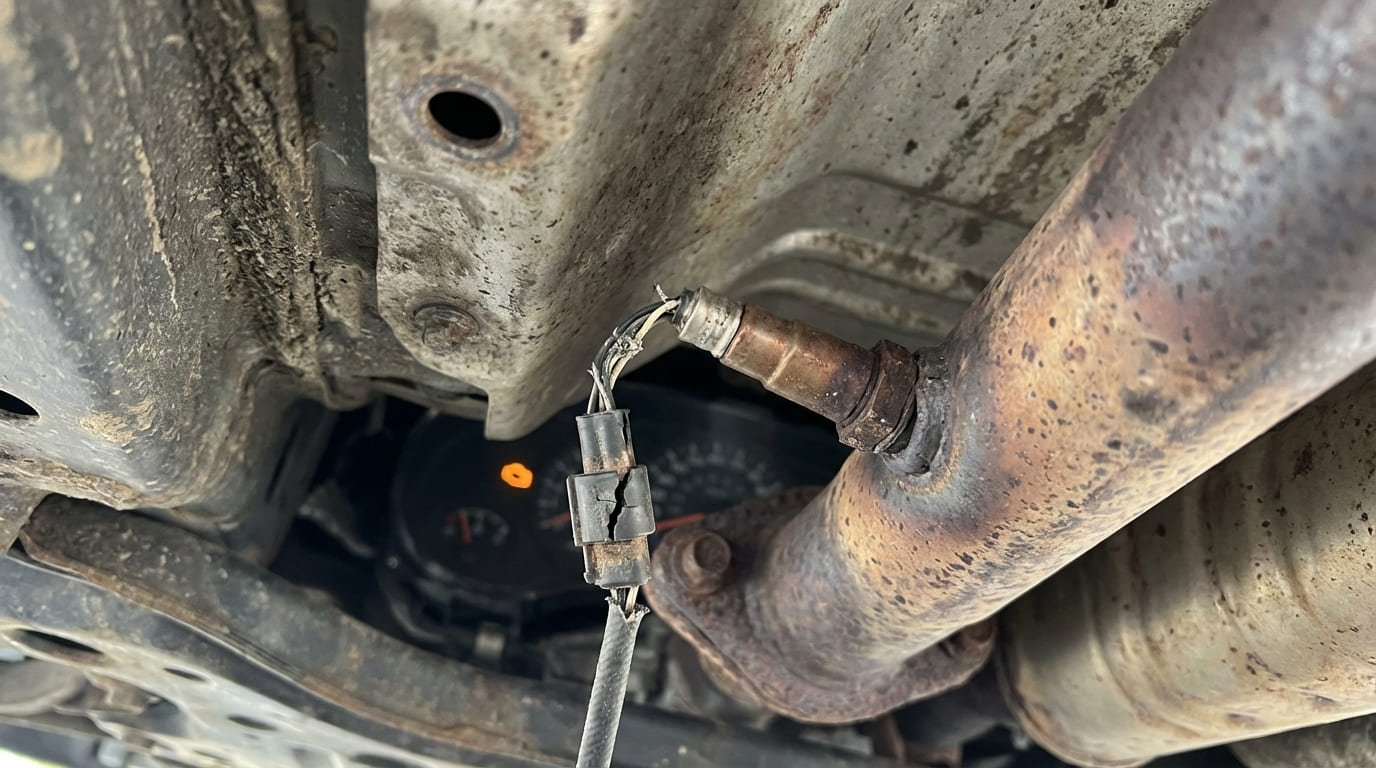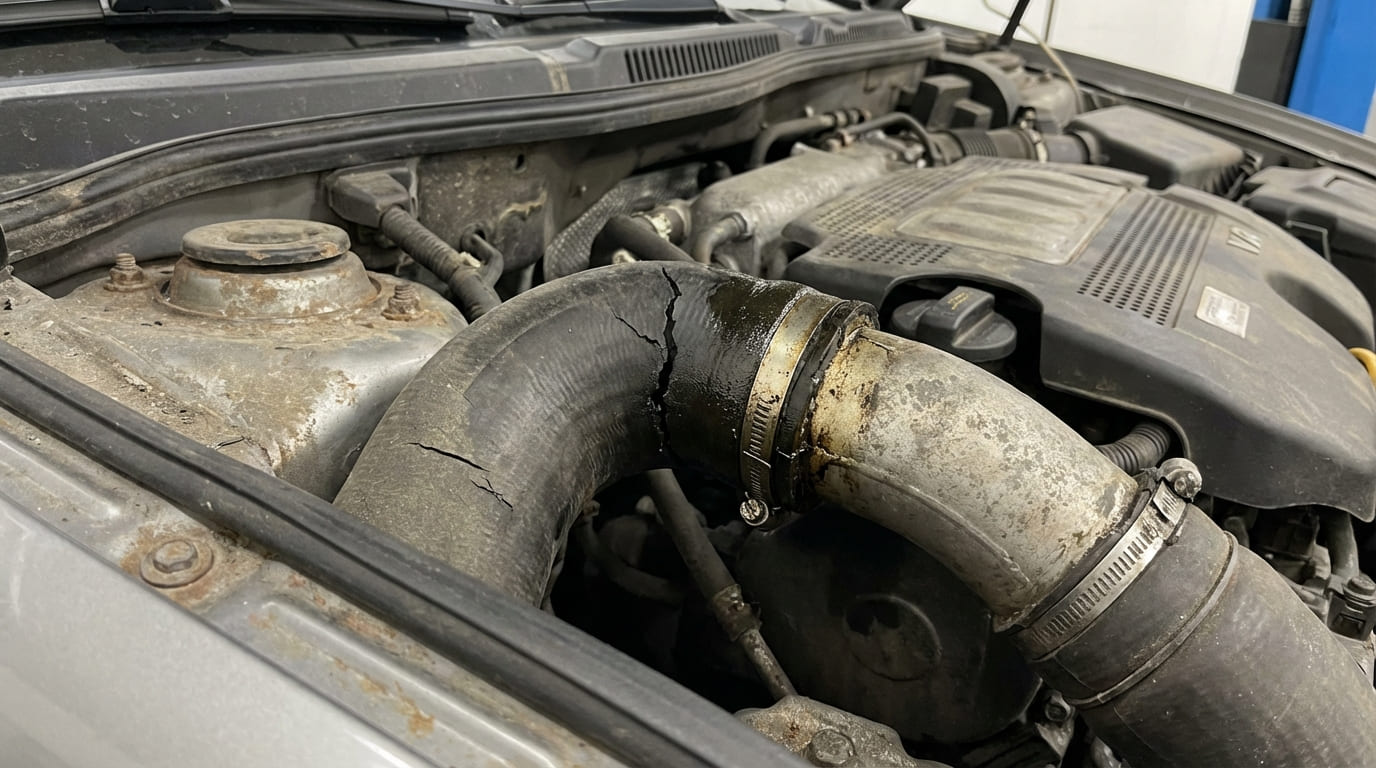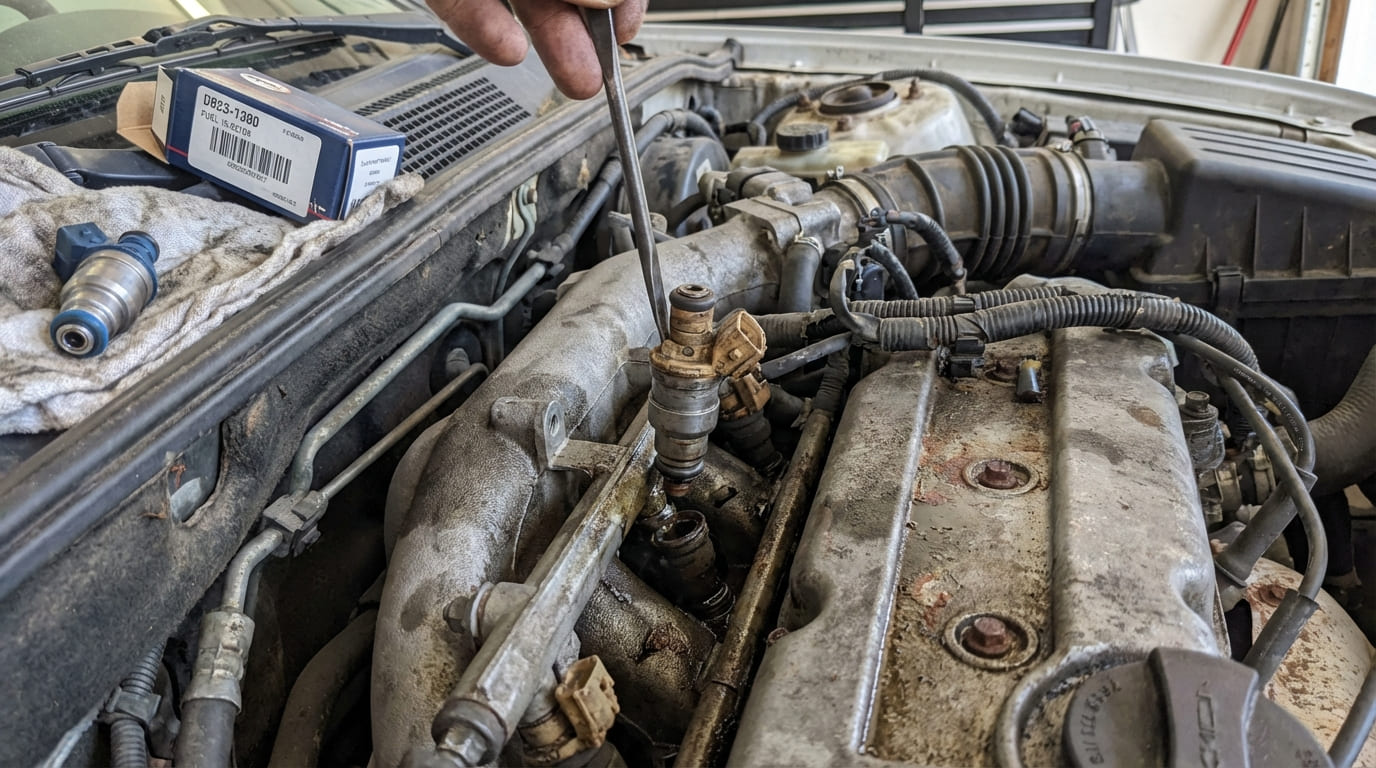
In my shop, diesel injector issues make up a solid chunk of the drivability and performance complaints we see—especially on high-mileage trucks and equipment running in tough conditions. Over the years, I’ve learned that while some injector problems look straightforward, the root cause is often hiding in plain sight. What appears to be a bad injector might actually stem from fuel quality, maintenance neglect, or even an electrical gremlin elsewhere in the system. Below, I’ll walk through the most common failure modes, how to approach diagnosis methodically, and what I’ve found actually leads to premature failure in the real world.
Internal Leakage (Excessive Return Flow)
Internal leakage occurs when fuel bypasses the nozzle needle or control valve and returns to the tank prematurely. This robs the combustion chamber of precise fuel delivery, especially at startup and idle. The issue is common in high-mileage injectors or those exposed to dirty fuel.
Symptoms and Diagnosis
- Hard starting, especially when hot
- Rough idle or misfire
- Reduced engine power
- Increased fuel consumption
- Diagnostic Trouble Codes (DTCs) like P0087 (low rail pressure) or P0088 (high rail pressure)
Use a graduated return flow kit: disconnect each injector’s return line and route it into a measuring cylinder. Run the engine at idle for 2–3 minutes. Compare volumes. If one injector returns more than 20–25% over the average, it’s likely leaking internally. Always verify rail pressure via scan tool—it should stabilize within spec during cranking and idle.
Root Causes and Fixes
- Nozzle needle wear or scoring preventing full sealing
- Control valve or solenoid wear in common rail injectors
- Fuel contamination with abrasive particles accelerating internal wear
- Chronically high fuel temperature reducing viscosity and increasing seepage
Replacement is the only reliable fix—modern injectors aren’t field-serviceable. Expect to pay $300–$700 per injector depending on make and model. Before installing new units, replace the fuel filter, flush the system, and inspect the fuel cooler. Ignoring heat or contamination will kill new injectors fast.
In my shop, we always test return flow on all injectors—even if only one is suspected. Uneven wear across multiple units means you’re better off replacing them in pairs or sets, especially on engines over 150k miles. It’s cheaper than two comebacks.
External Leakage
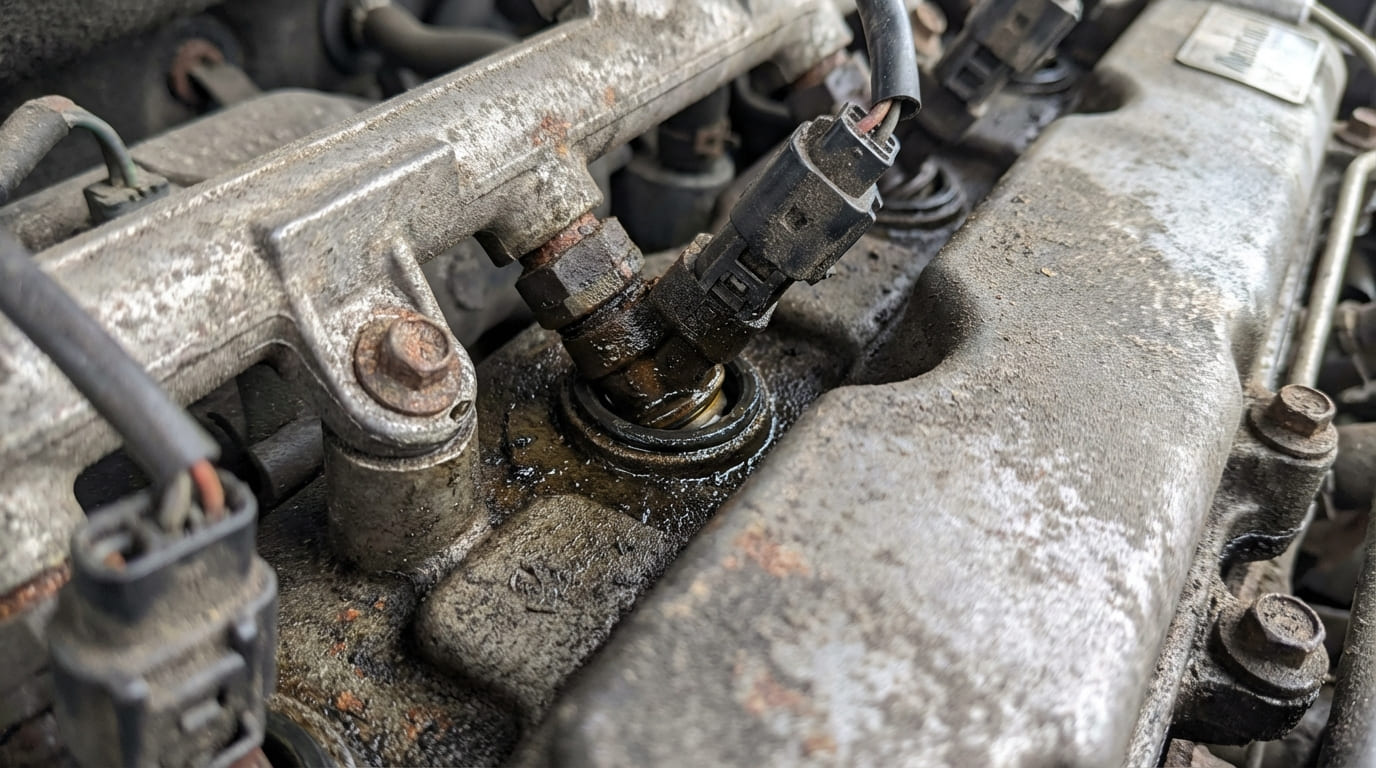
Fuel dripping from the injector or its connections poses fire risks and can cause performance issues if enough fuel escapes before injection.
Symptoms and Diagnosis
- Visible fuel weepage around injector body, O-rings, or banjo bolts
- Diesel odor in engine bay or cabin
- Fuel pooling in head valleys
- Intermittent low rail pressure if leak is severe
Start with a clean engine and thorough visual inspection. Use UV dye in the fuel tank and a black light after running the engine—it reveals even slow seeps. Confirm the leak isn’t from a loose fuel line or damaged fitting before condemning the injector.
Root Causes and Fixes
- Cracked or warped injector body from overtightening or thermal stress
- Degraded or improperly installed O-rings, especially on top-feed designs
- Loose or damaged fuel lines, fittings, or banjo bolts
- Improper seating due to carbon buildup or damaged injector bores
Replace O-rings and seals every time you pull an injector—OEM kits cost $15–$40 and prevent most leaks. If the body is cracked, replace the injector. Torque to spec with a calibrated wrench: over-tightening is the top cause of cracked injectors. Labor runs 2–4 hours depending on engine layout.
Nozzle Clogging or Restriction
Restricted nozzles disrupt spray pattern and fuel delivery, leading to incomplete combustion and cylinder-specific issues.
Symptoms and Diagnosis
- Intermittent misfire or rough running on one cylinder
- Loss of power under load
- Black smoke during acceleration
- Elevated exhaust gas temperatures (EGTs)
- Misfire codes (P030x) or cylinder contribution faults
Use a scan tool to run a cylinder balance or contribution test. A weak cylinder drops significantly in RPM during the test. Follow with a buzz test to rule out electrical faults. Remove the suspect injector and inspect the tip with a borescope. Bench flow and spray testing (available at diesel shops) confirms restriction or poor atomization.
Root Causes and Fixes
- Carbon deposits from short trips, excessive idling, or low-temperature operation
- Particulate contamination—water, rust, or microbial sludge blocking orifices
- Fuel gelling in cold climates temporarily restricting flow
- Low-cetane or off-spec fuel promoting coking
Ultrasonic cleaning works in mild cases but often fails on severe coking. Replacement is more reliable. Cost: $250–$650 per injector. Prevention: use quality fuel, add a detergent additive every 5,000 miles, and ensure the engine reaches full operating temperature regularly.
White smoke on startup? Don’t assume head gasket. Unburned fuel from a clogged injector looks identical. Always rule out fuel delivery issues before tearing into the engine.
Electrical Malfunction (Common Rail Injectors)
Modern diesel injectors rely on precise electrical signals. Solenoid or piezo actuators can fail, or the circuit delivering power can degrade.
Symptoms and Diagnosis
- Misfire or no combustion on a specific cylinder
- Engine cranks but won’t start (if multiple injectors affected)
- Injector circuit codes (P020x, P021x)
- ECM disabling fuel delivery to a cylinder
Check resistance at the injector connector with a multimeter. Solenoid injectors typically read 0.2–0.8 ohms; piezo types are 100–200k ohms. Compare to factory specs—variances matter. Use an oscilloscope to check the control waveform. An erratic or missing signal points to wiring, connector, or ECM issues. Wiggle the harness while monitoring resistance to catch intermittent breaks.
Root Causes and Fixes
- Internal solenoid failure—open or shorted windings
- Damaged piezoelectric crystals in piezo injectors
- Corroded or damaged harness connectors (common in salty or wet environments)
- ECM driver circuit failure—rare, but possible
Injectors with internal electrical faults aren’t repairable. But never replace the injector first—check the harness and connector. I’ve replaced more harnesses than injectors for “P0203” codes. Repairing a chafed wire costs $50 in labor vs. $600 for an injector. Always inspect the loom near valve covers and sharp brackets.
Incorrect Spray Pattern or Atomization
Poor atomization leads to inefficient combustion, increased emissions, and potential engine damage over time.
Symptoms and Diagnosis
- Reduced efficiency and power
- Excessive black or white smoke
- Knocking or rough combustion
- Higher-than-normal fuel consumption
- Piston or valve damage from fuel wash-down or hot spots
Only a bench test can confirm spray pattern. Remove the injector and use a flow bench to observe the spray. Look for a consistent cone shape, fine mist, and even breakup. Dribbling, stringing, or uneven dispersion indicates failure. Visually inspect the tip for pitting or erosion.
Root Causes and Fixes
- Erosion or pitting of the nozzle tip from high-pressure fuel or contaminated fuel
- Carbon buildup distorting the spray angle
- Incorrect opening pressure in older mechanical injectors
- Chemical degradation from unstable fuel additives or poor-quality biodiesel
Nozzle tips can’t be replaced individually. The entire injector must be swapped. Rebuilt units are available for 40–60% of OEM price but vary in quality—stick to reputable rebuilders. New OEM units last longer and come with better warranties.
Diagnostic Decision Guide: What to Suspect and Check
| Symptom | Most Likely Causes | Less Common But Possible Causes | First Diagnostic Step |
|---|---|---|---|
| Hard starting (hot) | Internal injector leakage, high return flow | Fuel pressure regulator fault, weak high-pressure pump | Return flow test, monitor rail pressure on scan tool |
| Black smoke under load | Nozzle clogging, poor atomization | Boost leak, EGR fault, turbo waste gate issue | Cylinder contribution test, inspect injectors via borescope |
| Misfire code (P030x) | Clogged or electrically failed injector | Compression loss, wiring harness fault, ECM driver issue | Buzz test, resistance check, contribution test |
| Visible fuel leak | Failed O-ring, loose fitting | Cracked injector body, damaged fuel line | Visual inspection with UV dye if needed |
| Low fuel rail pressure (P0087) | Internal injector leakage, weak high-pressure pump | Restricted fuel filter, air in fuel system, faulty rail pressure sensor | Return flow test, check filter, bleed system, verify sensor readings |
Best Practices: Do and Don’t
- Use OEM or equivalent-grade fuel filters and change them at or before the recommended interval. In my experience, this is the single biggest factor in injector longevity.
- Replace injector O-rings, seals, and copper washers every time you remove an injector. Reusing them often leads to leaks.
- Clean injector bores and sealing surfaces thoroughly before reinstallation. Carbon or debris can prevent proper seating.
- Torque injectors and fuel lines to spec using a calibrated tool. Overtightening is a common cause of cracked bodies or stripped threads.
- Do not reuse torque-to-yield (TTY) injector hold-down bolts unless the service manual explicitly allows it. In most cases, they’re one-time-use only.
- Do not swap injectors between cylinders to “test” them without verifying fuel trim or contribution data first. You can mask the real issue.
- Do not assume a DTC pointing to an injector means the injector is bad. Wiring, connectors, and even the ECM can trigger the same codes.
Situation: A 2015 Ram 3500 with 180k miles came in with black smoke and a P0203 code. The owner had already replaced injector #3.
Discovery: After the swap, the code moved to cylinder #5. That didn’t add up. I checked the wiring loom and found chafing near the valve cover where the harness rubbed on a sharp edge. The insulation was worn through, causing intermittent shorts.
Nuanced Lesson Learned: Just because a code follows an injector doesn’t mean the injector is faulty. Electrical harness damage can mimic injector failure, and replacing parts without tracing the circuit is a costly gamble.
Situation: A diesel generator had hard starting when hot. The shop had tested return flow and found one injector well above spec. They replaced it, but the problem returned in six weeks.
Discovery: I checked the fuel cooler and found it partially clogged. Fuel temps were running 25°F above normal. The heat was thinning the fuel, worsening internal leakage in already-worn injectors.
Nuanced Lesson Learned: High fuel temperature can accelerate wear and mimic mechanical failure. Always evaluate cooling and circulation in the fuel system—especially on equipment with long run cycles.
Situation: A customer reported rough idle and white smoke. Compression test was good. Injector buzz test passed. They were convinced it was a head gasket.
Discovery: I ran a cylinder contribution test and saw #2 was down 30%. Pulled the injector—nozzle was coked up solid. After replacement, the white smoke disappeared. Turns out, the truck was used mostly for short deliveries, never getting hot enough to burn off deposits.
Nuanced Lesson Learned: White smoke isn’t always coolant. Unburned fuel from a restricted injector can look identical. Don’t jump to major engine repairs without ruling out simpler fuel system issues first.
In my experience, the most reliable injector repairs start with a clear understanding of the operating environment—fuel quality, duty cycle, maintenance history. While modern diagnostics give us great data, they don’t replace careful observation and system-level thinking. Always consult the specific service manual for torque specs, resistance values, and flow limits—what’s true for one engine may not apply to another.