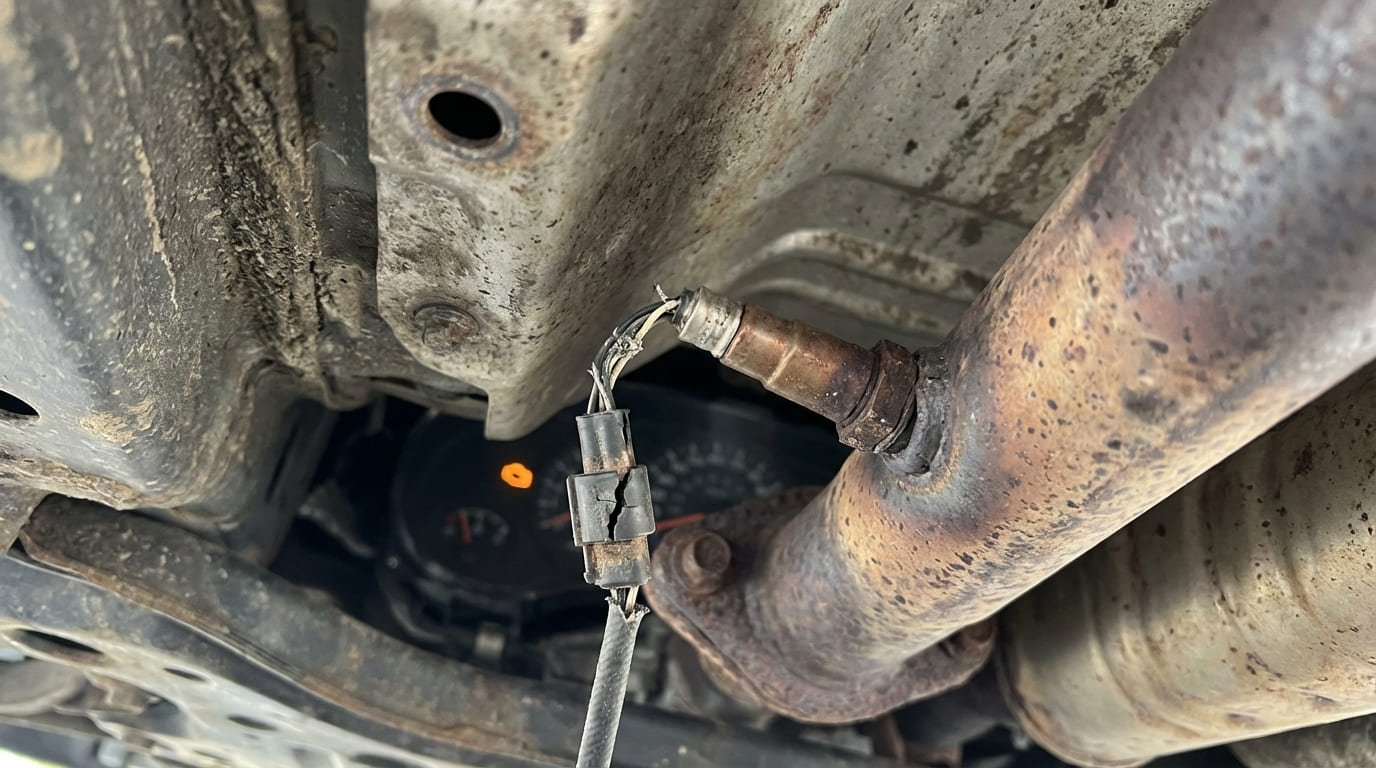
In my shop, I field this question more often than you’d think—especially when a customer gets hit with a check engine light and a diagnostic code pointing to an oxygen sensor. The short answer? You can usually keep the car moving short-term, but doing so comes with real risks that stack up over time. What follows is how I approach this issue with technicians and informed DIYers who want to understand the trade-offs.
Safety and Risks of Driving with a Faulty Oxygen Sensor
Driving with a faulty oxygen sensor isn’t immediately dangerous like a brake failure, but it compromises drivability and invites expensive secondary damage. The longer you delay repair, the higher the risk of collateral issues that far exceed the cost of a $50–$250 sensor.
Immediate Risks: Drivability and Efficiency
A failing O₂ sensor disrupts the air-fuel balance because the engine control unit (ECU) loses accurate feedback. This leads to:
- Rough idle or stalling, especially when cold
- Hesitation or surging during acceleration
- Noticeable drop in fuel economy (often 10–40%)
- Check engine light, sometimes flashing due to misfires
- Sulfur (rotten egg) smell from an overloaded catalytic converter
These symptoms can make merging, climbing hills, or stop-and-go driving unpredictable. While not a crash risk per se, compromised performance in traffic is a safety concern.
Long-Term Damage: What Else Can Fail?
The real danger isn’t the sensor itself—it’s what happens downstream when the ECU runs blind.
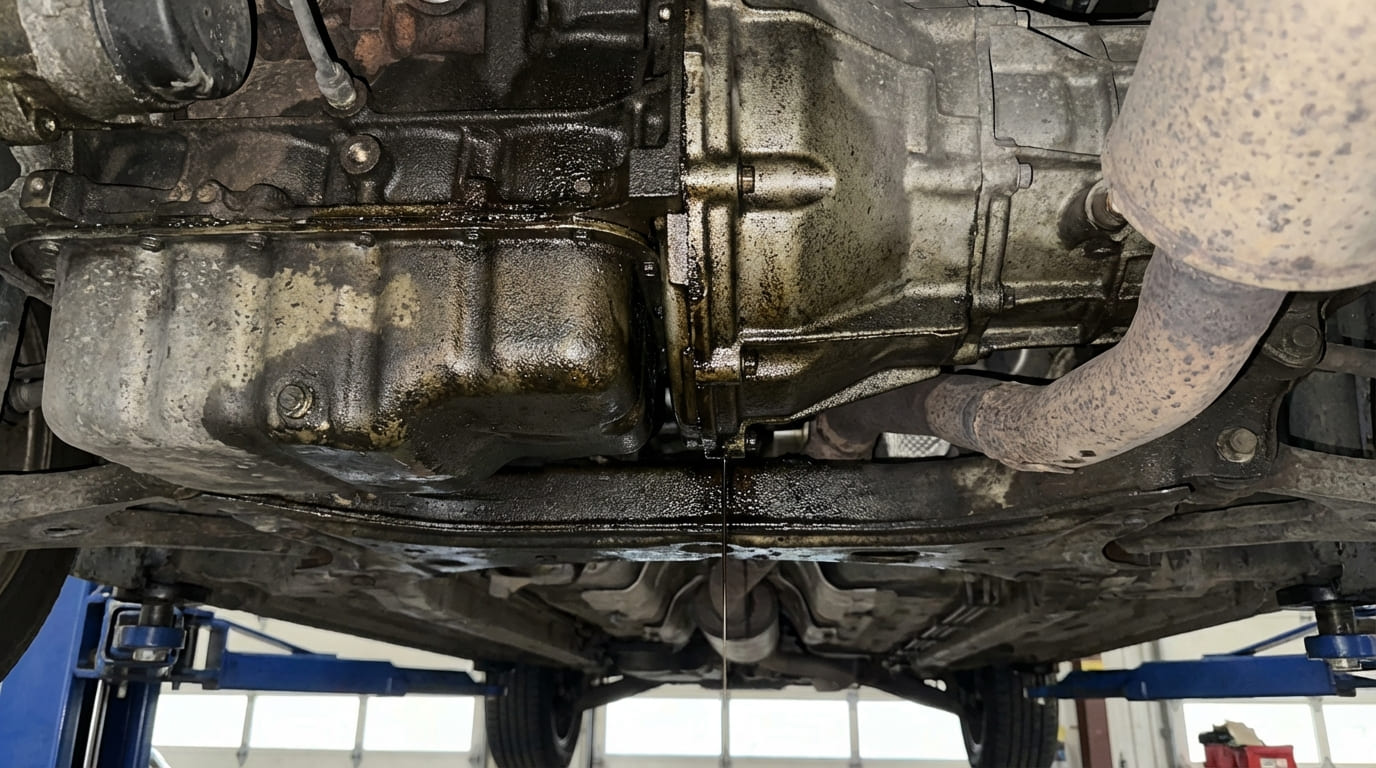
Fuel-contaminated oil: A faulty upstream sensor often causes a rich fuel mixture. Unburned gasoline washes past piston rings and dilutes engine oil. At just 2–3% contamination, oil loses lubricity. I’ve seen rod bearings fail prematurely due to extended driving in this state.
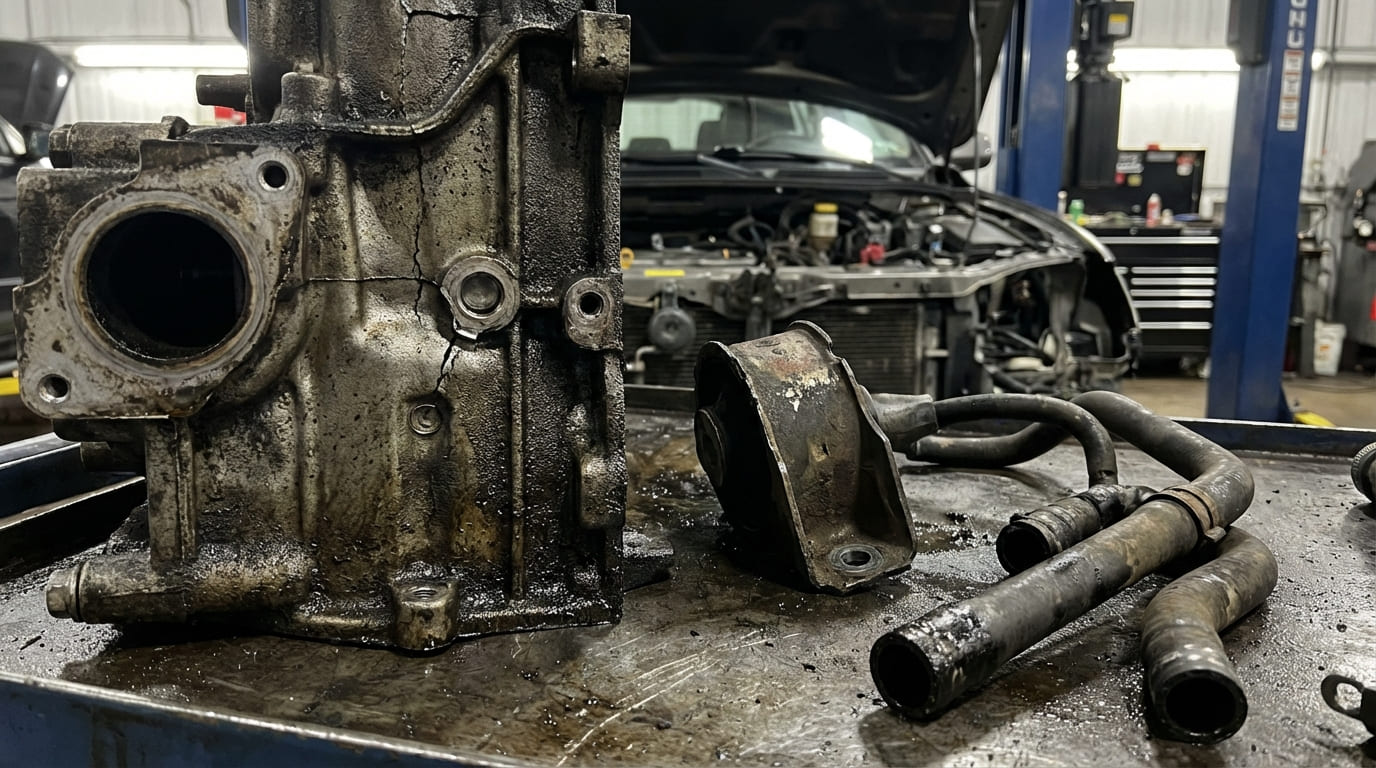
Catalytic converter meltdown: Excess fuel enters the exhaust and ignites in the cat, spiking temperatures beyond 2,000°F. This can melt the ceramic substrate. Replacement costs range from $800 to $2,500—versus $100–$300 for a sensor.
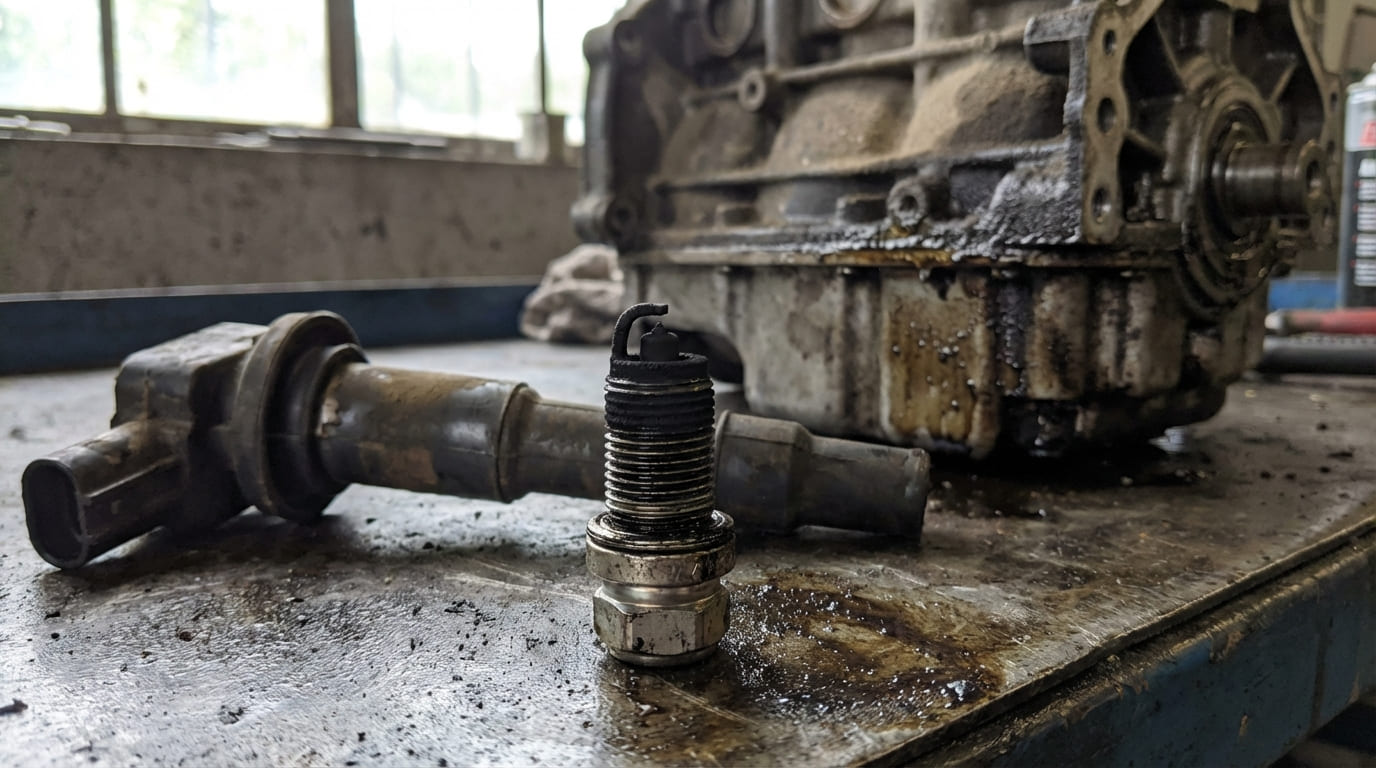
Spark plug and ignition wear: A rich mixture causes carbon fouling on plugs. Misfires follow, stressing coils and wires. I’ve pulled plugs so coated they looked like they’d been dipped in tar.
In my shop, we always treat a confirmed O₂ sensor fault like a ticking clock. Fix it in 1–2 weeks, not months. The longer it runs wrong, the more likely you’re buying two repairs instead of one.
How to Diagnose a Faulty Oxygen Sensor
Don’t guess—verify. Many symptoms of a bad O₂ sensor mimic other issues like vacuum leaks or fuel pump problems. Replacing the sensor without diagnosis is a common and costly mistake.
Step-by-Step Diagnostic Process
Use this methodical approach to confirm the fault:
- Scan for codes: Pull trouble codes with an OBD2 scanner. Common ones include P0130–P0167 (circuit/response issues), P0171/P0174 (lean/rich system), and P0420/P0430 (catalyst efficiency).
- Check live data: With the engine warmed up, monitor upstream O₂ sensor voltage. It should oscillate rapidly between 0.1V and 0.9V. A flatline at 0.45V or stuck high/low indicates failure.
- Inspect fuel trims: Long Term Fuel Trim (LTFT) consistently above +15% or below -15% means the ECU is overcompensating. But this could be due to other issues—don’t assume it’s the sensor.
- Test the heater circuit: Use a multimeter to check resistance across the sensor’s heater pins. Most zirconia sensors read 5–20 ohms. Infinite resistance means the heater is open and the sensor won’t warm up properly.
- Rule out exhaust leaks: Even a small leak upstream of the sensor can introduce oxygen, fooling the ECU into thinking the mixture is lean. Inspect gaskets and manifolds for cracks.
If the sensor voltage is sluggish or frozen, and the heater circuit checks out, replacement is likely needed. But if fuel trims remain off after replacement, look elsewhere—MAF sensor, fuel pressure, or vacuum leaks.
Repair Strategy and Cost Considerations
Replacing an oxygen sensor is one of the more DIY-friendly jobs—if you have the right tools and access. But knowing when and how to do it makes all the difference.
Repair vs. Replace: Is It Worth Fixing?
There’s no repair for a failed O₂ sensor—it must be replaced. The cost varies:
| Component | Cost Range |
|---|---|
| O₂ Sensor (upstream) | $50–$150 |
| O₂ Sensor (downstream) | $40–$120 |
| Professional Labor | $100–$200 |
| Catalytic Converter | $800–$2,500 |
The math is clear: replacing a sensor early prevents much larger bills. If your car is older and high-mileage, consider replacing both upstream sensors at once—they usually degrade at similar rates.
Replacement Procedure: Key Steps
Follow these steps for a reliable repair:
- Use an oxygen sensor socket with a cutout for the wiring—never a standard socket that can crush the body.
- Apply penetrating oil if the sensor is stuck. Let it soak 20–30 minutes. For stubborn cases, gently heat the bung with a torch (avoid nearby plastic).
- Check if anti-seize is pre-applied. If not, use a small amount on the threads—keep it away from the sensing tip to avoid contamination.
- Torque to spec—typically 30–45 ft-lbs, but always consult your service manual. Overtightening can damage the bung.
- Reconnect wiring securely and route away from hot or moving parts.
Post-Replacement Verification
Don’t assume it’s fixed after installation. Clear the codes and complete a drive cycle: 10–15 minutes of mixed driving (city and highway) to let the ECU relearn fuel trims.
Recheck live data:
- Upstream sensor should switch rapidly between 0.1V and 0.9V
- Fuel trims should stabilize within ±10%
- No recurring codes, especially P0420
If trims stay high or the P0420 returns, the catalytic converter may already be damaged—or another issue (like a vacuum leak) is still present.
Expert Tips and Common Pitfalls
Even experienced DIYers make mistakes with O₂ sensors. Avoid these traps:
- ✅ Verify first: Use live data before replacing. Saves money and avoids frustration.
- ✅ Clean the bung: Use a thread chaser or tap to clean corrosion from the sensor port. Ensures proper seating and accurate torque.
- ✅ Replace in pairs: If both upstream sensors are over 100k miles and show similar response, replace both. Prevents imbalance.
- ⚠️ Avoid generic sensors: Some aftermarket units have incompatible wiring or slower response. OEM or high-tier brands (Bosch, Denso) are more reliable.
- ⚠️ No anti-seize on the tip: Contamination kills sensors fast. Only apply to threads, sparingly.
- ⚠️ Don’t ignore exhaust leaks: A leak upstream can mimic sensor failure. Fix it before replacing the sensor.
Real-World Diagnostic Scenarios
| Symptom or Code | Most Likely Causes | Less Common But Possible Causes |
|---|---|---|
| P0133 (Slow Response) | Fouled or aging upstream O₂ sensor | Exhaust leak upstream, vacuum leak, low fuel pressure |
| P0171 (System Too Lean) | Vacuum leak, dirty MAF, weak fuel pump | Faulty O₂ sensor reporting lean, exhaust leak near sensor |
| P0420 (Catalyst Efficiency) | Prolonged upstream O₂ sensor fault, engine misfires | Aged converter, chronic oil burning, incorrect fuel type |
| Rough idle + high fuel trim | Faulty O₂ sensor causing rich mixture | Failed fuel pressure regulator, leaking injectors, PCM issue |
Situation: A 2015 Honda Accord came in with a P0133 code and poor fuel economy. The owner had replaced the Bank 1 Sensor 1 O₂ sensor twice with aftermarket units.
Discovery: Live data showed slow response even on the new sensor. A smoke test revealed a vacuum leak at the intake manifold gasket—upstream of the sensor. The lean condition was real; the sensor was working fine.
Nuanced Lesson Learned: Sensor response codes don’t always mean the sensor is bad. Always verify the operating environment—contamination, leaks, and fuel delivery matter just as much.
Situation: A truck with 180k miles had a rotten egg smell and failed emissions. Scanner showed P0420 and sluggish upstream O₂ response.
Discovery: The sensor voltage barely reached 0.7V, and the signal dropped out intermittently. We replaced it, but P0420 returned after 100 miles.
Nuanced Lesson Learned: A weak sensor can damage the converter over time. Once the cat is degraded, even a new sensor won’t clear the code. Sometimes, both need replacement.
Situation: A BMW owner reported rough idle and P0171. A shop replaced both upstream O₂ sensors, but the issue persisted.
Discovery: Fuel trims were still maxed out positive. Inspection found a split in the MAF boot, letting in unmetered air. The O₂ sensors were reacting correctly—the system was actually lean.
Nuanced Lesson Learned: Blindly replacing sensors based on fuel trim codes wastes money. The O₂ sensor is a diagnostic tool, not always the failure point.
Oxygen sensors are small, but their impact is massive. They’re the ECU’s primary source of combustion feedback. Ignoring a fault might seem harmless for a few days, but the downstream effects can be severe. Always use vehicle-specific service data for specs and procedures—what works on one engine may not apply to another.