Idle issues are among the most common complaints I see in the shop. Whether the engine races at stoplights or barely holds idle, the root cause can range from a simple clog to serious mechanical wear. This guide cuts through the noise and delivers what you need: a clear diagnostic path, practical checks, and real-world insights from decades of hands-on work.
What Is Normal Idle RPM?
Most modern vehicles idle between 650 and 850 RPM when warmed up and in park or neutral. During cold start, expect 1,000–1,300 RPM as part of normal warm-up strategy. Automatic transmissions typically idle slightly higher than manuals. Climate control, battery charging, and accessory load can also cause minor fluctuations—usually within 50 RPM.
If your idle is consistently below 600 RPM or above 900 RPM when warm, it’s time to investigate. Stalling or surging? That’s a red flag.
High Idle RPM: Causes and Diagnostics
Primary Causes and How to Check Them
High idle usually means excess air, incorrect sensor data, or a mechanical issue preventing throttle closure. Here’s how to diagnose each:
- Vacuum leaks (unmetered air): Air sneaking in after the MAF sensor tricks the ECU into thinking more fuel is needed, raising idle.
- IAC valve stuck open: Allows too much bypass air even when closed.
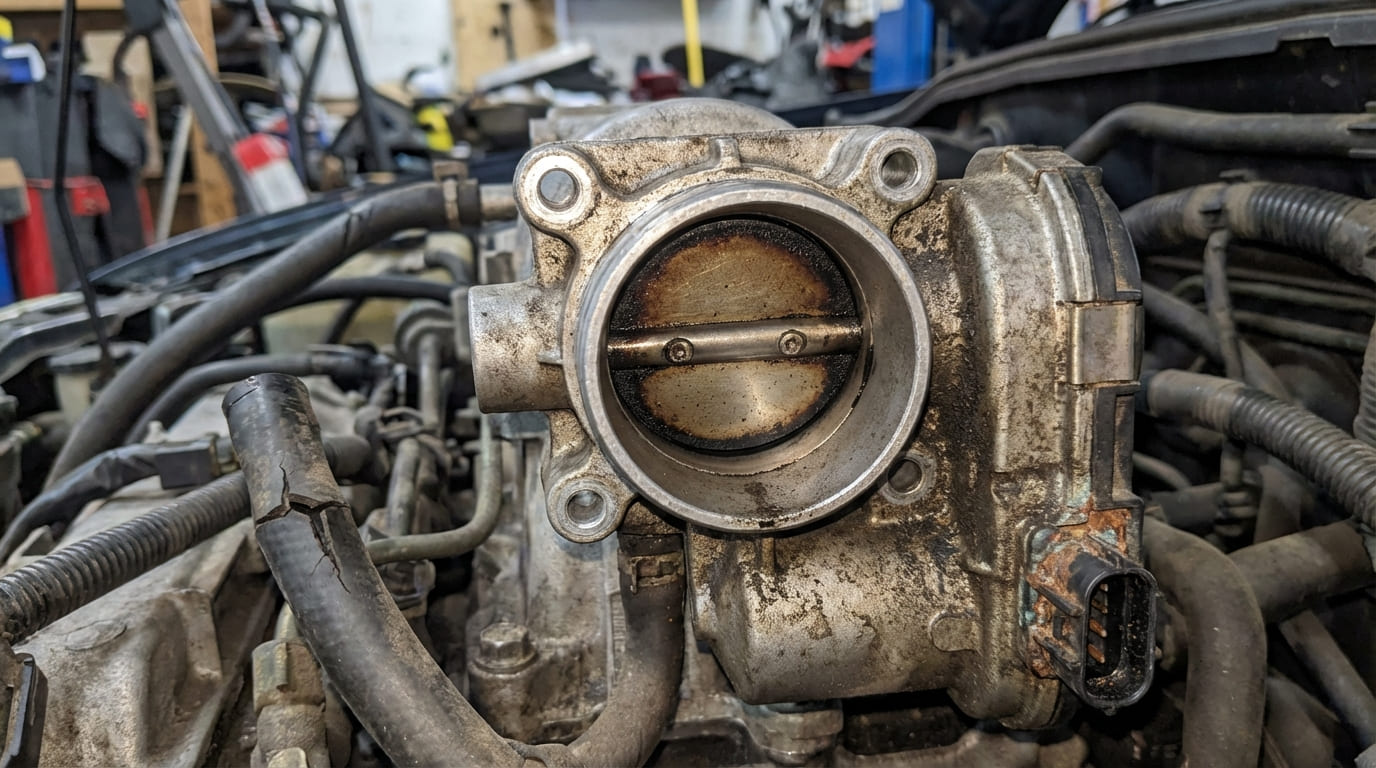
- Throttle plate not closing: Carbon buildup or mechanical interference keeps the plate from sealing.
- TPS or ECT sensor failure: Faulty signals make the ECU think the engine is cold or under load.
Start with this diagnostic sequence:
- Check for stored or pending codes with a scan tool—even if the check engine light is off.
- Monitor fuel trims: Positive long-term fuel trim (LTFT) over +10% at idle suggests a vacuum leak.
- Inspect throttle plate closure visually—remove the intake tube and look.
- Check IAC step count or duty cycle on scan tool. High values at idle indicate overcompensation.
- Verify ECT reading: Should match ambient when cold and ~195–220°F when warm.
In my shop, we always check throttle plate position first. It takes 30 seconds, costs nothing, and rules out carbon buildup or aftermarket gasket issues. I’ve saved hours by not jumping straight to sensors.
Low Idle or Stalling: Causes and Diagnostics
Where to Look and How to Test
Low idle means not enough air, fuel, spark, or too much load. Diagnose in this order:
- EGR valve stuck open: Dilutes mixture at idle. Common on older V6 engines.
- IAC valve stuck closed: No bypass air when needed.
- Ignition misfire: Weak spark causes cylinder misfire, killing momentum.
- Fuel pressure drop: Pump or filter can’t maintain pressure at idle.
- Restricted intake or dirty MAF: Limits airflow; often overlooked.
- Parasitic load: Failing alternator, AC compressor, or power steering pump dragging the engine.
Diagnostic steps:
- Scan for misfire codes (P0300–P0308). Use misfire counter to pinpoint cylinder.
- Check EGR position at idle—should read 0% or “closed.”
- Test fuel pressure: Compare static, running, and residual to factory specs.
- Inspect air filter and intake duct for collapse or blockage.
- Disconnect AC compressor and alternator belt to test for load-related stalling.
- Perform compression and leak-down tests if mechanical issues are suspected.
When a car stalls only when the AC kicks on, don’t assume the compressor is bad. First, verify the IAC responds to the AC-on signal. I’ve replaced dozens of IAC valves that couldn’t keep up with demand—cheaper than an AC repair.
Costs and Repair vs. Replace Decisions
Here’s a realistic cost breakdown for common fixes (parts + labor, where applicable):
| Component | Typical Cost | Repair vs. Replace |
|---|---|---|
| Vacuum hose/leak repair | $20–$100 | Repair: Replace hose or gasket. Cheap fix, high impact. |
| IAC valve | $80–$250 | Replace if motor is weak. Clean first if carbon is visible—saves $150+. |
| Throttle body cleaning | $50–$150 | Always try cleaning before replacement. Use OEM-spec cleaner. |
| MAF sensor | $200–$400 | Replace only after confirming contamination and failed cleaning. |
| Fuel pump | $300–$800 | Replace if pressure or volume is low. Don’t ignore volume test. |
| EGR valve | $150–$400 | Replace if stuck or clogged. Cleaning rarely works long-term. |
I’ve seen customers spend $1,000 chasing idle issues, only to find a $5 vacuum cap was missing. Always start cheap: inspect, scan, clean. Save replacements for when testing confirms failure.
Diagnostic Decision Tree
Use this table to prioritize your diagnosis based on symptoms:
| Symptom | Most Likely Causes (in order) | Less Common but Possible |
|---|---|---|
| High Idle (Warm Engine) | Vacuum leak, IAC stuck open, TPS fault | ECT sensor failure, PSP switch fault, throttle body carbon |
| Low Idle / Stalling | IAC stuck closed, EGR leak, ignition misfire | Fuel pressure drop, clogged air filter, mechanical wear |
| Idle Fluctuates | Intermittent vacuum leak, MAF contamination, ignition fault | Dirty throttle body, ECU memory issues, ground problems |
Best Practices: Do and Don’t
- ✅ Do clean intake manifold bolt threads before reassembly. Corrosion changes torque and can cause vacuum leaks.
- ✅ Do use a scan tool to verify sensor data before replacing parts. Confirm ECT, TPS, and IAC readings match reality.
- ✅ Do inspect vacuum lines while engine is warm and running. Heat expands rubber—some leaks only show up then.
- ⚠️ Don’t replace the IAC valve without checking for carbon in the bore. On GM and Toyota engines, cleaning works 60% of the time.
- ⚠️ Don’t use carb cleaner on MAF sensors. It damages the sensing wire. Use only MAF-safe cleaner.
- ⚠️ Don’t assume a P0171 (system too lean) means a vacuum leak. Check fuel pressure, MAF, and exhaust for upstream leaks first.
Real-World Case Studies
Situation: A 2008 Camry with 1,400 RPM idle when warm. No codes. Owner replaced IAC already.
Diagnosis: Fuel trims high at idle, dropped under load. Smoke test clean. Found aftermarket throttle body with thick gasket—preventing full plate closure.
Fix: Replaced with OEM gasket. Idle returned to 750 RPM.
Lesson: Mechanical fitment issues mimic sensor faults. Always verify throttle plate closure by sight and feel.
Situation: 2012 F-150 with rough idle and stalling. P0300. Plugs and coils replaced.
Diagnosis: Misfire counter showed cylinder #5. Swapped coil—misfire stayed. Compression test: 90 psi vs. 160 psi average. Leak-down: 40% to crankcase.
Fix: Engine rebuild needed. Worn piston rings.
Lesson: Persistent misfires after ignition work demand compression testing. Mechanical failure isn’t rare.
Situation: 2005 Accord idle drops to 500 RPM when AC on. No codes.
Diagnosis: Disconnected AC compressor—no change. Scan tool showed IAC not responding to AC-on signal.
Fix: Replaced IAC valve. Idle now holds steady at 700 RPM with AC on.
Lesson: The ECU can command help, but if the actuator fails, the engine can’t compensate. Test response, not just presence.
Abnormal idle isn’t just annoying—it can signal deeper issues. But with a logical approach, the right tools, and a focus on data over guesswork, you can fix it right the first time. Always consult your vehicle’s service manual for specs. What’s normal for a Honda isn’t normal for a Ford. Stay methodical, and you’ll save time, money, and frustration.