In my shop, lifter noise is one of the more common concerns we see—from seasoned mechanics to careful DIYers. It’s easy to jump to conclusions, especially when you hear that familiar tapping on cold start. But over two decades turning wrenches, I’ve learned that lifter noise isn’t a single problem with a single fix. It’s a symptom with multiple possible causes, and the real skill lies in narrowing them down logically. Let’s walk through what I’ve found tends to matter most.
Lifter Noise on Cold Engine (Often Resolves as Engine Warms)
Most cold-start lifter ticking that disappears within 30 seconds to a minute isn’t an immediate red flag. On many engines I work on, this kind of transient noise is often related to oil delivery delays rather than mechanical failure.
Insufficient Oil Pressure or Flow at Startup
When the engine’s cold, oil is thicker and flows more slowly. If pressure doesn’t build quickly, lifters can’t “pump up” fast enough, leading to momentary valve lash and noise.
- Oil viscosity too high for ambient temperature: In colder climates, I’ve seen 10W-30 behave almost like molasses at -10°F. The mechanism is straightforward—thick oil can’t feed the lifter galleries fast enough. I typically recommend checking the OEM viscosity chart for your region. A switch to 5W-20 or 5W-30 often resolves this. Cost: $0 if you change oil yourself; $50–$80 at a shop.
- Faulty oil filter anti-drainback (ADB) valve: If the ADB isn’t sealing, oil drains back into the pan overnight. Next cold start, it takes time to repressurize the upper end. I once chased a persistent cold tap for weeks—turned out a cheap aftermarket filter had a cracked ADB flap. Since then, I always inspect used filters. Replace with OEM or premium filter—$10–$25 vs. $5 for a no-name brand.
- Worn oil pump: On high-mileage engines, especially those with neglected oil changes, the pump’s gears or rotor can wear. This shows up as slow oil pressure rise on cold start. A mechanical gauge test is essential here—don’t rely on the dash light or sender. Repair cost: $400–$800; consider engine age before proceeding.
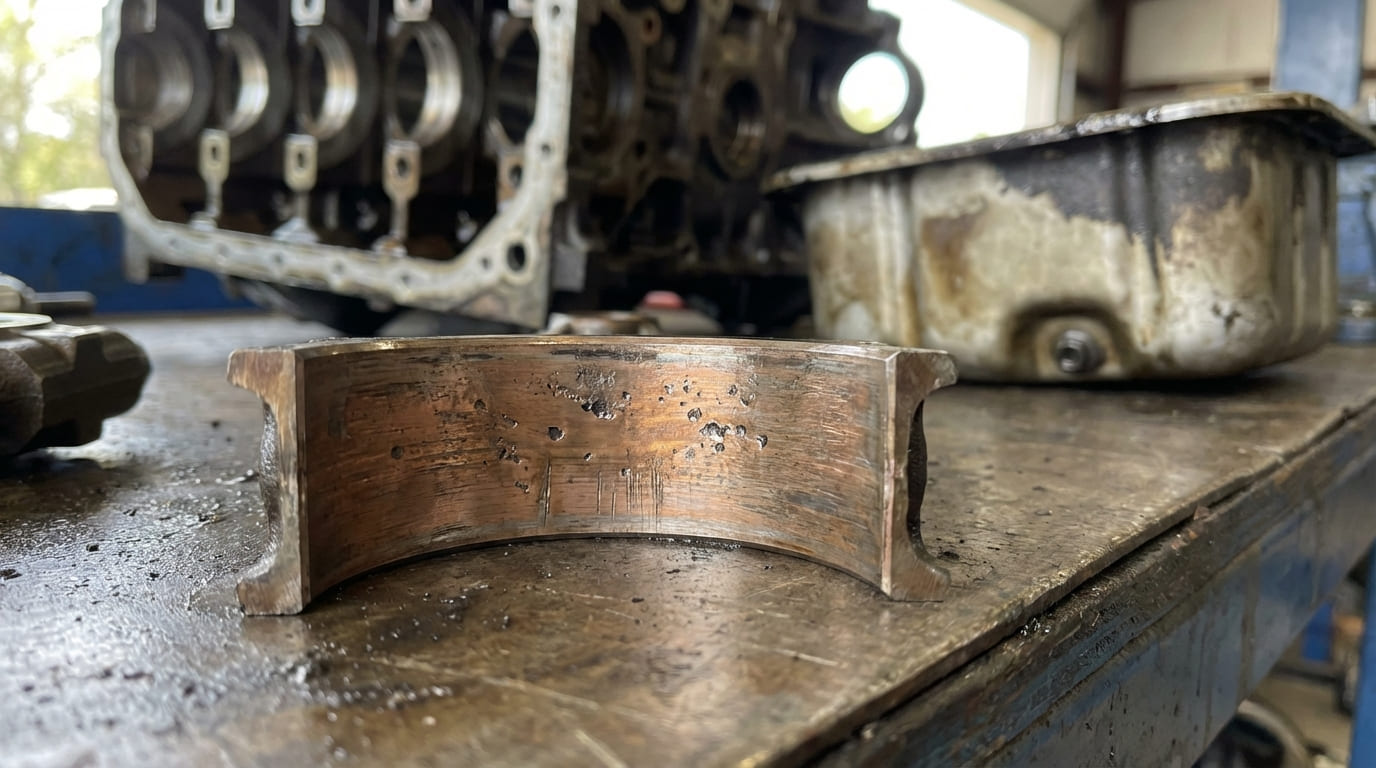
- Excessive main or rod bearing clearances: This is less common on cold-only noise, but not unheard of. More oil bypasses the bearings when cold and thick, reducing flow to lifters. I usually reserve this diagnosis for engines with known wear history or low warm oil pressure. If bearing wear is confirmed, lifter noise is a symptom—not the root cause. Rebuild or replace engine may be more cost-effective than partial repair.
Lifter Internal Component Issues
Some cold lifter noise lingers longer than expected or only partially clears as the engine warms. That’s when internal lifter problems become more likely.
- Hydraulic lash adjuster (HLA) bleed-down: A worn check ball or cracked piston seal lets oil escape overnight. I’ve found these by removing valve covers and manually pressing down on lifters with a plastic pry tool—healthy ones resist; bled-down ones compress easily. Replacement is the only real fix. Cost: $20–$50 per lifter; labor-intensive. Replace in sets on V6/V8 to prevent future mismatched wear.
- Sludge or varnish buildup: In engines with long oil change intervals, especially in short-trip driving, I’ve seen lifters clogged with dark varnish. An oil flush might help if caught early, but on modern tight-tolerance lifters, it’s a gamble. Sometimes it just moves gunk into the wrong place. Try a high-detergent synthetic oil for 1–2 changes first—$60–$100—before considering disassembly.
- Incorrect lifter type: After a previous repair, mismatched lifters—say, a solid lifter in a hydraulic setup, or a non-OEM part with different internal spring rates—can cause noise. I always double-check part numbers against the OEM catalog, even if the box says “exact fit.” Mismatched lifters can lead to premature cam wear—costly mistake.
Lifter Noise on Warm Engine (Often Indicates More Severe Wear or Persistent Issue)
When tapping persists after warm-up, that’s when I start to get concerned. Oil is thinner, pressure should be stable, and lifters should be fully pressurized. If noise remains, something’s not right.
- Low oil pressure when warm: This could point to a worn oil pump or excessive bearing clearance. I’ve seen engines with 10 psi at hot idle—well below the 20–30 psi most manuals call for. That’s not enough to keep lifters pumped up. Test with a mechanical gauge. If pressure is low, investigate pump and bearings before replacing lifters.
- Oil viscosity too low: Some folks switch to 0W-20 for fuel economy, but in older engines with looser tolerances, that oil may shear down too much when hot. I’ve measured viscosity loss in oil samples that dropped from 0W-20 to the equivalent of 0W-10 after 8,000 miles. Try 5W-30 or 10W-30 in high-mileage engines—better film strength. Cost: $10–$15 more per oil change, but protects valvetrain.
- Worn hydraulic lifters: Internal wear doesn’t fix itself with temperature. If a lifter compresses easily even after warm-up, it’s done. I typically replace them in sets, especially on V6/V8 engines, to avoid future mismatched wear. Labor is 60% of cost—$600–$1,200 total. If only one is bad, replace all to prevent repeat job.
- Camshaft lobe wear: Flat tappet cams are especially prone. A worn lobe doesn’t push the lifter high enough, creating excess lash. I’ve diagnosed this with a dial indicator on the pushrod or rocker arm—measured lift was 0.080″ instead of the 0.220″ spec. The lifter wasn’t the problem; the cam was. Replacement requires engine tear-down—$1,500–$3,000. Consider engine replacement if mileage is high.
Diagnostic Methodology for Lifter Noise
Before tearing anything apart, I follow a step-by-step process. Jumping to lifter replacement without data can waste time and money.
Initial Assessment
First, confirm it’s actually lifter noise. I use a long-handle mechanics’ stethoscope:
- Lifter noise is usually a high-pitched tap, rhythmic with RPM, located at the top of the engine.
- Piston slap is lower-pitched, often louder at idle, and diminishes as the engine warms.
- Rod knock is deeper, resonant, and may change with load—not RPM alone.
- Injector noise is faster, more of a buzz, and often isolated to one cylinder.
Oil System Diagnostics
Oil pressure tells you a lot. I always use a mechanical gauge tapped into the main oil gallery—never trust the factory sender reading for diagnosis.
- Check pressure cold at idle, then warm at idle and 2,000 RPM.
- Compare to the factory manual—limits vary widely. For example, many GM LS engines want 25–40 psi hot at 2,000 RPM, while some older Fords are happy with 18 psi.
- Oil analysis helps too. High iron content could mean bearing wear; fuel dilution thins oil and reduces pressure. Mail-in oil test: $30–$50. Worth it on high-mileage engines.
Valvetrain-Specific Checks
- On hydraulic lifters, I do a pump-up test: after running the engine, I gently press down on each lifter. If it squishes easily, it’s bled down.
- For solid lifters, I measure valve lash with feeler gauges. A clearance of 0.020″ when spec calls for 0.008″ means wear somewhere—could be lifter, pushrod, rocker, or cam.
- A borescope through the oil fill cap or spark plug hole can show cam lobe condition without removing the head. I’ve caught early spalling this way. Borescope rental: $50; worth it to avoid teardown.
Recommended / Avoid List
- ✅ Recommended: Clean oil gallery threads with a bottoming tap before installing oil galley plugs. I’ve seen a single thread burr block 70% of flow to a lifter bank.
- ✅ Recommended: Use OEM-specified oil viscosity and change it on schedule. For engines with known lifter issues, I often suggest a high-detergent synthetic.
- ✅ Recommended: Replace oil filters with OEM or premium-tier brands. The ADB valve matters more than most realize.
- ⚠️ Avoid: Reusing torque-to-yield (TTY) head bolts unless the manual explicitly allows it. Stretch is critical, and reused bolts often lose clamping force, affecting head gasket seal and oil paths.
- ⚠️ Avoid: Using aftermarket lifters without verifying compatibility. I once had a set that didn’t seat properly due to a 0.015″ difference in outer diameter—caused chronic noise.
- ⚠️ Avoid: Engine flushes on high-mileage engines with unknown service history. I’ve seen them dislodge large chunks that clogged the oil pickup.
Common Causes and Likelihoods
| Condition | Possible Cause | Relative Likelihood | Notes |
|---|---|---|---|
| Cold-start tap, clears in 10–30 sec | High oil viscosity | High | Especially in sub-20°F climates |
| Cold-start tap, lasts >1 min | Faulty oil filter ADB | Medium | Common with non-OEM filters |
| Warm engine tap, RPM-dependent | Worn hydraulic lifter | High | Confirm with stethoscope and pump-up test |
| Warm engine tap, pressure low | Worn oil pump or bearings | Medium | Requires tear-down for confirmation |
| Tap after recent repair | Incorrect lifter type | Low–Medium | Verify part numbers match OEM |
Situation: A 2012 V6 pickup came in with a cold-start lifter tap that lasted about 45 seconds. Owner had just changed oil with 10W-30 in winter.
Initial Assumption: Oil too thick for the weather.
Deep Dive: I checked the filter—ADB valve was intact. Oil pressure was good once warm. But when I pulled the valve cover, I found one lifter that compressed easily. The rest were firm.
Nuanced Lesson Learned: Not all cold noise is oil-related. Even in cold weather, a single failing lifter can mimic system-wide flow issues. Always isolate the noise before generalizing.
Situation: A high-mileage inline-6 had persistent warm-engine tapping. Oil pressure was 18 psi hot at idle—within “acceptable” range per an old mechanic’s rule of thumb.
Initial Assumption: Worn lifters.
Deep Dive: I did a borescope inspection—cam lobes looked decent. But after checking the manual, I found the spec was 25–60 psi. The pump was underperforming.
Nuanced Lesson Learned: “Acceptable” isn’t the same as “spec.” Always consult the factory manual. What’s normal for one engine may not apply to another.
Situation: A customer replaced lifters himself. Noise returned in two weeks. He swore he used the right parts.
Initial Assumption: Poor installation or leftover debris.
Deep Dive: I compared the old and new lifters. The new ones were from a budget brand—same dimensions, but different internal spring rate. The cam profile needed a stiffer lifter to maintain control at higher RPM.
Nuanced Lesson Learned: Not all lifters are functionally interchangeable, even if they fit. Camshaft dynamics, oil pressure, and lifter internals must be matched.
In my experience, lifter noise is rarely just about the lifter. It’s about oil delivery, component wear, and system design. I’ve seen too many engines torn apart unnecessarily because someone assumed the noise meant bad lifters. Always test oil pressure, inspect the filter, consider the oil type, and listen carefully before making a diagnosis. And above all—consult the specific service manual for your engine. What’s true for a Ford 4.6 may not apply to a Toyota 2.5.