Knocking and ticking noises from the engine block can signal anything from harmless operation to impending mechanical failure. As a master mechanic with 20+ years in the bay, I focus on fast, accurate diagnosis using simple tools and proven methods. This guide cuts through the noise—literally—and gives you the steps, tools, and real-world insights to identify and act.
Step 1: Characterize the Noise Accurately
Before grabbing tools, listen carefully. Misdiagnosis leads to wasted parts and money. Use these field-tested methods to isolate the issue.
Knock vs. Ticking: What You’re Hearing
Knocking is a low-frequency, rhythmic thud often felt as vibration. It worsens under load (acceleration or hill climbing) and points to heavy internal components like bearings or pistons. Ticking is higher-pitched, sharper, and more constant. It’s often valvetrain- or accessory-related and may disappear when the engine warms.
In my shop, we never trust descriptions like “it knocks when I turn.” We replicate the condition—idle, cruise, load—and use a stethoscope to track the source. One word changes everything: “tick” could be normal injector noise; “knock” under load is rarely good news.
Pinpoint the Source with a Stethoscope or Screwdriver
Use a long metal screwdriver or automotive stethoscope to isolate the loudest point. Touch it to:
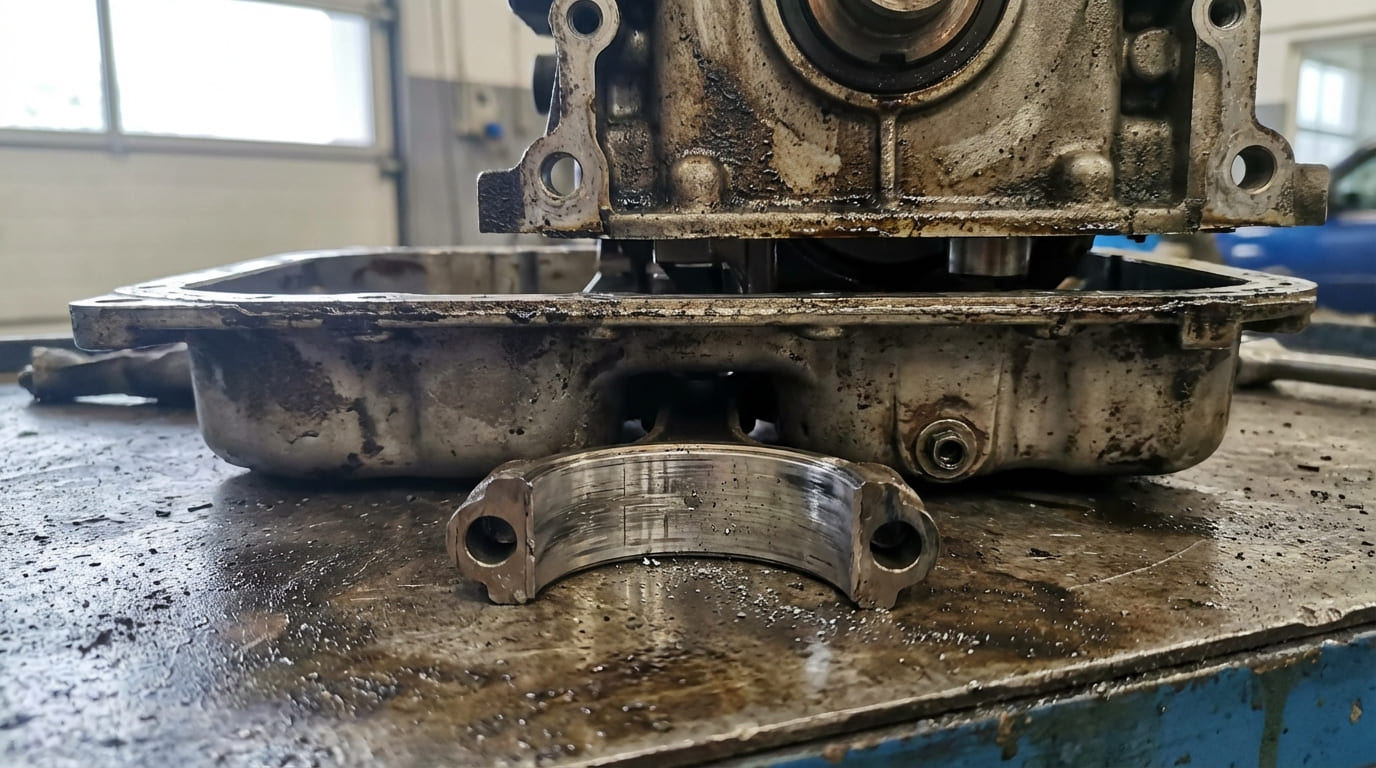
- Lower engine block (near main caps) – suspect main or rod bearings
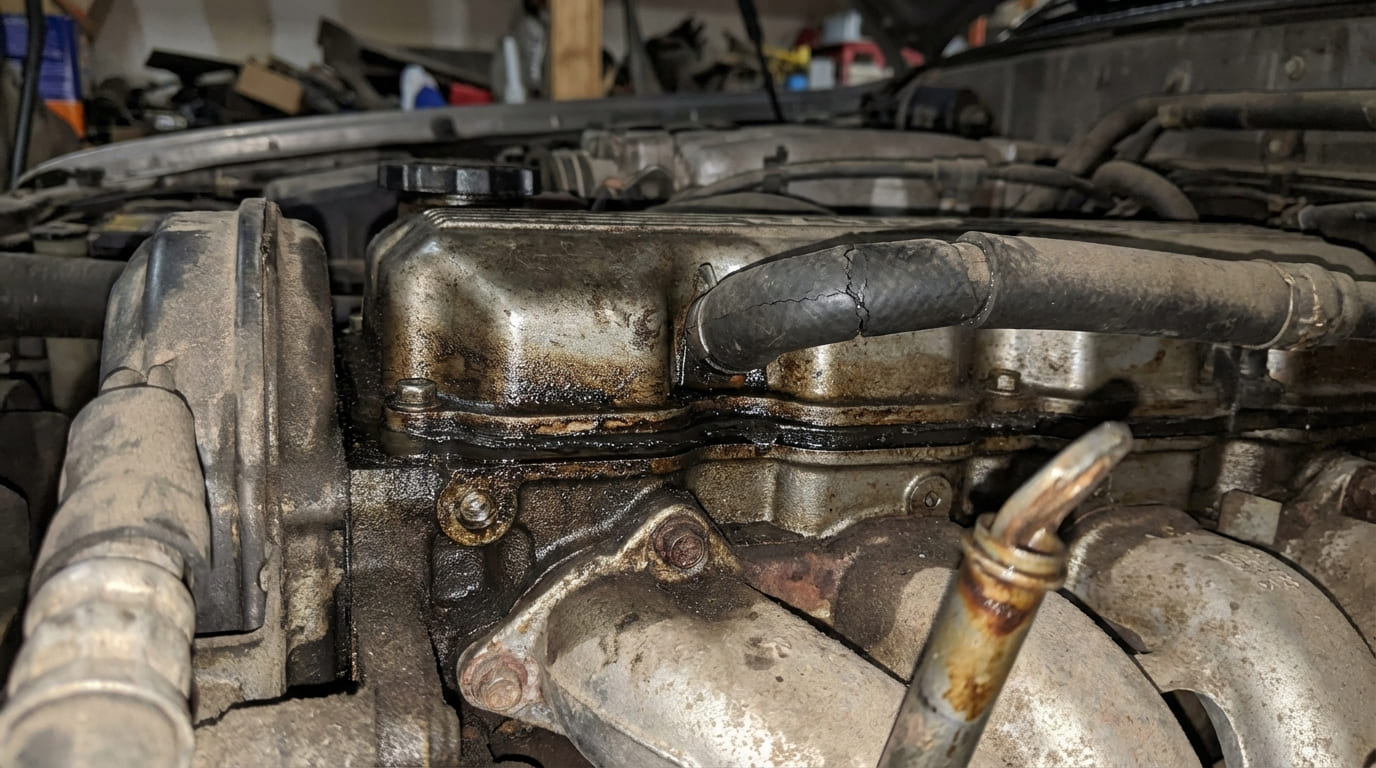
- Cylinder head or valve cover – likely valvetrain or injectors
- Oil pan rail – helps confirm bottom-end knock
- Exhaust manifold flange – check for leaks
Have a helper rev the engine from idle to 2,500 RPM while you move the tool. A noise that increases steadily with RPM suggests mechanical origin. Random pinging under load may be detonation, not knock.
Always start with the easiest fixes. I once billed 0.3 hours to find a loose heat shield ticking on a turbo downpipe—saved the customer a $5,000 rebuild quote.
Step 2: Diagnose Knocking Noises (Deep, Load-Sensitive)
True engine knock is serious. But not all deep noises mean rebuild. Use these checks to assess severity and cost.
Check for Rod or Main Bearing Knock
Perform a cylinder balance test (also called “cylinder kill test”) using a scan tool or by temporarily disabling spark or fuel to one cylinder at a time. If the knock diminishes significantly when a specific cylinder is disabled, it’s likely rod bearing wear on that rod.
For main bearing knock, the noise persists across all cylinders during the test. Confirm with an oil pressure check.
How to Check Oil Pressure: Install a mechanical gauge at the engine’s oil pressure sender port. Run the engine cold and at operating temperature. Compare readings:
- Below 10 psi at idle? Major bearing wear likely.
- Pressure climbs with RPM but low at idle? Points to excessive clearances.
- No pressure rise with RPM? Suspect oil pump or clogged pickup.
Cost to repair: Rod or main bearing replacement requires engine disassembly. Labor dominates—expect $1,800–$3,500. Rebuild vs. replace? If mileage is over 150k and the engine has other issues (oil consumption, low compression), consider a remanufactured long block ($2,500–$4,500 installed).
In my shop, we never replace rod bearings without checking crankshaft finish and journal micrometer readings. A quick bearing swap on a scored crank is a comeback waiting to happen.
Rule Out External Mimics
Before pulling the pan, eliminate external causes:
- Loose torque converter bolts: Noise changes when shifting from Park to Drive. Inspect through the bellhousing access plate.
- Flywheel/flexplate cracks or loose bolts: Often clicks or knocks at idle. More common in automatics. Torque spec is critical—usually 35–65 ft-lbs depending on model.
- Accessory drive noise: Remove the serpentine belt and run the engine briefly (under 30 seconds). If knock disappears, inspect alternator, A/C compressor, and power steering pump bearings.
Other Internal Causes
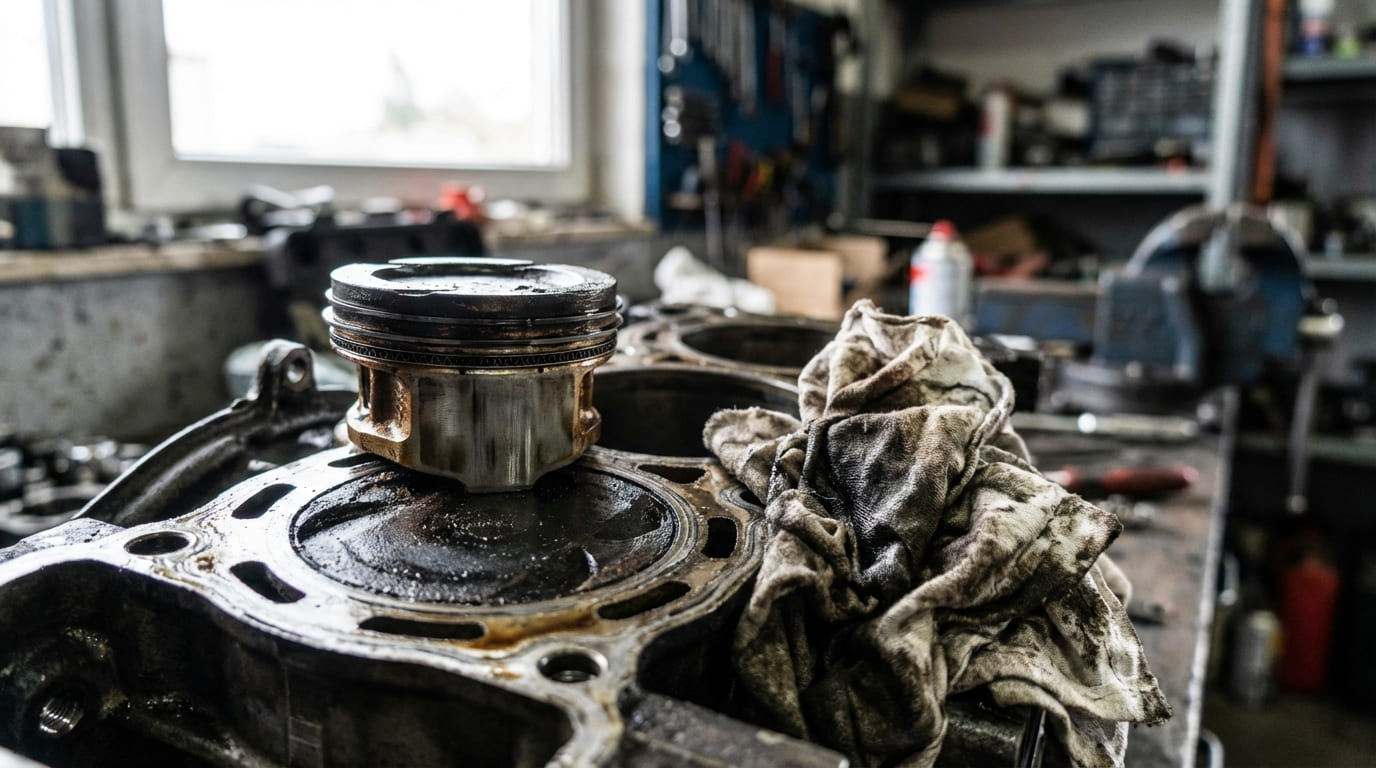
Piston slap: Common on cold start in aluminum-block engines (e.g., Ford Coyote, GM LS). Fades within 30 seconds. Not repairable without rebuild, but often safe to drive if oil consumption is normal. Cost to ignore: minimal, unless bore scoring develops.
Wrist pin knock: Rare. Sounds like a double-tap per combustion cycle. Confirm with a compression test—if stable, but noise persists, consider borescope inspection. Repair requires piston replacement.
Step 3: Diagnose Ticking Noises (Sharp, Often Top-End)
Ticking is more common and less urgent than knock. But persistent ticking can lead to valve damage if ignored.
Check the Valvetrain First
Start with oil quality and pressure. Low flow starves hydraulic lifters. Use a mechanical gauge to confirm at least 10 psi per 1,000 RPM.
- Hydraulic lifter tick: Common after oil changes with wrong viscosity or cheap filter. Should quiet within 30 seconds of startup. If not, lifters may be collapsed or clogged.
- How to test: Remove valve cover, run engine (use shield). Watch rocker arm movement. Uneven or delayed motion indicates lifter failure.
- Repair cost: Lifter replacement: $300–$800 depending on engine design. Some engines (e.g., Honda VTEC) require head removal.
I’ve replaced dozens of “bad” lifters only to find the real issue was a clogged oil gallery. Always flush the head oil passages when replacing lifters—takes 20 extra minutes, prevents comebacks.
- Rocker arm wear: Common on older OHV engines. Check lash with feeler gauges. Excessive clearance causes ticking. Adjust or replace as needed.
- Cam lobe wear: Flattened lobes reduce valve lift. Perform a compression and leak-down test. Affected cylinder shows low numbers. Repair: camshaft replacement, $600–$1,200 labor-heavy.
Don’t Overlook the Fuel System
Direct-injection fuel injectors tick by design. Normal rhythm matches engine firing order (e.g., every 90° on a 4-cylinder). To confirm:
- Compare sound to a known-good engine of same model.
- Use a stethoscope on each injector. One louder than others? May be sticking or failing.
- Cost to replace: $80–$150 per injector. Labor varies—some require intake removal.
Check for Exhaust Leaks
A small leak at the manifold gasket sounds like a sharp tick, especially when cold. As metal expands, noise often fades.
How to check: Use a stethoscope on the exhaust manifold flange, or perform a smoke test. Look for soot marks or discoloration.
Repair: Replace gasket. Cost: $120–$300 depending on accessibility. On 4-cylinder engines, front banks are usually easier than rear.
I once diagnosed a “lifter tick” that turned out to be a cracked turbo downpipe. The heat shield was loose and vibrating. Always inspect the full exhaust path—especially on turbocharged engines.
Best Practices Checklist
- ✅ Recommended: Clean threaded holes with a bottoming tap before installing critical fasteners. Swarf or old sealant can throw off torque readings and lead to uneven clamping.
- ✅ Recommended: Use a mechanical oil pressure gauge before condemning internal components. Electric gauges and dash warnings aren’t always accurate.
- ✅ Recommended: Perform a cylinder balance test before disassembling. A misfire or weak cylinder can vibrate enough to sound like a knock.
- ⚠️ Avoid: Reusing torque-to-yield (TTY) bolts unless the factory explicitly allows it. On most modern engines, these stretch during installation and lose clamping force if reused.
- ⚠️ Avoid: Assuming all ticking is lifter-related. I’ve chased “lifter tick” only to find a failing balance shaft bearing or timing chain tensioner.
- ⚠️ Avoid: Running an engine without a belt for more than 30 seconds. Overheating and electrical issues can compound the original problem.
Diagnostic Decision Table
| Noise Type | Load/RPM Behavior | Most Probable Cause | Less Common But Possible |
|---|---|---|---|
| Deep knock | Worsens under load | Connecting rod bearing wear | Cracked crankshaft, severe piston slap |
| Dull, constant knock | Persists across RPM | Main bearing wear | Faulty oil pump, harmonic balancer separation |
| Sharp tick | Worse when cold | Hydraulic lifter bleed-down | Exhaust manifold leak, low oil pressure |
| Rhythmic tick | Matches RPM exactly | Fuel injector operation | Sticking rocker, timing chain slap |
| Ticking | Fades when warm | Exhaust leak at manifold | Loose heat shield, cracked turbo downpipe |
Real-World Case Studies
Situation: A ’15 F-150 with 120k miles came in with a cold-start knock that disappeared after 30 seconds. Owner feared rod knock.
Initial Assumption: Classic piston slap—common in aluminum-block Coyote engines.
Deep Dive: I did a bore scope and found minimal skirt wear. Compression was even across cylinders. But oil analysis showed elevated aluminum levels—unusual for just skirt contact.
Discovery: The knock was actually from a slightly loose wrist pin bushing in one piston. Not enough to cause failure, but enough to rattle until thermal expansion tightened the fit.
Nuanced Lesson Learned: Not all cold knock is slap. Aluminum in oil doesn’t always mean cylinder bore wear—it can point to bushing or pin interface issues.
Situation: A 2012 Accord with a steady ticking noise. Customer had already replaced lifters twice.
Initial Assumption: Persistent lifter failure due to poor oil or manufacturing defect.
Deep Dive: I checked oil pressure—within spec. Removed valve cover and found rockers tapping excessively. Clearance was out of range despite “new” lifters.
Discovery: The lifters weren’t faulty—they were just not pumping up due to a clogged oil gallery in the head. Cleaning the passage resolved the issue.
Nuanced Lesson Learned: Don’t replace parts until you verify oil delivery. Sometimes the problem isn’t the component, but what feeds it.
Situation: A diesel pickup with a loud knock under acceleration. Low oil pressure reported.
Initial Assumption: Main bearing failure—common in high-mileage diesels.
Deep Dive: I pulled the oil pan and found bearings in decent condition. Crankshaft showed minimal wear. Oil pump pickup was intact.
Discovery: The real issue was a clogged oil cooler. Flow was restricted, causing pressure drop under load. The knock was piston slap from delayed lubrication.
Nuanced Lesson Learned: Low oil pressure doesn’t always mean worn bearings. Always trace the entire oil path—restrictions can mimic wear.
Engine noises demand methodical diagnosis. Skip the guesswork. Use stethoscopes, mechanical gauges, and process of elimination. What sounds like a death rattle might be a $20 gasket. Conversely, ignoring a faint knock can leave you stranded. Always consult the factory service manual for torque specs, oil requirements, and tolerances—what’s normal on one engine is a failure sign on another.