In my two decades in the shop, I’ve pulled apart hundreds of engines—some light enough to lift with one hand, others so heavy we needed the hoist just to budge them. The material the block is made from tells you a lot before you even crack a wrench. Aluminum and cast iron each bring their own strengths and quirks to the table, and understanding the real-world differences helps avoid misdiagnosis and bad repair decisions.
Cast Iron vs. Aluminum: Real-World Differences
Cast iron blocks are heavy, durable, and forgiving of minor mistakes during assembly. They resist warping under heat and handle high cylinder pressures well. Aluminum blocks are lighter, dissipate heat faster, and improve fuel economy, but demand more precision in service. Choosing between them isn’t about which is “better”—it’s about understanding how each behaves in use and repair.
Weight, Strength, and Thermal Behavior
Aluminum blocks typically weigh 30–50% less than cast iron, which improves handling and reduces front-end load, especially in front-wheel-drive vehicles. However, aluminum is less stiff, so manufacturers reinforce it with ribs or iron main caps. Cast iron naturally resists flex, making it ideal for high-torque or diesel applications.
Aluminum conducts heat three times faster than cast iron. That means quicker warm-ups and better cooling—but also greater sensitivity to hot spots. I’ve seen aluminum blocks develop head gasket issues from localized overheating, even when the overall temperature gauge reads normal.
Cast iron dampens vibration better. In older trucks and muscle cars, that mass contributes to smoother idle and reduced driveline shock. But in modern engines, weight savings usually outweigh this benefit.
Common Materials and Their Service Realities
Gray cast iron (GCI) is still common in base-model and older engines. It’s durable but brittle—impact or thermal shock can crack it, especially around water jackets. Ductile cast iron (DCI) and compacted graphite iron (CGI) are stronger and used in performance or turbo diesel engines. CGI handles high cylinder pressure well but requires OEM-level tooling for machining—don’t attempt a home rebuild.
Most aluminum blocks use hypoeutectic alloys like A319 or A356 with iron cylinder liners. Hypereutectic alloys (e.g., A390) allow for sleeveless bores via processes like Alusil, where the aluminum matrix is etched to expose hard silicon particles. These surfaces are wear-resistant but fragile—improper honing or wrong piston rings can destroy them fast.
Coatings like Nikasil and plasma-transferred wire arc (PTWA) are common in modern aluminum engines. Nikasil offers excellent friction performance but can fail with high-sulfur fuel. PTWA is tougher but can only be applied in factory or certified shops.
Manufacturing and Repairability
Sand casting is standard for cast iron—cost-effective and repairable. Lost foam casting allows more precise coolant passages, which helps with tight-clearance repairs. Aluminum blocks are usually high-pressure die cast (HPDC), which is fast but can introduce porosity. I’ve pressure-tested blocks that passed visually but leaked under operating pressure due to micro-voids.
Low-pressure or gravity die casting reduces porosity and is used in performance blocks. If you’re rebuilding one, stick to OEM specs—these engines often have tighter tolerances and unique service procedures.
Welding and Machining Tips
Welding cast iron requires pre-heating to 500–1200°F, nickel-based rods, and slow cooling. I only do this on rare or valuable engines. Always pressure-test afterward—twice, if possible.
Aluminum can be TIG welded, but overheating causes warping or weakening. Keep heat input low and use proper filler rod (4043 or 5356, depending on alloy). Never attempt a field weld on a stressed area like the deck without post-weld stress relief.
When machining aluminum decks, use sharp tools and proper feeds. Chatter or poor finish can compromise head gasket sealing. And always clean the surface thoroughly—aluminum oxidizes fast, and residue affects torque specs.
Thread Repair and Fastener Best Practices
Stripped threads in aluminum are common—especially in oil pans, valve covers, and intake manifolds. Helicoils or Time-Serts fix most issues, but only if the hole is clean. I always chase the threads with a bottoming tap and blow out debris with compressed air. Leftover chips can ruin the insert or cause false torque readings.
For cast iron, thread repair is easier—taps cut cleanly, and the material holds inserts well. But avoid over-torquing steel bolts into iron; it can crack the surrounding material, especially near thin sections.
In my shop, we always lubricate head bolt threads with engine oil—not assembly lube—before installation. Oil provides consistent friction, which ensures accurate torque. Using dry bolts or the wrong lubricant can result in up to 25% variation in clamp load, leading to head gasket failure.
Diagnostic Guide: Symptoms and Likely Causes
Many engine problems stem from misdiagnosis. Coolant loss and white exhaust smoke often point to a head gasket—but not always. On aluminum V6 engines, intake manifold gaskets often seal coolant passages and can leak into the valley, burning off and mimicking head gasket failure.
Before tearing into the engine:
- Pressure-test the cooling system with the engine cold.
- Perform a combustion leak test (block tester) to check for exhaust gases in the coolant.
- Inspect the intake manifold, thermostat housing, and water pump for external leaks.
- Check the radiator cap—many “internal” leaks are actually cap failures.
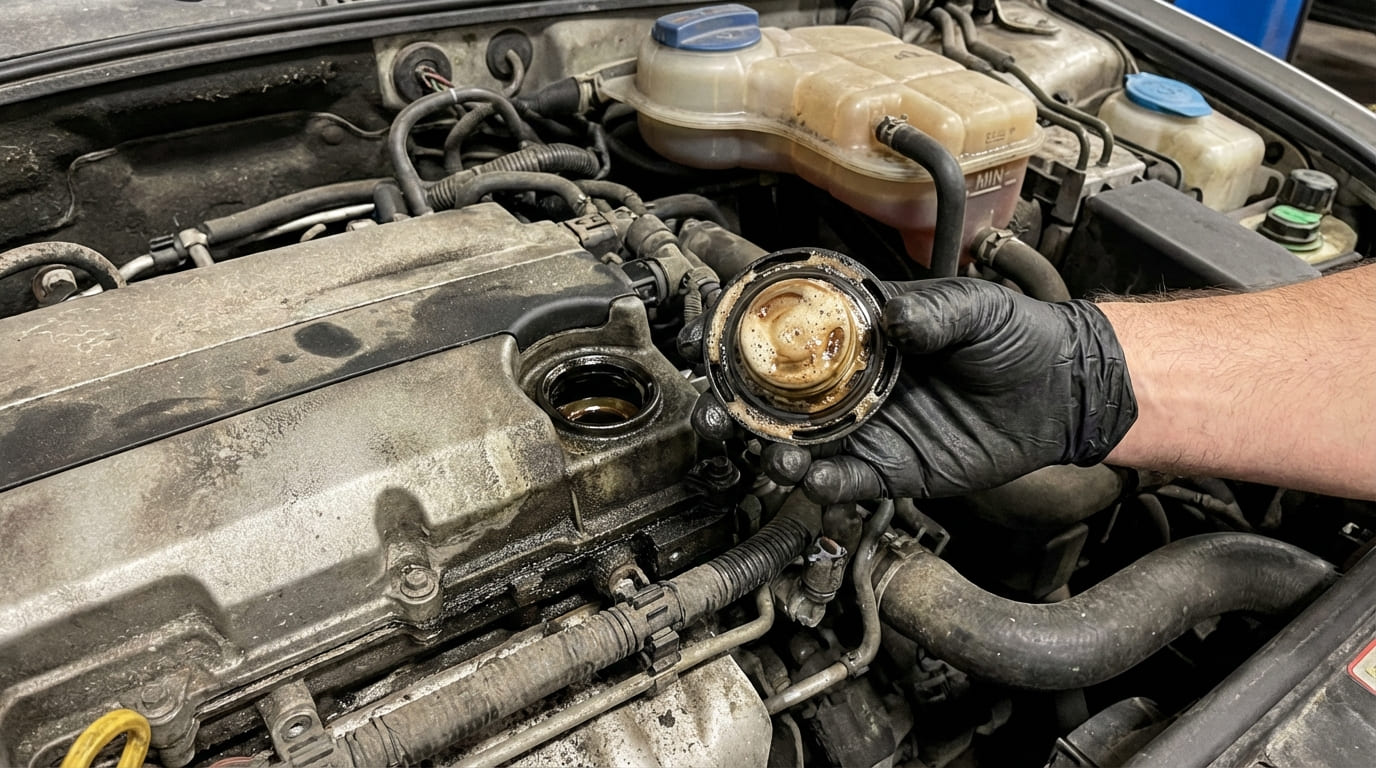
Oil in the coolant could mean a cracked block, but also check the oil cooler, transmission cooler (if in radiator), or head gasket with a cross-passaged failure.
| Symptom | Most Likely Causes (Iron Block) | Most Likely Causes (Aluminum Block) | Notes |
|---|---|---|---|
| Head gasket failure | Overheating, improper torque, warped head | Overheating, TTY bolt failure, deck warpage | Aluminum blocks more sensitive to thermal cycling; check for hot spots |
| Coolant in oil | Cracked block, failed gasket, porous casting | Porosity leak, failed liner seal, galvanic corrosion | Aluminum more prone to micro-porosity; pressure test at operating temp |
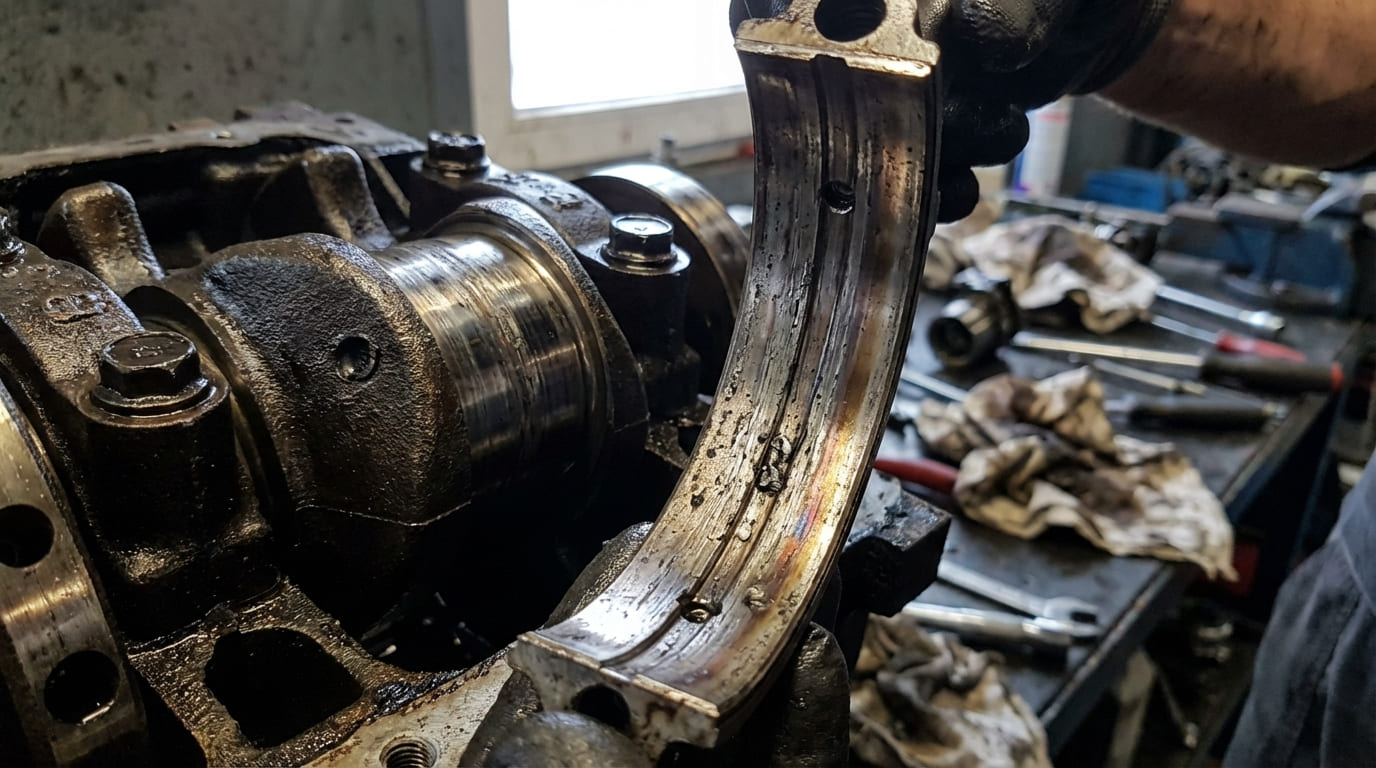
| Excessive bore wear | Contaminated oil, poor maintenance | Liner movement, coating delamination, wrong rings | Verify ring material compatibility with Alusil or Nikasil bores |
| Difficult cold starts | Worn bores, low compression | Cylinder distortion, ring seal issues | Aluminum expands faster—check clearances when cold vs. hot |
Situation: A 2005 V6 with an aluminum block came in with coolant loss and white smoke. The customer had already replaced the head gasket twice.
Initial Assumption: Persistent head gasket failure—likely warped head or cracked block.
Deep Dive: I pressure-tested the cooling system and found a leak near the rear of the intake manifold. Removed the manifold and found a degraded gasket allowing coolant to seep into the valley and burn off.
Nuanced Lesson Learned: Not every coolant burn is a head gasket. On some aluminum V6 designs, the intake manifold gasket seals coolant passages and can fail in ways that mimic more serious issues. Always rule out accessible external sources before disassembling major components.
Situation: A diesel pickup with a CGI block had low compression in two adjacent cylinders. Mechanic suspected a head gasket breach.
Initial Assumption: Blown head gasket due to high cylinder pressure.
Deep Dive: After removing the head, no gasket damage was visible. Bore scope showed micro-cracks in the deck surface between cylinders. Further inspection revealed the bolts had been torqued with an impact wrench, not a calibrated torque wrench.
Nuanced Lesson Learned: High-strength materials like CGI still depend on proper assembly. Over-torquing can induce stress fractures that don’t show up immediately. Always follow OEM torque specs and sequence—even if it takes longer.
Situation: A rebuilt aluminum V8 lost coolant after 1,500 miles. No external leaks, but the expansion tank overflowed under normal driving.
Initial Assumption: Head gasket or warped head.
Deep Dive: Combustion leak test was negative. Pressure test held. Then I checked the radiator cap—failed at 18 psi instead of the required 22 psi. Replaced cap, problem solved.
Nuanced Lesson Learned: Symptoms can mirror internal failure, but don’t overlook simple, low-cost components. System pressure relies on all parts—especially the cap. Test it before tearing into the engine.
Repair vs. Replace: Cost and Viability
Cast iron blocks are often repairable with welding or sleeving, but labor costs can exceed $800. If the block is common (e.g., GM 350, Ford 302), a used replacement from a junkyard may cost $200–$500 and save time.
Aluminum blocks are harder to repair. Porosity leaks or deck warpage often require specialized equipment. A remanufactured short block costs $1,200–$2,500, but avoids the risk of DIY fixes. For high-mileage engines, consider a full rebuild or replacement—aluminum engines don’t forgive neglect.
When working with aluminum blocks, I’ve learned to double-check everything—torque, coolant type, surface finish, bolt stretch. They’re more sensitive, not weaker per se, but less forgiving of shortcuts. One mistake—like dry-torquing a head bolt—can cost you a gasket, a head, or the whole engine.
With cast iron, the danger is assuming it’s indestructible. I’ve seen blocks crack from improper freeze plug installation or from being lifted by the oil pan. Always use proper lifting eyes and follow service procedures—even on “tough” iron.
Final Recommendations
- ✅ Recommended: Clean head bolt threads with a tap and lubricate with engine oil before installation. This ensures accurate torque and prevents false readings from friction.
- ✅ Recommended: Check deck flatness on both iron and aluminum blocks. A common limit is 0.002″–0.003″ out of flat, but always verify with the factory manual—some aluminum engines allow only 0.0015″.
- ✅ Recommended: Use a torque-angle gauge with TTY bolts on aluminum blocks. Stretch matters more than torque alone—overtightening can stretch the bolt past its limit and cause failure.
- ⚠️ Avoid: Reusing torque-to-yield bolts unless the manual explicitly allows it. In my experience, they often stretch unevenly on reinstallation, leading to head gasket failure.
- ⚠️ Avoid: Dry-honing aluminum bores. Lubrication is critical to prevent galling and achieve the correct surface finish.
- ⚠️ Avoid: Mixing coolant types in aluminum engines. Even a small amount of silicate-based coolant in an OAT system can trigger corrosion over time.
Ultimately, the best approach is to treat each engine as unique. Consult the service manual for specifications—don’t rely on “standard” values. Flatness, bore taper, torque specs—they all vary, even within the same material type. Diagnose thoroughly, repair precisely, and never assume.