Excessive oil consumption can signal anything from a simple maintenance issue to serious engine wear. As a senior automotive editor and master mechanic, I’ve diagnosed hundreds of cases. The key is not jumping to conclusions. This guide cuts through the noise, focusing on actionable diagnostics, repair viability, and real-world fixes — from quick checks to major repairs.
How to Diagnose Excessive Oil Consumption
Before tearing into the engine, confirm consumption and rule out leaks. Track oil level over 1,000 miles. If you’re using more than a quart, proceed. First, clean the engine thoroughly and check for external leaks. Then, observe exhaust smoke under different conditions — startup, idle, acceleration, deceleration. Smoke color and timing are critical clues.
In my shop, we always start with a clean engine and a 1,000-mile oil log. Many customers mistake normal consumption or slow leaks for burning oil. Confirm the problem before spending a dollar.
Primary Causes and How to Check Them
Internal Engine Wear and Failures
When oil disappears and there’s no leak, internal consumption is likely. Use targeted tests to isolate the source.
Piston Ring and Cylinder Wear
Worn, stuck, or damaged piston rings allow combustion pressure to blow past into the crankcase (blow-by), forcing oil into the combustion chamber. Carbon buildup from short trips or direct injection can stick rings, mimicking wear.
How to Check: Perform a compression test followed by a cylinder leak-down test. With the piston at TDC on the compression stroke, apply 100 psi of shop air. If air escapes through the oil filler cap, the rings or cylinder walls are likely faulty.
- Listen at the exhaust (rings rarely leak there) or intake (indicates valve issue).
- Use a borescope to inspect cylinder walls for glazing, scoring, or taper.
If rings are stuck but cylinders are in spec, a controlled decarbonization process may restore function without disassembly.
In my experience, glazing is often misdiagnosed as ring failure. A 2015 turbo SUV burned a quart every 700 miles — but the fix was chemical decarbonization, not a rebuild. Always test before tearing down.
Valve Stem Seals and Guides
Hardened, cracked, or loose valve stem seals allow oil to drip into the combustion chamber, especially when the engine is off. Worn valve guides amplify the problem by increasing stem movement.
How to Check: Perform the engine braking test. Drive downhill in gear, then accelerate. Blue smoke on acceleration points to bad valve stem seals. Smoke at idle suggests guide wear.
Use a borescope through the spark plug hole to inspect for oil pooling on valves. Measure guide clearance with a dial indicator — typical wear limit is 0.003″. Aluminum heads wear faster than iron.
| Component | Typical Wear Limit | Cost to Repair (Labor + Parts) |
|---|---|---|
| Valve Stem Seals Only | Replace if cracked or loose | $300–$700 (often done without head removal) |
| Valve Guides (Reamed/Bushed) | 0.003″ max clearance | $800–$1,500 (head removal required) |
I’ve seen multiple cases where seals were replaced, but guide wear wasn’t addressed — consumption returned in 6 months. Always check both.
PCV and Crankcase Ventilation System Issues
A clogged PCV valve or blocked oil separator creates positive crankcase pressure, pushing oil into the intake. A stuck-open valve pulls oil mist directly into the engine.
How to Check: Remove the PCV valve and shake it — if it doesn’t rattle, it’s stuck. Block the inlet hose at idle; you should feel vacuum. No vacuum? Check for blockages in hoses or the separator.
On modern engines, perform a crankcase pressure test using a manometer. Expect near-zero or slightly negative pressure at idle. Positive pressure indicates a blockage.
- Smoke test the system to find collapsed or cracked hoses.
- Inspect the oil separator — common failure point on turbocharged engines.
Cleaning or replacing the separator often resolves consumption without engine work.
Turbocharger Oil Seal Failure
Failing turbo seals leak oil into the intake (compressor side) or exhaust (turbine side), burning off as blue-gray smoke, especially on startup or deceleration.
How to Check: Inspect the turbo inlet tube for oil residue. Check shaft play with a dial indicator — max allowable is typically 0.003″ radial and 0.002″ axial. Excessive play means bearing wear, which compromises seals.
Also verify oil drainage: kinked or clogged drain lines cause oil to pool in the turbo housing, leading to leaks even with good seals.
External Oil Leaks (Often Mistaken for Consumption)
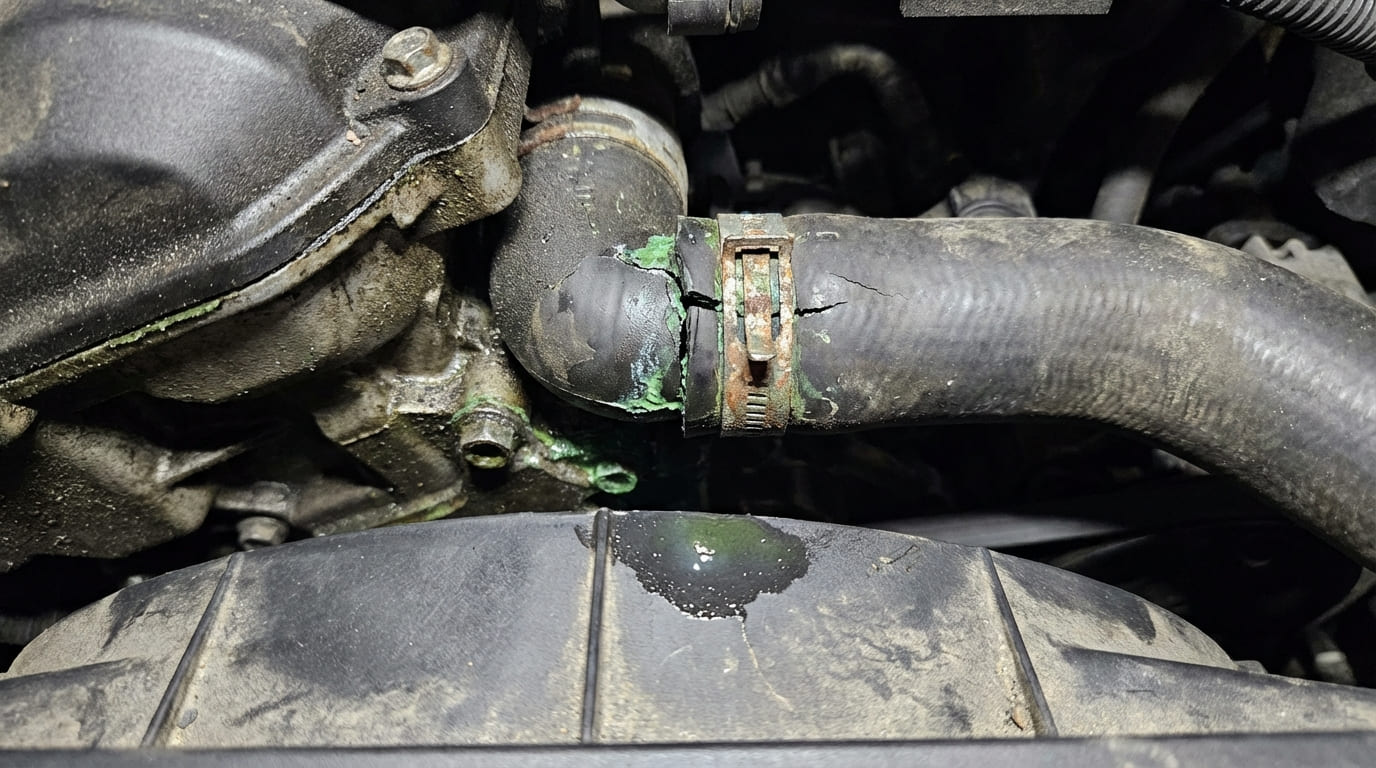
Before assuming internal failure, eliminate leaks. Oil migrates, so the drip point isn’t always the source.
How to Check: Clean the engine, drive 50–100 miles, then re-inspect. Use UV dye added to oil and a black light to pinpoint leaks.
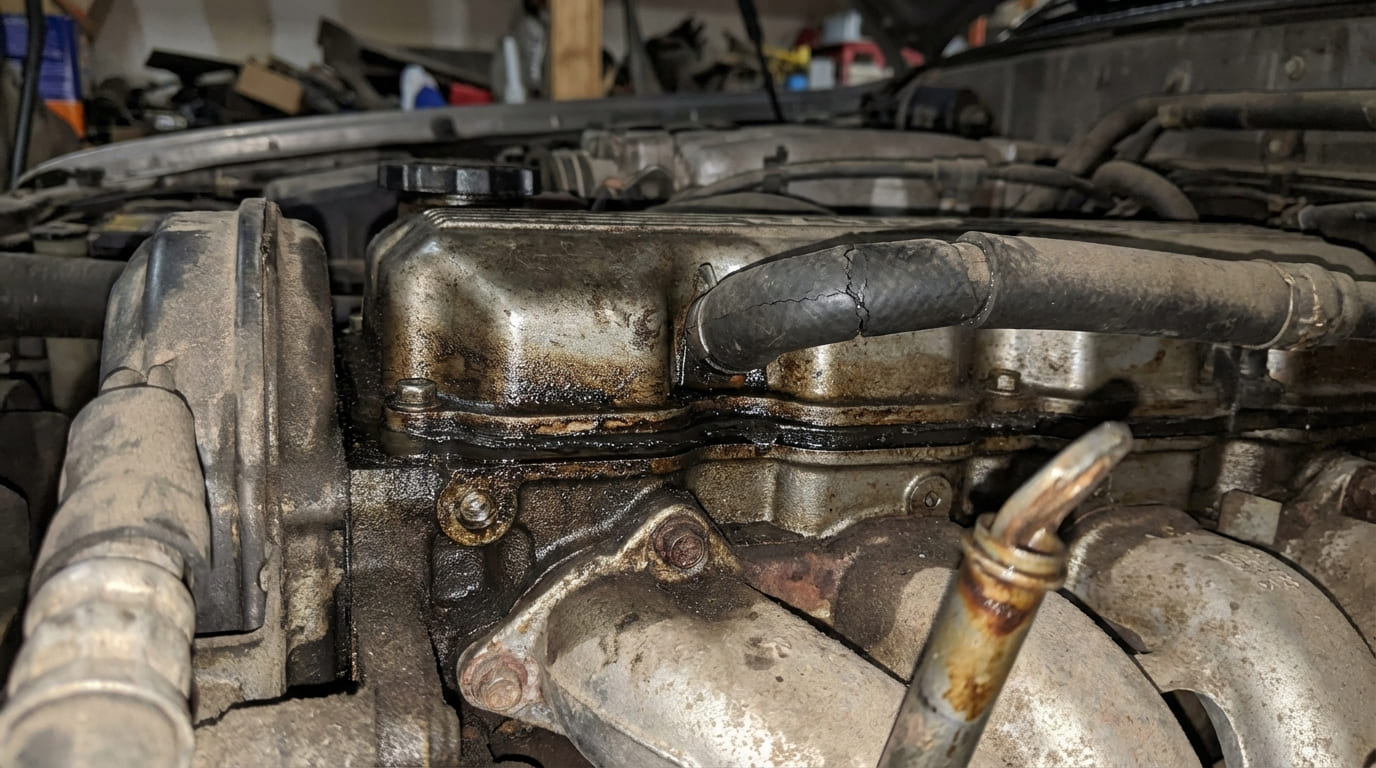
- Valve cover gaskets — common on V6/V8 engines
- Oil pan gasket or RTV seals
- Front and rear main seals — rear seal leaks often mimic transmission issues
- Oil filter housing o-rings — frequent on European engines
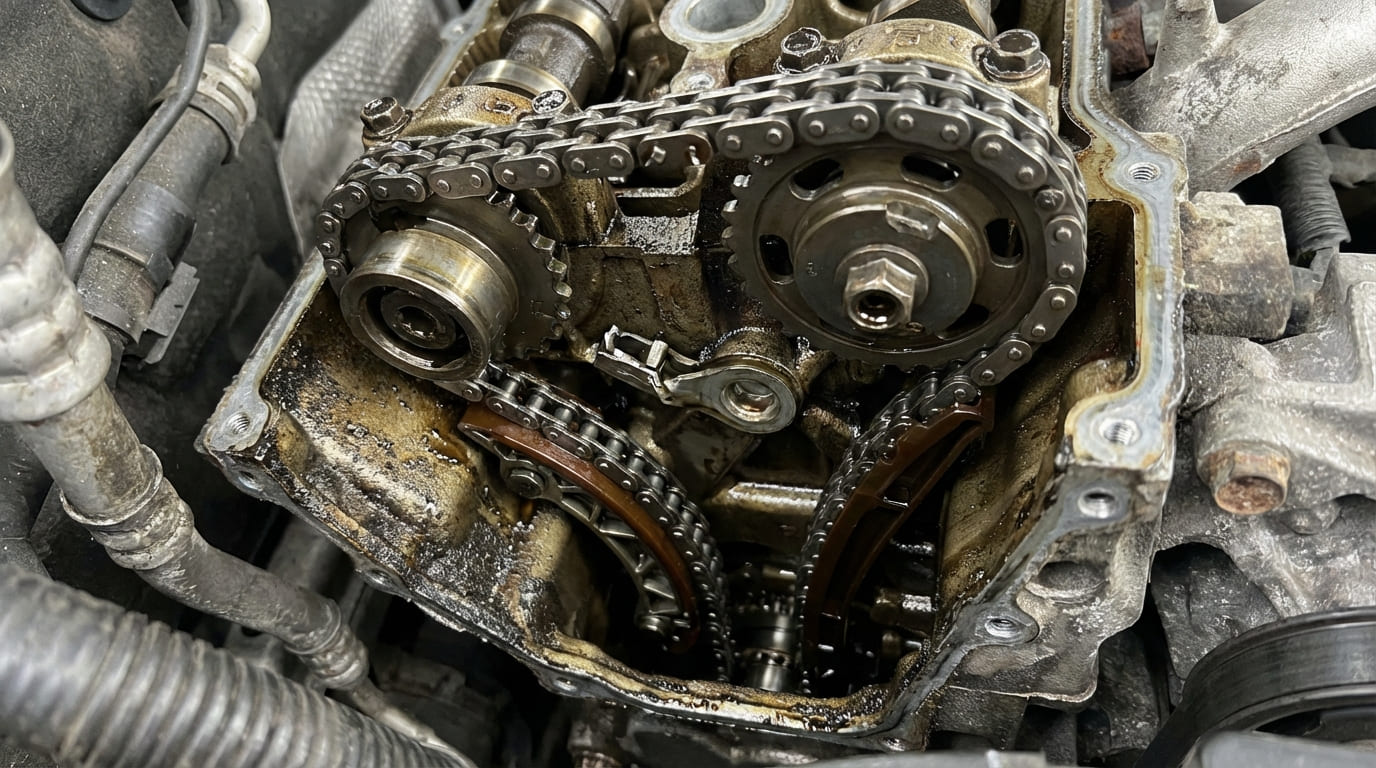
- Timing cover seals — critical on interference engines
Repair cost varies: gaskets $100–$300, rear main seal $600–$1,200 (requires transmission removal).
Oil Quality and Maintenance Practices
Using the wrong oil or extending change intervals can increase consumption. Thin or degraded oil loses film strength and volatilizes under heat.
How to Check: Verify oil meets OEM viscosity and specification (e.g., dexos, BMW LL-01). Check for fuel dilution with a lab oil analysis or smell (gasoline odor).
- Short trips cause moisture and fuel buildup, degrading oil.
- Aftermarket additives can interfere with detergents or form deposits.
A high-performance coupe burned oil after switching to a lower-viscosity oil. Leak-down tests were perfect. Switched back to OEM 5W-30 — consumption normalized. Viscosity matters, especially under load.
Driving Habits and Engine Design
Short trips prevent oil from reaching operating temperature, causing condensation and sludge. High-RPM driving increases cylinder pressure, forcing oil past worn components.
Some engines are designed to consume oil. BMW, Subaru, and Ford EcoBoost engines may use a quart every 1,500–3,000 miles and still be within spec.
How to Check: Consult the owner’s manual or service bulletin for acceptable consumption. If consumption suddenly increases, investigate.
Diagnostic Decision Tree
Use this flow to narrow down causes efficiently:
- If blue smoke at startup → Check valve stem seals, turbo seals, or PCV system
- If blue smoke under acceleration → Focus on valve stem seals or turbo
- If blue smoke at idle or cruise → Suspect PCV issues or worn rings
- If no smoke but low oil → Rule out external leaks first
- If high crankcase pressure → Inspect PCV valve, hoses, and oil separator
- If leak-down test shows air escaping through oil filler → Rings or cylinder wear
- If air escapes through intake/exhaust → Valves or seats
Repair vs. Replace: Cost and Viability
Major internal repairs (rings, cylinders, guides) often cost $2,500–$6,000. Consider engine replacement or used long-blocks if wear is severe.
- PCV or separator fixes: $100–$400 — always try first
- Valve stem seals: $300–$700 — high ROI if guides are good
- External leaks: $100–$1,200 — gaskets are cheap, labor varies
- Full rebuild: Often exceeds vehicle value unless it’s a performance or classic car
Recommended and Avoid: Best Practices
- ✅ Perform a leak-down test before disassembly — it’s the best non-invasive diagnostic.
- ✅ Check crankcase pressure with a manometer on modern engines.
- ✅ Use OEM-specified oil and change intervals — shortcuts cost more long-term.
- ✅ Clean fastener threads with a bottoming tap — debris affects torque accuracy.
- ⚠️ Avoid reusing torque-to-yield (TTY) head bolts — they stretch and can fail.
- ⚠️ Avoid assuming worn rings are the culprit — valve seals and PCV issues are more common.
- ⚠️ Avoid honing cylinders without measuring bore first — you can go out of spec.
Common Causes by Symptom
| Symptom / Condition | Most Likely Cause(s) | Less Common but Possible | Diagnostic Priority |
|---|---|---|---|
| Blue smoke on startup | Valve stem seals, turbo seals | PCV system pulling oil overnight | Borescope, turbo inspection |
| Blue smoke on acceleration | Valve stem seals, turbo | Worn rings under load | Engine braking test, leak-down |
| No smoke, low oil | External leak | Internal consumption within normal range | Visual + dye test |
| High crankcase pressure | Clogged PCV or separator | Ring blow-by, turbo drain issue | Smoke test, pressure test |
| Oil in intercooler | Ring blow-by, turbo compressor seal | PCV system routing issue | Leak-down, turbo inspection |
Oil consumption is rarely a single failure. It’s wear, maintenance, and design interacting. Work methodically. Validate every assumption. And always check what the manufacturer considers normal — you might save yourself a teardown.