As a master mechanic with over two decades of experience, I’ve seen engine rebuilds that saved a beloved vehicle and ones that made owners regret not choosing replacement. The real cost isn’t just what’s on the invoice—it’s understanding whether a rebuild makes financial and mechanical sense for your situation. This guide cuts through the noise and gives you the facts, diagnostics, and real-world advice to make a smart decision.
Engine Rebuild Cost Overview
Rebuilding an engine is a major investment. For most common passenger vehicles, total costs—including labor, parts, and machine work—fall within these ranges:
- Four-cylinder engine: $2,500 – $5,000
- Six-cylinder engine: $3,500 – $7,000
- Eight-cylinder engine: $4,500 – $10,000+
High-performance, diesel, or specialty engines often exceed $10,000 due to custom machining or rare parts. Labor alone can take 25–50 hours depending on engine complexity and vehicle layout.
Key Cost Drivers
Labor Hours and Shop Rates
Labor typically makes up 40–60% of the total rebuild cost. The process includes engine removal and installation, complete disassembly, inspection, cleaning, reassembly, and break-in. A typical 4-cylinder engine takes 25–35 hours; V6 and V8 engines in tight engine bays can take 40+ hours.
Hourly rates vary significantly:
| Location Type | Average Labor Rate |
|---|---|
| Rural areas | $90 – $120/hour |
| Suburban shops | $120 – $150/hour |
| Urban or specialty shops | $150 – $180+/hour |
Shops with in-house machining capabilities often charge more but reduce turnaround time and improve quality control.
Parts: OEM, Aftermarket, and Budget Options
Parts selection has a major impact on both cost and longevity. Here’s what to expect:
- OEM (Original Equipment Manufacturer): Highest cost, guaranteed fit and durability. Ideal for daily drivers and high-mileage rebuilds.
- Premium aftermarket (Mahle, Clevite, Federal-Mogul): 20–30% cheaper than OEM, with comparable quality. My go-to recommendation for most customers.
- Budget kits: Save $200–$400 upfront but often use lower-grade materials. I’ve seen piston rings fail within 10,000 miles due to poor metallurgy.
A full master rebuild kit (rings, bearings, seals, gaskets) costs $600–$1,500 depending on brand and engine type.
Machine Shop Services
Even engines with minor wear require machine work. Common services and typical costs:
| Service | Cost Range |
|---|---|
| Cylinder head resurfacing (per head) | $300 – $700 |
| Block bore/hone and hot tanking | $400 – $900 |
| Crankshaft grinding and polishing | $200 – $500 |
| Valve job (per head) | $250 – $600 |
Blocks with cylinder wall scoring may need to be bored .030” or .060” over, requiring custom pistons ($300–$600 extra). A cracked block or bent crankshaft often makes rebuilds cost-prohibitive.
Ancillary Components and Fluids
Don’t overlook these critical add-ons:
- Oil pump: $80–$200 (replace it—never reuse)
- Timing chain and tensioners: $150–$400
- Water pump (if driven by timing): $100–$300
- Assembly lube, coolant, oil, filter: $100–$250
Skimping here risks the entire rebuild. I’ve seen engines fail in under 5,000 miles because someone reused a worn oil pump.
Rebuild vs. Replacement: Making the Decision
Before committing to a rebuild, compare these alternatives:
Engine Rebuild (Overhaul)
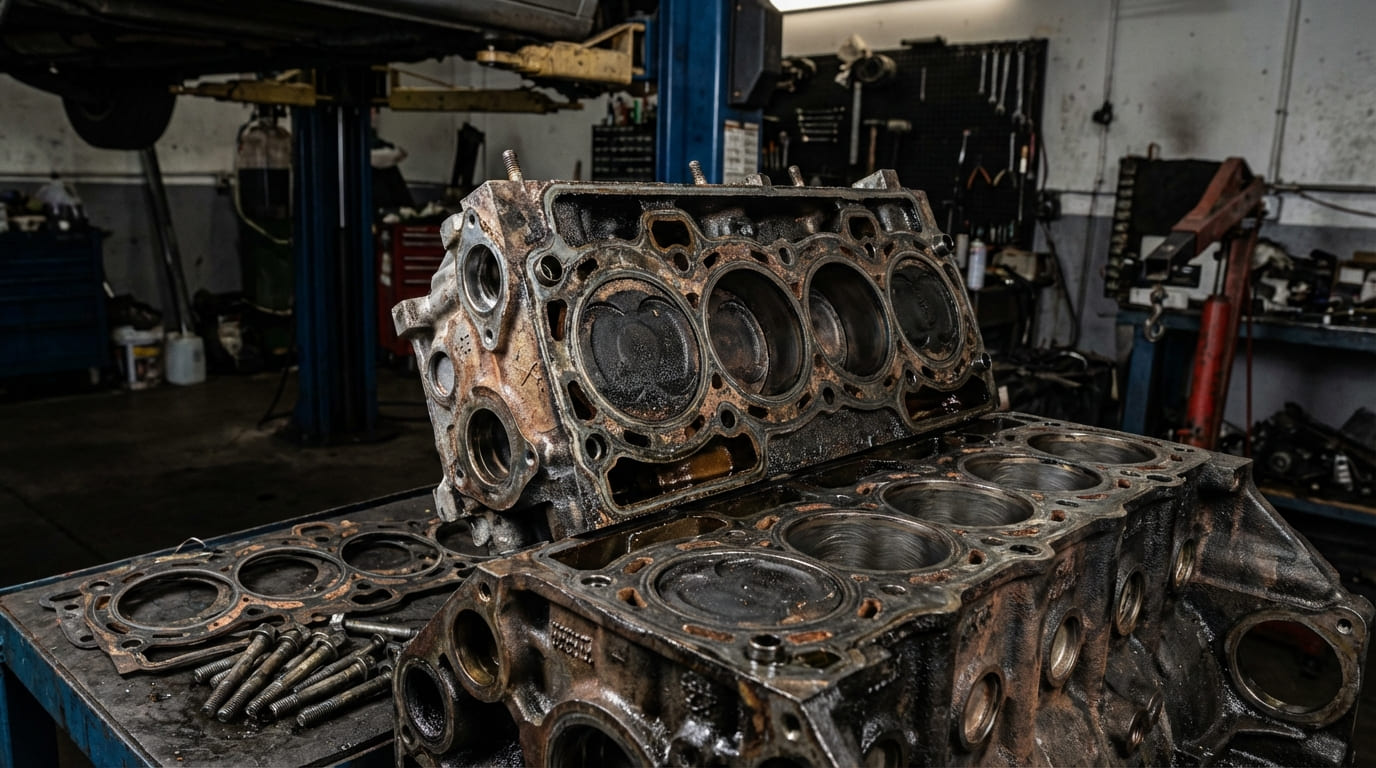
A full rebuild restores the engine to like-new condition with precision machining and new wear parts. It’s ideal if:
- You plan to keep the vehicle long-term
- The block and head are salvageable
- You want control over parts quality
Downsides: Long downtime (2–4 weeks), higher upfront cost than used or reman engines.
Remanufactured Engine
Professionally rebuilt to factory specs, often with a 3-year/100,000-mile warranty. Typical installed cost: $3,000–$5,000.
Best for: High-labor-cost areas, older vehicles where downtime matters, or when block damage is suspected.
In my shop, we often recommend a reman unit when the rebuild estimate exceeds $5,000 on a 10-year-old vehicle worth $8,000. The warranty and faster turnaround make it the smarter choice.
Used (Salvage) Engine
Cheapest option—$500–$2,000—but highest risk. Always verify condition before purchase:
How to Check a Used Engine:
- Visual inspection: Look for oil leaks, coolant stains, or impact damage.
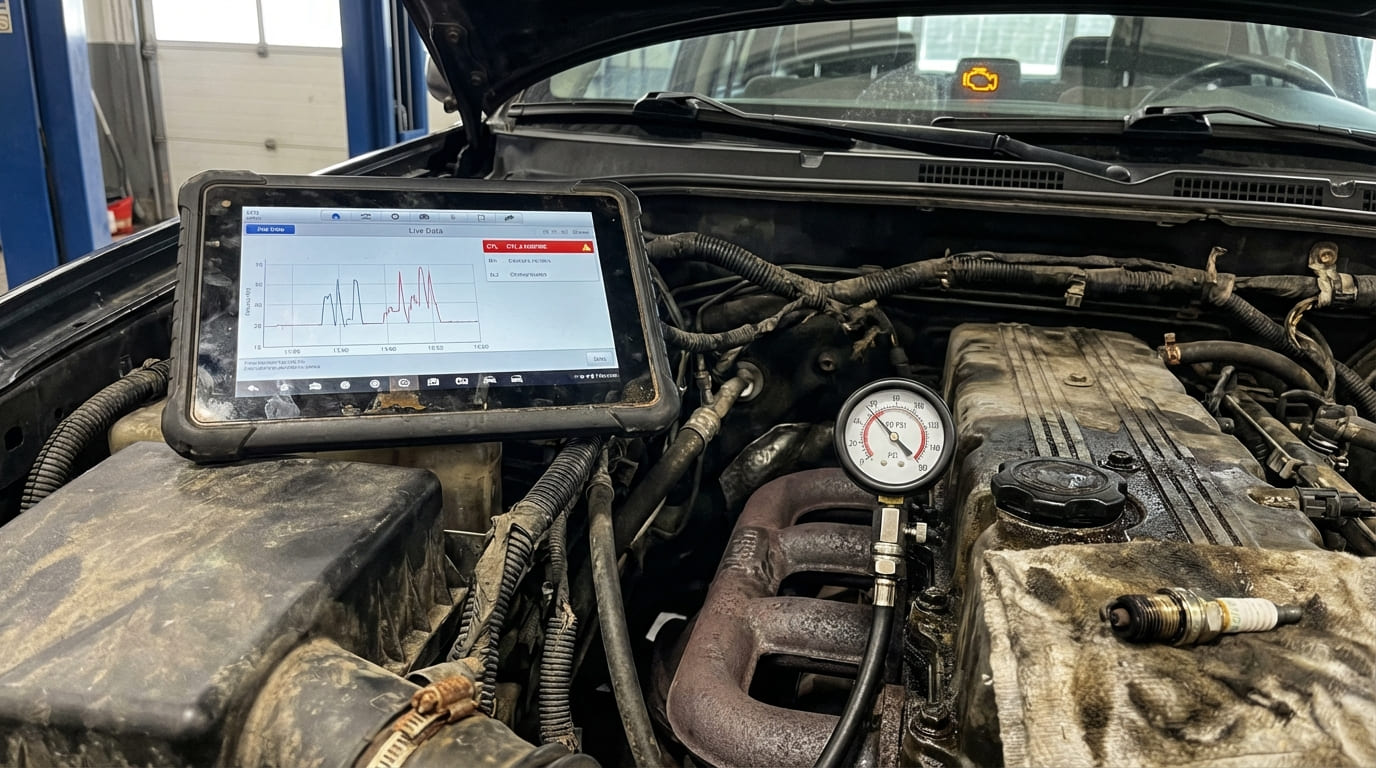
- Compression test: All cylinders should read 130–160 psi and be within 10% of each other.
- Leak-down test: Less than 10% loss per cylinder indicates good sealing.
- Oil analysis: High iron, copper, or lead suggests internal wear.
Install a used engine at your own risk—many have unknown maintenance history and hidden damage.
New Crate Engine
Factory-built, zero-mile engines. Prices start at $5,000 and go up fast. Common in restorations or performance builds. Warranty and reliability are strong, but cost is hard to justify for daily drivers.
When to Rebuild vs. Walk Away
Use this logic to decide:
- If rebuild cost > 75% of vehicle value → consider replacement or selling the car.
- If the block is cracked or the crankshaft is damaged beyond grinding → scrap or replace.
- If you’re rebuilding due to neglect (low oil, overheating) → inspect everything. One failure often hides others.
I once quoted a $6,000 rebuild on a 15-year-old SUV worth $4,500. The owner opted for a $3,800 reman install. Three years later, he’s still driving it. Sometimes the best repair is the one that doesn’t break the bank.
Post-Rebuild Verification: How to Know It’s Done Right
A proper rebuild isn’t finished at startup. Here’s how to verify quality:
Break-in Procedure
Follow this 500-mile break-in:
- Vary RPM between 1,500 and 3,500 for the first 20 minutes.
- Avoid long idle periods (prevents ring glazing).
- Change oil and filter at 500 miles (removes metal debris from initial wear).
Initial Start-up Checks
- Oil pressure: Use a mechanical gauge. Expect 10+ psi at idle and 40+ psi at 2,000 RPM.
- Leak check: Inspect all gasket surfaces, oil cooler lines, and coolant connections.
- Timing: Verify with a timing light or scan tool (if applicable).
Post-Break-in Diagnostics (500–1,000 miles)
- Compression test: All cylinders within 10% of the highest reading.
- Leak-down test: Less than 10% loss per cylinder confirms good sealing.
- Oil analysis: Lab test should show low wear metals and no coolant contamination.
Critical Do’s and Don’ts
- ✅ Clean all threads: Use a bottoming tap on block and head bolt holes. Debris causes false torque and bolt failure.
- ✅ Use assembly lube: On cam lobes, lifters, and bearing surfaces. Dry starts destroy new engines.
- ✅ Torque fasteners properly: Use a calibrated wrench, follow factory sequence, and apply multiple passes—especially for head and main cap bolts.
- ⚠️ Never reuse torque-to-yield (stretch) bolts: They lose clamping force. Reusing them risks head gasket or main cap failure.
- ⚠️ Never skip magnaflux inspection: On used crankshafts. A hairline crack can lead to sudden failure.
- ⚠️ Always check ring end gap: Even with “pre-sized” rings. Incorrect gap causes poor compression or ring binding.
Diagnostic Logic: Common Symptoms and What They Mean
Before tearing down, confirm the diagnosis. Here’s a practical guide:
| Symptom / Condition | Most Likely Cause(s) | Less Common But Possible Causes | Diagnostic Next Step |
|---|---|---|---|
| Low compression in two adjacent cylinders | Blown head gasket | Cracked cylinder head, warped block deck | Perform leak-down test, inspect coolant for hydrocarbons |
| Excessive oil consumption with no external leaks | Worn valve stem seals or piston rings | PCV system malfunction, turbo seal failure | Check PCV flow, perform smoke test, inspect spark plugs |
| Crankshaft won’t rotate after assembly | Binding main or rod bearing | Incorrect thrust bearing installation, piston contact with head | Check bearing clearances with Plastigage, verify piston-to-head clearance |
| Oil pressure drops at hot idle | Worn main/rod bearings, low oil viscosity | Stuck oil pressure relief valve, clogged pickup screen | Check oil grade, inspect relief valve, verify bearing clearances |
Situation: A 2008 V6 sedan came in with coolant loss and white exhaust smoke. Everyone assumed a blown head gasket.
Discovery: The plastic intake manifold was cracked, leaking coolant into the valley. No head gasket damage.
Lesson: Always inspect the entire cooling system before committing to an engine teardown. Intake manifolds fail just as often as head gaskets on modern engines.
Situation: A rebuilt 5.3L truck lost oil pressure after 1,500 miles. Bearings showed uneven wear.
Discovery: The crankshaft was reground .010” over, but standard bearings were installed. Clearance was wrong from day one.
Lesson: Machine work changes clearances. Always verify with Plastigage—even with “new” parts. Assumptions lead to failure.
Situation: A DIY rebuild smoked heavily at startup. Compression was low across all cylinders.
Discovery: Cylinders weren’t honed. The glaze from old rings prevented the new ones from seating.
Lesson: Honing isn’t optional. It creates the crosshatch pattern needed for ring seal. Even if bore is within spec, surface finish matters.
A successful engine rebuild comes down to precision, patience, and proper diagnostics. The cost is high, but so is the payoff: an engine built to last. Always follow the factory service manual for torque specs, clearances, and assembly procedures—no shortcuts. If you’re unsure, consult a trusted shop. A second opinion can save thousands.