In my 20+ years as a shop foreman, I’ve seen fuel pump failures leave drivers stranded more times than I can count. The cost to fix it isn’t straightforward—it depends on your vehicle, location, and whether you DIY or go to a shop. More importantly, you need to confirm the pump is actually bad before spending a dime. I’ll break down real costs, how to test it yourself, and where mistakes happen—so you don’t pay for guesses.
Fuel Pump Replacement Cost Overview
Most car owners get shocked by the price tag. That’s because labor often costs more than the part. The type of pump, access difficulty, and fuel system design all play major roles.
Average Total Cost Range
These are real-world totals from the jobs I’ve seen and done. Your actual cost depends on vehicle make, location, and labor rates.
- Standard In-Tank Fuel Pump (Most Cars): $400 – $1,000
- Heavy-Duty Trucks / SUVs: $800 – $2,000+
- High-Pressure Fuel Pump (GDI Engines): $700 – $2,500+
In my shop, we always quote customers a range—and explain why. A $500 job on a Camry isn’t the same as a $1,500 job on a Silverado with a skid plate and dual tanks. It’s not markup—it’s access time.
Parts Cost Breakdown
The pump itself may not be the expensive part. Many in-tank units are sold as modules, which include the pump, fuel level sensor, and filter sock.
| Part | Cost Range |
|---|---|
| In-Tank Fuel Pump Module | $150 – $600 |
| External/Inline Fuel Pump | $80 – $300 |
| High-Pressure Fuel Pump (HPFP) | $300 – $1,500 |
| Fuel Filter (external) | $20 – $80 |
| Fuel Tank Seal/Gasket | $10 – $30 |
| Fuel Sending Unit (if separate) | $80 – $300 |
OEM parts cost more but are worth it on GDI and turbocharged engines. I’ve had good luck with Airtex and Delphi modules on Fords and GMs, but I avoid ultra-cheap no-name pumps. They often fail within a year.
Labor Cost Breakdown
Labor varies by location and vehicle. Dropping the fuel tank takes time—and shops charge for it.
| Service Type | Labor Cost | Time Estimate |
|---|---|---|
| Independent Shop | $200 – $500 | 2–5 hours |
| Dealership | $300 – $800 | 2–5 hours |
| DIY Time (if feasible) | $0 (but 2–8 hours) | Varies by access |
Dealers charge more per hour, but they have factory tools and software. For GDI HPFPs, that matters. On a simple inline pump? An independent shop or DIY saves big.
How to Confirm the Fuel Pump is Bad
Never replace a fuel pump based on noise or a hunch. Diagnose first. I’ve seen too many customers replace pumps only to find a bad relay or clogged filter was the real issue.
Step 1: Check the Symptoms
These signs suggest a fuel pump issue—but aren’t proof.
- Engine cranks but won’t start
- Long crank time before starting
- Stalling under load (e.g., uphill or accelerating)
- Whining noise from the rear (near fuel tank)
- Reduced power or fuel economy
But similar symptoms come from clogged filters, bad spark plugs, or vacuum leaks. Don’t jump to conclusions.
Step 2: Perform a Fuel Pressure Test
This is the first real test. You’ll need a fuel pressure gauge with the right adapter for your vehicle.
- Relieve fuel pressure: remove the fuel pump fuse and crank the engine for 5 seconds.
- Connect the gauge to the fuel rail test port (if equipped).
- Turn the key to ON (don’t start). The pump should prime for 2–3 seconds.
- Record the pressure. Start the engine and check pressure at idle and under light throttle.
Compare to factory specs. Most port-injected engines run 40–60 PSI. GDI systems can exceed 2,000 PSI under load. If pressure is low or drops fast after shutdown, the pump or regulator may be failing.
Step 3: Run a Fuel Volume Test
Pressure tells part of the story. Volume shows if the pump can keep up under demand.
- Depressurize the system.
- Disconnect the fuel line at the fuel rail and route it into a graduated container.
- Jump the fuel pump relay (or use a scan tool) to run the pump for 30 seconds.
- Measure the fuel collected.
Most pumps should deliver at least 1 liter (about 1 quart) in 30 seconds. If it’s less, the pump is weak—or the inlet sock is clogged.
I had a Tahoe come in with low pressure. We tested volume and got only 0.6L in 30 seconds. Pulled the tank—sock filter was full of rust. Cleaned the tank, replaced the pump, and the problem was gone. Always check the tank for debris.
Step 4: Test the Electrical Circuit
Before pulling the tank, verify power and ground at the pump connector.
- Disconnect the pump’s electrical connector.
- Use a multimeter to check voltage when the pump is activated (key ON or relay jumped).
- Voltage should be within 0.5V of battery voltage (around 12.6V).
- Check ground continuity with the chassis.
No power? Check the fuse, relay, and fuel pump control module. On some Fords and GMs, the control module fails more often than the pump.
Factors That Drive Up Cost
Why does one job cost twice as much as another? Here’s what really matters.
- Pump Location: External pumps are easy. In-tank pumps require dropping the fuel tank—adding 1–3 labor hours.
- Vehicle Design: Trucks with skid plates, dual exhausts, or underbody shields take longer to access.
- Fuel System Type: GDI HPFPs are cam-driven and require timing alignment. Some need calibration with a scan tool.
- Labor Rates: $90/hour in rural areas vs. $180/hour at dealers in big cities adds up fast.
- Part Availability: OEM modules may be backordered, pushing repair time and rental costs.
Can You DIY This Job?
It depends. Some pumps are simple. Others need special tools and knowledge.
DIY Feasibility Guide
- ✅ Doable for DIY: Inline or external pumps (e.g., older diesels, some trucks).
- ⚠️ Challenging: In-tank pumps on sedans (e.g., Camry, Accord). Requires tank drop, special lock ring tool.
- Not Recommended: GDI high-pressure pumps (e.g., VW, BMW, Ford EcoBoost). Needs timing tools and software reset.
Tools You’ll Need
- Jack and jack stands (or lift)
- Fuel line disconnect tools (plastic or metal)
- Fuel pump lock ring wrench (often specific to make/model)
- Torque wrench (for fuel lines and tank straps)
- Multimeter and fuel pressure gauge
- Safety gear: gloves, eye protection, fire extinguisher
In my shop, we never reuse the fuel tank seal or O-rings. They’re cheap, and a leak under the car is a fire hazard. Spend the $15.
What to Do After Replacement
Starting the engine isn’t the end. Verify the repair properly.
- Prime the system: cycle the key ON/OFF 3–4 times before starting.
- Check for fuel leaks at all connections—don’t just listen.
- Re-test fuel pressure and volume.
- Clear any stored trouble codes.
- Take a short test drive and monitor for smooth acceleration.
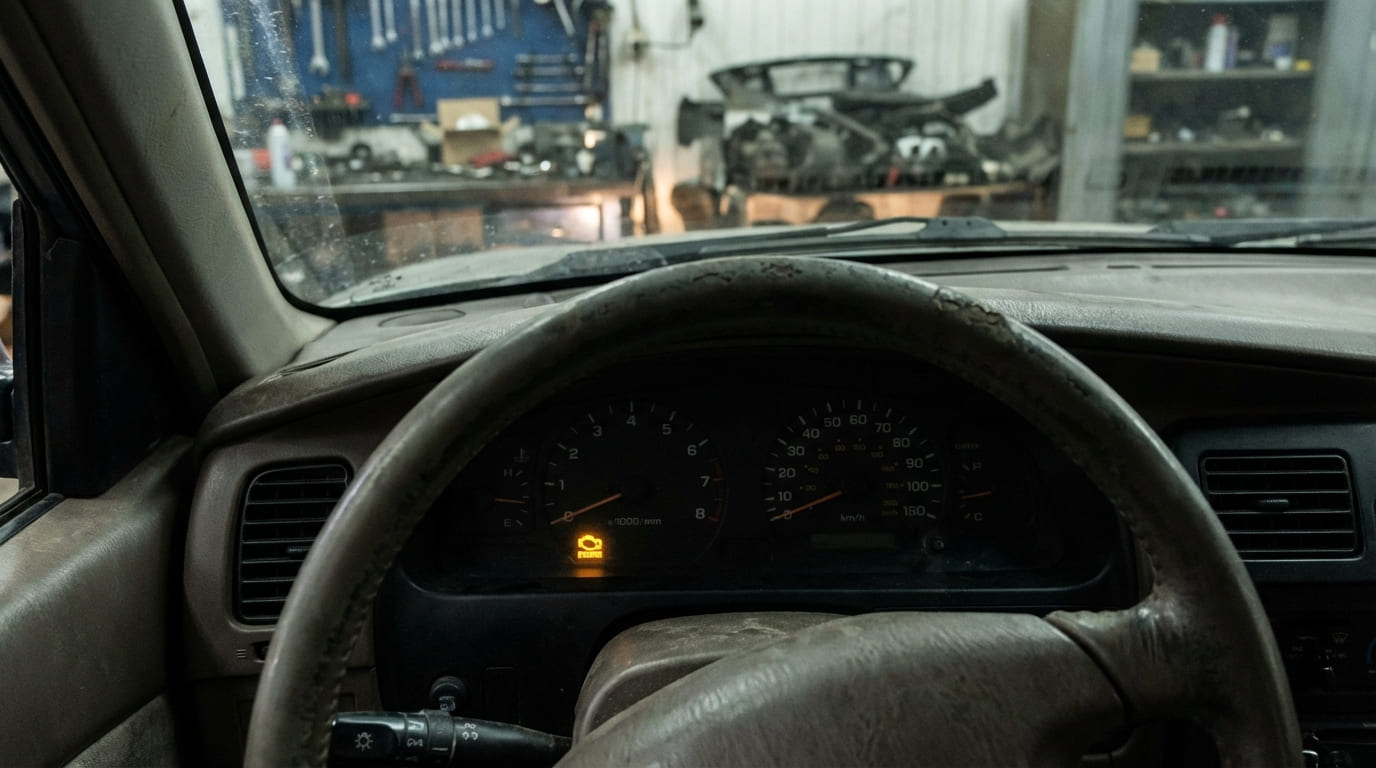
If the check engine light returns with a lean code (P0171/P0174), check for air leaks in the fuel lines or a faulty check valve in the new pump.
What to Replace While You’re There
When the tank is down or the system is open, replace related parts to avoid coming back.
- ✅ Replace the in-tank filter sock—even if it looks clean.
- ✅ Install a new external fuel filter if your vehicle has one.
- ✅ Clean the fuel pump mounting area and module threads.
- ✅ Inspect the tank for rust or debris—clean it if needed.
I once replaced a pump twice in six months on a Jeep because the owner skipped cleaning the tank. The new pump sucked up sediment and failed. Learn from my mistake—clean the tank or replace it.
Real-World Diagnostic Scenarios
| Symptom | Most Likely Cause | Less Common Causes |
|---|---|---|
| No start, no fuel pressure | Fuel pump failure, blown fuse, bad relay | Wiring damage, failed PCM command, clogged filter sock |
| Whining noise from tank | Worn fuel pump bearings | Low fuel level (common), debris in tank |
| Intermittent stalling under load | Weak fuel pump, clogged inlet screen | Faulty fuel pressure regulator, voltage drop in circuit |
| Engine runs lean (P0171/P0174) | Low fuel pressure (pump or regulator) | Vacuum leak, MAF contamination, timing issue |
What Happens If You Delay the Repair?
A failing pump might work today—but tomorrow you could be stranded.
- Intermittent stalling on highways or in traffic.
- Lean fuel mixture can overheat and damage catalytic converters ($1,000+ to replace).
- Debris from a failing pump can clog fuel injectors.
- Some modern cars won’t restart if fuel pressure is too low.
In my experience, once a pump shows clear failure signs, it’s better to fix it now than risk a tow bill and rental car.