Engine stalling can happen at idle, while driving, during braking, or when shifting. Each scenario points to different root causes. This guide cuts through theory and delivers actionable diagnostics, repair steps, and expert insights to help you identify and fix the real problem—fast.
Stalling at Idle: Most Common Causes
Idle stalling usually stems from air/fuel imbalance, idle control failure, or electrical issues. The engine relies on precise control of airflow and fuel at low RPM. When that balance breaks, the engine can’t compensate and shuts down.
Air/Fuel Mixture Problems
A lean condition—too much air or too little fuel—is the top cause of idle stalling. The ECU tries to correct it using fuel trims, but if the imbalance is too great, it fails.
- Vacuum leaks: Unmetered air enters the intake, leaning the mixture. Common sources: intake gaskets, PCV hoses, brake booster, and vacuum lines to EVAP or HVAC.
- Diagnosis:
- Inspect all vacuum lines for cracks, disconnections, or brittleness.
- Use a smoke machine for definitive leak detection—best method for hidden leaks.
- Propane or carb cleaner test: Spray around suspected areas. If RPM increases, you’ve found a leak. Warning: Do not spray near hot exhaust or open sparks.
- Scan tool: Check STFT and LTFT. Consistently above +15% suggests a lean condition. But confirm it’s not a MAF or O2 sensor issue first.
In my shop, we always check the PCV hose first—it’s cheap, common, and often collapsed or cracked. Replacing it takes 10 minutes and costs under $20.
- Fuel delivery issues: Weak pump, clogged filter, or leaking injectors can’t maintain pressure.
- Diagnosis:
- Test fuel pressure at idle. Compare to OEM specs (typically 35–60 psi).
- Perform a 5-minute leakdown test: Pressure should not drop below 20 psi after shutdown.
- Fuel volume test: Collect fuel in a jar for 30 seconds. Less than 0.5 liters indicates a failing pump.
Idle Air Control (IAC) and Throttle Body Issues
On older engines, the IAC valve regulates idle speed. On modern direct-injection engines, carbon buildup blocks airflow.
- IAC valve failure: Carbon gunk or motor failure prevents proper airflow adjustment.
- Diagnosis:
- Remove and inspect the IAC pintle. Clean with throttle body cleaner if sticky.
- Scan tool: Monitor IAC step counts. If maxed out and unresponsive, the valve is likely faulty.
- Bi-directional test: Command open/close. No RPM change? Replace the valve.
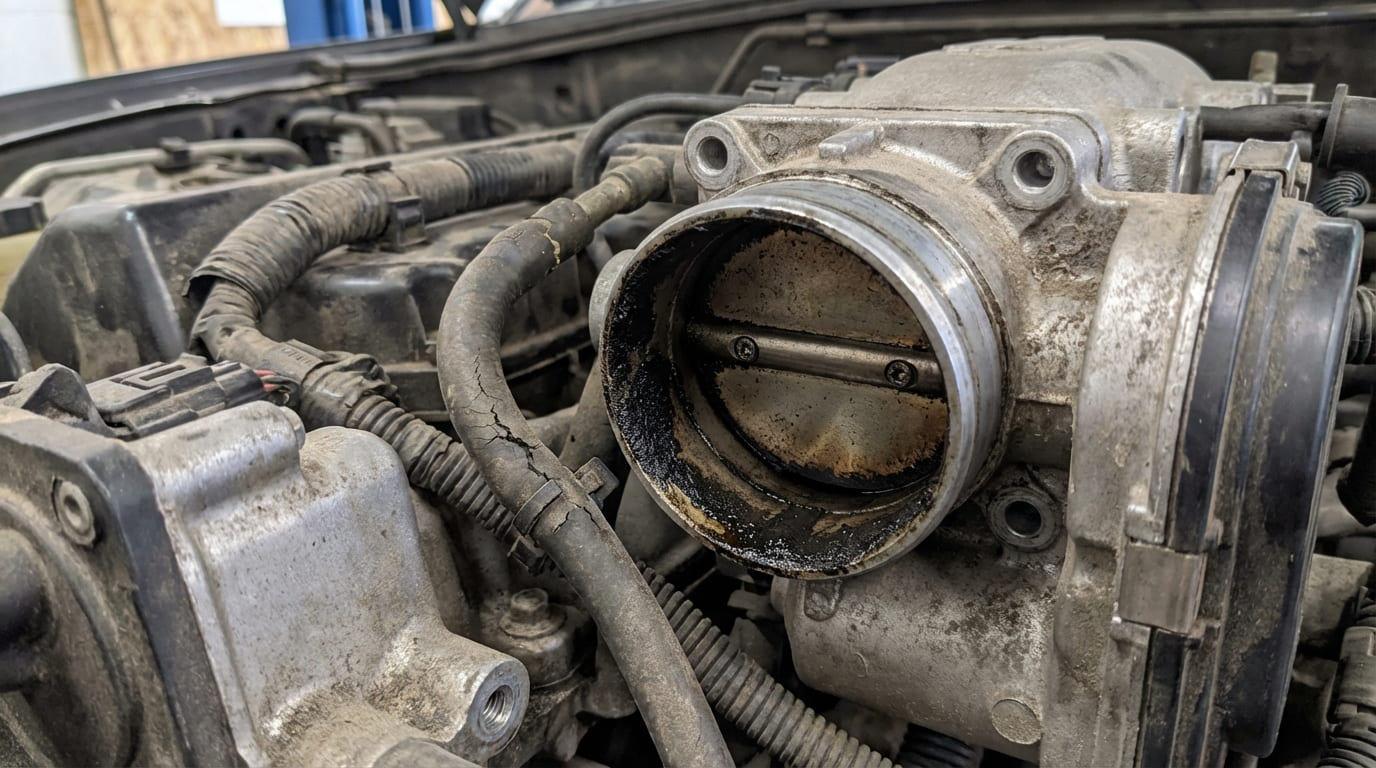
- Throttle body carbon buildup: Especially common on direct-injection engines.
- Diagnosis:
- Remove intake duct and inspect bore and plate. Heavy carbon restricts idle airflow.
- Clean with throttle body cleaner and soft brush. Avoid scratching.
- Some vehicles require a relearn procedure—check service manual.
Ignition and Electrical Causes
Weak spark or low voltage can cause misfires severe enough to stall the engine.
- Ignition failure: Failing coils, worn plugs, or bad crankshaft position (CKP) sensor.
- Diagnosis:
- Check for misfire codes (P030x). Swap coils to see if misfire follows.
- Use a spark tester. No spark? Test coil resistance with multimeter.
- Scan tool: Look for erratic RPM signal or CKP correlation codes (P0335).
- Electrical system issues: Low voltage destabilizes ECU operation.
- Diagnosis:
- Test battery under load. Replace if below 9.6V at 50% charge.
- Alternator output: 13.5–14.8V at idle, no less than 13.0V under load (headlights, blower on).
- Voltage drop test: More than 0.2V across ground or power cables indicates corrosion.
Engine Mechanical Problems
Rare, but rule out if other tests fail.
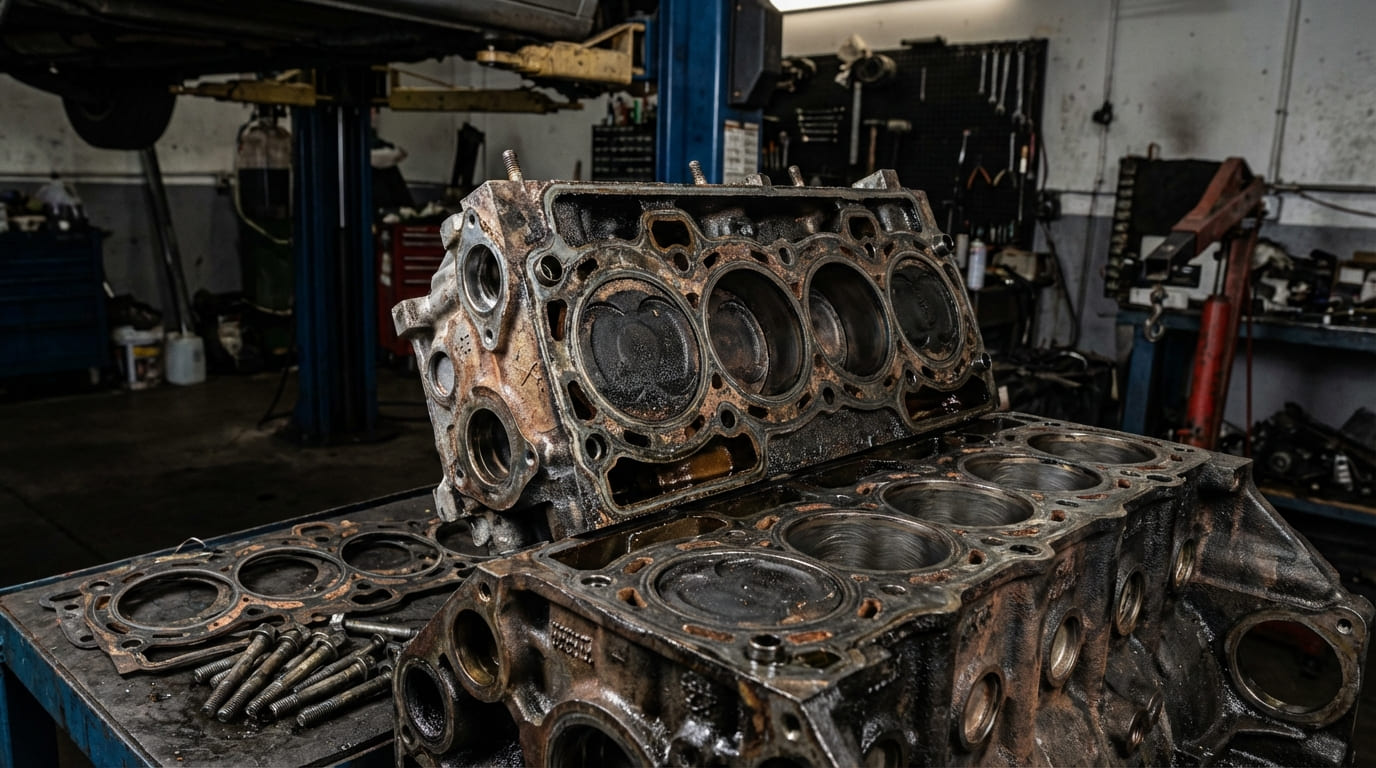
- Low compression: Worn rings, valves, or head gasket.
- Diagnosis:
- Compression test: Healthy engines read 150–180 psi, within 10% between cylinders.
- Leakdown test: Identifies where compression is lost (valves, rings, gasket).
- Timing issues: Stretched chain or failed cam phaser.
- Diagnosis:
- Verify timing marks. On variable timing engines, check oil pressure and solenoid function.
Stalling While Driving: What to Check
Stalling at speed is dangerous and often intermittent. Focus on systems that fail under load or heat.
- Fuel delivery collapse: Pump or filter can’t sustain pressure during acceleration.
- Diagnosis:
- Monitor fuel pressure on a road test. A sudden drop under load points to pump or regulator.
- Fuel volume test is more reliable than static pressure.
- Intermittent ignition failure: Coils or sensors fail when hot.
- Diagnosis:
- Check for stored misfire codes—even if CEL is off.
- Oscilloscope test during road drive catches signal dropouts.
- Heat gun test: Apply heat to suspected coil. If misfire returns, replace it.
- Alternator failure: Voltage drops, ECU resets.
- Diagnosis:
- Monitor voltage while driving. Should stay above 13.0V under load.
- Check for delayed battery light—some ECUs suppress it until failure is certain.
- ECU or wiring issues: Loose ground or failing ECU.
- Diagnosis:
- Scan tool communication dropouts suggest ECU power loss.
- Check ECU ground with voltage drop test.
- Wiggle harness near ECU while monitoring live data.
- Torque converter clutch (TCC) lockup: Acts like stalling a manual in high gear.
- Diagnosis:
- Scan tool: Monitor TCC apply status. Should unlock below 15 mph.
- Shift to Neutral when slowing. If engine stays running, TCC is likely stuck.
Stalling When Braking: Focus on Vacuum and TCC
Braking creates sudden load changes. Two main causes: brake booster vacuum leak or TCC not releasing.
- Brake booster failure: Ruptured diaphragm creates large vacuum leak when pedal is pressed.
- Diagnosis:
- Pump pedal with engine off, hold down, start engine. Pedal should drop 1 inch. No movement? Check valve or booster.
- Pinch vacuum hose to booster. If idle stabilizes during braking, replace booster.
- Monitor STFT while gently braking. A spike above +20% confirms lean condition.
- TCC not releasing: Same as above—check with scan tool or Neutral test.
- Sluggish IAC response: Can’t adjust fast enough to sudden load drop.
- Diagnosis: Same as idle IAC checks—inspect, clean, test with scan tool.
Stalling When Shifting (Manual Transmission)
Most cases are driver-related, but mechanical issues can mimic technique problems.
- Driver technique: Releasing clutch too fast or not enough throttle.
- Diagnosis: Take a test drive. If the stall only happens with one driver, it’s likely ergonomic.
- Clutch drag: Clutch doesn’t fully disengage, loading engine during shift.
- Diagnosis:
- Check clutch pedal free play: 1/2 to 1 inch. Adjust if needed.
- Inspect master cylinder fluid level and for air in lines.
- Engine off: Try shifting into reverse. Grinding means clutch isn’t disengaging.
- CKP or flywheel tone ring issues: Vibration during shift disrupts signal.
- Diagnosis:
- Check for P0335 or similar codes.
- Oscilloscope test during shift to catch signal dropout.
Diagnostic Workflow and Cost Guidance
Follow a logical path to avoid wasting time and money. Here’s the order we use in our shop:
- Scan for codes (current, pending, history).
- Verify symptom with test drive—note conditions (cold, hot, load, speed).
- Visual inspection: hoses, wires, fluid levels, corrosion.
- Check maintenance history: spark plugs, fuel filter, air filter, oil changes.
- Test fuel pressure and volume.
- Inspect for vacuum leaks (smoke test preferred).
- Check ignition and electrical systems.
- Rule out TCC or brake booster issues if relevant.
| Stalling Condition | Most Likely Causes | Less Common But Possible |
|---|---|---|
| At Idle | Vacuum leak, IAC failure, MAF contamination | Weak fuel pump, low compression, ECU power issue |
| While Driving | Fuel delivery drop, ignition coil failure, TCC lockup | ECU failure, intermittent CKP signal, severe exhaust restriction |
| When Braking | Brake booster leak, TCC not releasing | IAC too slow, vacuum reservoir rupture |
| When Shifting (Manual) | Driver technique, clutch drag | CKP sensor dropout, engine mount allowing vibration |
Repair vs Replace: Cost and Viability
Know when to fix and when to replace. Here’s a practical guide:
| Part | DIY Cost | Shop Cost | Repair vs Replace |
|---|---|---|---|
| Fuel Pump | $100–$200 | $400–$800 | Replace—no repair viable |
| Ignition Coil | $40–$100 | $150–$300 | Replace—test others if one failed |
| IAC Valve | $30–$80 | $150–$250 | Clean first—replace if motor seized |
| Brake Booster | $100–$200 | $300–$500 | Replace—no field repair |
| MAF Sensor | $80–$150 | $250–$400 | Clean first—replace if signal still off |
Situation: A 2010 sedan stalled at idle and when braking. No codes. Fuel pressure and trims normal.
Initial Assumption: Small vacuum leak—common on high-mileage engines.
Deep Dive: Smoke test found nothing. Idle smoothed when I pinched the brake booster hose. Replaced booster—fixed.
Nuanced Lesson Learned: Brake booster is a vacuum component. If it fails, it won’t show on a standard scan tool. Always test under actual load conditions.
Situation: Pickup truck stalled while cruising, restartable after cooling.
Initial Assumption: Heat-related fuel pump failure.
Deep Dive: Static pressure was fine. Road test showed pressure drop under acceleration. Volume test: 0.3L in 30 seconds—pump was starving.
Nuanced Lesson Learned: Static pressure tests can pass a bad pump. Volume under demand is the real test.
Situation: Manual hatchback stalled shifting into first at stops.
Initial Assumption: Clutch drag or worn release bearing.
Deep Dive: Hydraulics and adjustment perfect. Watched driver—they weren’t pressing clutch fully. Fixed with driving lesson.
Nuanced Lesson Learned: Not every stall is mechanical. Observe the driver before ordering parts.
Final Recommendations
- ✅ Clean intake manifold bolt threads with a tap before reassembly. Prevents false torque readings.
- ✅ Use OEM torque specs and sequence. Critical for gaskets and sensors.
- ✅ Perform a fuel pressure leakdown test after pump replacement.
- ⚠️ Never reuse torque-to-yield (TTY) bolts. They stretch and won’t hold torque. Replace every time.
- ⚠️ Don’t assume a clean MAF is good. Internal damage isn’t visible. Test signal or swap to confirm.
- ⚠️ Don’t rely on parts-store scanners. They miss manufacturer-specific codes and freeze frame data.
In 20 years of diagnosing stalling engines, I’ve learned this: it’s rarely one thing. It’s carbon, aging sensors, and small leaks combining to push the engine past its limits. Always consult the service manual for your specific vehicle—specs and procedures vary too much to guess.