Over two decades in the shop, I’ve seen engines that never reach operating temperature—leading to poor heater performance, increased fuel consumption, and long-term engine wear. The key is confirming the real issue before tearing into components. Don’t rely on the dashboard gauge; it often lies. Use live data and physical checks to verify what’s really happening.
Confirm the Problem with Accurate Diagnostics
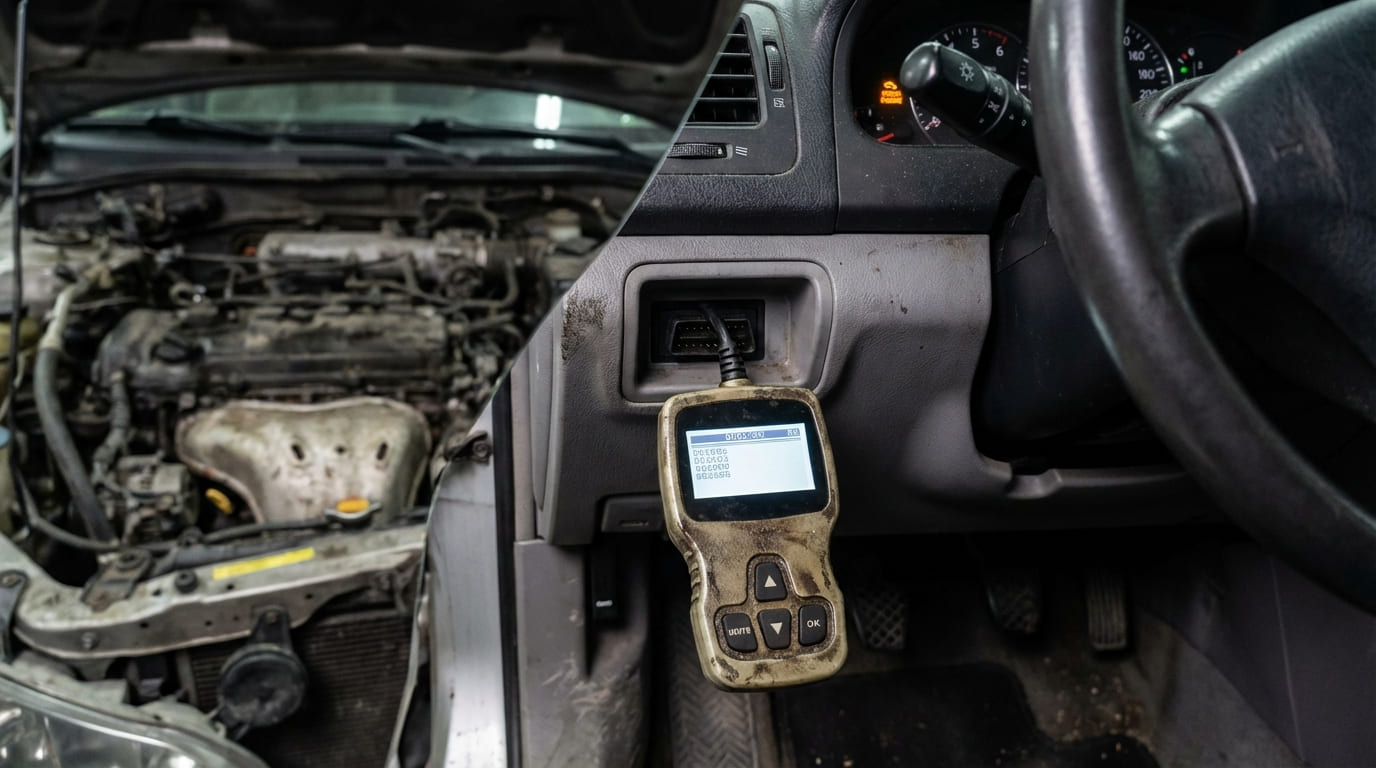
Start with an OBD2 scan tool. Monitor the Engine Coolant Temperature (ECT) PID from a cold start—ideally overnight cold. Under normal driving conditions (city, highway, idle), most engines should reach 88–95°C (190–203°F) within 5 to 15 minutes. If ECT stays below this range or climbs too slowly, you have a real issue.
Prolonged cold operation harms the engine: fuel dilutes oil, emissions rise, and cylinder wear increases due to poor oil film formation. But first, rule out sensor error. A faulty ECT sensor can mimic mechanical failure.
Primary Causes and How to Diagnose Them
1. Thermostat Stuck Open or Incorrectly Rated
The most common cause. A failed wax pellet or broken spring leaves the thermostat open, allowing constant coolant flow and preventing heat buildup.
How to Check:
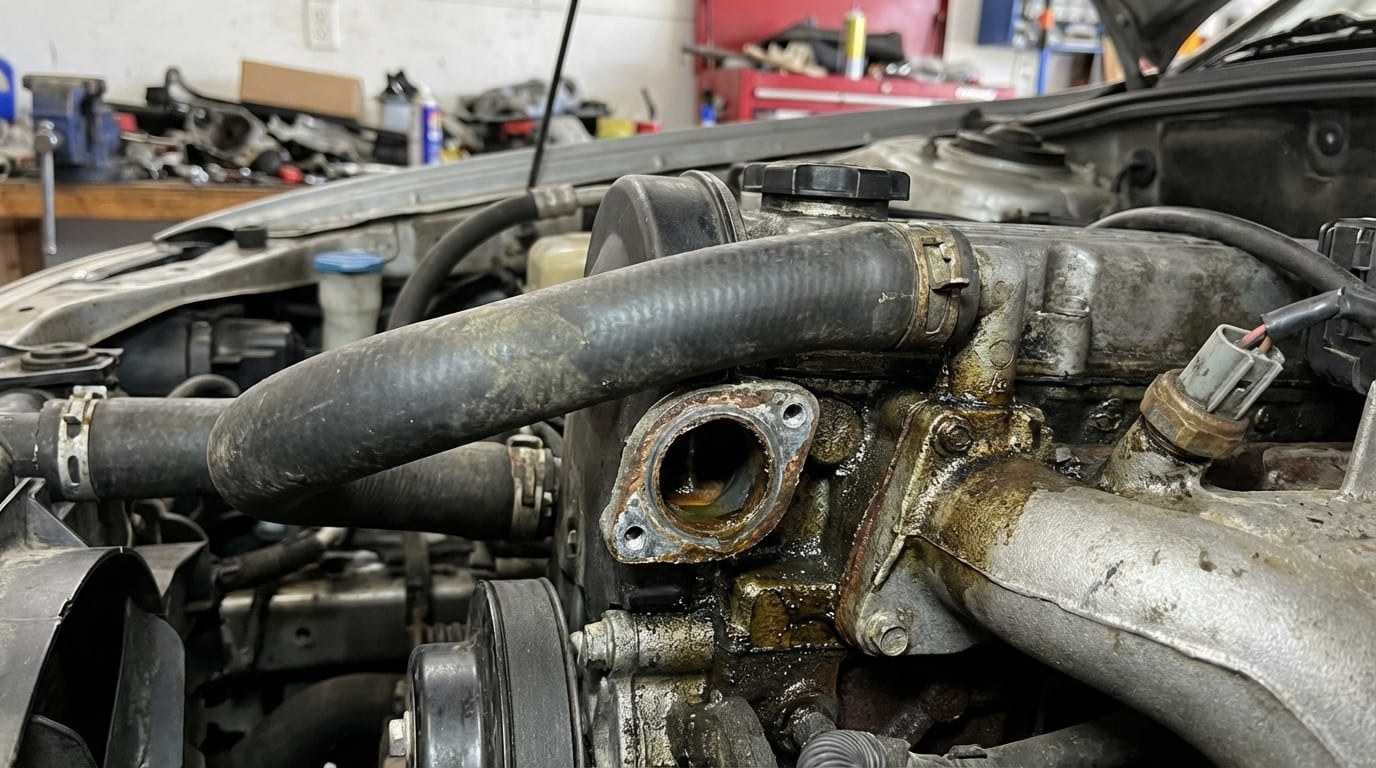
With a cold engine, start the vehicle and monitor the upper radiator hose. It should remain cool for several minutes. If it warms within 3–5 minutes, suspect a stuck-open thermostat. Confirm using an infrared thermometer: compare the temperature at the thermostat housing versus the upper hose. Once the engine warms, there should be a sharp difference—housing hot, hose still cool—until the thermostat opens.
Also verify the thermostat’s temperature rating. Common specs are 82°C, 88°C, or 92°C. Installing a lower-temp unit (e.g., 76°C) delays closed-loop operation and hurts fuel economy.
Cost & Viability:
Replacement thermostat: $20–$60.
Labor (if outsourced): $100–$200.
DIY-friendly job on most vehicles. Replace the housing gasket and inspect for debris.
In my shop, we always test a suspect thermostat in hot water with a thermometer. Drop it in boiling water (100°C)—it should open fully within a minute. If not, it’s done.
2. Faulty Engine Coolant Temperature (ECT) Sensor
A bad ECT sensor sends incorrect data to the ECM, delaying closed-loop operation and skewing fuel trims. This mimics a mechanical warm-up problem.
How to Check:
With the engine off and cold, compare the ECT PID reading to ambient temperature. They should match within 2–3°C. If the sensor reads 0°C in a 22°C garage, it’s faulty.
Unplug the sensor and measure resistance with a multimeter. Compare the reading to the OEM resistance/temperature chart (usually available in service manuals). A deviation over 10% indicates failure.
Cost & Viability:
Sensor cost: $15–$50.
Replacement time: 15–30 minutes on most engines.
Highly recommended to replace if readings are inconsistent.
I’ve seen more than one customer replace a thermostat twice before checking the ECT sensor. Always validate sensor data with physical temperature checks before disassembling the cooling system.
3. Cooling Fan Running Continuously
Electric fans that run from startup pull heat from the radiator before the engine warms, especially in cold weather.
How to Check:
Observe the fan at cold start. It should remain off unless the A/C is on. If it spins immediately, check the fan relay. A stuck relay is common. Test by swapping with a known-good relay (e.g., horn relay).
If the relay is good, check for control issues: failed fan control module, shorted wiring, or PCM command error. Use OBD2 to read fan command PID—if it says “ON” at 70°C with no A/C, the control side is faulty.
Cost & Viability:
Relay: $10–$30.
Fan control module: $50–$150.
Wiring repair: varies. Often DIY-accessible.
4. Low Coolant Level or Air Pockets
Low coolant or trapped air disrupts circulation and prevents proper thermostat operation.
How to Check:
Inspect coolant reservoir and radiator (when cold). Top off if below minimum, but don’t stop there. Burping noises, fluctuating temperature, or inconsistent heater output suggest air pockets.
Perform a proper bleed procedure. Some vehicles require a scan tool to activate the electric water pump or open the thermostat during bleeding. Others have bleed screws at high points in the system.
Use a cooling system pressure tester (15–18 psi) to check for leaks. A pressure drop over 15–20 minutes indicates a leak—hose, water pump, radiator cap, or head gasket.
Cost & Viability:
Coolant: $10–$30 per gallon (use correct type).
Pressure tester rental: often free at auto parts stores.
Bleeding can take 30–60 minutes—worth the time to avoid repeat issues.
Less Common but Important Causes
1. Incorrect Thermostat Installation or Specification
Installing the wrong thermostat (too low a rating) or backwards (spring end facing radiator) causes premature opening or failure to seal.
How to Check:
Verify part number matches OEM spec. Inspect orientation during replacement—spring and jiggle valve (if present) must face the engine block.
On GM LS engines, I’ve seen techs install the thermostat backwards because the housing doesn’t have a clear “engine side” mark. Always double-check service manual diagrams.
2. ECM Calibration or Software Issues
Rare, but possible. A failed PCM reflash or incorrect aftermarket tune can alter closed-loop thresholds or ECT interpretation.
How to Check:
If all sensors and components test good but the engine never exits open loop, use OEM-level scan software. Check for available updates or calibration mismatches. Monitor fuel trims and closed-loop status independently of ECT readings.
Cost & Viability:
Dealership or specialist reflash: $100–$200.
Not DIY unless you have proper tools and backup.
3. Excessive Cooling System Capacity
Aftermarket radiators with oversized cores or dual fans can overcool, especially in winter or during short trips.
How to Check:
Compare radiator specs to OEM. If it’s significantly larger or has extra cooling capacity, it may be the culprit. Fan shrouds missing or improper fitment can also increase airflow.
Repair vs Replace:
No mechanical fault here. Consider a winter grill cover to restrict airflow. Replacing with OEM-spec radiator may be needed if warm-up is severely impacted.
4. Extreme Ambient Temperatures and Driving Habits
In cold climates (-20°C or below), extended warm-up is normal. Short trips prevent the engine from ever reaching stable temperature.
How to Check:
Assess driving pattern. If the vehicle never sees sustained highway driving or long idle periods, it won’t warm fully. Check ECT PID after a 30-minute highway drive—if it finally reaches 90°C, the system works.
Solution:
Install a block heater. Cost: $100–$200 (parts and installation). Reduces warm-up time by 50% or more in freezing conditions.
In my shop, we ask one question first: “How long is your typical drive?” If it’s under 10 minutes in winter, the engine never has time to warm up—no matter how good the thermostat is.
Best Practices: Do and Avoid
- ✅ Recommended: Clean thermostat housing and coolant passages with a wire brush and solvent. Debris prevents proper seating.
- ✅ Recommended: Use a tap to clean housing bolt threads. Prevents galling and ensures accurate torque.
- ✅ Recommended: Use OEM-spec coolant mixed with distilled water at the correct ratio (usually 50/50). Prevents corrosion and maintains proper boiling point.
- ⚠️ Avoid: Reusing torque-to-yield (TTY) bolts unless the manual allows it. They stretch and lose clamping force.
- ⚠️ Avoid: Skipping the air bleed procedure. Air locks cause erratic behavior and false diagnoses.
- ⚠️ Avoid: Assuming the thermostat is bad just because the engine runs cool. Verify with live data and physical temp checks first.
Diagnostic Scenarios and Probable Causes
| Symptom | Most Likely Cause | Less Common Causes | Notes |
|---|---|---|---|
| Slow warm-up, upper hose warms early | Thermostat stuck open | Faulty ECT sensor, air pocket | Verify with IR thermometer and live data |
| ECT reading stays low, heater works | Faulty ECT sensor or circuit | ECM calibration issue | Check resistance and compare to OEM chart |
| Fan runs continuously from cold start | Stuck relay or failed control module | Wiring short to ground | Check fan command PID if available |
| Inconsistent warm-up, burping noises | Air pocket in system | Head gasket leak pushing combustion gases into coolant | Bleed properly; consider block test if in doubt |
| Engine warms slowly only in winter | Normal behavior in extreme cold | Oversized radiator or missing shroud | Assess driving conditions before diagnosing fault |
Situation: A 2014 Honda Accord came in with poor heater output and a P0171 code. The owner replaced the thermostat twice. No change.
Discovery: I checked the ECT PID—it read 72°C after 15 minutes of highway driving. But the infrared gun showed 94°C at the thermostat housing. The sensor was off by over 20°C.
Nuanced Lesson Learned: Don’t assume mechanical components are at fault just because the symptom points to temperature. Always validate sensor data with physical measurement before disassembling anything.
Situation: A 2010 Ford F-150 with a new radiator would never reach 90°C, even on long drives. Fan was off, thermostat tested in hot water—opened at 92°C.
Discovery: The aftermarket radiator was 2 inches thicker than stock with dual 14-inch fans. Even at idle, airflow was excessive.
Nuanced Lesson Learned: Cooling system performance isn’t just about components working right—it’s about working as designed. Aftermarket upgrades can create new problems even when “better” on paper.
Situation: A 2008 Toyota Camry warmed up fine in summer but took 25+ minutes in winter. No codes, ECT looked accurate.
Discovery: The customer took only short trips. The engine never reached full load long enough to stabilize temperature.
Nuanced Lesson Learned: Driving pattern matters. What looks like a fault might just be usage. Suggest a longer drive or consider a block heater before replacing parts.
Final Thoughts
Extended warm-up time isn’t always a failure. It could be a stuck-open thermostat, a bad sensor, or just winter driving habits. In my shop, we always start with data: live ECT values, physical temperature checks, and fan behavior. Never assume—verify every component before replacing.
And remember: specifications vary. A 92°C thermostat on one engine may be normal, but on another, it’s too hot. Always consult the service manual. What’s standard on a 2012 model might not apply to a 2015—same engine, different calibration.