Fuel pump failure can leave you stranded and cost hundreds in repairs. As a master mechanic, I’ve seen countless pumps replaced unnecessarily because the root cause wasn’t diagnosed. This guide cuts through the noise, focusing on real-world causes, diagnostics, and what to check before buying a new pump. The key takeaway: the fuel pump is often a victim, not the culprit.
Electrical System Degradation
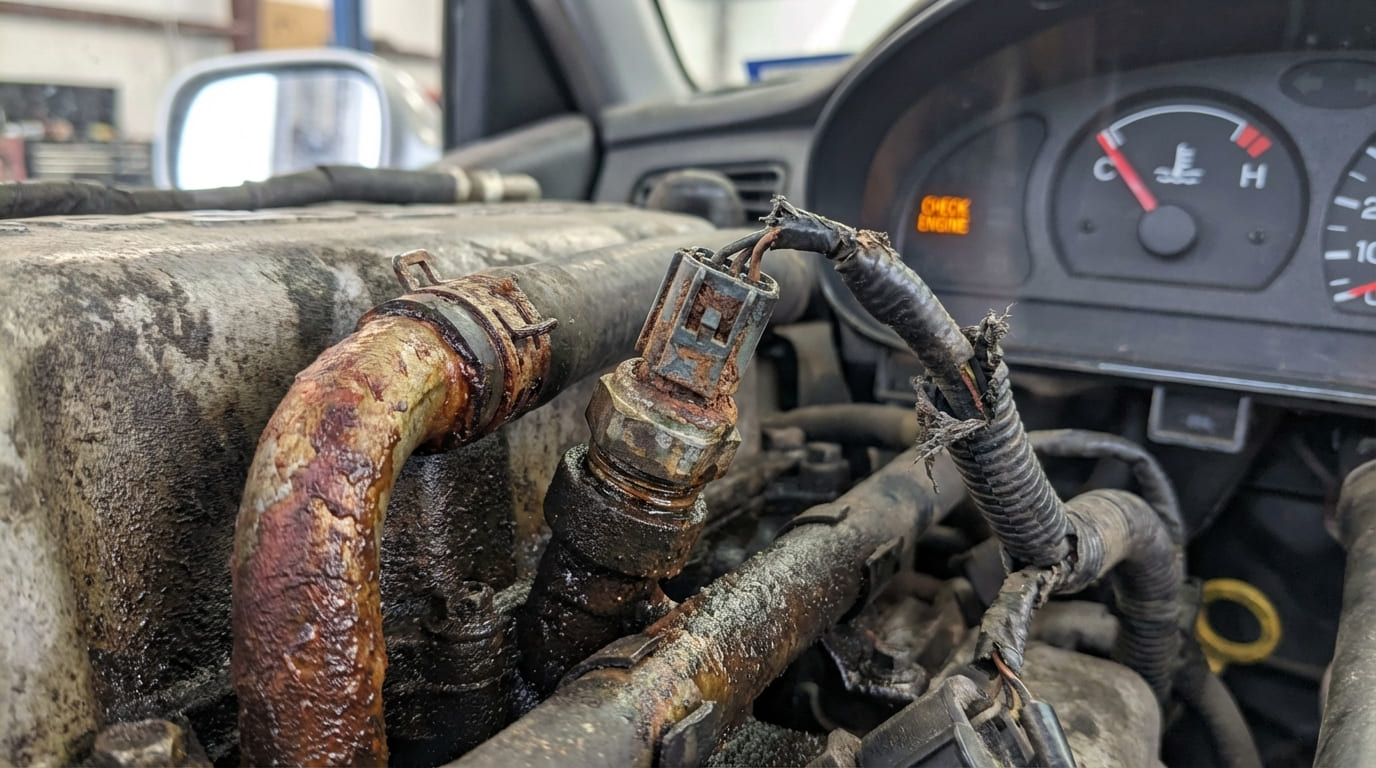
Over half the “failed” fuel pumps I test in the shop are actually victims of poor electrical supply. A pump needs clean voltage and a solid ground. When resistance builds in the circuit, the motor overworks, overheats, and fails prematurely. Always test the circuit before replacing the pump.
How to Check Voltage and Ground
Use a digital multimeter to perform voltage drop tests. With the pump running (or cranking the engine), measure:
- Voltage at the pump connector (should be within 0.5V of battery voltage)
- Voltage drop on the power side (place one probe at the battery positive, one at the pump’s power terminal—should be <0.5V)
- Voltage drop on the ground side (battery negative to pump ground—should be <0.1V, never over 0.2V)
If drops exceed these values, clean or replace wiring, connectors, or ground points before installing a new pump.
In my shop, we always test voltage drop before touching the fuel tank. More than once, a $300 pump replacement was avoided with a $3 fuse holder repair.
Fuel Pump Relay and FPDM Issues
The relay is a common failure point. A click doesn’t mean it’s working—burned contacts can pass just enough current to click but not run the pump. Swap it with a known good relay (same part number) as a first diagnostic step.
On modern vehicles with variable-speed pumps, the Fuel Pump Driver Module (FPDM) controls speed. These fail due to heat or moisture. Diagnosing FPDM issues requires a scan tool to view commanded vs. actual pump speed. Misreading this data leads to unnecessary pump replacements—this is a professional-level diagnosis in most cases.
Mechanical Wear and Internal Failures
Fuel pumps are sealed units—no rebuilds, only replacements. Lifespan varies: 50,000 miles on a neglected truck, 200,000 on a well-maintained sedan. Internal wear is inevitable, but often accelerated by external factors.
Common Internal Failures and How to Diagnose
These issues usually require pump removal, but symptoms and electrical tests can point to internal damage:
- Motor brush/commutator wear: Causes surging or stalling. Check current draw—excessive amps indicate wear or binding.
- Armature winding failure: Open or shorted windings reduce power. Resistance checks help, but load testing is more reliable.
- Bearing failure: Whining or grinding noise. High current draw supports this diagnosis.
- Impeller damage: Caused by cavitation (running low on fuel) or debris. Perform a fuel volume test—pressure may read normal, but flow is low.
- Check valve failure: Hard starting when warm. Use a fuel pressure gauge to test residual pressure after shutdown—should hold for at least 5 minutes.
- Integrated pressure regulator failure: Causes rich or lean conditions. Test fuel pressure with engine running and compare to spec.
When a customer brings in a high-mileage car with fuel pressure issues, I don’t just replace the pump—I run a volume test. More than once, a “weak pump” turned out to be a clogged filter starving an otherwise healthy unit.
Fuel Contamination and Quality
Bad fuel kills pumps. Modern ethanol blends absorb water and degrade old seals. Contamination often goes unnoticed until the pump fails.
How to Check for Contamination
Drain a small sample from the tank (if possible) or inspect the fuel filter and pump inlet screen during replacement:
- Water: Look for cloudiness or separation. Ethanol-blended fuels (E10/E15) are more prone. Water causes corrosion inside the motor.
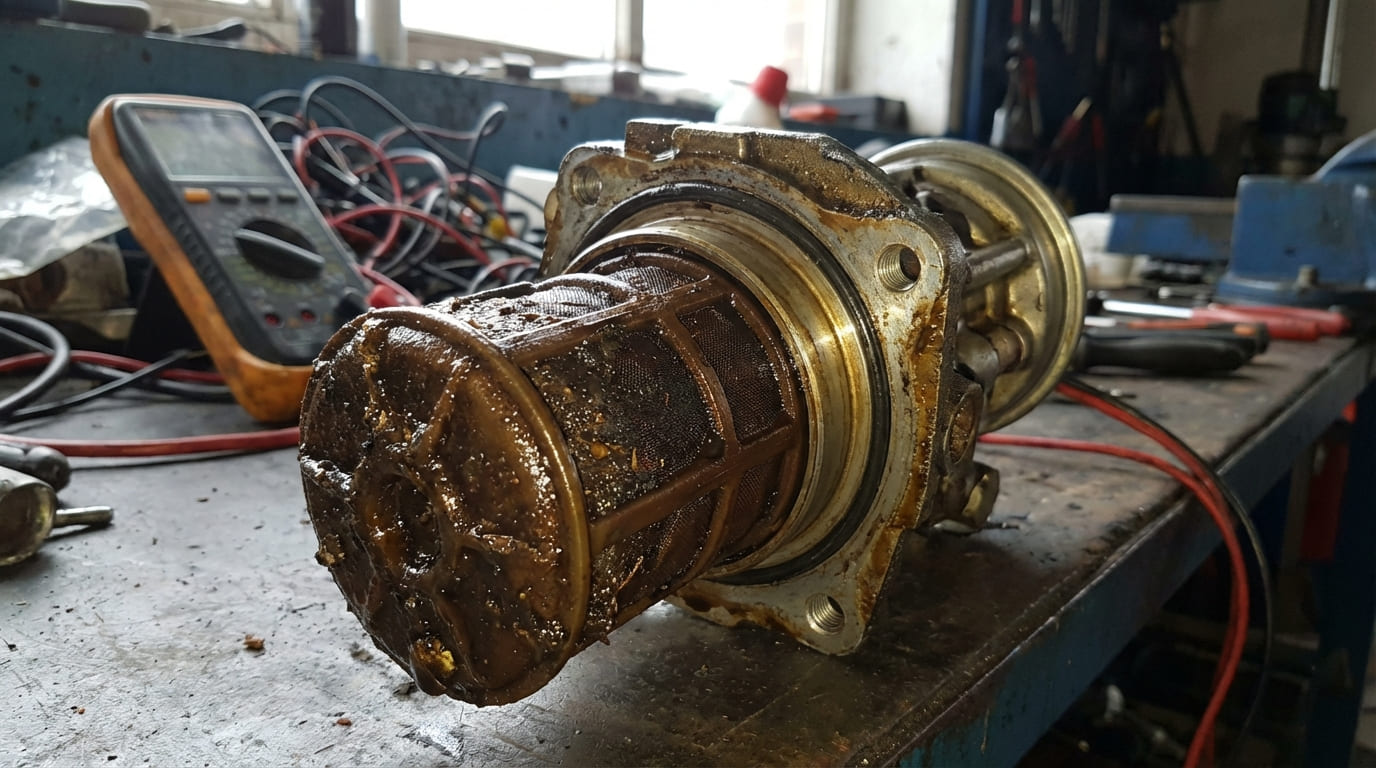
- Particulates: Dirt, rust, or degraded fuel lines clog the inlet screen. Always inspect the old pump’s screen—what you find tells the story.
- Chemical breakdown: Sour smell, varnish, or thick fuel indicates old or degraded gasoline. Ethanol can swell internal seals, leading to early failure.
I pulled a pump last year that looked sandblasted—yet the filter was clean. The tank had rust flakes too fine to catch in the filter but deadly to the pump. Always inspect the tank when replacing a pump.
Thermal Stress and Cooling Issues
Fuel cools the pump. Running low on fuel or restricting flow causes overheating—the top cause of repeat failures.
How to Prevent Overheating
- Keep the tank above 1/4 full, especially in hot weather or during towing.
- Replace the fuel filter at OEM intervals—even if not “required.” A clogged filter forces the pump to work harder.
- Check for kinked or collapsed fuel lines.
Perform a fuel volume test: disconnect the fuel line and run the pump for 30 seconds into a graduated container. Compare to factory specs. Low volume with normal pressure points to flow restriction or impeller wear.
External Factors and Installation Errors
Even a perfect pump can fail due to impact, poor installation, or defects.
What to Watch For
- Impact damage: Road debris or improper jacking can dent the housing. Inspect during removal.
- Improper installation: Kinked lines, overtightened rings, or debris dropped in the tank can kill a new pump. Use OEM-style tools and clean the area thoroughly.
- Manufacturing defects: Rare, but real. If a new pump fails within a year with no circuit or contamination issues, consider a defect. Keep the old unit for warranty claims.
Costs and Repair vs. Replace
Understanding costs helps decide whether to repair or replace:
| Component | Repair Cost (DIY) | Repair Cost (Shop) | Viable Repair? |
|---|---|---|---|
| Fuel Pump | $100–$300 (part) | $600–$1,200 | No—replace only |
| Fuel Pump Relay | $15–$40 | $100–$200 | Yes—easy DIY |
| Fuel Filter | $20–$50 | $150–$300 | Yes—recommended maintenance |
| Wiring Repair | $10–$50 (materials) | $200–$500 | Yes—prevents repeat failure |
Spending $1,000 on a new pump without fixing a corroded ground wire is a waste. I always say: diagnose the system, not the part.
Diagnostic Decision Guide
| Symptom | Most Likely Causes | Less Common Causes | Diagnostic Priority |
|---|---|---|---|
| No fuel pressure, no pump noise | Blown fuse, failed relay, dead FPDM, wiring break | Internal pump motor failure, seized bearing | Check power and ground first; verify relay operation |
| Low fuel pressure, pump running | Clogged filter, restricted inlet, worn pump | Weak motor, voltage drop, failing regulator | Perform volume test and check filter; inspect tank |
| Hard starting when hot | Leaking check valve, vapor lock | Fuel pressure regulator leak, excessive ethanol content | Pressure hold test; review fuel type and driving habits |
| Intermittent operation | Failing relay, loose connection, bad ground | Cracked circuit board in FPDM, internal pump break | Wiggle test wiring; monitor voltage under load |
Situation: A 2012 sedan came in with a no-start condition. The owner had already replaced the pump twice in 18 months. Each time, the new pump worked briefly, then failed.
Initial Assumption: Bad batch of aftermarket pumps.
Deep Dive: I checked voltage at the pump connector and found 10.8V during cranking—well below the 12.6V battery supply. A voltage drop test revealed 1.8V loss across the power wire.
Nuanced Lesson Learned: The root cause wasn’t the pump quality—it was a corroded splice in the power feed that increased resistance over time. Replacing the wiring harness segment resolved the issue. New pumps were being overloaded from day one.
Situation: A truck with 90,000 miles had a whining fuel pump. The owner wanted a replacement, but I noticed the fuel filter hadn’t been changed in over 60,000 miles.
Initial Assumption: Bearing wear in the pump.
Deep Dive: After replacing the filter, the noise dropped significantly. A volume test showed flow had increased by 35%. The pump was struggling against a clogged filter, not failing mechanically.
Nuanced Lesson Learned: Not every noise means replacement. Flow restrictions can mimic internal failure. Addressing the filter restored performance and likely extended the pump’s life.
Situation: A classic car with a new fuel pump started hard when warm. The owner suspected the pump’s check valve.
Initial Assumption: Failed internal check valve.
Deep Dive: The pressure hold test showed a slow drop, but not enough to explain the symptom. I checked the fuel type—E15 in a carbureted system. The higher ethanol content was causing vapor lock in the rail.
Nuanced Lesson Learned: Not all hard-starting is a pump issue. Fuel chemistry and system design interact in subtle ways. Sometimes the fix is switching fuel type, not replacing parts.
Always consult factory service information for your specific vehicle. Test procedures, torque specs, and acceptable tolerances vary. Diagnose the system, not just the symptom. The pump may be dead—but ask yourself: what killed it?