The exhaust manifold is a critical component that collects exhaust gases from each cylinder and routes them into the exhaust system. Its design directly impacts engine performance, emissions, and fuel efficiency. A failing manifold can lead to poor drivability, increased emissions, and even safety hazards like carbon monoxide entering the cabin. This guide covers its function, failure signs, diagnostics, repair costs, and best practices for replacement.
Core Functions of the Exhaust Manifold
Gas Collection and Flow Management
The manifold’s primary job is to gather spent combustion gases from multiple cylinders and direct them into a single outlet leading to the catalytic converter and muffler. It’s the first link in the exhaust system and must maintain a sealed connection to the cylinder head. Any leak here can disrupt sensor readings and engine operation.
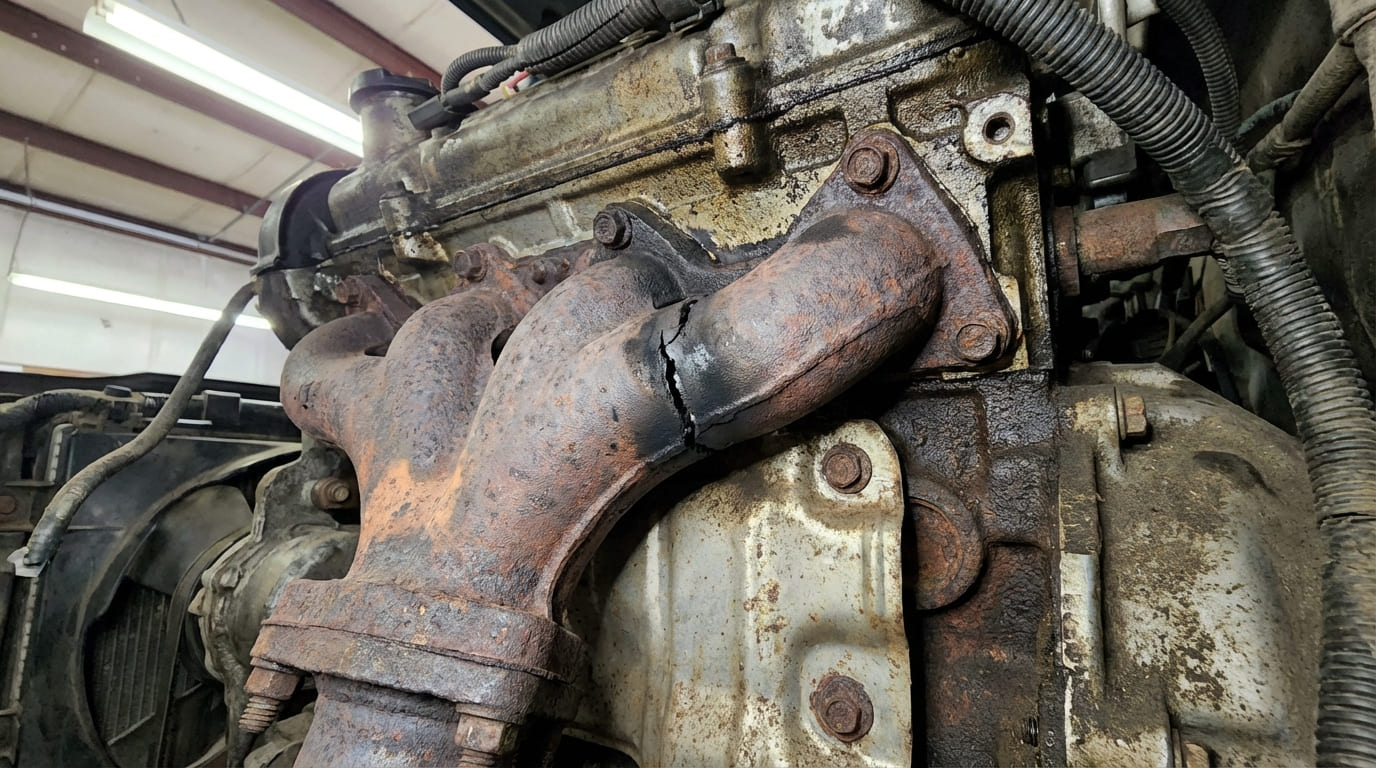
How to check: Listen for ticking or hissing noises, especially at cold start. Inspect for soot stains around the manifold flange—these are telltale signs of a leak.
In my shop, we always inspect the exhaust manifold before replacing oxygen sensors or catalytic converters. A small leak upstream can mimic sensor or converter failure, leading to unnecessary repairs.
Integration with Emissions and Engine Management
The upstream oxygen (O2) sensor is typically mounted in or just after the manifold. If a leak occurs before this sensor, outside air gets pulled in, causing a false lean reading. The engine control unit (ECU) responds by adding extra fuel, resulting in rich fuel trims, poor economy, and potential catalytic converter damage over time.
How to check: Use a scan tool to read long-term and short-term fuel trims. Trims consistently above +10% may indicate an exhaust leak pre-O2 sensor. Confirm with a visual inspection and soapy water test on a cold engine.
Common Materials and Designs
Manifolds come in different materials and configurations, each with pros and cons:
| Type | Pros | Cons | Typical Cost (Part Only) |
|---|---|---|---|
| Cast Iron | Durable, retains heat well, OEM standard | Heavy, prone to cracking, poor flow | $80–$250 |
| Stainless Steel Tubular Headers | Better flow, improved scavenging, lighter | Expensive, may trigger check engine light on some OEM systems | $300–$1,200 |
| Integrated Manifold + Catalytic Converter | Faster catalyst warm-up, lower emissions | Very expensive to replace if cracked | $600–$1,800 |
Performance vs. Practicality
Tubular headers improve exhaust flow and can increase horsepower, especially in the mid-range. But on daily drivers, the gains are often minimal—5–10 hp at best—and may not justify the cost unless you’re tuning the engine. Integrated catalytic manifolds are common on modern cars and reduce cold-start emissions, but a crack means replacing the entire assembly, which is costly.
I’ve seen customers replace a cracked OEM manifold with a cheap header only to face check engine lights due to incorrect O2 sensor placement. Always verify compatibility with your ECU and emissions system before upgrading.
How to Diagnose a Failing Exhaust Manifold
Early diagnosis prevents secondary damage. Use this step-by-step approach:
- Listen: A ticking or tapping noise at cold start that fades as the engine warms is classic. The crack expands when cold and closes as metal heats up.
- Inspect: Look for black soot stains or discoloration around the manifold and flange. Use a flashlight and mirror for hard-to-see areas.
- Test: On a cold engine, spray soapy water around suspect areas. Have an assistant start the engine—bubbles indicate a leak. Use low RPM to avoid injury.
- Scan: Check for trouble codes like P0171 (system too lean), P0420 (catalyst efficiency), or misfire codes. Analyze fuel trims: positive trims suggest air entering the exhaust.
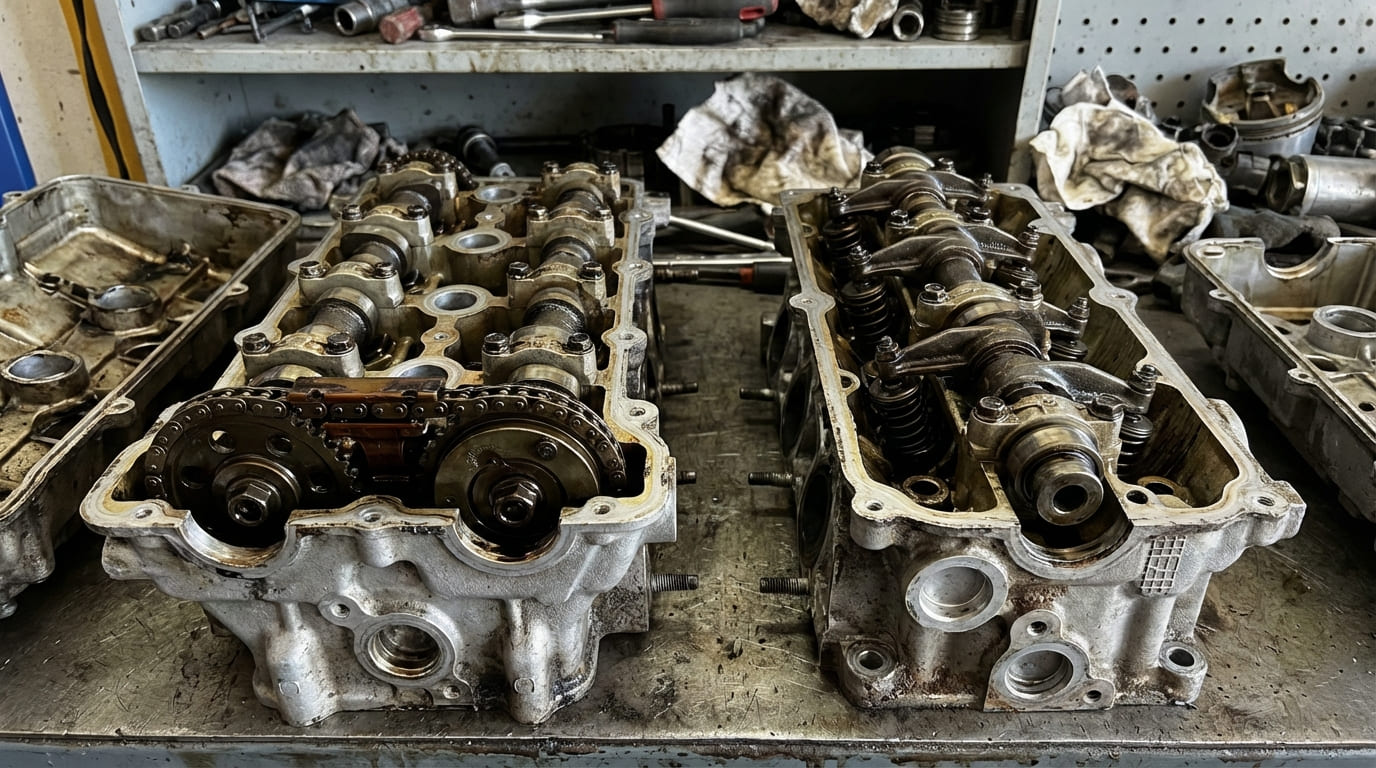
- Verify: Remove the manifold if needed. Inspect for cracks, warpage, and gasket condition. Use a straight edge and feeler gauge to check flange flatness (max 0.002″–0.004″ out of flat for cast iron).
Repair vs. Replace: Cost and Viability
Small cracks can sometimes be repaired with high-temp epoxy or welding, but this is a temporary fix. Given the thermal stress, replacement is usually the better long-term solution.
- Repair (welding): $100–$250. Risk of re-cracking is high, especially on cast iron.
- Replacement (OEM): $250–$600 (part + labor). Recommended for reliability.
- Replacement (aftermarket): $400–$900. May offer better flow but verify fit and emissions compliance.
On aluminum-head engines, I always recommend replacing manifold bolts and gaskets. Reusing old bolts risks breakage, and old gaskets rarely reseal properly due to compression set.
Best Practices for Replacement
Proper installation prevents future leaks and damage:
- ✅ Clean all bolt holes with a bottoming tap. Carbon or corrosion can prevent full thread engagement, leading to breakage.
- ✅ Use new gaskets and torque-to-yield (TTY) bolts. Never reuse TTY bolts—they stretch permanently.
- ✅ Apply anti-seize to bolt threads only—never on the seating surface. This ensures accurate clamping force.
- ✅ Follow factory torque sequence and specs. Use a crisscross pattern for even pressure.
- ✅ Reinstall or replace heat shields. They protect wiring, fuel lines, and cabin components from radiant heat.
Consequences of Ignoring a Bad Manifold
A leaking or cracked manifold doesn’t just make noise—it harms performance, emissions, and safety:
- Reduced fuel economy and power due to disrupted scavenging and incorrect fuel trims.
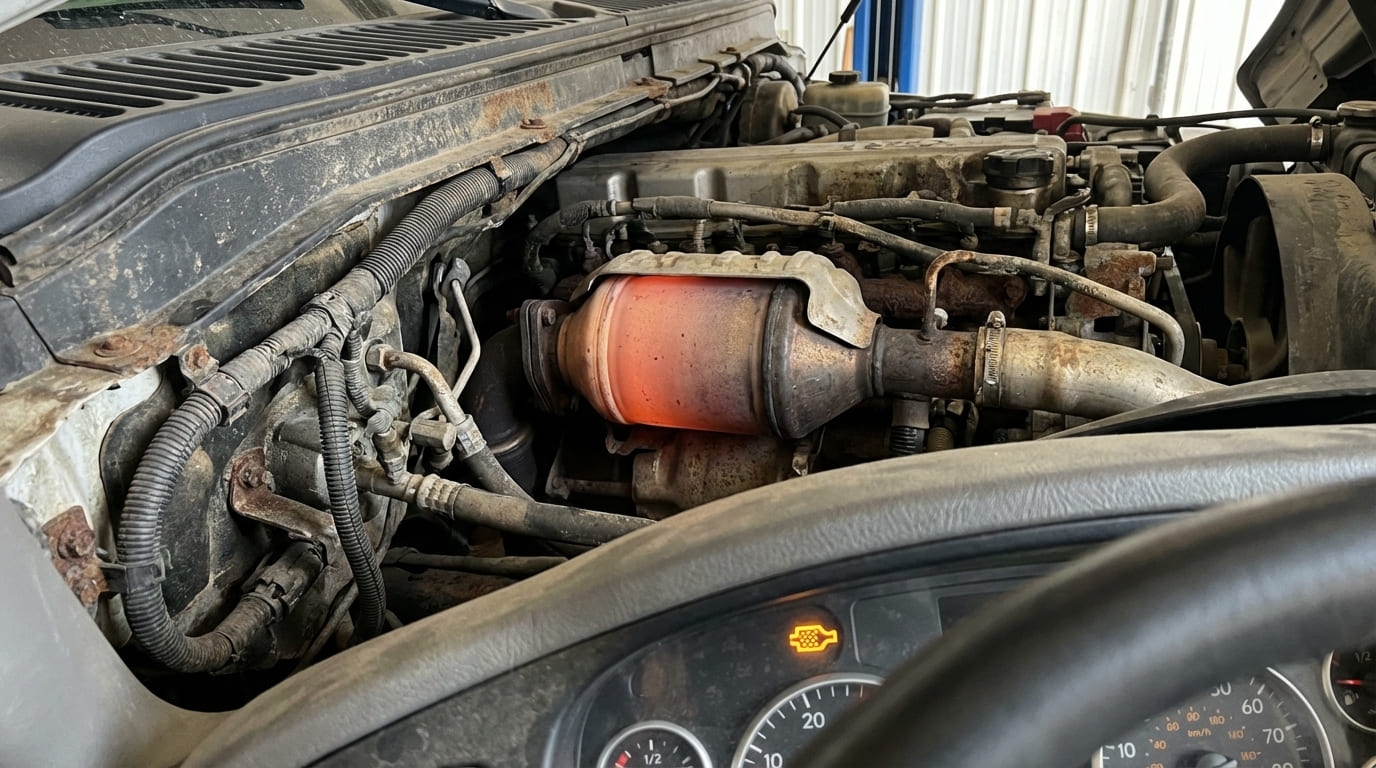
- Overheated catalytic converter from unburned fuel or rich running conditions.
- Carbon monoxide entering the cabin through floor pans or seals—potentially fatal.
If you smell exhaust inside the car or feel drowsy while driving, pull over and inspect the exhaust system immediately.
Diagnostic Decision Table
| Symptom | Most Likely Causes | Diagnostic Approach |
|---|---|---|
| Ticking noise on cold start | Manifold crack, gasket leak, loose bolt | Visual inspection for soot, soapy water test (cold engine), stethoscope check near ports |
| Check Engine Light (P0171/P0174 lean codes) | Exhaust leak pre-O2 sensor, vacuum leak, MAF issue | Scan tool fuel trim analysis, smoke test intake, inspect exhaust upstream of sensor |
| Reduced power and fuel economy | Severe backpressure, manifold restriction, EGR issue | Backpressure test, compare pre- and post-catalyst O2 sensor activity, inspect for blockages |
| Exhaust smell in cabin | Manifold or flange leak, floor pan corrosion, disconnected pipe | Visual inspection under vehicle, pressurized smoke test (low PSI), cabin ventilation check |
Situation: A 2012 Subaru with 98,000 miles came in with a P0302 misfire and a faint ticking on cold start. The customer had already replaced plugs and coils.
Initial Assumption: We suspected a valve train issue or compression problem.
Deep Dive: Compression test was good. Then I noticed a slight soot trail near cylinder 2’s port on the exhaust manifold. Removed the manifold and found a fine crack extending from the port edge.
Nuanced Lesson Learned: Not every misfire is ignition- or fuel-related. A small exhaust leak near a cylinder can disrupt scavenging and cause inconsistent cylinder pressure, confusing the ECU. Always inspect the exhaust side when chasing ghost misfires.
Situation: A customer installed an aftermarket header on a 5.0L Ford, but after 300 miles, two bolts sheared off.
Initial Assumption: We thought the bolts were subpar or over-torqued.
Deep Dive: Found that the installer hadn’t chased the threads in the head. Corrosion debris remained, causing uneven thread engagement. One bolt was bottoming out before reaching proper torque, transferring excess stress to others.
Nuanced Lesson Learned: Proper thread preparation is just as critical as torque specs. A bolt that can’t seat fully becomes a weak point under thermal cycling—even with quality hardware.
Situation: A 2015 Toyota Camry had a recurring P0420 code. Cat efficiency below threshold. Customer replaced the catalytic converter twice with no fix.
Initial Assumption: Faulty converters or engine running rich.
Deep Dive: We found a hairline crack in the integrated manifold near cylinder 3. It wasn’t visible at first, but a smoke test revealed a small leak pre-catalyst. The O2 sensor was reading lean, causing long-term fuel trim to go rich—eventually overheating the cat.
Nuanced Lesson Learned: An exhaust leak before the catalyst doesn’t just cause noise—it can mimic converter failure. Always rule out upstream leaks before condemning expensive emissions components.
The exhaust manifold is more than just a pipe—it’s a precision component that affects engine breathing, emissions, and safety. Whether you’re diagnosing a tick, replacing a cracked unit, or upgrading for performance, always follow proper procedures and use quality parts. When in doubt, consult the vehicle-specific service manual for torque specs, flatness limits, and replacement guidelines—what works on one engine may destroy another.