Over the past two decades in the shop, I’ve seen blown head gaskets on everything from high-mileage sedans to performance imports. The online estimates—$1,500 to $5,000—are real, but they’re starting points, not guarantees. The true cost depends on your engine, labor rates, hidden damage, and whether you DIY. Let me break down exactly what drives the price and how to make the smartest move.
How to Confirm a Blown Head Gasket
Don’t guess—diagnose. Many symptoms overlap with simpler issues like a bad radiator cap or cracked intake manifold. Misdiagnosis wastes money. Here’s how to verify.
Check for External and Internal Leaks
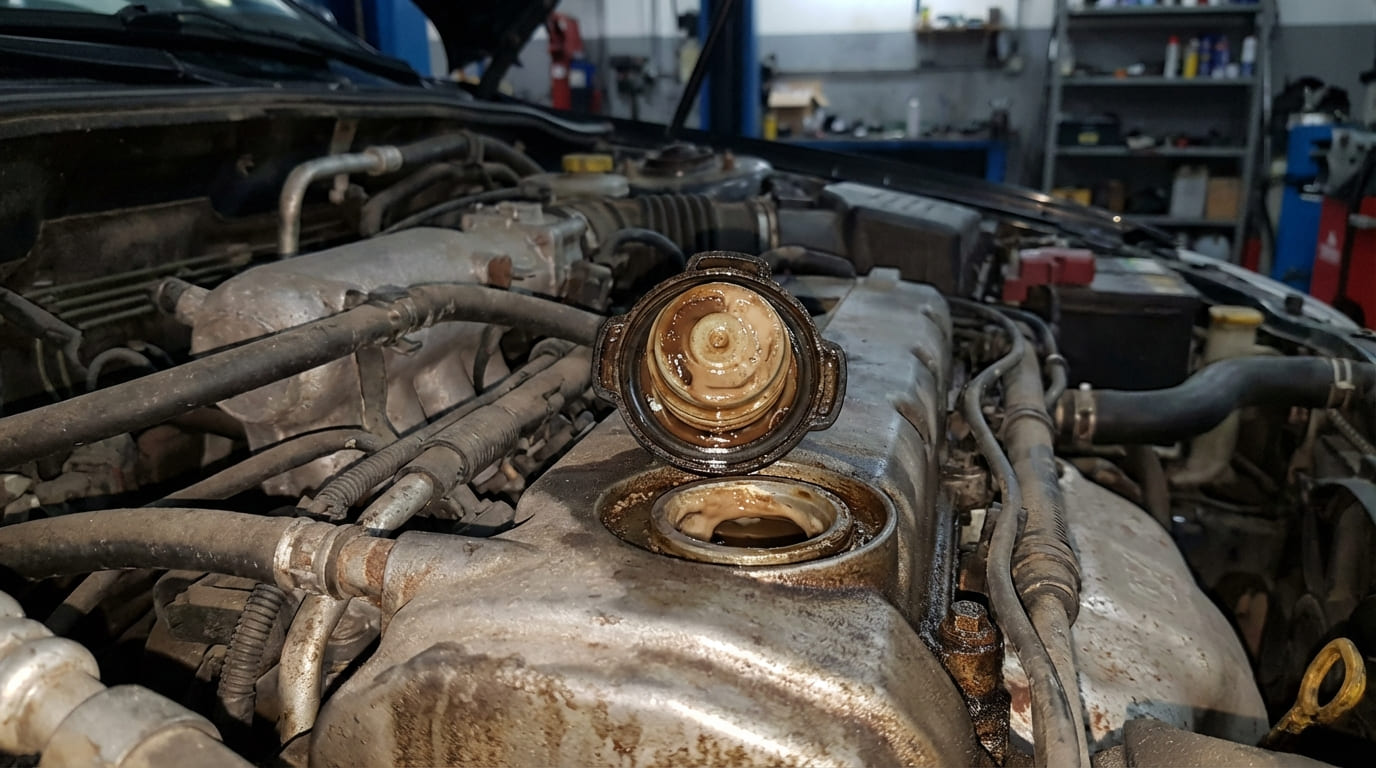
Start with a visual inspection. Look for coolant/oil mixing (milky residue on oil cap or dipstick) or wetness along the head-to-block seam. On transverse V6s and boxer engines, access is tight—use a mirror and flashlight.
If no obvious leak, move to internal testing.
How to Check: Exhaust Gas in Coolant (Block Tester)
Use a combustion leak tester (“sniffer”) with fresh chemical fluid (blue). Draw air from the coolant reservoir. If it turns yellow or green, combustion gases are entering the cooling system—strong sign of head gasket failure. Bubbles in the radiator alone aren’t definitive; they can be air pockets.
How to Check: Cooling System Pressure Test
Pump the system to factory pressure (usually 15 psi) and watch for 20 minutes. A drop indicates a leak. If no external leaks appear, the breach may be internal. Note: Some leaks only show under engine load and heat.
How to Check: Cylinder Leak-Down Test
This is the gold standard. With the piston at TDC on compression stroke, apply 100 psi of air. Listen for air escaping:
- Into radiator? Gasket breach to coolant.
- Into adjacent cylinder? Inter-cylinder leak.
- Out exhaust or intake? Valve or gasket issue.
More than 20% leakage means disassembly is needed.
How to Check: Oil and Coolant Analysis
If unsure, pull oil and coolant samples. Glycol in oil confirms coolant intrusion. But oil in coolant could also mean a failed transmission cooler or turbo seal—don’t assume it’s the head gasket.
In my shop, we never greenlight a head gasket job without a leak-down test. I’ve saved customers thousands by catching bad water pumps or intake manifolds that mimic gasket failure.
Professional Replacement: What You’ll Pay
Most head gasket jobs run $1,500–$4,000. High-end or complex engines can hit $5,000+. Here’s the breakdown.
Labor: The Big Cost Driver
Labor is 70% or more of the total. This job isn’t just removing the head—it’s full disassembly. Access, engine layout, and required precision drastically affect hours.
| Engine Type | Typical Labor Hours | Common Complications |
|---|---|---|
| Inline-4 (FWD transverse) | 10–14 | Limited access, timing chain setup, plastic intake removal |
| V6 (transverse) | 14–18 | Dual heads, tight clearances, water pump behind timing cover |
| Flat-6 (e.g., Subaru) | 18–24 | Engine removal often needed, dual timing systems |
| V8 (RWD, older) | 12–16 | Better access, but stuck exhaust manifolds, more fasteners |
Labor rates vary: $100–$180/hour. A Subaru in a metro area can easily hit $4,500 just from labor and shop rate.
Parts: What’s Included and What to Add
A quality head gasket kit costs $300–$700 and includes:
- Head gasket(s)
- Torque-to-yield (TTY) head bolts (must replace)
- Intake, exhaust, and valve cover gaskets
- O-rings and seals
Smart upgrades while the engine is apart:
- Water pump (if timing-accessible): $100–$300
- Thermostat: $20–$50
- Coolant hoses: $80–$150
- Spark plugs: $100–$200
Plan an extra $300–$500 for these “might as well” parts.
Hidden Costs: What Happens When You Open It Up
Once the head’s off, surprises happen. Budget for these:
- Head resurfacing: $100–$300 per head
- Remanufactured head: $600–$1,500
- Block crack repair: $500+, if feasible
Check head flatness with a precision straightedge and feeler gauge. More than 0.002” warp over 6 inches? It needs machining.
Situation: 2012 Subaru Outback with white smoke and overheating. Owner replaced radiator and thermostat first. Leak-down test showed 35% loss into coolant. After removal, heads looked fine—but dye penetrant found a hairline crack between cylinders. Lesson: Overheating can crack the head. Always inspect metal, not just the gasket.
Situation: 2005 Toyota Camry with milky oil. Head looked flat, but block deck had pitting from old coolant. Lesson: A new gasket won’t seal a damaged surface. Clean decks thoroughly and verify flatness—even if it looks okay.
Situation: 2008 Honda Accord with intermittent overheating. Block test positive. Head had minor carbon tracking and 0.003” warp. TTY bolts had been over-torqued in prior repair. Lesson: Torque specs and sequence are critical—especially with stretch bolts.
Can You DIY? What It Really Takes
Yes, but only if you’re experienced. I’ve seen DIYers nail it on Honda and GM 4-cylinders. But one mistake—wrong torque, dirty threads, skipped step—and you’re back at square one.
Tools and Must-Know Tips
Required tools:
- Factory service manual (Haynes isn’t enough)
- Accurate torque wrenches (inch- and foot-pound)
- Feeler gauges and 12″ precision straightedge
- Specialty tools: cam lock kits, harmonic balancer puller
- Time—this is a 2–3 weekend job for most
Parts cost is the same: $300–$1,000. But you’re risking $2,000 in damage if it fails.
Pro Tips: Do This, Avoid That
- ✅ Clean head bolt threads with a bottoming tap. Dirt or old sealant causes false torque readings.
- ✅ Oil TTY bolts before installation. Dry bolts stretch unevenly.
- ✅ Torque in stages and sequence—never skip steps. Example: 50 ft-lb, then 90° turn, then another 90°.
- ✅ Prime oil system before startup—crank engine with spark plugs out (coil disabled) to build oil pressure.
- ⚠️ Never reuse TTY head bolts. Stretch is one-time only.
- ⚠️ Don’t use RTV sealant excessively. A dab at corners is fine—too much can clog oil passages.
- ⚠️ Replace thermostat and radiator cap. Overheating likely caused the failure—don’t skip these cheap fixes.
In my shop, we see two DIY failures every month. One: reused head bolts. Two: didn’t clean block threads. Both lead to leaks in under 1,000 miles. If you’re not confident, pay for labor.
Is the Repair Worth It? Cost vs. Value
Rule of thumb: if repair cost exceeds 50–75% of your car’s value, reconsider. But context matters.
Example: A $3,000 repair on a $2,500 Corolla with 200k miles and rust? Probably not. But that same repair on a clean, low-mileage Subaru with a manual trans and no rust? It could add 100k more miles of reliable service.
Alternatives:
- Used engine: $1,500–$3,000 (plus $500–$1,000 install)
- Rebuilt engine: $2,500–$4,000 installed
- Scrap and move on: sometimes the smartest financial move
How to Verify the Repair Worked
Don’t drive it home and hope. Test it like a pro.
- Pressure test cooling system—hold 15 psi for 30 minutes
- Perform block test when cold and hot
- Road test: include highway speeds and hill climbs under load
- Scan for pending codes—even if no check engine light
- Check oil and coolant levels at 50 and 500 miles
I once missed a slightly loose coolant hose after a head gasket job. Engine ran fine—until it overheated on the highway. Now I double-check every hose, clamp, and bolt. A 10-minute recheck saves a $3,000 mistake.