Understanding Crankshaft Knock: Sound, Location, and Behavior
A true crankshaft knock is a serious mechanical issue, not just engine noise. It typically presents as a deep, rhythmic metallic thump from the lower engine block—distinct from high-pitched ticks or random rattles. The sound usually worsens under load, such as during acceleration or uphill driving, and may be more pronounced on cold start before oil pressure stabilizes. If you hear this, don’t ignore it: internal damage is likely progressing.
How to Check for Crankshaft Knock
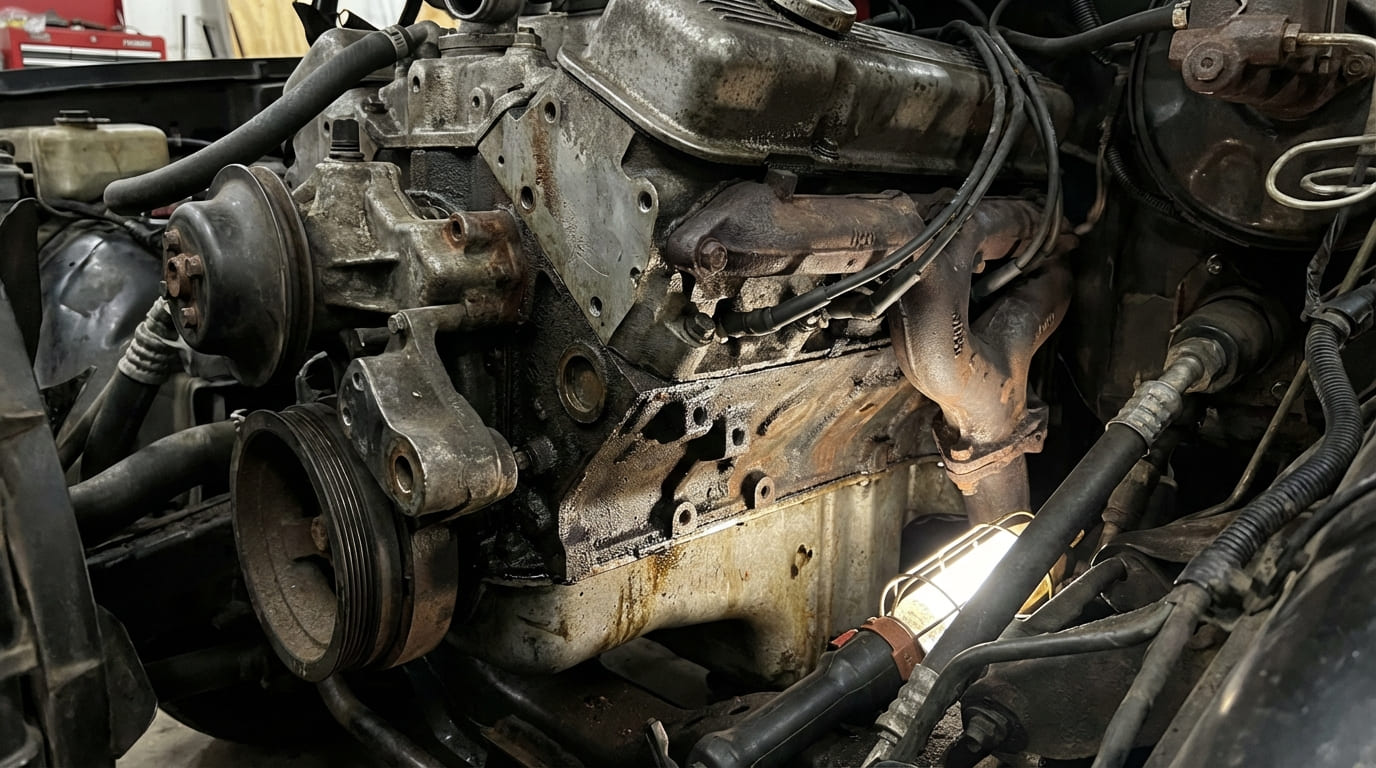
Use a mechanic’s stethoscope or chassis ear to isolate the noise. Place the sensor near the oil pan rail, main bearing caps, and along the engine block centerline. A rod knock will often be loudest near the corresponding cylinder’s rod access point, while a main bearing knock resonates more centrally. Record the sound while slowly increasing RPM—crankshaft knock grows steadily louder with engine speed and load.
Primary Causes and How to Diagnose Each
Four main issues cause crankshaft knock. Diagnosing the root cause saves time and money—because replacing bearings won’t fix a broken oil pump.
1. Connecting Rod Bearing Failure
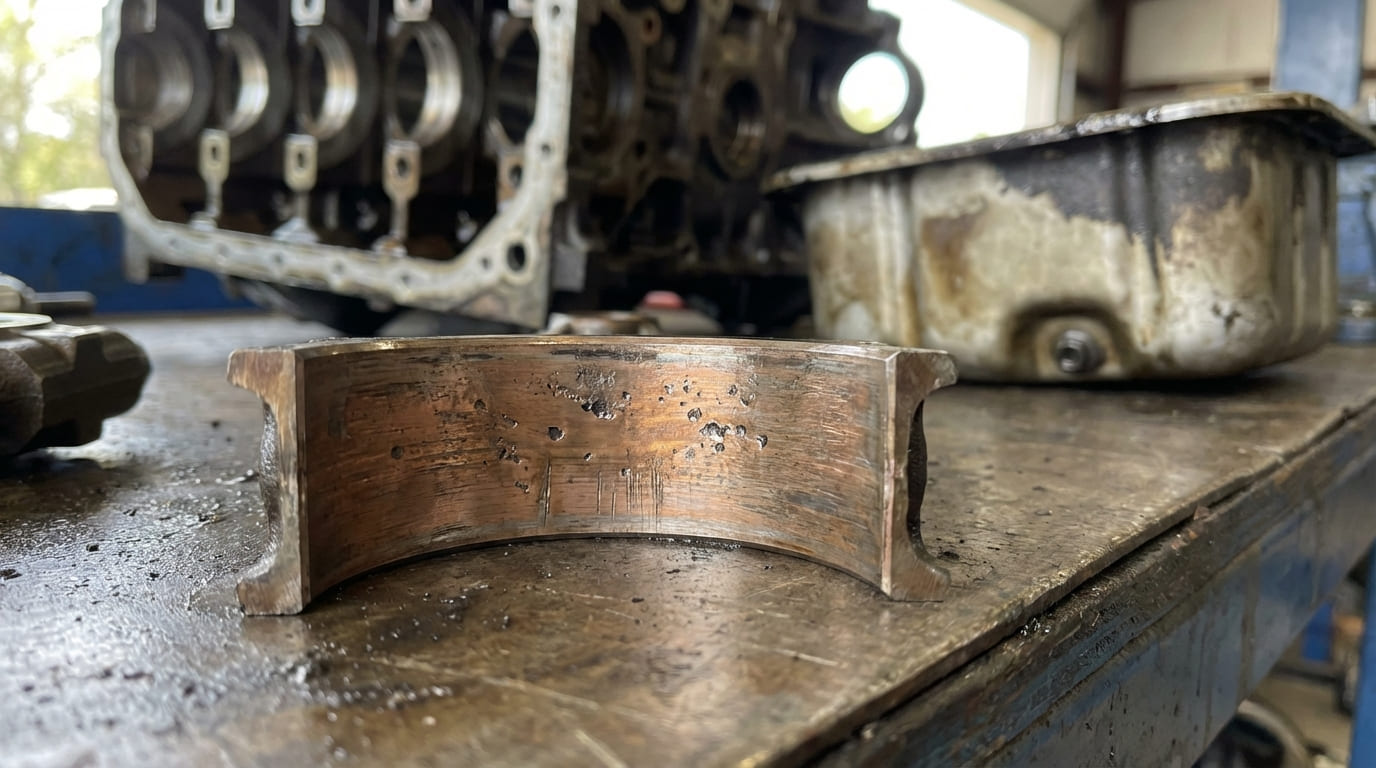
Worn rod bearings create excess clearance, allowing the rod to slam into the crank journal during piston direction changes. This produces a sharp, rhythmic knock that peaks at top and bottom dead center. Common triggers include oil starvation, overdue oil changes, poor oil quality, or incorrect bearing installation.
How to Check: Perform a cylinder kill test using a scan tool to disable fuel or spark to individual cylinders. If the knock disappears when a specific cylinder is cut, that rod bearing is likely the source. Confirm with oil pan inspection and Plastigage measurement.
2. Main Bearing Failure
Main bearing knock is broader and often felt as a vibration through the chassis. It may be accompanied by excessive crankshaft end play. Thrust bearing wear—common in manual transmission vehicles with aggressive clutch use—can cause knocking during load shifts.
How to Check: Measure crankshaft end play with a dial indicator on the harmonic balancer. Factory specs vary; most allow 0.004″ to 0.010″. Exceeding this range points to thrust bearing wear. Also inspect oil pressure: main bearing leaks can reduce overall system pressure.
3. Oil Starvation and Lubrication Failure
Low oil volume or pressure prevents proper hydrodynamic film formation. Causes include clogged oil pickup screens, failing oil pumps, degraded oil, or incorrect viscosity. The knock may fade when warm as oil thins, leading to false confidence.
How to Check: Install a mechanical oil pressure gauge. Test at idle and 2,000 RPM. Compare to factory specs—most engines need 10 psi per 1,000 RPM, minimum. Remove the oil pan and inspect the pickup screen for debris or blockage. Check oil pump rotor wear and relief valve function.
4. Crankshaft Journal Damage or Excessive Clearance
Once bearings fail, journals often become scored or out-of-round. But sometimes journal damage comes first—due to debris during assembly or poor oil filtration. Even minor burrs disrupt oil film, accelerating wear.
How to Check: After removing bearings, inspect journals for scoring, pitting, or taper. Measure journal diameter with a micrometer at multiple points. Compare to factory specs. Use Plastigage or a bore gauge to verify bearing clearance—typical rod clearance is 0.001″ to 0.003″, but always consult the service manual.
Differential Diagnosis: Is It Really Crankshaft Knock?
Many noises mimic crankshaft knock. Misdiagnosis leads to unnecessary teardowns. Use this guide to distinguish:
| Noise Type | Typical Sound | Location | Load Response | Likely Cause |
|---|---|---|---|---|
| Crankshaft Knock | Deep, rhythmic thump | Lower block, near crank centerline | Worsens under load | Main or rod bearing wear, oil starvation |
| Piston Slap | Sharp, hollow knock when cold | Upper cylinder wall | Improves as engine warms | Excessive piston-to-wall clearance |
| Wrist Pin Knock | Light metallic rap | Upper end, near piston crown | Noticeable at idle, decel | Worn pin or bushing |
| Valvetrain Noise | High-pitched tick or tap | Cylinder head | Consistent, RPM-dependent | Lifter leak-down, low oil pressure to top end |
| Detonation | Sharp pinging or rattling | Combustion chamber (throughout) | Under acceleration, high load | Lean mixture, carbon buildup, low fuel octane |
Step-by-Step Diagnostic Procedure
Follow this sequence to confirm crankshaft knock and identify the root cause without unnecessary disassembly.
- Check oil level and condition. Low or sludged oil is the easiest fix. Top up and test drive—but don’t assume this solves the problem.
- Perform an oil pressure test with a mechanical gauge. Electronic sensors can be inaccurate. Low pressure at idle (below 10 psi) is a red flag.
- Run an oil analysis. Lab results showing elevated copper, lead, or tin indicate bearing wear. Iron spikes suggest crank or cylinder damage. This can detect issues before noise appears.
- Conduct a cylinder kill test. Use a scan tool to disable cylinders one at a time. If the knock stops when a cylinder is cut, that rod bearing is suspect.
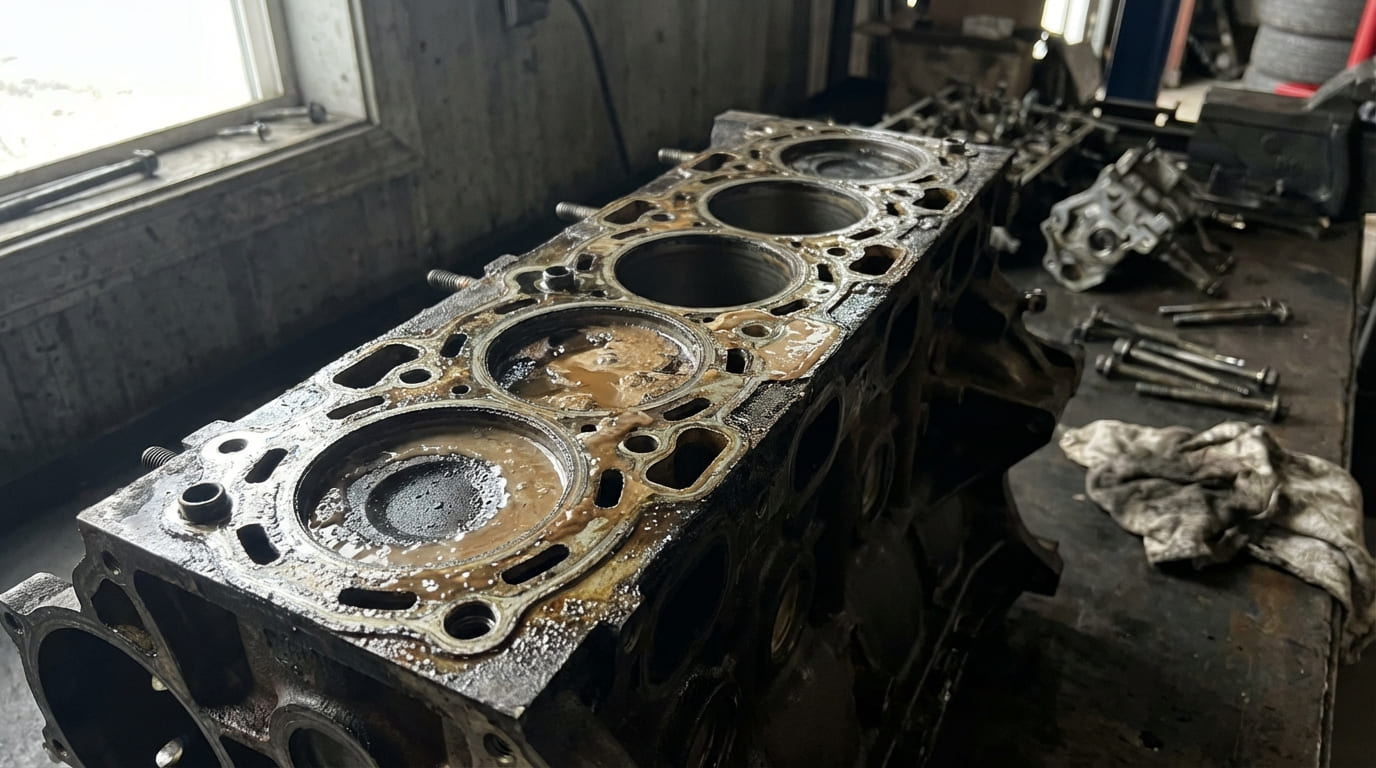
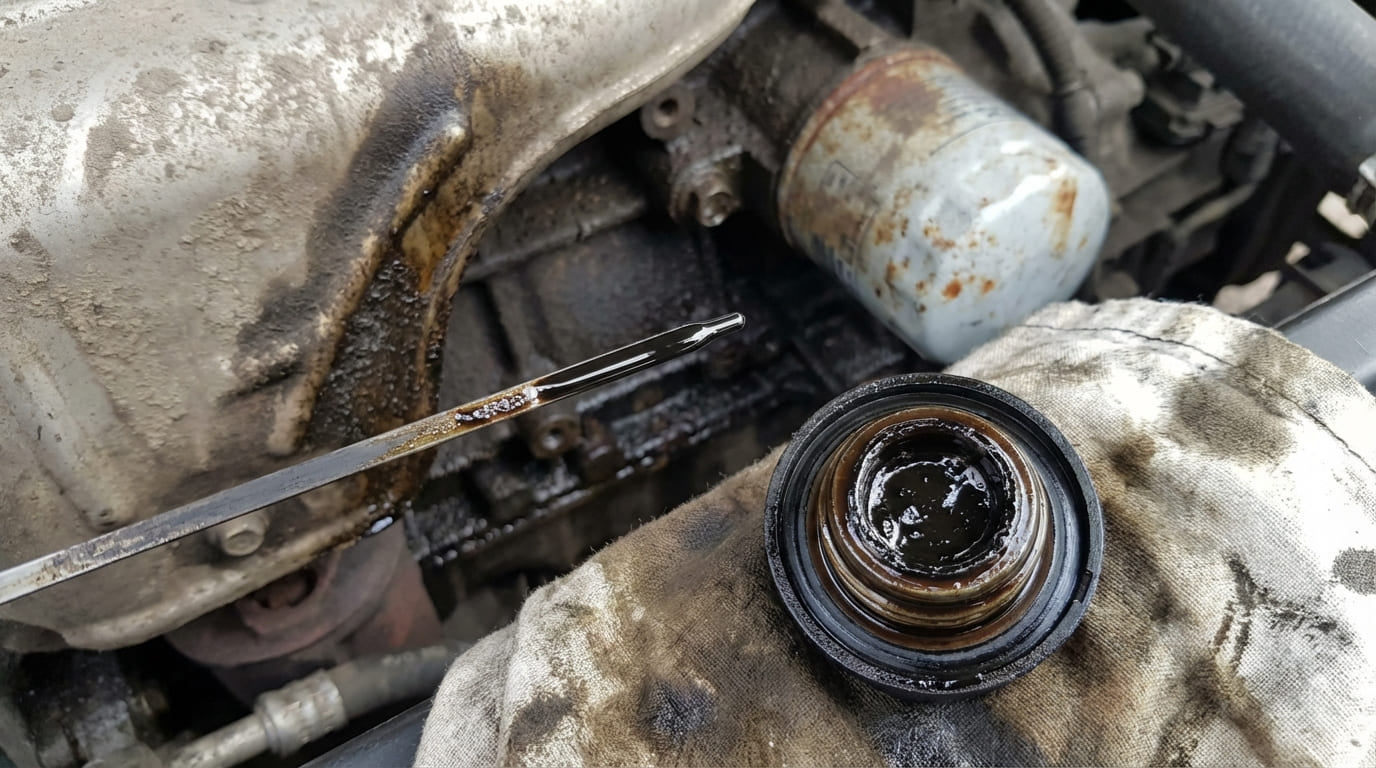
- Remove the oil pan for visual inspection. Look for metal flakes—copper means bearing material, silver or gray suggests crank damage. Inspect the pickup screen for blockages.
- Measure bearing clearance with Plastigage or precision tools. Check all rod and main bearings. Record values and compare to factory specs.
- Inspect crankshaft journals. Clean and measure with a micrometer. Check for taper, out-of-round, or scoring.
Repair vs. Replace: Cost and Viability
Once crankshaft knock is confirmed, decide whether to repair or replace the engine.
| Option | Cost Range | When It Makes Sense | Risks |
|---|---|---|---|
| Rebuild (bearings + recondition crank) | $1,200–$2,500 | Low-mileage engine, minimal crank damage, skilled mechanic | Shortened lifespan if crank isn’t properly ground or clearances are off |
| Short block replacement | $2,000–$4,000 | High-mileage engine, damaged crank, or limited shop tools | Higher cost, but factory-spec tolerances and reliability |
| Used engine swap | $1,500–$3,500 | Budget option, but unknown history | Potential for hidden wear or future knock |
| New long block | $3,000–$6,000+ | Max reliability, warranty coverage, modern updates | Most expensive, but lowest long-term risk |
Best Practices and Master Tips
- ✅ Clean block and cap threads with a bottoming tap before reassembly. Dirty or stretched threads cause inaccurate torque and cap shift.
- ✅ Use a torque-angle gauge for torque-to-yield (TTY) bolts. These bolts stretch, and angle is critical—don’t rely on torque alone.
- ✅ Prime the oil system before startup after any internal work. Use a drill-driven oil pump primer to ensure all bearings are lubricated at first start.
- ⚠️ Never reuse torque-to-yield bolts unless the factory explicitly allows it. In my shop, we treat them as single-use.
- ⚠️ Never install new bearings without inspecting the crankshaft. A scored journal will destroy new bearings in days.
- ⚠️ Always measure bearing clearance—even with “standard” bearings. Manufacturing variances mean clearance isn’t guaranteed.
Situation: A 2012 V6 came in with a knock that worsened under load. Initial oil pressure was low at idle—15 psi. The customer had already replaced lifters, thinking it was valvetrain noise.
Discovery: After pulling the pan, I found brass flakes. Plastigage showed rod clearance at 0.005″—well over spec. But the crank journals looked smooth. Further inspection revealed the oil pickup screen was partially blocked by a torn gasket.
Nuanced Lesson Learned: The root cause wasn’t poor assembly or bad bearings—it was an oil starvation event from a simple gasket misalignment. Always rule out oil delivery issues before condemning rotating assembly components.
Situation: A high-mileage inline-four developed a rhythmic knock after a cold start. It faded slightly when warm. The owner had recently switched to a high-mileage oil with added seal conditioners.
Discovery: Oil analysis showed normal wear metals. Pressure test passed. Upon teardown, bearings were in spec. The knock was actually mild piston slap—exacerbated by the thicker oil delaying hydrodynamic film formation.
Nuanced Lesson Learned: Not every cold-start knock is a bearing. Oil formulation can influence noise characteristics, and piston slap can mimic crankshaft issues under certain conditions.
Situation: A truck with a rebuilt engine developed a knock after 8,000 miles. Builder claimed “break-in wear.” Noise was load-sensitive and loudest near cylinder #5.
Discovery: Cylinder kill test silenced the knock. Plastigage showed excessive clearance on rod #5. The bearing had spun slightly. Further review found the rod cap was misaligned during assembly—likely due to unclean mating surfaces.
Nuanced Lesson Learned: Even experienced builders make small mistakes. Surface cleanliness and proper cap orientation are critical. A fraction of a millimeter off can lead to catastrophic clearance issues.
When diagnosing crankshaft knock, remember: the loudest noise isn’t always the root cause. The real problem may be upstream—like oil flow, assembly cleanliness, or driving habits. Modern engines have tighter tolerances and less forgiveness than older models. Always consult the factory service manual for torque specs, clearance limits, and material requirements. What works on one engine may destroy another.