In my shop, one of the most critical questions I ask when diagnosing a no-start or planning a timing service is: “Is this engine interference or non-interference?” The answer dictates whether a simple timing belt replacement could lead to a $3,000 engine rebuild or just a $500 repair. Over two decades, I’ve seen too many DIYers skip this step—only to destroy an engine they thought was safe. Let me break down what it means, how to tell the difference, and what to do when things go wrong.
Interference Engines: High Performance, High Risk
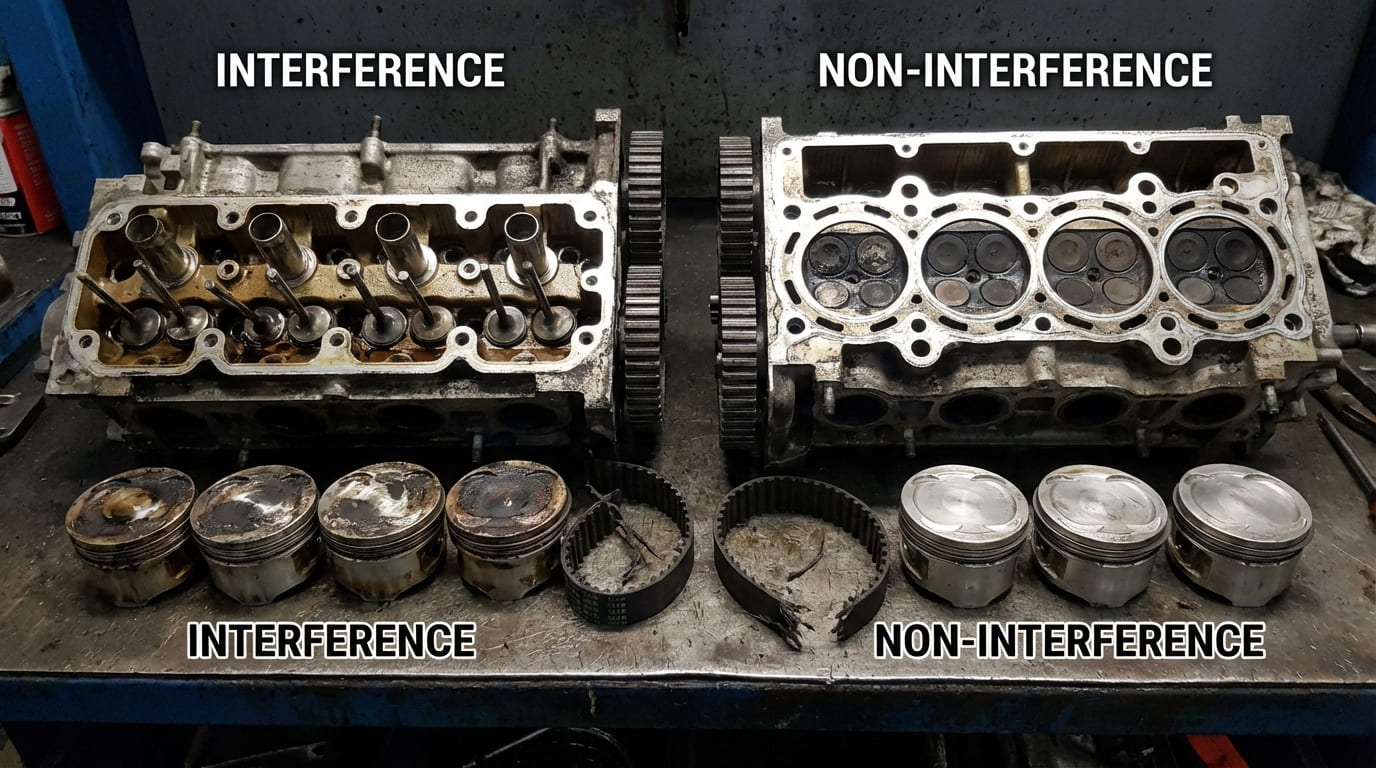
Most modern engines are interference designs. The pistons and valves occupy the same space in the cylinder at different times, allowing for larger valves, tighter combustion chambers, and better efficiency. But if the timing belt or chain fails, those parts can collide.
When timing is lost—due to a broken belt, jumped chain, or failed tensioner—the valves and pistons can crash into each other. The result? Bent valves, damaged pistons, and often a ruined cylinder head. This isn’t a maybe—it’s mechanical certainty on most interference engines.
Common Damage After Timing Failure
- Bent or broken intake and exhaust valves—exhaust valves fail more often due to heat and brittleness
- Valve guide damage or pulled guides
- Dented or holed pistons
- Cracked cylinder head decks or damaged valve seats
- Rarely, bent connecting rods from severe impact
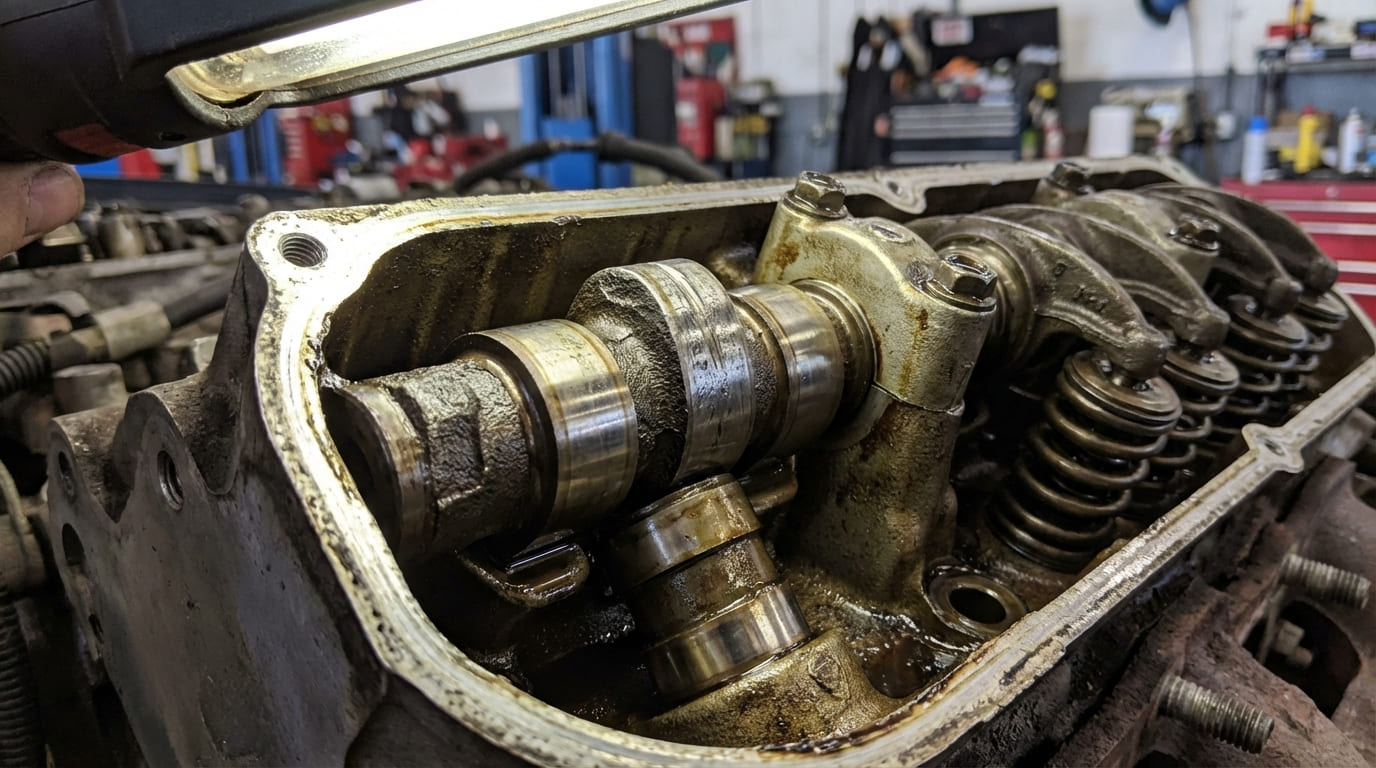
- Secondary damage to camshafts or lifters from debris
Repair costs vary widely. Replacing bent valves and guides in a head can run $800–$1,500 if the block is intact. But if pistons or the crank are damaged, a full rebuild or replacement engine ($2,500–$5,000) may be needed. Always inspect thoroughly before quoting.
In my shop, we never assume an interference engine is junk after a belt failure. We check compression and use a borescope first. I’ve saved customers thousands by finding only minor damage—don’t condemn the engine without proof.
Non-Interference Engines: Built-In Clearance
Non-interference engines have physical clearance between the fully open valves and the piston at Top Dead Center (TDC). If the timing belt breaks, the engine stops—but no parts collide. There’s no bent metal, no internal damage—just a dead engine.
That means you can usually replace the belt and reset timing without tearing into the engine. However, “safe” doesn’t mean “free.” You’ll still pay for towing, labor, and parts—typically $400–$700. And if the engine was under load when it failed, hydrolock or fuel dilution could complicate things.
Just because it’s non-interference doesn’t mean you can wing the timing job. I’ve seen engines with camshafts installed backward—valves didn’t hit pistons, but the engine wouldn’t run right. Precision still matters.
How to Identify Your Engine Type
The only reliable way to know is by checking the OEM service manual. Online charts and forums are often outdated or incorrect. I’ve seen techs trust a forum post and ruin a perfectly good engine.
If you’re rebuilding and want to verify clearance, use modeling clay. Stick a 1/4″ layer on the piston crown, install the head without gasket, rotate the engine one full cycle, then remove and measure the thinnest point of the clay. Compare to factory specs—typically 0.080″ for intake and 0.100″ for exhaust, but always verify.
Don’t guess based on piston reliefs. I’ve seen deep valve pockets on interference engines—those are for airflow, not clearance. Only factory data tells the full story.
Diagnosing Timing Damage: Step-by-Step
If an engine won’t start after a timing belt or chain issue, follow this diagnostic path:
- Check if the engine cranks normally. If it binds or won’t turn, stop—mechanical interference is likely.
- Perform a compression test. Zero or very low compression on multiple cylinders suggests valve damage.
- Follow with a leak-down test. Over 20% leakage with air heard at the intake or exhaust confirms bent valves.
- Use a borescope through the spark plug hole or injector bore. Look for valve contact marks on pistons or bent valve stems.
- If compression and visuals are good, recheck timing marks and cam/crank sensor signals.
Some interference engines survive belt breaks if the engine stops at a “safe” piston position. But don’t rely on luck—inspect before assuming.
Best Practices and Cost-Saving Tips
Timing jobs are high-stakes. Here’s what I enforce in my shop:
- ✅ Always confirm interference status in the factory manual before removing the old belt.
- ✅ Replace tensioners, idlers, and water pump (if belt-driven) at the same time. A $20 tensioner can kill a $3,000 engine.
- ✅ Clean all threads and lubricate cam and crank bolts with engine oil. Dry threads cause false torque readings and bolt failure.
- ⚠️ Never reuse old timing belt hardware. Stretch and wear make them unreliable.
- ⚠️ Don’t over-tighten timing cover bolts—especially on aluminum or magnesium housings. Use a torque wrench and follow sequence.
- ⚠️ Always rotate the engine two full revolutions by hand after setting timing. Binding means something’s wrong—don’t start it.
Real-World Cases: What Actually Happens
Situation: 2010 Honda Accord 2.4L with broken timing belt. Classic interference engine—assumed total loss.
Discovery: Hand-cranking showed no resistance. Borescope revealed minor piston marks but no bent valves. Compression was 10% low across all cylinders.
Outcome: Replaced belt and tensioner—engine fired up. Lesson: Failure doesn’t always mean destruction. Inspect before condemning.
Situation: DIYer replaced timing belt on Toyota 5VZ-FE 3.4L (non-interference), but engine clattered and ran rough.
Discovery: Camshaft was 180° out. No piston damage, but valve overlap was destroyed.
Outcome: Re-timed cam—fixed. Lesson: Non-interference doesn’t mean “foolproof.” Precision still rules.
Situation: 2016 VW 1.8T with jumped timing chain due to failed tensioner. Mechanic quoted full rebuild.
Discovery: Compression and leak-down tests showed only two exhaust valves slightly bent. Head was repairable.
Outcome: Replaced valves and guides—saved $2,000 over a new engine. Lesson: Evaluate, don’t assume.
Comparison: Interference vs. Non-Interference Outcomes
| Scenario | Most Likely Cause (Interference) | Most Likely Cause (Non-Interference) | Probability of Internal Damage |
|---|---|---|---|
| Timing belt breaks at 3,000 RPM | Valve-piston collision | Timing loss only | High (70–90%) vs. Low (5–10%) |
| Engine won’t start after belt replacement | Incorrect timing alignment | Incorrect timing or ECU sync issue | Moderate (requires verification) |
| White smoke after timing repair | Valve seal damage or head gasket compromise | Coolant leak or sensor error | Varies—check compression and coolant pressure |
| Chain rattle at cold start | Worn tensioner or guide | Same—chain design not related to interference | Unrelated to interference type |
The bottom line: interference engines demand strict maintenance and precise repairs. Miss the timing belt change, and you’re gambling with the engine. Non-interference engines offer margin for error—but not immunity from poor workmanship. Always verify, always inspect, and always let the factory data—not guesses—guide your decisions.