In my experience, the oil pump is one of those components that often gets overlooked—until something goes wrong. It’s not flashy like fuel injectors or as talked about as the turbo, but it’s absolutely vital. I’ve pulled apart more than a few engines where the root cause wasn’t the bearings or the cam, but a pump that wasn’t doing its job properly—or one that was doing too much, creating other issues. This article will show you exactly what the oil pump does, how to diagnose problems, and when to repair or replace it.
Primary Function: Why the Oil Pump Matters
The oil pump’s job is to circulate pressurized oil through the engine the moment it starts. Without it, metal parts grind together in seconds. It ensures oil reaches critical components—crankshaft and rod bearings, camshafts, lifters, piston jets, and turbos—before significant wear occurs.
Flow and pressure are both critical. A pump may show good pressure on a gauge but still fail to deliver enough volume at high RPM, especially in engines with worn internals or performance modifications. Don’t assume pressure = health. Volume matters just as much.
In my shop, we always prime the oil system before starting a rebuilt engine. A dry startup—even for 10 seconds—can destroy new bearings. Use a priming tool or drill-driven adapter to spin the pump and build pressure before ignition.
How It Works: Key Components and Operation
Positive Displacement Pumps and Flow Control
Most oil pumps are positive displacement: they move a fixed amount of oil per revolution. Flow increases with engine speed. Pressure, however, is determined by resistance—tight bearing clearances, a clogged filter, or blocked galleries. The pump creates flow; the engine creates pressure.
If pressure is low across the board, it’s usually due to excessive internal clearances (worn bearings) or a failing pump. If pressure is high, suspect a stuck relief valve or overly thick oil.
Common Pump Types and Real-World Use
- Gerotor (internal gear): Compact and efficient. Found in most modern engines. Reliable for street use but can lack volume in high-RPM or high-clearance builds.
- External gear: Durable and simple. Common in older and performance engines. Can handle higher volumes but noisier and bulkier.
- Crescent pump: A variation of the external gear design with improved sealing. Used in some OEM applications for efficiency.
- Vane pump: Often used in variable-displacement systems. Flow adjusts based on engine demand, improving fuel economy.
Aftermarket high-volume or high-pressure pumps are available, but only install them if your engine needs it—like a stroker build or tight bearing clearances. More flow can cause aeration, windage, or relief valve bypass if not managed.
Pickup Tube, Screen, and Oil Pan Dynamics
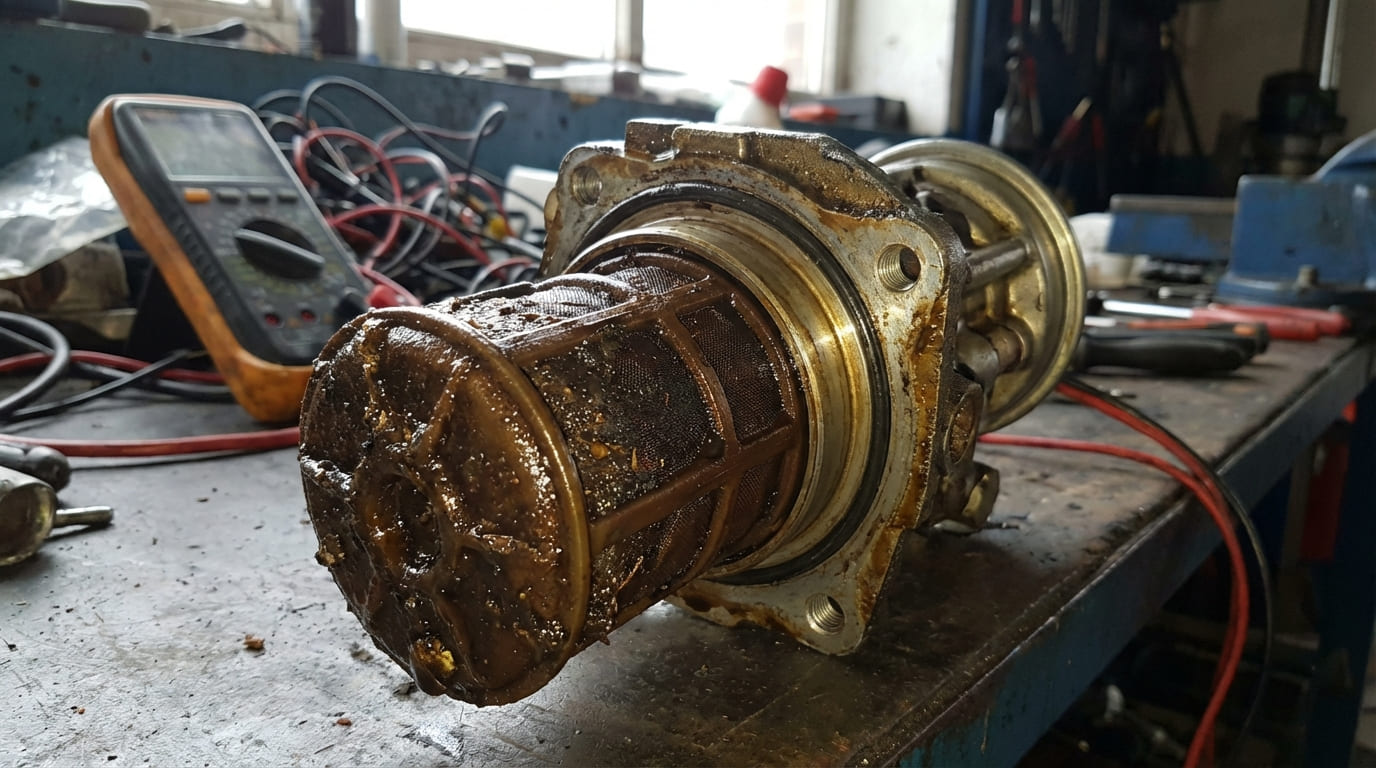
The pickup tube draws oil from the sump. The screen prevents large debris from entering the pump. A bent pickup, loose screen, or low oil level can cause aeration or cavitation—especially under hard cornering or acceleration.
Always inspect the pickup-to-pump inlet seal. Even a small gap can suck air, reducing effective flow. On engines with windage trays, ensure oil can return freely to the sump. Trapped oil or splashing can foam the oil, hurting pump efficiency.
In my shop, we measure pickup-to-sump clearance. For most engines, it should be 3/8″ to 1/2″ off the pan floor. Too close, and it can suck debris; too far, and oil slosh can starve it during hard driving.
Drive Methods and Failure Points
Pumps are driven by the crankshaft (via a driveshaft), timing chain, or intermediate shaft. Some modern engines use electric pumps to maintain pressure during stop-start cycles.
A worn timing chain or loose driveshaft can cause pump lash, leading to fluctuating pressure at idle. Always check the drive mechanism when diagnosing oil pressure issues. A bad chain tensioner can mimic a failing pump.
Oil Flow Path and System Integration
Oil travels: sump → pickup → pump → filter → main oil gallery → critical components. The exact path varies by engine. Some feed the cam first; others prioritize main bearings. Know your engine’s design when diagnosing.
Oil feeds:
- Main and rod bearings
- Camshaft journals and lifters
- Variable valve timing (VVT) actuators
- Piston cooling jets
- Turbocharger bearings (if equipped)
Hydraulic lifters and VVT systems rely on consistent pressure. Low flow causes ticking, poor performance, or check engine lights. Turbo bearings can fail in minutes without oil.
Pressure Regulation: Relief Valve Function
The relief valve opens when pressure exceeds a set limit—usually via a spring. It recirculates oil back to the inlet or sump, preventing damage. On most OEM pumps, it’s non-adjustable.
Sludge or debris can stick the valve open (causing low pressure) or closed (causing high pressure). A simple disassembly and clean can fix what looks like a major issue.
OEM specs are essential. A typical sedan might need 25–30 psi at 2000 RPM. A high-performance engine may require 55+ psi. Always consult the factory manual—don’t guess.
Oil Pressure Sensor: Don’t Trust the Dashboard Light
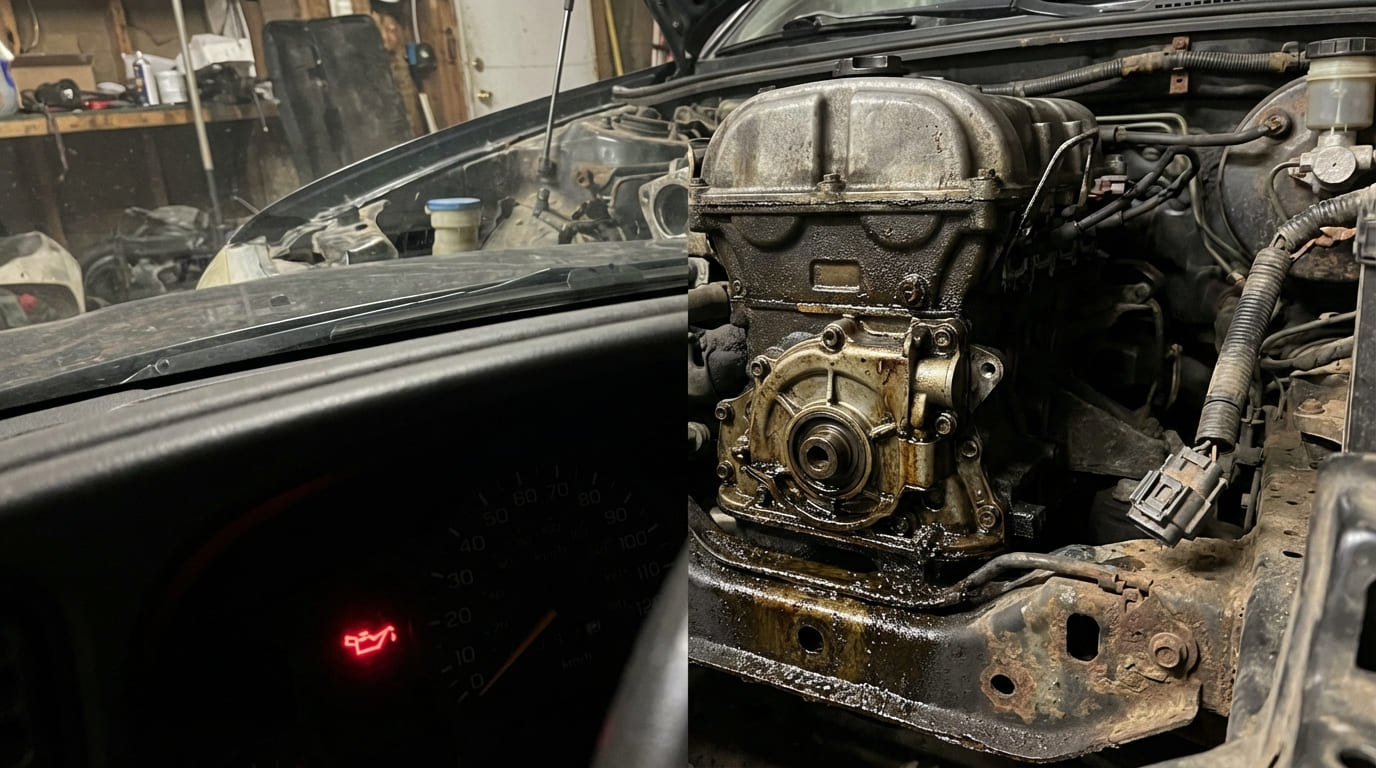
The oil pressure sensor monitors pressure and triggers the warning light. But its location matters. Some are placed in low-flow branches of the gallery and don’t reflect true system pressure.
If the light comes on at idle, don’t assume the pump is bad. Install a mechanical gauge at the filter port or main gallery to verify. I’ve seen many good pumps replaced unnecessarily because of a faulty or poorly located sensor.
Diagnosing Oil Pump and Pressure Problems
Symptoms of oil system failure include:
- Low oil pressure warning light (especially when hot or at idle)
- Knocking or tapping from bearings or lifters
- Overheating despite good coolant function
- Loss of power or stalling under load
The only reliable test is a mechanical oil pressure gauge. Connect it to the engine’s test port—usually near the oil filter. Run the engine at idle and at 2000 RPM. Compare readings to factory specs.
Keep in mind: oil viscosity, temperature, and engine wear affect readings. 18 psi at idle might be normal for a worn engine but too low for a fresh rebuild.
When to Replace the Pump: Cost and Viability
Oil pump replacement typically costs $300–$800 at a shop, depending on accessibility. DIY cost: $80–$200 for the pump, plus time. Most pumps are inside the oil pan, requiring pan removal and sometimes timing cover work.
Replace the pump during engine rebuilds or if:
- Pressure is low and other causes are ruled out
- Debris is found in the oil (indicating pump wear)
- You’re building a high-RPM or high-performance engine
Otherwise, don’t replace it “just in case.” A healthy pump can last 150,000+ miles. Focus on oil quality and filter changes instead.
Common Mistakes and Best Practices
- ✅ Always clean the pump inlet and pickup tube during rebuilds. Debris causes blockages and cavitation.
- ✅ Prime the oil system before startup. Use a priming tool to fill the filter and galleries.
- ✅ Use a quality oil filter. Cheap filters can collapse, restricting flow. Look for anti-drainback and bypass valves.
- ⚠️ Don’t install a high-volume pump without reason. Extra flow can aerate oil or overload the relief valve.
- ⚠️ Never reuse old pickup tubes or screens. Cracks or warpage can leak air or shed debris.
- ⚠️ Avoid over-tightening pump bolts. Distortion reduces internal clearances and causes premature wear.
Diagnostic Scenarios and Troubleshooting Guide
| Symptom | Most Likely Causes | Less Common But Possible | Diagnostic Priority |
|---|---|---|---|
| Low pressure at idle, normal at RPM | Worn pump, worn bearings, low oil viscosity | Stuck-open relief valve, partially clogged pickup | Check oil level and grade first, then test with mechanical gauge |
| Low pressure at all RPM | Severe bearing wear, pump failure, clogged pickup | Cracked oil gallery, wrong pump installed | Inspect pickup, verify pump model, check bearing clearances |
| High pressure at all RPM | Relief valve stuck closed, high-viscosity oil | Blocked gallery, incorrect pump spring | Inspect relief valve, confirm oil type, check for restrictions |
| Pressure fluctuates at idle | Air in pickup, worn drive gears, low oil level | Electric pump control issue (if equipped) | Check oil level, inspect pickup seal, test drive mechanism |
Situation: A 2014 V6 truck came in with low oil pressure at idle after a timing chain job. The owner had done the work himself, using a new pump.
Initial Assumption: The new pump was defective.
Discovery: After installing a mechanical gauge, pressure was fine at 2000 RPM but dropped at idle. We pulled the pan—turns out the pickup tube wasn’t fully seated in the pump inlet. A half-inch gap was letting air in.
Nuanced Lesson Learned: Even brand-new parts can be misinstalled. Always verify pickup-to-pump alignment and seal integrity—don’t assume a new pump is functioning correctly.
Situation: A rebuilt performance engine lost pressure after 3,000 miles. The builder had installed a high-volume pump and tight bearing clearances.
Initial Assumption: The pump was over-pressurizing and blowing past the relief valve.
Discovery: The oil was foaming. The windage tray was too close to the crank, churning the oil. The pump was sucking aerated fluid, reducing effective flow.
Nuanced Lesson Learned: More pump volume isn’t always better. Oil control in the pan is just as critical—especially in high-RPM builds.
Situation: A late-model sedan had intermittent oil pressure warnings. Scan data showed pressure dropping below threshold at stoplights.
Initial Assumption: Worn pump or bearings.
Discovery: The electric auxiliary pump wasn’t activating during stop-start cycles. The mechanical pump alone couldn’t maintain pressure at idle. A software update fixed the control logic.
Nuanced Lesson Learned: Modern lubrication systems are integrated with engine management. Diagnose the entire system—not just mechanical components.
The oil pump is the heart of your engine’s lubrication system. When it fails, damage follows fast. But many “pump failures” are actually installation errors, oil issues, or other system faults. Always verify with a mechanical gauge, consult the factory manual, and treat the oil system as a complete circuit. Your engine’s life depends on it.