Primary Indicators of Oil Pump Failure
The oil pump is the heart of your engine’s lubrication system. When it fails, damage can be swift and severe. Recognizing the signs early—and diagnosing accurately—can save thousands in engine repairs. Below are the real-world symptoms I’ve seen across decades in the shop, paired with actionable diagnostics and proven checks.
Low Oil Pressure Warning Lamp or Gauge Reading
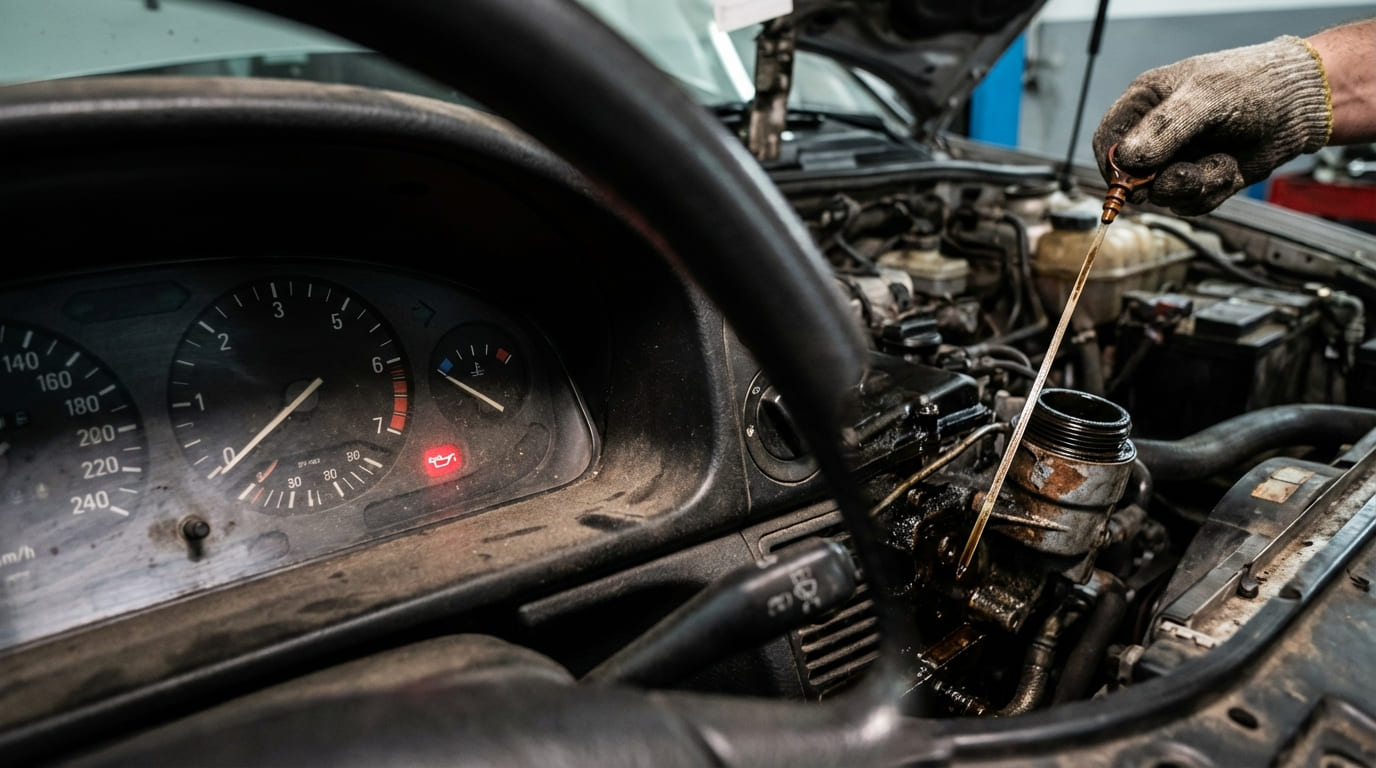
The oil pressure warning light is often the first clue, but it’s not definitive. Many drivers panic when the light flickers at idle, only to find the pump isn’t the issue. The key is context: when does it happen, and what else is going on?
How to Check:
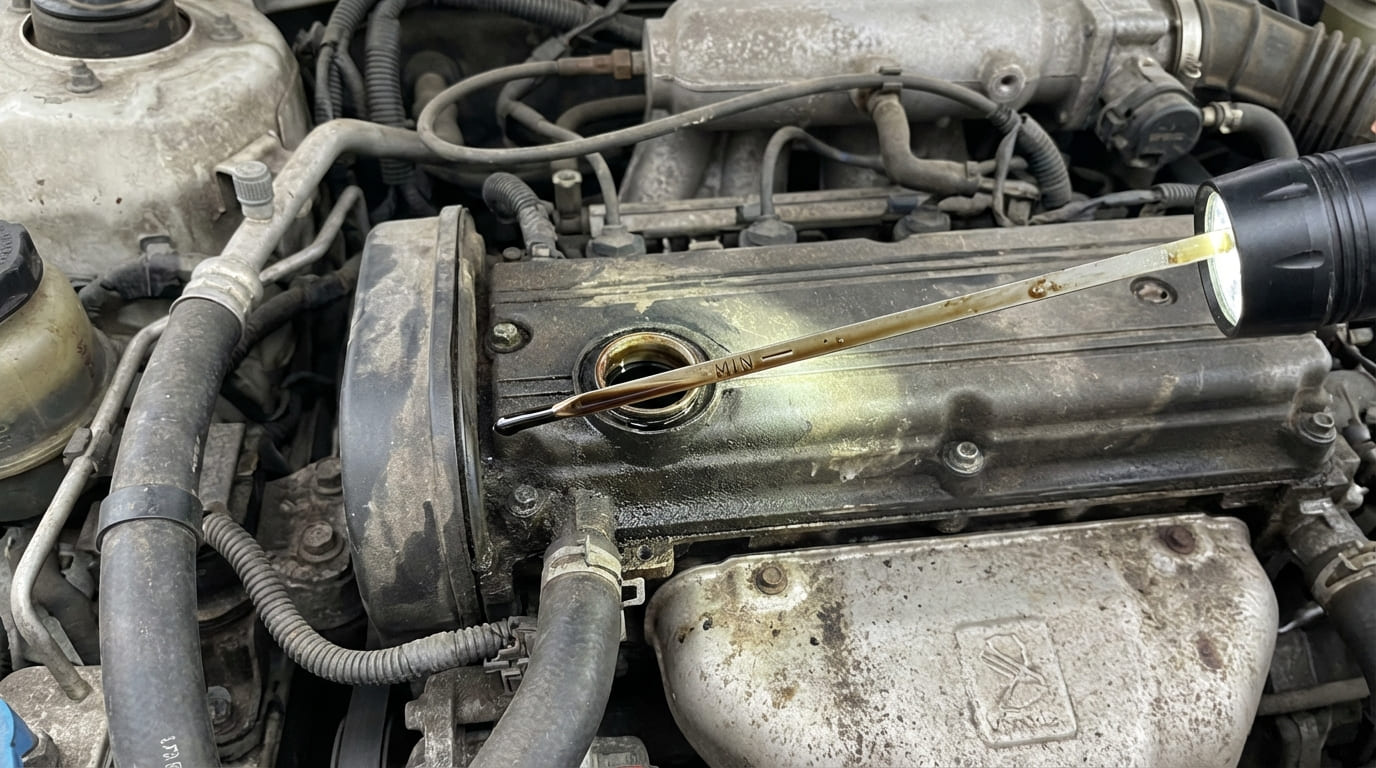
- Verify oil level and condition first—low oil or sludge can mimic pump failure.
- Scan for live data: some vehicles display real-time oil pressure. Compare with known specs.
- Test the oil pressure sensor with a multimeter. Disconnect it and check resistance or output voltage against OEM specs for operating temperature.
- Best practice: Install a mechanical oil pressure gauge in place of the sensor. Run the engine to operating temperature. At idle, pressure below 10–15 psi is a red flag. At 2,500 RPM, most engines should read 30–60 psi.
In my shop, we never replace an oil pump based on a warning light alone. I’ve saved customers hundreds by replacing a $25 sensor instead of a $300 pump.
Abnormal Engine Noises
Oil starvation follows a predictable path: lifters first, then bearings, then turbos. The noise tells you where the system is breaking down.
Valve train ticking or clatter: Persistent ticking after warm-up often points to hydraulic lifters not getting enough oil volume. Before blaming the pump, check the oil filter bypass valve and pickup screen for clogs.
Connecting rod knock or main bearing rumble: A deep, rhythmic knock under load is serious. It means metal-on-metal contact. Low oil pressure combined with this noise requires immediate attention. But remember: worn bearings increase clearance, which drops pressure—even with a good pump.
Turbocharger whine or failure: Turbos rely entirely on oil for lubrication. A whining turbo may be starved. But don’t replace it yet—check oil pressure and flow first. A kinked return line or clogged pickup can starve the turbo without a pump issue.
How to Diagnose Noise Sources
- Use a mechanic’s stethoscope to isolate noise location.
- Check oil pressure under load—if it drops when noise increases, lubrication is compromised.
- Perform an oil analysis: elevated copper, lead, or iron levels suggest bearing wear, not pump failure.
Secondary and Corroborating Symptoms
These signs don’t confirm a failing pump on their own, but when combined with low pressure or noise, they strengthen the diagnosis.
Elevated Engine and Oil Temperatures
Oil helps cool critical components like pistons and bearings. Reduced flow means heat builds up. If oil temps rise without cooling system issues, suspect poor circulation.
How to Check: Monitor oil temperature via scan tool or aftermarket gauge. A steady climb under load—especially when paired with low pressure—is a red flag.
Hydraulic Lifter Collapse or Persistent Ticking
If lifters don’t “pump up” after startup and stay collapsed, it’s often a volume issue. But don’t assume it’s the pump. Clogged oil passages, worn cam lobes, or a stuck lifter can mimic this.
How to Check: Confirm low pressure with a mechanical gauge. If pressure is good, the issue is likely in the valvetrain, not the pump.
Variable Valve Timing (VVT) Malfunctions
Modern VVT systems use oil pressure to shift cam timing. Low pressure causes codes like P0011 or P0012, rough idle, or loss of power.
How to Check: Use a scan tool to compare desired vs. actual camshaft position. If there’s a gap, check oil pressure and flow. Clean phaser screens and oil control valves before replacing the pump.
Differential Diagnosis: What Else Could It Be?
Low oil pressure has many causes. The pump is often blamed, but it’s not always guilty. Use this table to rule out other issues.
| Symptom/Condition | Most Likely Causes | Probability Estimate | Verification Method |
|---|---|---|---|
| Low pressure at idle, normal at RPM | Worn bearings, high oil temp, wrong viscosity | High | Pressure test hot vs. cold, check oil grade |
| Consistently low pressure across RPM range | Failing pump, stuck relief valve, clogged pickup | Medium-High | Mechanical gauge, pump inspection |
| Intermittent warning lamp | Faulty sensor, low oil level, electrical issue | Very High | Check level, test sensor, inspect wiring |
| Knocking noise + low pressure | Bearing wear, pump failure, blockage | Medium | Borescope, oil analysis, pressure test |
| VVT codes + low pressure | Low oil volume, clogged passages, worn pump | Medium | Flow test, pressure test, clean phaser screens |
Costs and Repair vs. Replace
Replacing an oil pump isn’t cheap. Labor often exceeds $500 due to pan removal, timing cover disassembly, or front cover removal. The pump itself ranges from $50 (aftermarket) to $200+ (OEM).
Repair vs. Replace Logic:
- If the pump gears are scored or the housing is worn, replace it.
- If the pump looks good but pressure is low, investigate bearings, clearances, or blockages first.
- On high-mileage engines with bearing wear, a new pump won’t fix low pressure—engine rebuild may be needed.
I’ve seen more good oil pumps replaced unnecessarily than bad ones. Always rule out sensors, oil viscosity, and bearing clearances before pulling the pan.
Best Practices and Master Tips
These are the habits that separate guesses from accurate diagnoses.
- ✅ Use a mechanical gauge for confirmation: Electronic readings can lie. I don’t trust a diagnosis until I’ve seen it on a calibrated mechanical gauge.
- ✅ Inspect the oil pickup screen during pan drops: Sludge, RTV globs, or metal debris can restrict flow without fully blocking it. I’ve found screens 70% clogged that still allowed “some” pressure.
- ✅ Check oil viscosity and change interval history: A 0W-20 in an older engine designed for 10W-30 can show lower pressure, especially when hot. Not a pump failure—just a mismatch.
- ⚠️ Avoid reusing oil pump drive gears or shafts: On some timing-driven pumps, the drive tang wears over time. Reusing it risks premature failure, even with a new pump.
- ⚠️ Don’t assume the pump is defective because pressure is low: I’ve seen more good pumps replaced unnecessarily than bad ones. Rule out clearances, blockages, and sensors first.
- ✅ Clean oil gallery plugs and relief valve bore before assembly: Built-up varnish or debris can prevent the relief valve from seating, causing chronic low pressure.
Real-World Case Studies
Situation: A 2012 F-150 came in with a check engine light and P0011 code. Owner reported ticking noise. Oil level was fine, and the pressure warning lamp never came on.
Initial Assumption: Faulty VVT solenoid or cam phaser.
Discovery: Mechanical pressure test showed 18 psi at idle and 42 psi at 2500 RPM—within spec on paper. But flow was sluggish. Upon inspection, the oil pickup screen was partially clogged with degraded RTV from a prior repair.
Nuanced Lesson Learned: Adequate pressure doesn’t guarantee adequate flow. Volume matters just as much, especially for VVT systems. Always consider restriction even when pressure seems acceptable.
Situation: A high-mileage Camry had low oil pressure at idle when hot. Pressure climbed to 50 psi at 3000 RPM. No knocking, but the lamp flickered in traffic.
Initial Assumption: Worn oil pump.
Discovery: After pulling the pan, the pump gears looked good. But main bearing clearance measured 0.0045″—above the 0.0025″ spec. Oil was escaping too fast.
Nuanced Lesson Learned: Low pressure isn’t always a pump problem. Bearing wear can create a low-resistance path that overwhelms even a healthy pump. Always assess clearances before condemning the pump.
Situation: A turbocharged Subaru arrived with a seized turbo and low oil pressure readings. Owner assumed the pump failed and starved the turbo.
Initial Assumption: Oil pump unable to supply turbo feed line.
Discovery: Pump tested fine on the bench. The issue? A kinked oil return line from the turbo, causing oil to pool in the turbo housing and starving the pump inlet. Crankcase pressure also spiked.
Nuanced Lesson Learned: Oil system health depends on both supply and return. A restriction downstream can cripple upstream performance. Don’t overlook return paths and ventilation.
Contributing Factors to Oil Pump Failure
Pumps rarely fail without cause. The most common culprits:
- Contamination: Metal debris from bearing wear or sludge from neglected oil changes can score gears or jam the relief valve.
- Cavitation: If oil level is low or the pickup is too far from the oil surface, the pump can ingest air, leading to erosion over time.
- Drive mechanism failure: A sheared pump shaft or stripped drive gear (common on cam-driven pumps) kills pressure instantly.
In my shop, we never replace an oil pump without inspecting the entire circuit: pickup, relief valve, filter, galleries, and bearings. The factory service manual’s pressure specs are a starting point, but real-world diagnosis requires context, measurement, and a willingness to question assumptions.